Portuguese
  Spanish


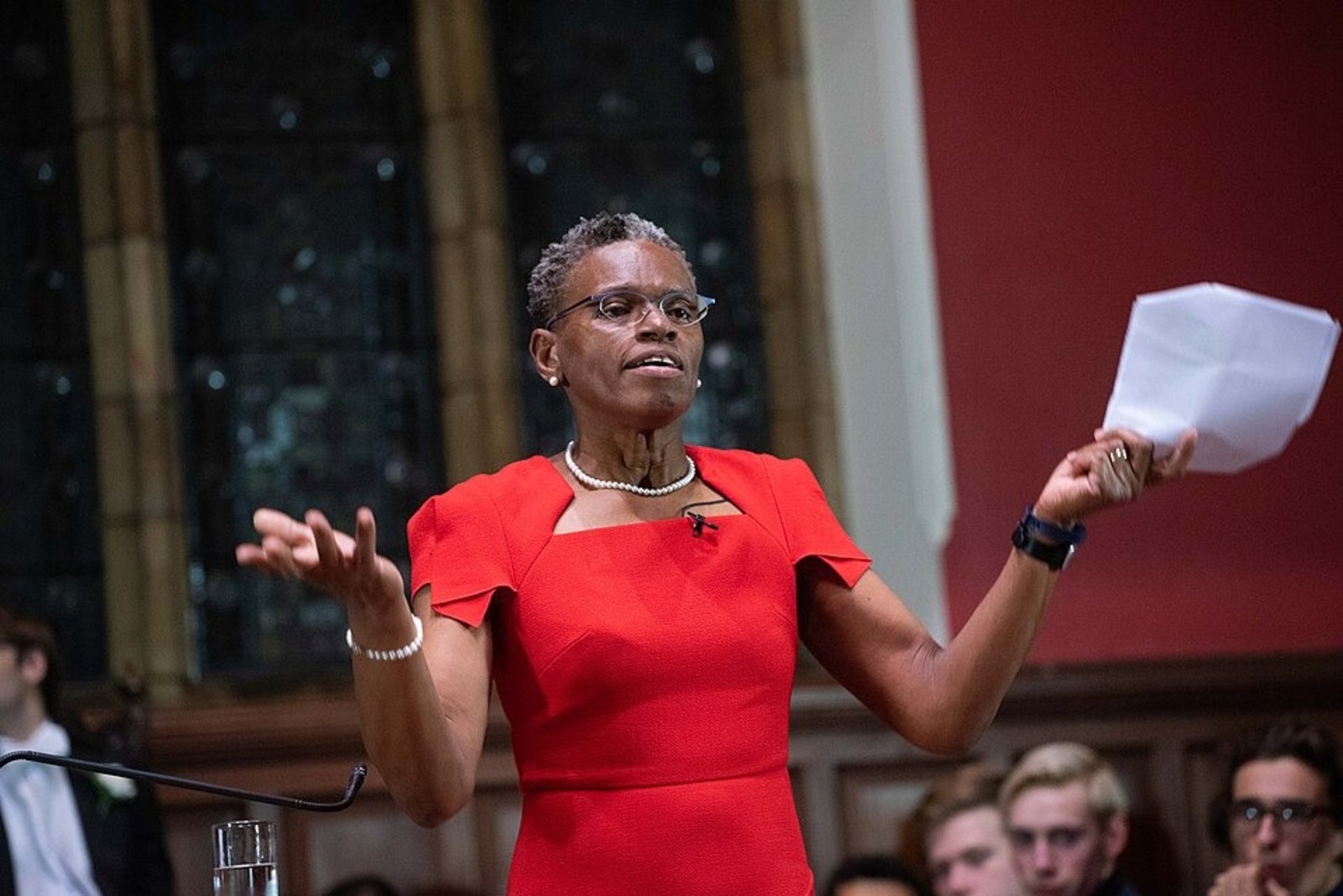


From a Shelter in London to Scientific Leadership in Cambridge, Ijeoma Uchegbu Overcame Prejudices, Losses, and Poverty to Revolutionize Medicine with Nanoparticles Capable of Transforming Treatments and Saving Lives
In 1990, Ijeoma Uchegbu arrived in London from Nigeria with three small daughters, one of whom was still a baby. She carried only a suitcase and little hope for a fresh start. Soon after, she found herself in a shelter for homeless people, trying to feed and protect her family.
The journey to becoming one of the leading experts in nanoparticles was marked by losses and twists of fate.
Born in London to Nigerian parents who migrated in search of education, Ijeoma received a symbolic name: “have a good journey”.
-
Berries, Strawberries, and Blueberries Could Transform Agriculture in Northeastern Brazil, New Tests Reveal

-
Danish Resident Discovers Six Viking Gold Bracelets Weighing 762.5 Grams, Third Largest Gold Treasure in Denmark

-
Over 200 Cities in Southern Brazil on Storm Alert as Cyclone Near Uruguay Brings Heavy Rain, Hail, and Winds Up to 100 km/h

-
Archaeologists Discover 2,300-Year-Old Beer in Sealed Bronze Vessel from Ancient Chinese Tomb




The couple was studying in the UK and, unable to care for their daughter, left her with a family in Kent.
For four years, the girl believed those were her parents. Everything changed when the biological father appeared to take her back.
From then on, her life was split between her father, her stepmother, and the desire to reconnect with her true mother.
The Discovery of the Biological Mother and the Pain of Loss
The reunion with her mother happened when she was 13. “She trembled when she hugged me, was very happy and nervous,” she recalls.
It was an unforgettable weekend, full of gifts and affection. However, the two never talked about the reason for the absence.
One year later, her biological mother moved to the United States and died at the age of 33. “I yelled in pain. I never imagined I wouldn’t see her again.”
Ijeoma also lost her adoptive mother and stepmother, leaving only her father, a caring man who always repeated the same desire: to return to Nigeria.
He was unable to carry out the plan because of the civil war but kept the Nigerian culture alive at home, reminding his daughter of her origins and traditions.
Between Prejudice and Overcoming
Growing up in the UK in the 1960s and 1970s meant facing an openly racist environment.
Ijeoma had good grades but couldn’t see herself in a prominent profession. She only wanted to work in a shop because she didn’t see Black people in important positions.
The move to Nigeria, although difficult, transformed her outlook. She left her friends and the security of London to live in a country that was still recovering from war.
At first, she cried and resisted leaving, but her father believed the experience would be valuable.
Immediately upon arrival, she suffered severe sunburns, revealing an allergy to intense light.
For months, she was bedridden. When she returned to school, she was rejected by classmates who saw her as a “foreigner”.
Even so, she discovered a new path. She immersed herself in science and mathematics, the only subjects she fully understood. “It was the best thing that ever happened to me because it completely redefined my aspirations,” she says.
The Return to the United Kingdom, the Shelter, and the Start of It All
At 16, she enrolled in university to study pharmacy. Later, she earned a master’s degree, got married, and had three daughters. But the marriage failed, and she decided to return to the UK.
“I wanted to be a scientist, and with Nigeria’s infrastructure, that was difficult.” She left feeling hopeless, with few resources and three children.
She ended up in a shelter with 11 families sharing the same bathroom. “I stayed there for seven months. Leaving felt like escaping from prison.”
Even in the worst conditions, she never thought of going back. She sought a research position for her doctorate and ended up choosing a topic on tiny particles, not knowing she was entering the field of nanotechnology.
The Personal and Scientific Turning Point
During a conference, she met German scientist Andreas G. Schätzlein. Four days of conversation were enough to spark a love that would cross borders. “He left everything to be with me: a woman with three children,” she recalls.
Together, they began working on something that would change medicine: nanoparticles capable of delivering medications directly to the part of the body where they are needed.
This reduces side effects and increases the effectiveness of treatments.
“Not all organs are sick. If the medicine goes straight to the site of the disease, the body suffers less,” she explains. This innovation paves the way for safer treatments, including for serious illnesses.
In addition to reducing the effects of chemotherapy and potent pain relievers, her research includes nanoparticles that can deliver medications to the brain and retina, opening possibilities to treat blindness and combat the opioid crisis.
Science, Humor, and Equality
Currently, Ijeoma is a Professor of Pharmaceutical Nanoscience at University College London and President of Wolfson College at the University of Cambridge.
She is also dedicated to science communication and has discovered that humor is a powerful tool.
“I realized that when I made jokes, students paid more attention. I even took a comedy course.” The learning served not only in the classroom but also in lectures and events.
Another area she works in is racial and gender equality in universities. Initially skeptical about the issue, she changed her mind upon seeing data that showed inequality in promotions and academic outcomes.
Since then, she visits departments and proposes simple measures to improve inclusion, such as encouraging minority students to repeat their names until pronounced correctly and including Black scientists as examples in class.
“The changes had a phenomenal impact,” she asserts. Among the actions, she highlights the removal of the names of eugenicists from university buildings, which generated recognition and emotion among students and staff.
From Shelter to Science Elite: The Legacy of a Scientist
From a fragmented childhood to academic recognition, Ijeoma Uchegbu has built a story of resilience and transformation.
Today, her research promises to revolutionize the treatment of complex diseases and save millions of lives.
At the same time, her social work reinforces the importance of diversity and representation in science.
If she had to leave one piece of advice, she says: “If you do what you love, you’ll be fine.”
A phrase that sums up the journey of someone who, with courage and curiosity, turned the impossible into achievement — and the small into the gigantic.
With information from BBC.