





 Portuguese
  English
  Spanish
 3 min of reading
  0 comments


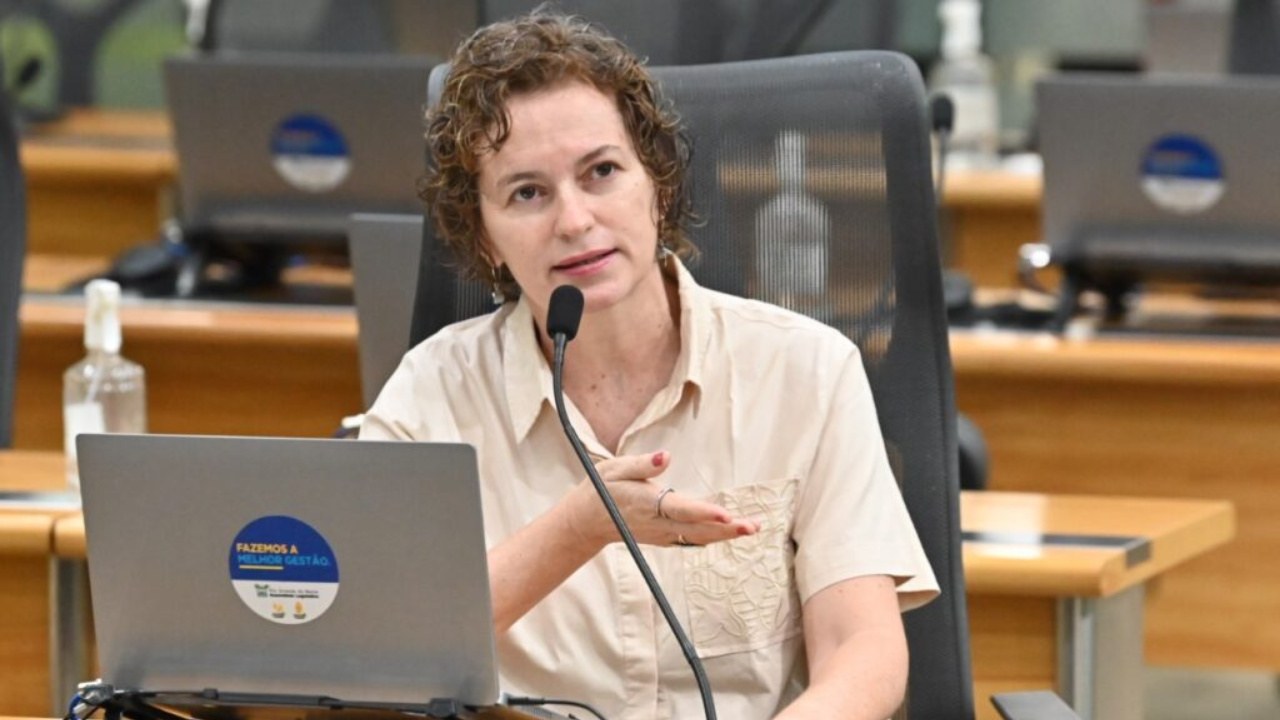
RN Legislative Assembly Holds Public Hearing to Discuss Challenges and Opportunities in the Oil Sector in the Potiguar Basin. The Meeting Addresses the Need for New Investments, Job Creation, and the Role of the State in the Energy Transition.
Oil production in Rio Grande do Norte returns to the spotlight with the public hearing promoted by the State Legislative Assembly (ALRN) this Tuesday (14), at 2 PM, in the Cortez Pereira auditorium in Natal. The meeting, proposed by the deputy Isolda Dantas (PT), will bring together authorities, businesspeople, unions, and specialists to discuss the challenges and opportunities of the oil production chain in the region.
The Potiguar Basin, which has held the state’s leadership in the national oil industry for nearly five decades, will be the main focus of the debate. The activity, which generates hundreds of millions of reais and supports the economy of dozens of municipalities, is facing a pivotal moment today. The public hearing aims to discuss measures that ensure sustainability, new investments, and strengthening of local production.
According to Deputy Isolda Dantas, the topic requires responsibility and long-term planning. “Oil is part of our history and our economy, but it also imposes challenges that need to be addressed with responsibility, sustainability, and planning for the future,” the parliamentarian stated.
-
The rise in oil prices could ensure an extra revenue of R$ 100 billion for the Federal Government, indicates a recent economic study.

-
Naturgy begins an investment of R$ 1.6 million to expand the gas network in Niterói and benefit thousands of new residences and businesses.
-
A major turn in the Justice system suspends tax increases and directly impacts oil and gas companies in Brazil by affecting costs, contracts, and financial planning, leaving uncertain what could happen to the sector if these costs had increased.

-
Brava Energia begins drilling in Papa-Terra and Atlanta and could change the game by reducing costs in oil while increasing production and strengthening competitiveness in the offshore market.


Potiguar Production Faces Decline and Pressures Regional Economy
According to data from the National Agency of Petroleum, Natural Gas, and Biofuels (ANP), production in Rio Grande do Norte reached 39,144 barrels of oil equivalent per day (boe/d) in August 2025. The number represents a slight reduction compared to the average of the last 18 months, which was 39,610 boe/d.
Although the decline appears modest, it reflects a continuous drop in local production, directly impacting job creation and tax revenue. This scenario has raised concerns among public managers and investors, as the economy of several producing municipalities heavily depends on the oil industry.
The setback is partly attributed to the gradual reduction of Petrobras’s presence in the region, which has led to a significant decrease in public and private investments. Nevertheless, recent studies indicate that the Potiguar Basin still has great production potential, with unexplored areas capable of revitalizing the sector.
SINDIPETRO-RN Proposes Inclusion of New Blocks and Reinforces Importance of Resuming Investments
In an effort to reverse the stagnation scenario, SINDIPETRO-RN submitted a formal request to the ANP in August to include 33 new exploratory blocks in the Permanent Offering of Concession (OPC) edital. The areas are distributed across strategic municipalities such as Mossoró, Areia Branca, Assú, Serra do Mel, and Guamaré.
The ANP confirmed the inclusion of the blocks, which should be made available later this year. The general coordinator of the union, Marcos Brasil, emphasized the positive impact of the initiative:
“If no new blocks are offered, there is a risk of a severe economic contraction, as the sector represents a significant portion of RN’s industrial GDP,” he warned.
The expectation is that up to five companies already operating in the state will participate in the bidding, which should boost the generation of direct and indirect jobs and stimulate new financial investments in infrastructure and technology.
In addition to the economic agenda, the public hearing organized by ALRN will also address the role of oil in the transition to cleaner energy sources. The goal is to find a balance between development and sustainability, leveraging local expertise without compromising environmental commitments.
Authorities from the energy sector, union representatives, and businesspeople will debate strategic guidelines to ensure that Rio Grande do Norte continues to be a leader in oil production, but with a future-oriented perspective.
The Potiguar Basin, with its history of productivity and innovation, remains an essential asset for the state — and the expectation is that the meeting will serve as a starting point for a new phase of investments, diversification, and strengthening of the production chain.







Seja o primeiro a reagir!