





 Portuguese
  English
  Spanish
  4 min of reading
  0 comments


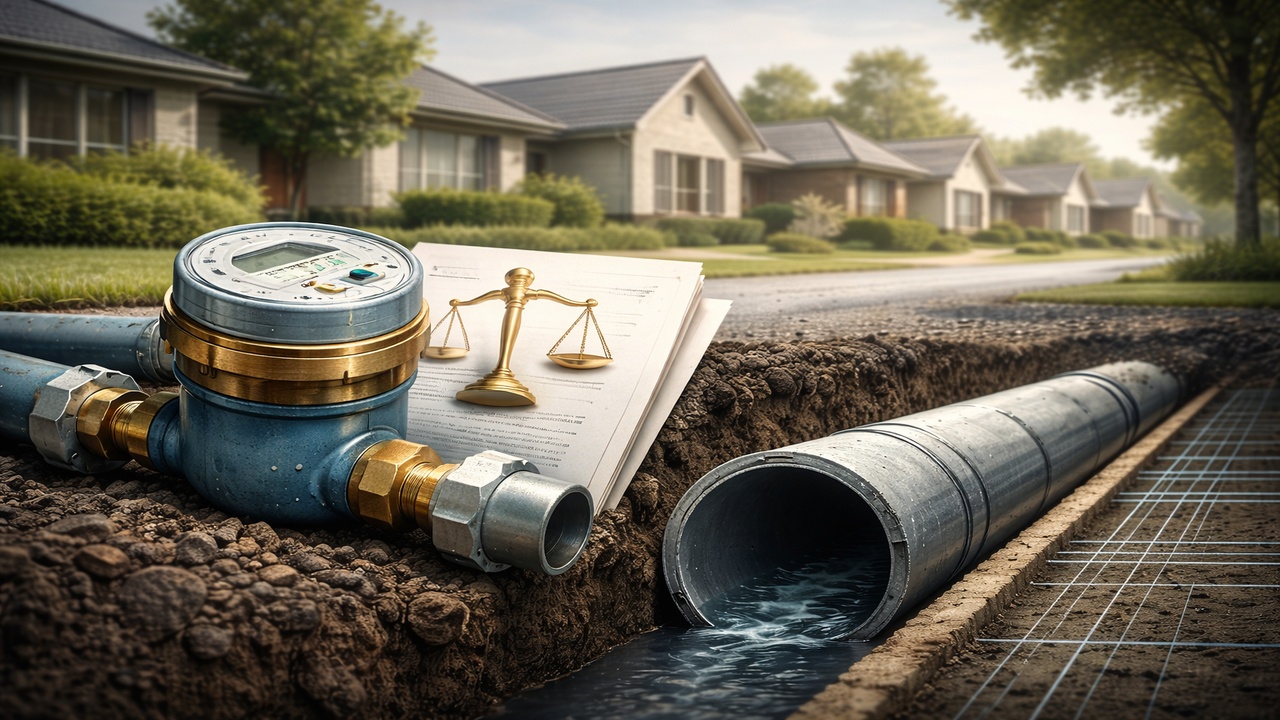
Court Authorizes Sewage Fee Charging Even Without Connection to the System When Public Network Is Available, Based on the Basic Sanitation Law.
A recent court decision has rekindled an old debate between consumers and sanitation companies: is it legal to charge sewage fees even when the property is not physically connected to the network? The answer, according to the consolidated understanding in state courts and the Superior Court of Justice, is yes, as long as the service is available in the area. The central point is not actual usage, but the offer of essential public service.
This understanding has a direct impact on urban areas, condominiums, old properties, and homes that use alternative solutions, such as septic tanks.
What Underpins the Charge Even Without Connection to the System
The legal basis for the charge is found in the Law No. 11.445/2007, which establishes the national guidelines for basic sanitation. The legislation defines water and sewage services as essential public services, whose compensation can occur by availability, and not only by actual consumption.
-
The noise law will no longer be in effect at 10 PM starting in June with a new rule valid during the 2026 World Cup.

-
The Chamber opens a debate on driver’s licenses at 16 years old as part of a reform that includes around 270 proposals to change the Brazilian Traffic Code and may redesign rules for licensing, enforcement, and circulation in the country.

-
The new Civil Code could revolutionize marriages in Brazil with “express divorce” and changes that could exclude spouses from inheritance.

-
Banco do Brasil sues famous influencer for million-dollar debt and intensifies debate on delinquency, risks of seizure, and direct impact on Gkay’s credibility.

In practice, this means that if the sewage network is installed in the public roadway and the property can connect to it, the company can charge the corresponding fee, even if the owner has not made the physical connection.
Service Availability Is Different from Effective Use
The courts have differentiated two concepts that are often confused by consumers. Effective use occurs when the property is connected and discharges its effluents into the system. Service availability, on the other hand, exists when the public infrastructure is installed and capable of serving the property.
The court understands that maintaining the network, treating sewage collected from other properties, and preserving the environment benefit the entire community. Therefore, the fee does not only compensate the individual act of discharging sewage but the functioning of the system as a whole.
Understanding That Has Been Applied by the Courts
In several decisions, the courts state that charging the sewage fee is legitimate when there is a public network available, even if the property uses a septic tank or is not connected to the system. The central argument is that the service is available to the user, serving the public interest.
This understanding has been reaffirmed in multiple judgments, creating a stable jurisprudence, which significantly reduces the chances of success in actions questioning the charge solely based on the absence of physical connection.
Despite the favorable position for the companies, the charge is not automatic in all cases. The court also recognizes exceptions. If it is proven that there is no public network available, that the connection is technically impossible, or that the property is in an area not served by the system, the charge may be deemed inappropriate.
Furthermore, there are decisions that dismiss the charge when the company does not demonstrate the actual availability of the service or when the fee is applied generically, without clear technical criteria.
Direct Impact on Property Owners and Condominiums
The judicial understanding directly affects property owners in urban areas, residential condominiums, and old developments that have never connected to the sewage network. In many cases, the charge will continue to occur even without the connection, requiring heightened attention in analyzing the bill and the property’s situation.
For condominiums, the topic becomes even more relevant, as the discussion may involve high amounts and collective disputes between residents and companies.
Public Health and Environment as Justification
Another point often highlighted in the decisions is the aspect of public health. The expansion and maintenance of sanitation systems reduce soil contamination, protect aquifers, and decrease disease risks.
By authorizing the charge for availability, the court reinforces the logic that sanitation is a service of collective interest, whose financial sustainability depends on contributions from users who benefit directly or indirectly.
What the Consumer Can and Should Do
Before contesting the charge, the consumer should verify if the sewage network is indeed available on their street, if there is technical possibility for connection, and if the company complies with regulatory standards. In case of doubt, it is possible to request formal information from the company and the local regulatory agency.
Legal actions remain possible, but only when there are concrete elements that negate the service availability or indicate an undue charge.
The court’s decision makes it clear that, in basic sanitation, service availability prevails over effective use. Properties located in areas served by the public network can be charged even without a physical connection to the sewage system.
This understanding reinforces the collective nature of the service and redefines the boundaries between consumer rights and public interest, requiring heightened attention from property owners and urban residents.








-

2 pessoas reagiram a isso.