





 Portuguese
  English
  Spanish
  7 min of reading
  0 comments



Petrobras 2025 Contest: See The Definitive Preparation Guide With Practical Steps, Study Routine, Reviews, And Simulations To Compete For Positions At The Oil Giant.
In Brazil, few opportunities generate as much anticipation as a public contest from Petrobras. In 2025, with a new announcement expected, thousands of candidates have already started preparing to take one of the most competitive exams in the country. It’s not just the prestige of working for one of the largest energy companies in the world that motivates the competition: it’s the attractive salaries, robust benefits, and the chance to be part of a strategic state-owned enterprise for national sovereignty.
But, under pressure, an inevitable question arises: how to start studying without getting lost in so much information? For many, opening the announcement is a shock. The dozens of pages filled with rules, content, weights, and classification criteria make any beginner feel lost. It is at this point that the need for a structured plan comes into play. Those who start now, in an organized way, are already ahead of more than 90% of their competitors.


The Weight of The Petrobras 2025 Contest
The Petrobras contest is not just another public selection. It mobilizes candidates from all over the country, from high school, technical, and higher education levels. In 2021 and 2023, for instance, the competitions recorded tens of thousands of registrations for a relatively limited number of vacancies, showing that the competition is brutal.
-
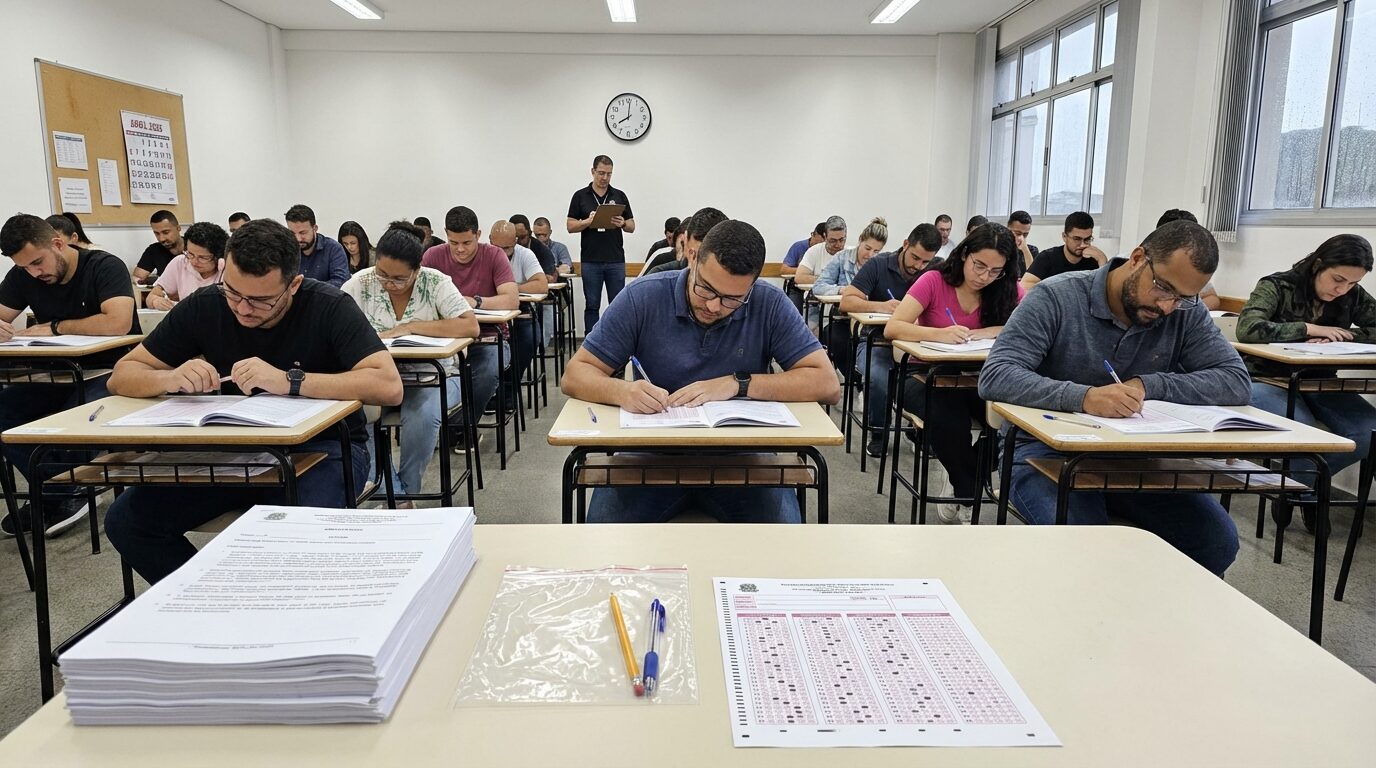
FCC releases the answer key for the Barueri 2026 contest after exams with 23,191 registered candidates, 124 vacancies, and salaries of up to R$ 22,200, with appeals scheduled for April 28 and 29.
-
The Technical Assistance and Rural Extension Company announced a Simplified Selection Process (PSS) with 24 temporary positions – the salary can exceed R$ 5,000.

-
Petrobras Subsidiary Opens 126 Positions With Salaries Exceeding R$ 8,000

-
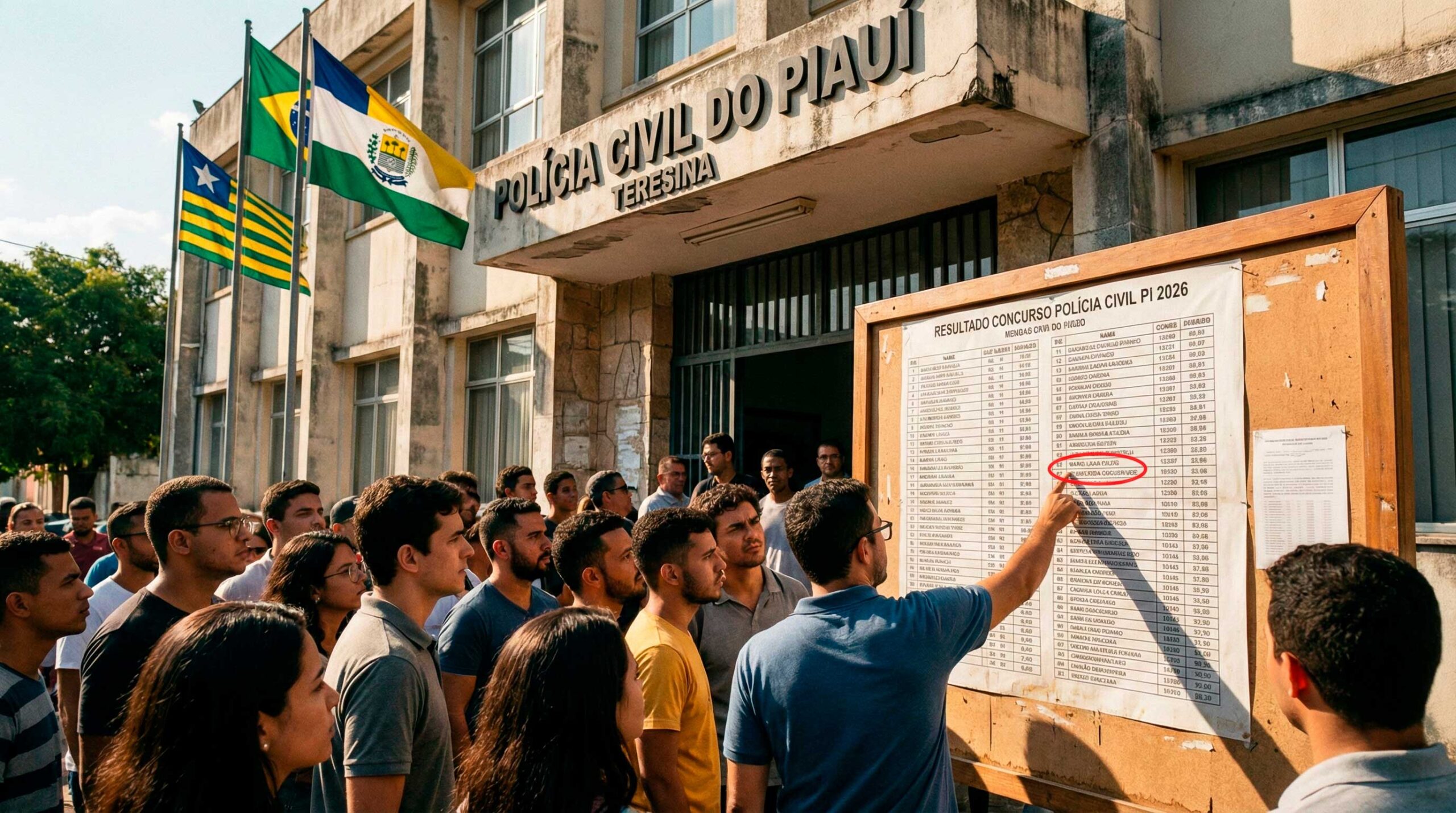
FGV Releases Preliminary Results of the Objective Test for the PC PI Contest, Opens Appeal Period, and Confirms Dates for Next Stages with Approval Criteria and Detailed Salaries
The positions range from operation and maintenance technicians, aimed at those who have completed high school with a technical background, to engineers, analysts, and professionals specialized in areas such as IT, law, and management.
The initial salary, depending on the position, can easily exceed R$ 11 thousand, not counting benefits, profit sharing, and career plans.
This reality explains why Petrobras is seen as one of the most desired contests in Brazil. Passing is not easy, but it is possible with method, discipline, and strategic vision.
The First Step: Understanding The Announcement
The first mistake many candidates make is to ignore the announcement or read it superficially. The announcement is the “manual of the game” and contains all the vital information: training requirements, number of vacancies, weight of each subject, elimination rules, tie-breaking criteria, and even details about quotas.
In the Petrobras contest, the announcement needs to be read in two layers:
- More Recent Announcements (2021 and 2023), to understand how the organizing committee arranged the content and what the most highly demanded points were.
- Previous Announcements (2017 and 2018), because they serve as a parameter for different committees that may be chosen in the next contest.
This analysis allows you to notice, for example, that Portuguese and English are basic but can lead to disqualification; that at the high school level there is more weight on mathematics and technical knowledge, while at the higher education level, the specific blocks of the training area prevail.
The Second Step: Knowing The Previous Exams
Another common mistake is to study without knowing how the questions are charged. Even if you can’t solve the old exams right away, it is essential to skim through them, observe the language, complexity level, and recurring themes.
When analyzing the previous exams from Cesgranrio, the organizing committee that has already run Petrobras and Transpetro contests, it becomes clear that there are patterns:
- Long questions requiring interpretation and conceptual mastery.
- Strong emphasis on specific technical subjects.
- Differentiated scoring criteria, where basic knowledge may not directly count toward the final score but eliminates candidates who score zero on the exam.
This initial perspective ensures that when you encounter certain content in your studies, your brain already recognizes it as relevant for the exam.
The Third Step: Organizing The Study Routine
No approval happens without consistency. This is where many give up because they believe they need to study 10 hours a day to compete. The truth is that with organization, it is possible to be competitive even with less time.
The recommendation is clear:
- Monday to Friday: 1 to 2 focused hours daily without distractions.
- Saturdays and Sundays: 5 to 6 hours each, taking advantage of the extra time.
This model adds up to around 30 weekly hours, a number considered very competitive for high-level contests.
The secret lies in mapping the routine: work, family, leisure—everything must be considered to reserve fixed study blocks. Putting each schedule on paper (or in digital spreadsheets) is essential to avoid the feeling of improvisation.
The Fourth Step: Creating A Study Plan
Studying for Petrobras is not like choosing a movie on Netflix. It’s not enough to “go with the flow,” but rather attack the contents that effectively appear in the exam. The study plan should follow this order:
- Basic Knowledge, such as Portuguese, English, and mathematics.
- Specific Content for Each Area, according to the emphasis chosen in the announcement.
- Higher Weight Blocks, since they are the ones that effectively classify.
This is where weekly planning gains strength. If the candidate plans to study 2 hours a day, they need to divide that time between reviews, theory reading, and question resolution. Every 7 to 15 days, including reviews is mandatory to avoid the feeling of “always starting from scratch.”
The Fifth Step: Reviewing And Simulating
The difference between those who dream and those who pass lies in the review. Without it, the brain simply erases content within a few weeks. Therefore, the recommendation is to review everything every 7 days and do larger cycles every 15.
Moreover, simulations are the real training. Solving old exams within the official time helps candidates get used to the pressure of the clock and understand how to manage their time. Many approved candidates state that simulations were decisive for their confidence on exam day.
What Appears Most In The Petrobras Contest
An analysis of previous announcements shows that some contents appear almost mandatorily. For high school level, basic mathematics, physics, chemistry, and logical reasoning are indispensable. For higher education, the specific technical disciplines of the training are decisive, but Portuguese and English cannot be neglected.
Additionally, topics related to Petrobras itself—such as ethics, governance, occupational safety, and energy sector legislation—tend to appear in organizational knowledge questions. Ignoring this block can cost precious points.
Why Starting Now Provides An Advantage
The Petrobras contests attract tens of thousands of applicants, but only a minority truly prepares in advance. Most wait for the announcement to begin, which diminishes their chances of approval.
Those who start now, in September 2025, for example, have precious months to:
- Read and understand the announcement.
- Analyze previous exams.
- Create a realistic study plan.
- Accumulate reviews and simulations before the competition.
This means starting with an advantage over more than 90% of the competitors.
The Role Of Discipline And Mindset
More than just memorizing content, passing a contest like Petrobras requires mindset. Many candidates become discouraged along the way, believing that they lack the ability.
What separates the approved from the ones who give up is the discipline to maintain the study rhythm even on days when motivation disappears.
Here comes an uncomfortable truth: it’s not a matter of intelligence, but consistency. Those who maintain the daily habit, even with little time, accumulate knowledge exponentially and arrive on exam day much more prepared.
Turning Intention Into Action
The Petrobras 2025 Contest represents one of the decade’s biggest opportunities for those seeking stability, good salaries, and a solid career in a strategic state-owned enterprise. But the path to approval requires planning, discipline, and above all, action.
It’s not enough to just take note of the five steps or read articles like this and remain in “wait mode.” You need to act now. The announcement can come out at any moment, and those who start today are already ahead of the majority.
And here is the crucial point: you can try to put everything together yourself or accelerate the process with a structured plan. Imagine having access to ready schedules, previous exams, organized reviews, and even simulations programmed to fit into your routine. This is precisely what differentiates those who study with direction from those who merely accumulate PDFs without strategy.
In the end, the choice is yours: repeat the frustration of opening the announcement and closing it in 5 minutes, or finally prepare with method and clarity. For those who want to take this step, there is complete material designed precisely to unlock those starting from scratch.
Preparation Course for Petrobras — a structured guide that can be the differentiator between falling behind or arriving on exam day knowing exactly what to do.
The decision is in your hands. The Petrobras 2025 Contest has already started — and your future can begin now.










-

-

-

3 pessoas reagiram a isso.