





 Portuguese
  English
  Spanish
  7 min of reading
  10 comments


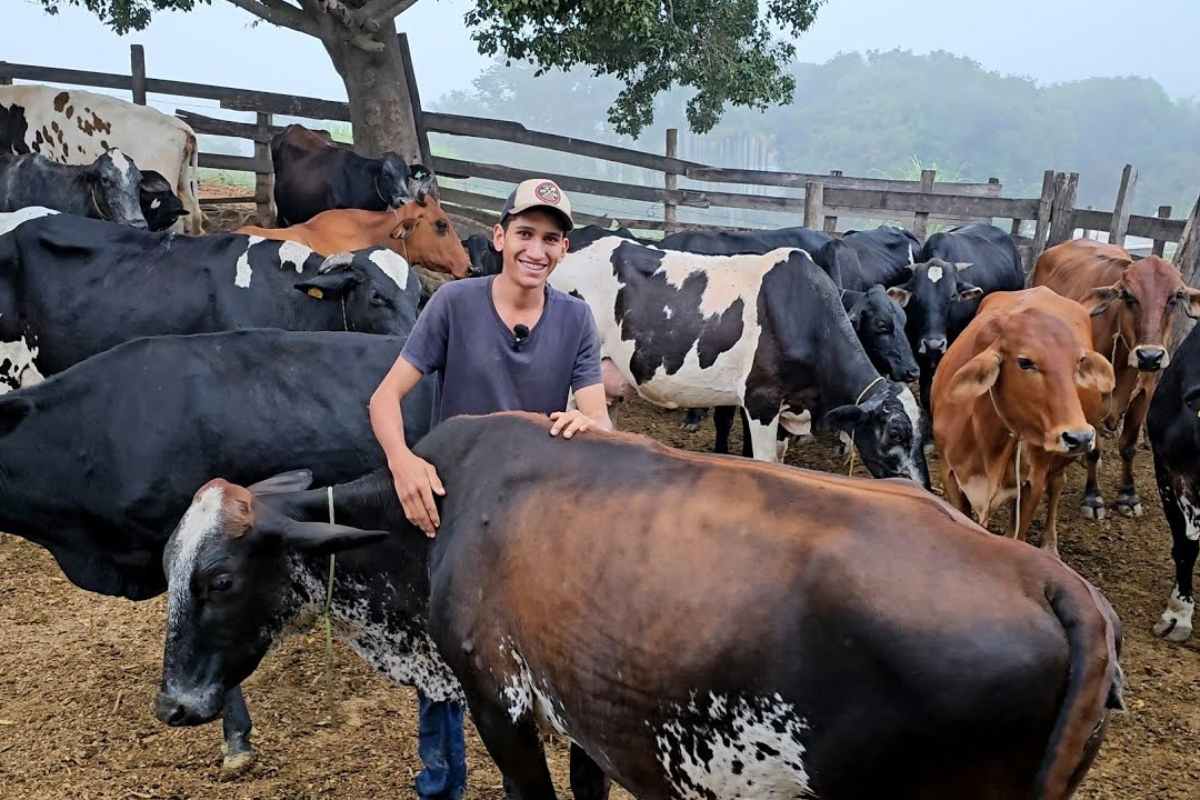


Left as a Teenager in the Retreat During the Drought, Pedro Vaqueiro Transformed Thin Cows into Consistent Production, Combined Technique and Affection for the Herd, Became a Rural Phenomenon on Social Media, and Today Explains Simply How the Heavy Routine of Milk Can Sustain an Entire Future in the Countryside for Those Who Insist on Staying
At the age of 11, during the drought, with no structure and a father determined to abandon dairy farming, Pedro Lucas heard the question that would change his life: either he took over the retreat or the cows would be sold. There, almost without realizing it, the rural phenomenon was born that today attracts thousands of curious people to understand how a young man from the countryside became a reference in persistence in agriculture.
From a simple corral in southern Minas, surrounded by cows with names that seem straight out of a soap opera and stories that mix humor and real struggle, he built, through sheer determination, a productive system that stands strong with technique, care, and obstinacy. Between milking at dawn, feeding at the trough, and daily conversations with each animal, Pedro Vaqueiro transformed a heavy routine into a powerful narrative, able to convey to the city the reality of those who insist on living off milk.
From Childhood in the Countryside to Managing the Retreat at the Age of 11

Pedro started like many children of small producers: at 7, he was already helping his father with milking, still using the old method of hand milking, in a modest retreat with few facilities and a lot of improvisation.
-
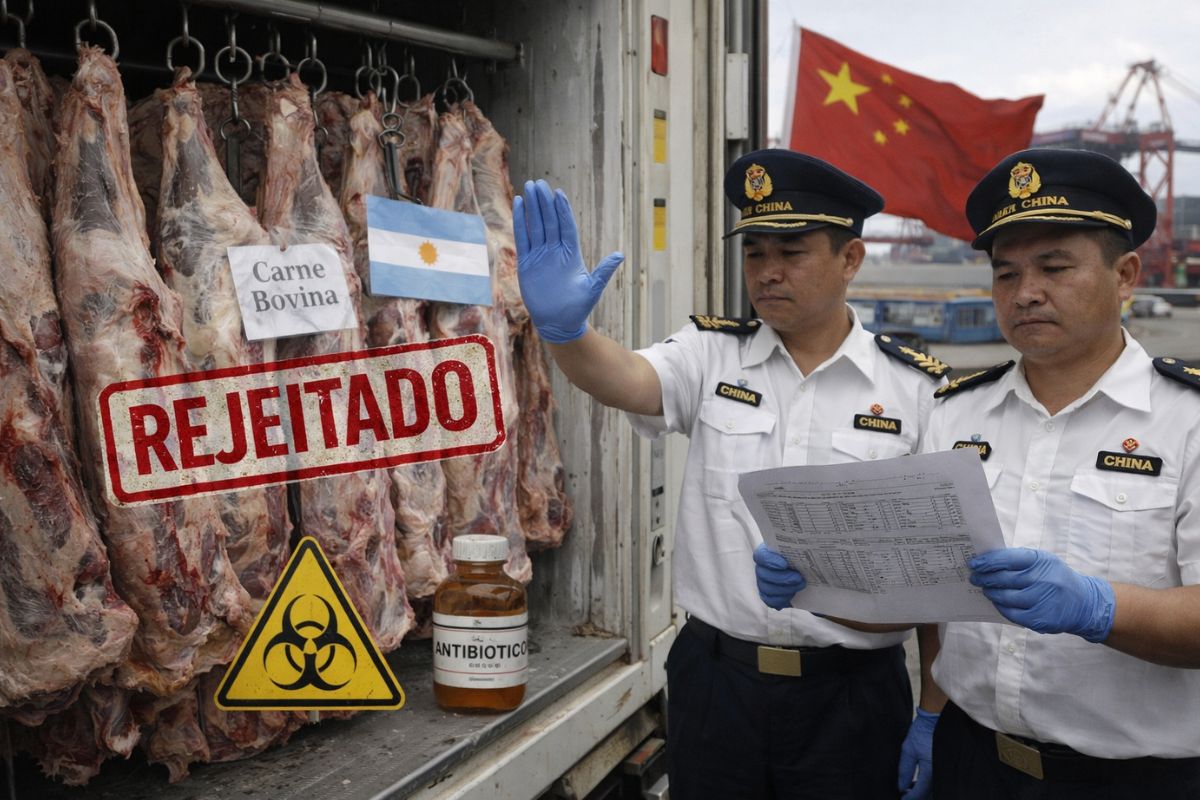
China rejected an entire shipment of beef from Argentina after detecting an antibiotic so dangerous that it has been banned for human consumption for over 30 years, and now the export sector is facing a crisis of international trust.
-
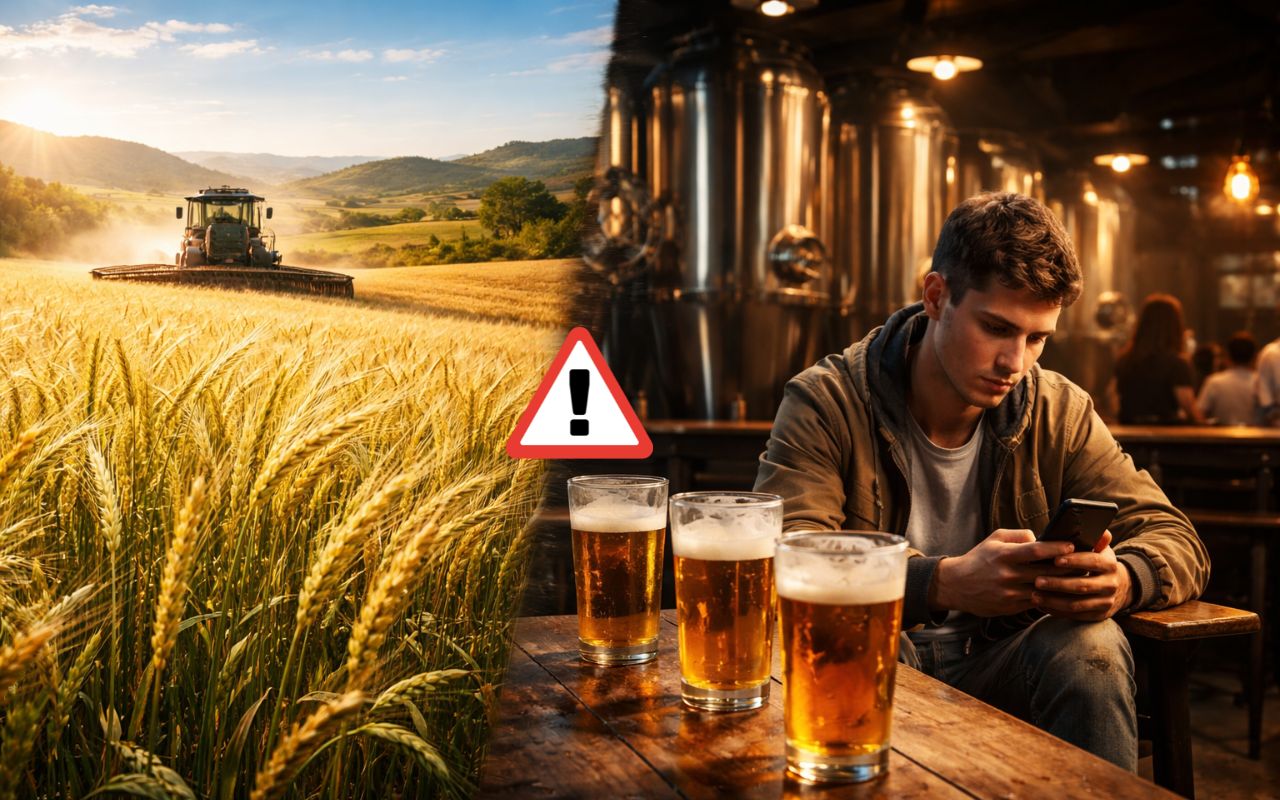
With nearly 500 thousand tons per year, barley production is growing in Brazil, while a decline in beer consumption among Generation Z raises alarms in the sector.
-
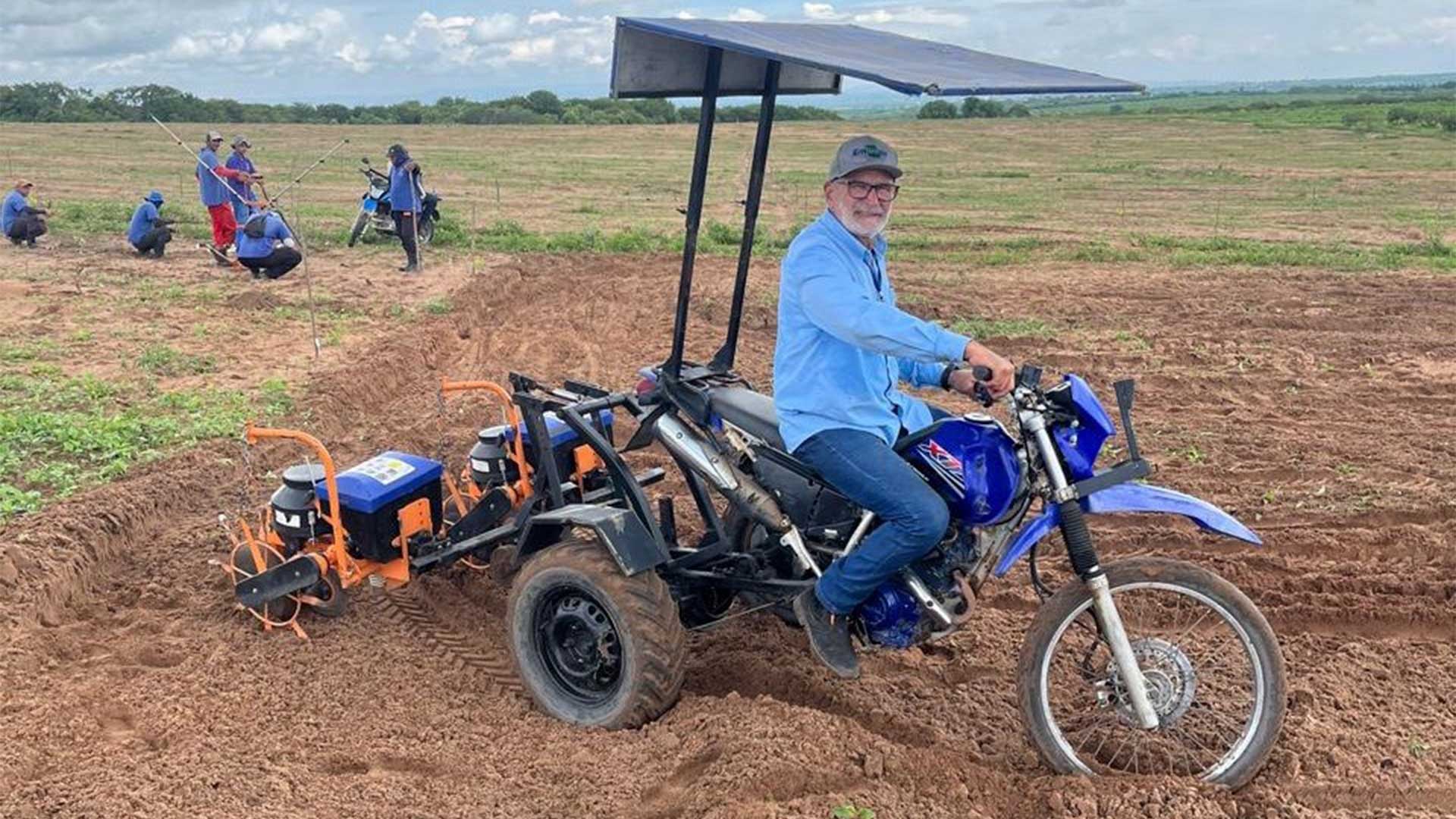
With tractors out of reach for small producers, a tricycle created by Embrapa Algodão becomes a cheap and efficient solution and gains national prominence.
-
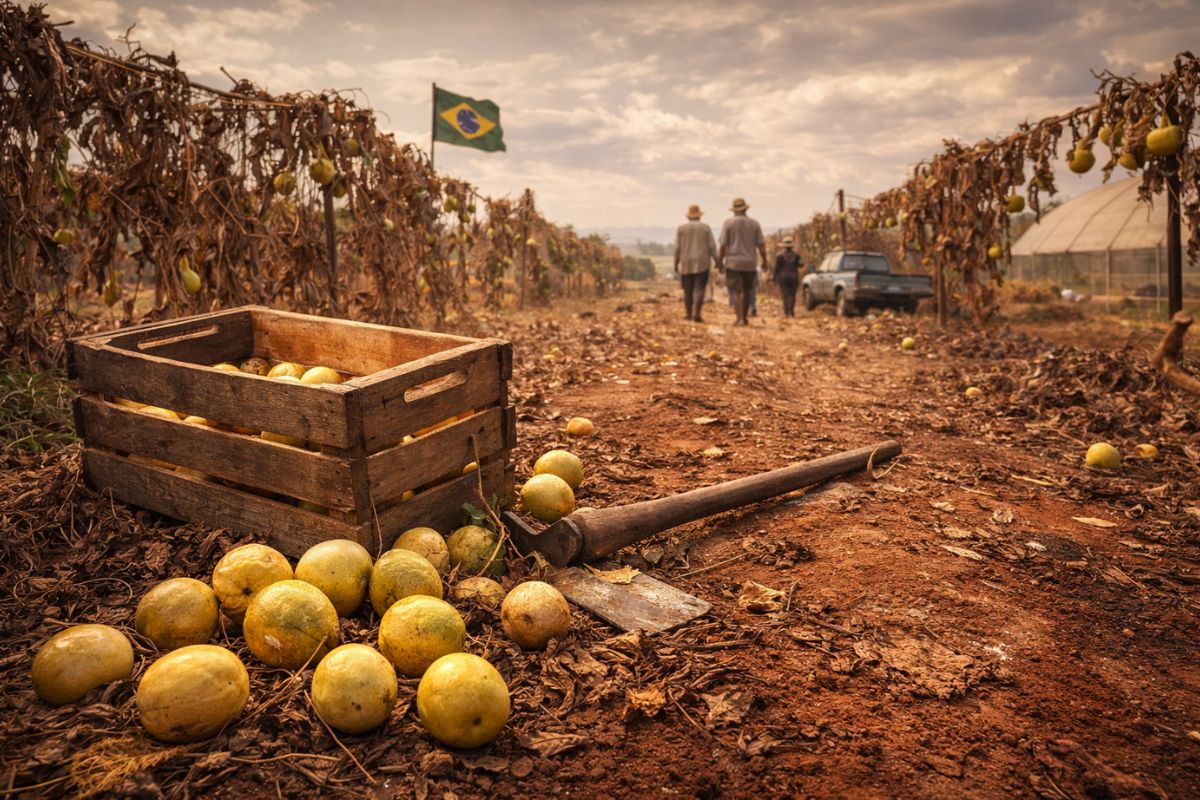
From 130 producers in the year 2000 to just 15 today: the dramatic decline of passion fruit in Araguari shows how the lack of labor in the Brazilian countryside is killing a decades-old agricultural tradition, even with Brazil being the largest producer in the world.

At 9, the family moved permanently to the location. At 11, during a milking session, the turning point came.
Tired of the milk routine and more interested in beef cattle and buying and selling businesses, his father announced he would end the dairy activity.
He offered the boy the option to take over the retreat or see the herd sold. Pedro accepted.
With no technical course, no consulting, and no business plan, only with daily interaction with his father, grandfather, and grandmother, he became, in practice, the manager of the family dairy system.
At the time, the herd consisted of about 40 cows, producing approximately 800 liters per day.
A severe drought came, feed supplies ran out, there was no silage to buy, and milk production plummeted to 50 or 60 liters.
To prevent the cattle from dying, the teenager cut banana trees along the roadside and in marshes, pulled forage with an ox cart, and held the system together at the limit.
He does not grow through the romantic path of the “dream in the countryside,” he grows through the pain of not having food for the cows.
From the Nickname Pedro Galinha to the Character Pedro Vaqueiro

Before becoming a rural phenomenon on social media, Pedro was the target of ridicule at school.
As a child, to have his own income, he raised chickens in the countryside, brought dozens of eggs and free-range chickens to sell in the classroom, even served the principal.
The result is a nickname that sticks: Pedro Galinha.
His classmates laughed, he felt uncomfortable, but he kept selling. His grandmother encouraged him, saying that this was the beginning of independence and that “we need to have our own earnings.”
This spirit of seeking income from an early age would return later with strength, when milk became his main responsibility.
In the digital world, however, the old nickname does not enter. When he opened his first channel, still with few subscribers, he decided to introduce himself as Pedro Vaqueiro, inspired by the roosters he raised and his bond with the cattle.
The old channel was deleted, the routine tightened, and time passed. Only later, already established in the dairy business, did he resume social media with simple videos recorded on his phone, showing daily life in the corral.
The content exploded after an interview with another well-known breeder. In a few weeks, the number of followers soared to tens of thousands.
Without sophisticated editing, without a marketing script, just with spontaneous speech, a thick accent, and cows that respond by name, Pedro establishes himself as a digital rural phenomenon, but without abandoning the essence: those who become famous, he repeats, are the cows.
Heavy Routine, Fine Technique, and Management of People and Cattle
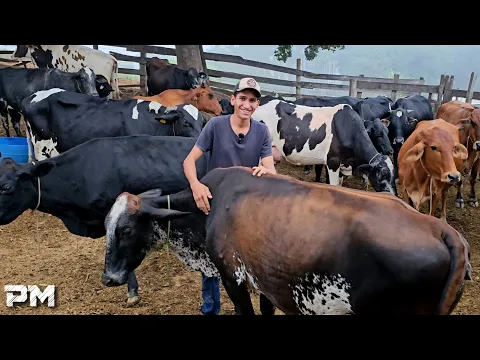

The reality behind the camera is much less “romantic” than social media may suggest. The day starts around 3 a.m.
Still in the dark and with dew falling, he gathers the cattle, turns on the milking machines, organizes batches, separates calves, monitors production, and faces, whether with a hurt leg or not, the marathon of squatting, standing up, fitting cluster attachments, and maintaining the rhythm.
When the power goes out, technology gives way to what he learned from his father and grandfather: back to the bucket on the arm, the cow bursting with milk, hand milking. There is little time left for rest.
After finishing the cows in the first batch, he already needs to think about tomorrow’s milk, cleaning the machines, washing the pens, and organizing the elevated calf barn to reduce pneumonia and diarrhea.
Today, with a herd of just over 20 lactating cows, he maintains daily productions of around 450 liters, compensating for the smaller scale with fine management.
The batches are defined by production and lactation phase, the diet mixes corn silage, capiaçu grass, and adjusted concentrated feed, the pre-partum cows are separated for better control, and females with higher potential are retained in the rearing stage, creating a base of unique genetics.
In parallel, Pedro masters procedures that many small producers outsource: he performs hoof trimming, accompanies insemination, evaluates lactation persistence, decides on the culling of problematic cows, controls mastitis, and observes behavior.
In his simple speech, he translates technical concepts of comfort, well-being, and productive efficiency, insisting that a good milk cow is one that eats well, rests, and does not suffer.
Drought, Feed Crisis, and Management Lessons Learned the Hard Way
The greatest lessons come from crises.
Besides the drought that brought down milk production and nearly made the business unviable, he faces losses from calves sold cheaply after a long period of rearing, deaths suspected to be from toxic plants in rented pastures, and the constant difficulty of balancing the costs of feed, silage, labor, and milk prices.
The capiaçu appears as a strategic turning point. Planted in areas where coffee has not entered, it serves as a safety feed.
There are up to three cuts per year, used to complement corn silage, especially in weaker harvests.
Without using technical jargon, Pedro practically describes the importance of having “pot and plate” before putting the rice on the fire, that is, ensuring a guaranteed feed structure before growing the herd.
He also learned that genetics without management conditions does not solve problems.
After frustrating experiences with Holstein cows, which are more sensitive to mastitis and diseases, he began to invest in Gir, Girolando, and more rustic crossbreeds, which adapt better to the realities of pasture, mud, heat, and variable management of a small producer.
The result is a herd that does not impress with gigantic numbers, but rather with consistency.
The cows maintain good body condition, produce milk at a competitive level for the size of the property, and withstand climate fluctuations without collapsing.
The rural phenomenon here is not record-breaking productivity on a model farm; it is resilience on a small property with few hectares and a lot of manual labor.
Internet, Charisma, and the Rural Phenomenon that Inspires Staying in the Countryside
If in the corral he manages milk volume and cow health, on social media he manages the expectations of those who only see the “pretty” side of the countryside.
On TikTok and other platforms, videos where he calls cows by name, punishes a group for invading the crop, shows sick calves recovering, or explains the difference between corn silage and grass generate millions of views.
The language is straightforward. He talks about falls, a hurt leg from a rough cow, the time he had to milk by hand because the power went out, the night he dreamed of dying of anxiety after seeing his follower count soar.
Unlike polished motivational content, Pedro exposes the harshness of the routine, but always seasoned with humor, nicknames, and an evident affection for the animals, which helps the urban audience see milk producers beyond numbers and clichés.
With this, he establishes himself as a rural phenomenon not only for his audience but also for serving as a bridge between two worlds: that of those who believe the solution is leaving the countryside and that of those who still believe that, with technique, planning, and support, it is possible to build a future without abandoning the farm.
His plans include investing in compost barn, improving irrigation, strengthening genetics, and, above all, maintaining what he considers essential: waking up early, hearing the cows bellow, and knowing that this is where he belongs.
In the end, the figure that appears on the screen is that of a young man carrying the surname of a lineage of “Lucas” linked to the countryside, but who decided to write his own story as Pedro Vaqueiro.
A rural phenomenon that did not arise from advertising campaigns, but rather from the sum of drought, effort, simplicity, and a difficult choice made early in childhood.
And you, looking at Pedro’s journey, do you think that the youth who decide to stay in the countryside is an exception or can it become a trend in the coming years?







Na minha opinião, ele aproveitou a chance q a vida lhe deu! Parabéns Vaqueirão!
Um belo exemplo de força e resiliência!!!
Parabéns pela determinação e garra desse jovem!!!!Deus abençoe e ilumine sempre sua vacaria!!!!