





 English
  Francês
  Alemão
  Italiano
  Japonês
  Norueguês
  Portuguese
  Spanish
  2 min of reading


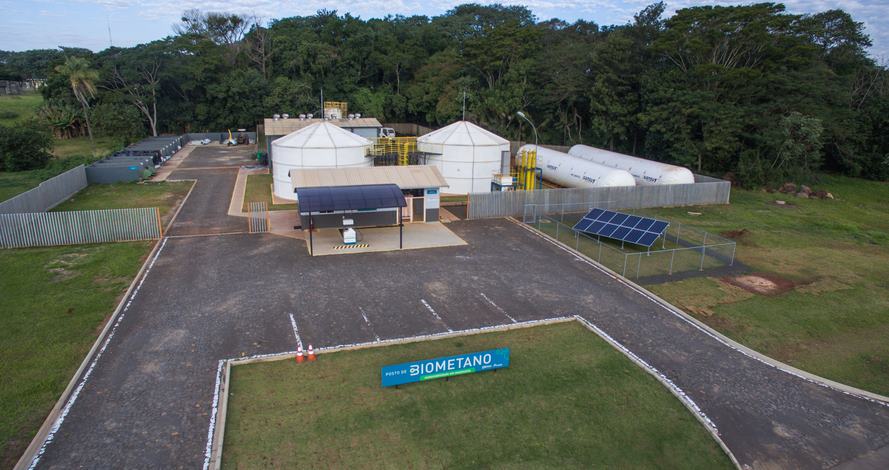
The City of Entre Rios do Oeste, in Paraná Supplies Farms and Municipal Buildings with Biogas Produced from 215 Tons of Swine Waste
Following the Plant That Turns Waste into Energy in Rio de Janeiro, another beautiful initiative for energy production from cleaner sources has caught attention, this time in the state of Paraná.
The city hall of Entre Rios do Oeste, in Paraná, is managing to supply electricity to 72 municipal administration buildings with electricity generated from 215 tons of swine waste from 18 farms in the region.
Utilizing its vocation for swine farming, the municipality in Paraná, which has a breeding of around 150,000 pigs, was already using biogas to power its farms, and now the producers are managing to sell the generated energy to the city hall.
The mini thermoelectric project belongs to the public authority, the Itaipu Technological Park (PTI), and the International Center for Renewable Energies (CIBiogás).
-
Government unlocks R$ 554 million for a highway that has been requested for decades and accelerates the duplication of BR.
-
Without bricks, without cement, and without endless construction: the cardboard house that is assembled in modules and can be moved.

-
Billions of barrels on the equatorial margin could lead Amapá to double its oil production in Brazil — the state aims to enter the route of companies in the Campos Basin, attract investments, and boost jobs and businesses in the oil and gas sector.

-
Without bricks, without cement, and without endless construction: the cardboard house that is assembled in modules and can be moved.

The initiative, besides reducing environmental pollution caused by animal waste, has become a source of income for farmers in the region.
The waste is treated in biodigesters, where the material is decomposed by bacteria, generating biomethane, which is transported via pipelines to the energy generation site; the combustion of biogas activates a generator and produces electricity.
The Mini Thermoelectric Plant
The mini thermoelectric plant (MCT) of Entre Rios do Oeste has a generating capacity of 480 kW, and the energy is sold to the Paraná Energy Company (Copel), which financed the project and deducts the total produced from the municipality’s electricity bills.
Producers’ revenue is estimated between R$ 900 and R$ 5,000, depending on the amount of biogas generated by each, and the payer is the city hall.
The procedure is regulated by Aneel, using the model of micro and mini distributed generation, in which the consumer can produce their own energy, similar to the use of solar panels and deduct it from their energy bill.
In the case of the city in Paraná, producers have meters that register how much biogas each one has produced, thus accounting for how much each is owed.
The project, which started in 2016, is affectionately called “Country Pre-salt,” and R$ 17 million was invested in the construction of 22 km of pipelines and the plant, while the costs for installing the biodigesters were borne by the rural producers.
As the western region of the state has great potential for pig breeding, poultry, and sugarcane cultivation, it is expected to expand the project to other raw materials and to other regions of the state.
Read Also! 27 Wind Turbines Will Be Supplied by Siemens Gamesa in Bahia!




Seja o primeiro a reagir!