





 Portuguese
  English
  Spanish
  4 min of reading
  0 comments


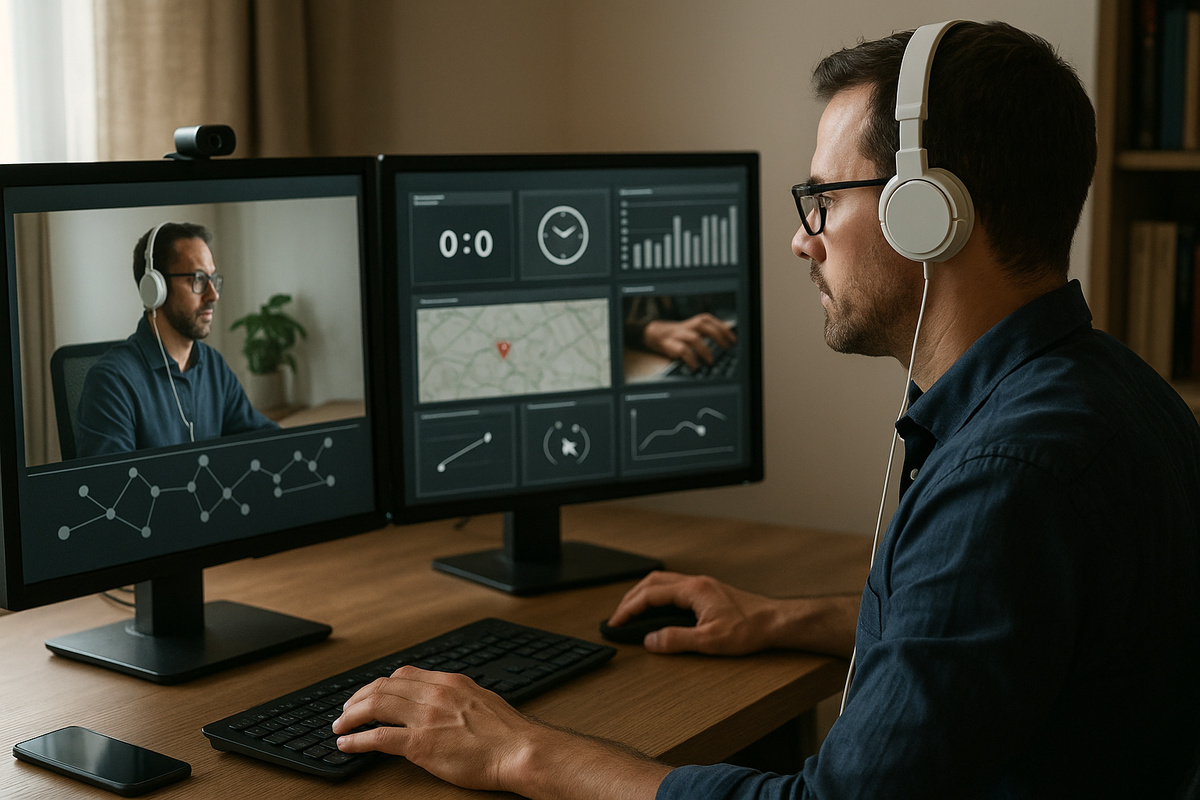
More Than A Thousand Dismissals Reveal Digital Surveillance Tools And Rekindle Debate On Legal Limits And Privacy In Brazil
The Itaú Unibanco announced on September 8, 2025, the dismissal of about a thousand employees, many working from home. The move rekindled the discussion on privacy in remote work and exposed the use of digital monitoring technologies.
According to the bank, the performance analysis lasted four months. During this period, managers identified employees with only 20% of daily digital activity. Additionally, some of these professionals requested overtime, which increased the controversy.
Monitoring Systems Reveal Workers’ Routines
Companies in various sectors have already adopted global tools to control connection time to the server. These solutions also map typing and mouse movements, as well as track installed applications and record the location of corporate devices.
-
Government enacts new law: paternity leave increases from 5 to 20 days with gradual increases until 2029, and Social Security pays the paternity salary; companies no longer bear the absence cost, estimated at R$ 5.4 billion.

-
End of the 1-hour lunch break in the CLT? Current labor law maintains the break, allows for negotiated reductions, and defines rules for working hours and home office in Brazil.

-
Employee Fired After Accumulating 114 Days of Medical Leave in One Year, Labor Court Upholds Company’s Decision

-
Employee Fired While Treating Depression Wins in Court and Vale Is Required to Rehire Him Following Decision Based on the CLT and INSS Benefits


Furthermore, some software can capture screens, audio, and video in real-time. They also detect participation in video calls and messages sent and received in corporate channels.
Lawyer Marília Minicucci, a specialist in digital law, explained that these practices only find legal support when they comply with the General Data Protection Law (LGPD). Therefore, the company must inform workers in advance about the data collection and its purpose.
Legal Controversies About Cameras and Privacy
Despite the legal provision, the use of cameras in homes generates the greatest conflicts. As highlighted by Marília Minicucci, the practice can violate the right to the inviolability of the home, protected by the Constitution.
She recommends that managers use background blurring features to preserve privacy. This way, they avoid turning the employee’s environment into a “corporate big brother”.
A recent case illustrates the controversy. The court accepted the camera requirement because the company dealt with sensitive customer data. However, authorization occurred only because the system used blurred the entire scenario around the worker.
Conflict Between Personal And Professional Life
Another challenge arises when employees use corporate equipment in a mixed manner. For the lawyer, the solution is straightforward: prohibit personal use of computers and cell phones provided by the company.
This measure avoids the so-called “gray area,” where the boundary between private and professional life disappears. Thus, the prohibition reduces risks and prevents privacy conflicts.
Itaú stated that the evaluation criteria were not limited to keyboard and mouse usage. Furthermore, the bank emphasized that it respected the LGPD and ensured that it did not capture screens, audio, or video during the process.
Union Takes Legal Action Against The Dismissals
On September 11, 2025, the Union of Bank Employees of São Paulo, Osasco and Region filed a lawsuit against Itaú. The entity questioned the transparency of the dismissal process and criticized the justifications presented.
According to the union, the decision affected at least 380 unionized workers. Among them were 85 who had received recent bonuses for good performance. Additionally, at least five neurodivergent employees in treatment lost their jobs.
During a plenary session, the dismissed employees expressed their indignation. They stated that they had never received clear information about the monitoring criteria used by the bank.
Productivity In Numbers
Itaú presented data to justify the terminations. In an area with 316 analysts, the average digital activity reached 72% over the four months.
On the other hand, the dismissed employees recorded between 27% and 37% activity. Therefore, according to the institution, these figures demonstrated low productivity and supported the cuts.
Nevertheless, the case provoked social and legal repercussions. Moreover, it opened a discussion about the limits between productivity management, privacy, and worker dignity.
What Is At Stake For The Future Of Remote Work
The episode highlighted the need to define clear limits for digital monitoring. Experts believe that the trend is towards increased practice, as companies want to maintain efficiency in hybrid or remote regimes.
However, without additional regulations, the risks of excesses and legal disputes increase. Therefore, legal scholars argue that only transparent governance, based on clear communication and respect for privacy, will prevent new similar conflicts.
Now, Brazilian courts will analyze not only the legality of the dismissals but also the corporate monitoring model that should prevail in the country.
And you, do you believe that digital monitoring is valid to maintain productivity in home office, or do you think it directly threatens workers’ privacy?









Seja o primeiro a reagir!