





 Portuguese
  English
  Spanish
  7 min of reading
  0 comments


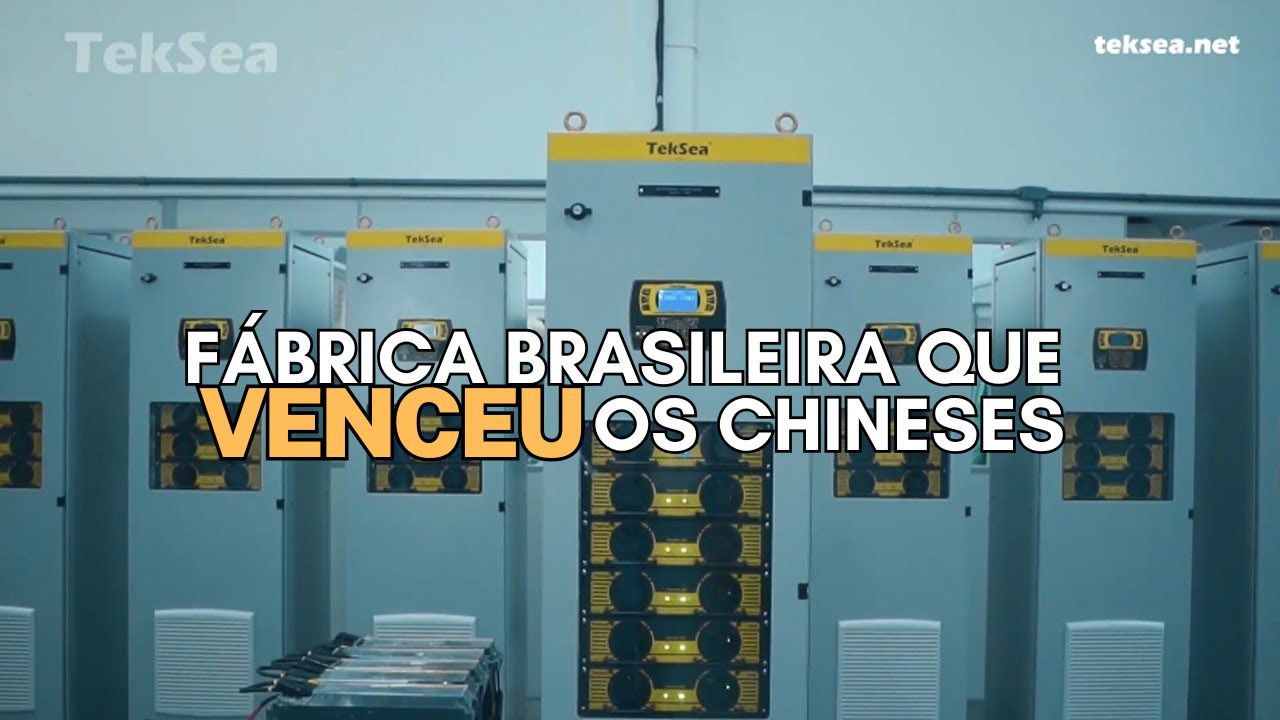
Brazilian Rectifier Company Reveals How It Beat Chinese Companies By Transforming A Rectifier Factory Into A Rare Case Of National Industry Growing With Own Technology And Custom Electric Equipment.
Is it still worth manufacturing electric equipment in Brazil, or is it just stubbornness? In Blumenau, a brazilian rectifier company reveals how it beat chinese companies by growing from 32 to about 300 employees, maintaining local production, and competing with global giants in one of the most demanding markets in the country, the energy sector.
Behind the numbers lies a story of national industry that decided to tackle the Brazilian cost, high logistics, and Chinese competition by investing in proprietary engineering, aggressive after-sales, and fully customized solutions. Instead of merely reselling imported products, the company transformed its rectifier factory into a development center for high-criticality electric equipment, approved by major utilities and ready for export.
Inside A Rectifier Factory That Started Small And Became A Reference
The scene takes place in Blumenau, inside one of the largest rectifier factories in Brazil. In 2022, the structure had just 32 employees.
-
Electrolux surprises, closes colossal factory and lays off 400 people in a mass dismissal that will have a direct effect later this year, following a cost review, with an impact of R$ 272.5 million and R$ 109 million in cash in Chile.
-
The Lula government is pursuing re-election and is therefore preparing a package with discounts of up to 80% on debts, subsidies for diesel, gas for 15 million, and energy, after reaching 51% disapproval six months before the election.

-
The chamber approves a project that transforms plots of up to 2,000 square meters into official rural properties, allowing thousands of small producers who were invisible to the government to now access credit, tax exemptions, and technical assistance.

-
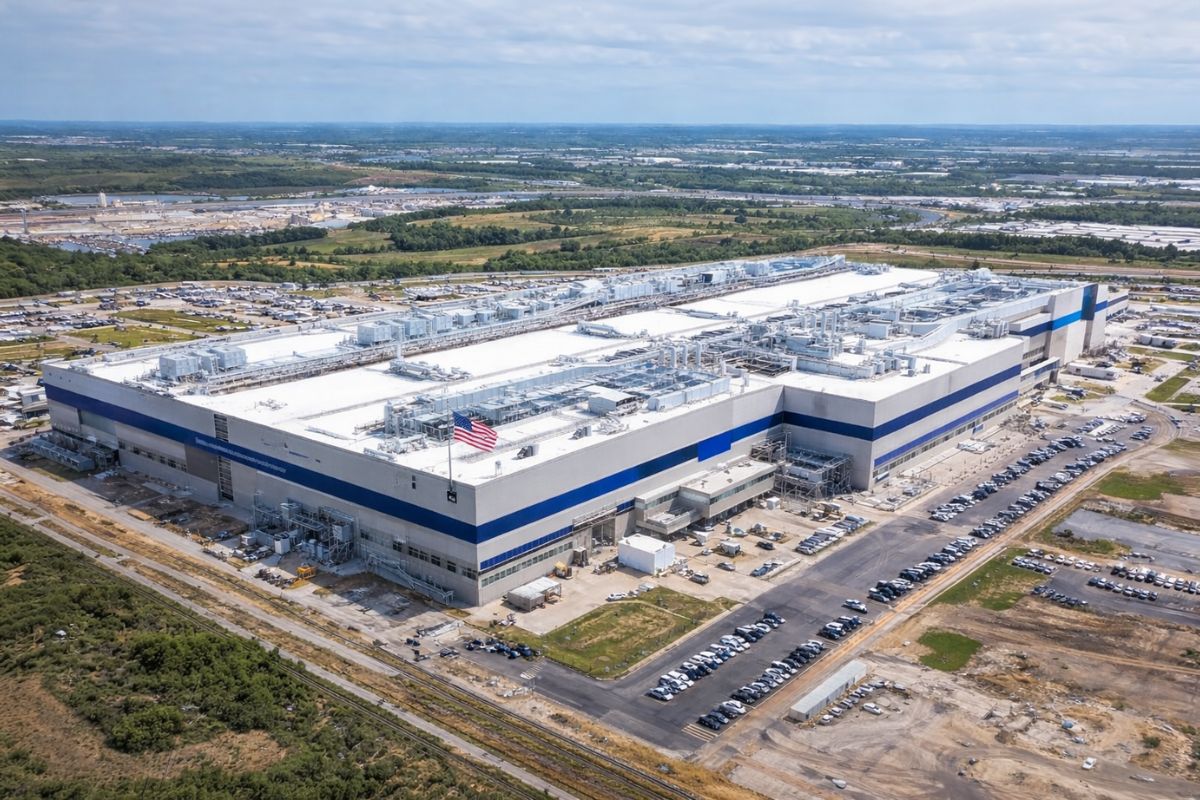
Factory 52, in the USA, cost over $5 billion, covers 270,000 square meters, and manufactures cutting-edge chips: it was named Project of the Year by the world’s largest engineering magazine, marking the global race for semiconductors.
A few years later, the same plant houses about 300 employees, including assembly, engineering, R&D, metallurgy, and sales, supporting an annual revenue of around R$ 50 million and an average ticket between R$ 250,000 and R$ 300,000 per order.
It is not just a production line. The brazilian rectifier company reveals how it beat chinese companies by selling, above all, trust in critical electric equipment.
Each panel can be different in size, color, options, and specifications, because the Brazilian energy market does not operate with a single standard.
What holds back growth is not demand, but the ability to form teams, deliver quality, and maintain pace in a continental country.
A Market Without Standards Where Imports Do Not Fit
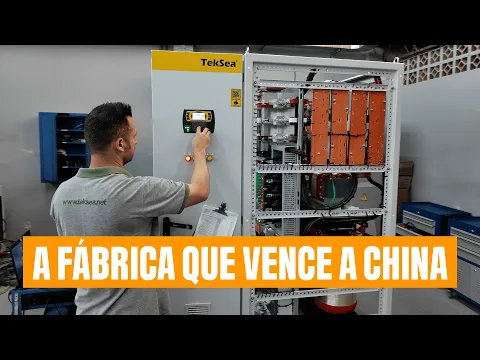

The first point that explains why this brazilian rectifier company reveals how it beat chinese companies lies in the market it operates in.
In Brazil, there is no standard rectifier that serves all utilities or every substation. A company like Copel already operates with lithium batteries and advanced specifications, while other distributors still use outdated designs with outdated electronics.
This means that it’s not enough to bring ready-made German or Chinese electric equipment and put it on the shelf. Each utility has its own base project model, its drawings, and its protection, supervision, and communication requirements.
The solution needs to be customized customer by customer, which creates a high barrier to entry for those outside the country and also for adventurers without structure.
It is in this scenario that the brazilian rectifier company reveals how it beat chinese companies: by understanding that the business is not about selling metal boxes, but rather designing tailored solutions for a complex and regulated market.
Proprietary Technology And Partnerships With Universities: The Brain Of The Electric Equipment
At the heart of each system is a large electronic board, the “brain” of the electric equipment. There is no foreign catalog: all power electronics, firmware, and automation are developed in-house, with a team made up of masters and PhDs in electronics, control, and embedded systems.
Today, the rectifier factory has about 20 designers dedicated to mechanics and panels, as well as approximately 15 professionals in research and development, focused on algorithms, hardware, and firmware.
Partnerships with federal universities help turn master’s and doctoral thesis, which often did not start as a product, into high-value commercializable solutions.
This is how the brazilian rectifier company reveals how it beat chinese companies: instead of importing intelligence, it uses the scientific knowledge of the country to create proprietary technology, file patents, and dominate the project from start to finish.
This allows rapid evolution, adjusting solutions for the Brazilian reality, while also preparing products for external markets, such as Uruguay, Paraguay, and Argentina.
Rigorous Homologation, 24-Hour After-Sales, And Barriers To Entry In Favor
In the energy sector, national industry can only consolidate if it passes through a severe technical filter. To homologate a new electric equipment in a large utility, the company needs to invest heavily in prototypes, testing, and monitoring.
In many cases, it takes two years of continuous operation without significant failures for the client to approve the model.
During this period, the brazilian rectifier company reveals how it beat chinese companies by showcasing after-sales and support structure that goes beyond mere talk.
There is a 24-hour hotline with rotating technicians, stock of replacement boards for immediate substitution, and a clear guideline from the management: solve the customer’s problem in the field first and discuss the root cause later, when calm.
This posture drastically reduces the perceived risk for the electric system operator, who cannot afford to have a substation halted waiting for a part to arrive from the other side of the world. At the same time, the rigorous homologation becomes a barrier to entry.
Those without processes, laboratories, engineering, and financial stamina to endure this journey simply do not enter the game.
This is where the brazilian rectifier company reveals how it beat chinese companies and even large multinationals, which sometimes buy rectifier manufacturers and, a few years later, give up the business, leaving customers without parts replacement and technical support.
Labor, Cost Brazil, And Logistics: The Villains Of Producing Here
If on one hand the market is rich and in need of modernization, on the other hand, the national industry faces well-known bottlenecks. The first of these is labor. In a region surrounded by major multinationals like WEG, Hitachi, and Schneider, qualified professionals can choose where they want to work.
Growing from 32 to 300 people in a short time requires constant recruitment, well-defined career paths, and a lot of internal discipline.
The second villain is the cost of Brazil, which has already become part of daily life. Complex taxes, bureaucracy, and high financial burdens increase the final price, but since all local competitors play by the same rules, the differential becomes management efficiency and quality of electric equipment, not just price.
Finally, logistics weighs heavily. In a continental country, sending a complete panel from the South to the Amazon could mean shipment costs approaching or even exceeding the product’s value. At such times, the brazilian rectifier company reveals how it beat chinese companies by betting on relationships and trust.
If the customer believes that the system will operate safely for decades, they accept the total investment. For a critical substation or industrial plant, the pain is not the cost of freight, but the possibility of losing power.
Chinese Competition, Technology, And Trust: Where Brazil Wins The Game
In pure hardware price, Chinese competition is hard to face. The math seems simple: huge volume, global supply chain, subsidies, and scale manufacturing drive down unit costs.
However, the energy, telecom, and heavy industry markets do not just buy the cheapest, they buy availability and operational safety.
It is at this point that the brazilian rectifier company reveals how it beat chinese companies. The focus is not on being the cheapest, but on delivering technology compatible with European and American standards, coupled with close, fast after-sales service in Portuguese, with engineering that speaks the same language as the customer’s operational teams.
When the rectifier is part of a critical path, any downtime costs much more than the price difference between a national and an imported product.
Moreover, by keeping the rectifier factory on Brazilian territory, the company creates and preserves local competencies, pays salaries to 300 families, develops suppliers, and contributes so that the national industry is not limited to assembling parts from abroad, but genuinely dominates projects, firmware, integration, and service.
From 32 To 300 Employees: What Lies Ahead For This National Industry
The plan for the coming years is not to repeat the initial explosive growth, but to grow consistently, at least above inflation, around 20% per year to maintain competitiveness and investment capacity.
The domestic market still has a lot of outdated electric equipment, old rectifiers, unmonitored systems, and plants that need to be repowered.
At the same time, the brazilian rectifier company reveals how it beat chinese companies by using Brazil as a laboratory and showcase to reach other countries. Uruguay, Paraguay, and Argentina are already on the map, and the horizon includes larger markets, like the United States, in the midst of expanding data centers and energy infrastructure to support artificial intelligence.
If the thesis proves correct, this case shows that it is still worth producing in Brazil when there is proprietary technology, a deep understanding of the customer, and the willingness to face Chinese competition not just with price but with trust, engineering, and local presence.
And you, after learning this story, what do you think: is it still worth investing in the national electric equipment industry or would it be better to let imports dominate the market once and for all?






-

Uma pessoa reagiu a isso.