





 Portuguese
  English
  Spanish
  5 min of reading
  12 comments


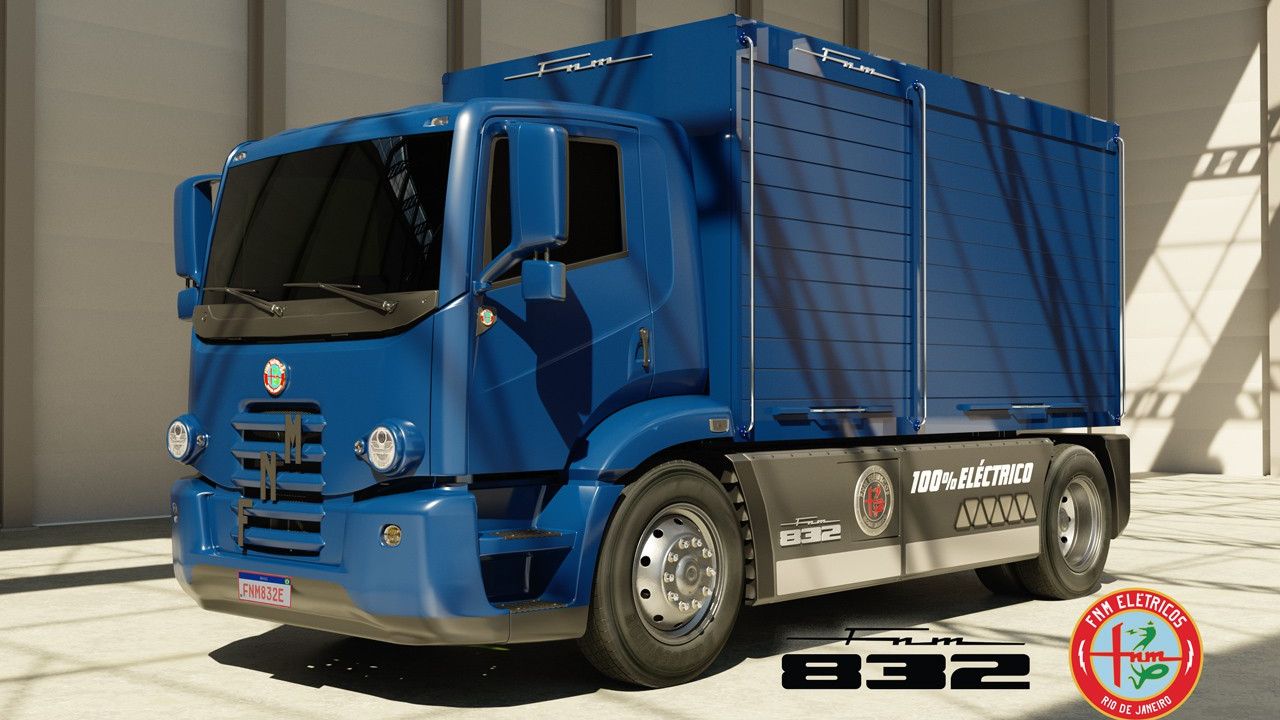


The Brand That Was Once Synonymous With Raw Power and Resilience Now Wants to Compete for Attention With Industry Giants by Betting on Electric Mobility, Operational Efficiency, and an Industrial Rebirth With National DNA.
After more than 40 years off the asphalt, the legendary FNM is reborn in Brazil with an unexpected proposal: to unite tradition and technology in an electric truck, silent and zero-emission, aiming for a new era of heavy transportation.
The legendary FNM is reborn in Brazil in a movement that touches on both emotional memory and market strategy at the same time.
The truck that dominated the roads when the country was still mud and dust returns as a symbol of the future, with batteries in place of diesel and the promise of a silent revolution.
-
While Brazil wants to end the 6×1 work shift, the president of Argentina wants 12 hours for his workers, increasing political tension in the country.

-
The village where two rivers run side by side without mixing in Santarém and Alter do Chão reveals some of the most beautiful freshwater beaches on the planet.
-
Mars is accelerating, and scientists have discovered that the planet’s day is getting shorter, revealing surprising signs of internal activity.

-
Artemis 2 is set to launch on April 1 at 7:24 PM to orbit the Moon with four astronauts, but a class X solar flare and coronal mass ejection could interfere with communications and threaten the launch.

Beyond nostalgia, the return raises a practical question: Is there space for a historic brand to challenge traditional transportation with electric technology designed for the Brazilian reality?
When the FNM Became Fenemê and Gained Soul on the Roads
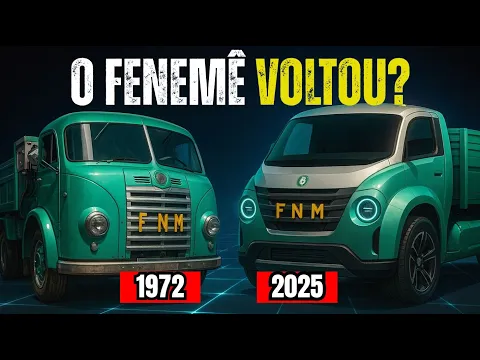

The history of the FNM begins in 1942, in Xerém, Rio de Janeiro, created to produce airplane engines in a Brazil pressured by war and dependence on imports.
With the end of the conflict, the factory had to reinvent itself and went through attempts in different fronts until reaching the turning point: producing trucks.
The first partnership was with the Italian Isota Frasquini, which resulted in the D7300 model, cited as the first truck actually manufactured on Brazilian soil.
Then came the partnership with Alfa Romeo, under Italian license, with models like the D9500. It was then that the name FNM gained a nickname, became Fenemê, and transformed into a symbol of pride and resilience.
The Golden Age and the Truck That Helped Build Brasília
In 1958, the FNM D11000 emerged, described as a true tank on wheels, with a six-cylinder diesel engine and a capacity of 11 tons.
The model became a reference for robustness, facing muddy terrains, mountains, and long journeys, consolidating FNM as synonymous with durability.
The most epic chapter comes with its participation in the construction of Brasília. The D11000 appears as a central piece in transporting concrete, iron, sand, and materials that built the capital.
The legend grows when the machine becomes part of a country’s project, and the Fenemê starts to represent more than just a brand.
The Decline, the Loss of Space, and the Silence on the Assembly Lines
With the advance of foreign brands and intensified competition, the isolated reign turns into a market war. In 1968, the FNM was privatized, and full control passed to Alfa Romeo, but production costs rose and competition became difficult.
Later, Alfa Romeo faced a crisis and sold its commercial vehicle division, and the FNM began operating under the umbrella of Fiat Industrial Vehicles. Models such as FNM 180 and FNM 210 emerged, with more modern cabins, but lacking the same soul.
Between 1977 and 1979, the last trucks were quietly produced, and the name FNM disappeared from the roads. What remains is memory, collectors, and the feeling that an era ended without a farewell.
Legendary FNM Is Reborn in Brazil as National Mobility Factory
Decades later, the return begins to take shape: in 2008, a Brazilian company reacquired the rights to the FNM brand. The idea is not just to revive the past but to reinvent it.
The new FNM is now called the National Mobility Factory, with a clear vision: to silence the roads with electric energy.
Here, the legendary FNM is reborn in Brazil with a clash between past and future. Instead of the roar of diesel, the concept of an electric truck enters, focusing on sustainability and embedded technology.
The foundation also cites a partnership with the gaucho manufacturer Agrali, which initiates the development of prototypes and turns the project into something concrete.
The FNM83 and FNM832 Models and the Promise of the Silent Revolution
The base text presents two electric models, FNM83 and FNM832, as the new silent giants. The FNM83 appears as the most robust, capable of carrying up to 18 tons, with an electric motor of 350 horsepower and torque above 2200 Nm. The range is cited between 120 and 160 km, aimed at urban and regional transport.
Meanwhile, the FNM832 is described as lighter, designed for urban deliveries and logistical centers. Both feature lithium batteries, real-time telematics, and fast charging in about 3 hours. The proposal is clear: zero emissions, almost no noise, and efficiency in daily operations.
Another highlighted point is operational cost: the new FNM promises up to 70% reduction in maintenance costs compared to diesel trucks, with fewer items such as oil changes, exhausts, and clutches.
In this package, the legendary FNM is reborn in Brazil not as a museum piece, but as a real attempt to reposition the brand at the center of the debate about heavy transportation.
The Challenges of the Electric Truck in Brazil and the Bridge Between Past and Future
Even with the shine of innovation, the base describes obstacles: high initial cost, lack of charging infrastructure, and cultural resistance in a country accustomed to diesel.
This is compounded by Brazilian logistics, with long distances and high electricity costs in some regions, making electrification a gradual process.
In this scenario, a strategic letter appears: the R model, cited as a conversion of diesel trucks to electric, functioning as a bridge between what already exists in the fleet and the future the brand wants to accelerate. It’s the bet of those who know that revolutions in transportation rarely happen all at once.
Tradition, Technology, and a Real-Time Market Test
The return of the brand carries a powerful symbolism, but the verdict depends on the real world: fleet owners, infrastructure, total cost of operation, and trust in technical support. Still, the narrative is strong because it reconnects the idea of pioneering spirit to the present.
And that’s why the legendary FNM is reborn in Brazil with a weight that goes beyond a launch. It tries to prove that tradition and innovation can share the same asphalt, and that an icon can return without repeating the past, but without losing identity.
And now the quick question: do you believe that the legendary FNM is reborn in Brazil to truly become a protagonist in electric transportation, or will it remain a beautiful but niche symbol?







Essa empresa deveria se unir a outras de automóveis elétricos e conversar com quem vende combustíveis e colocar pontos de carregamento junto aos postos.
Tem de ser híbrido, tipo ser elétrico e um motor de pequeno porte para manter a carga das baterias
Alfa RomeO(e não Romeu). AgralE(e não Agrali).