





 Portuguese
  English
  Spanish
  4 min of reading
  0 comments


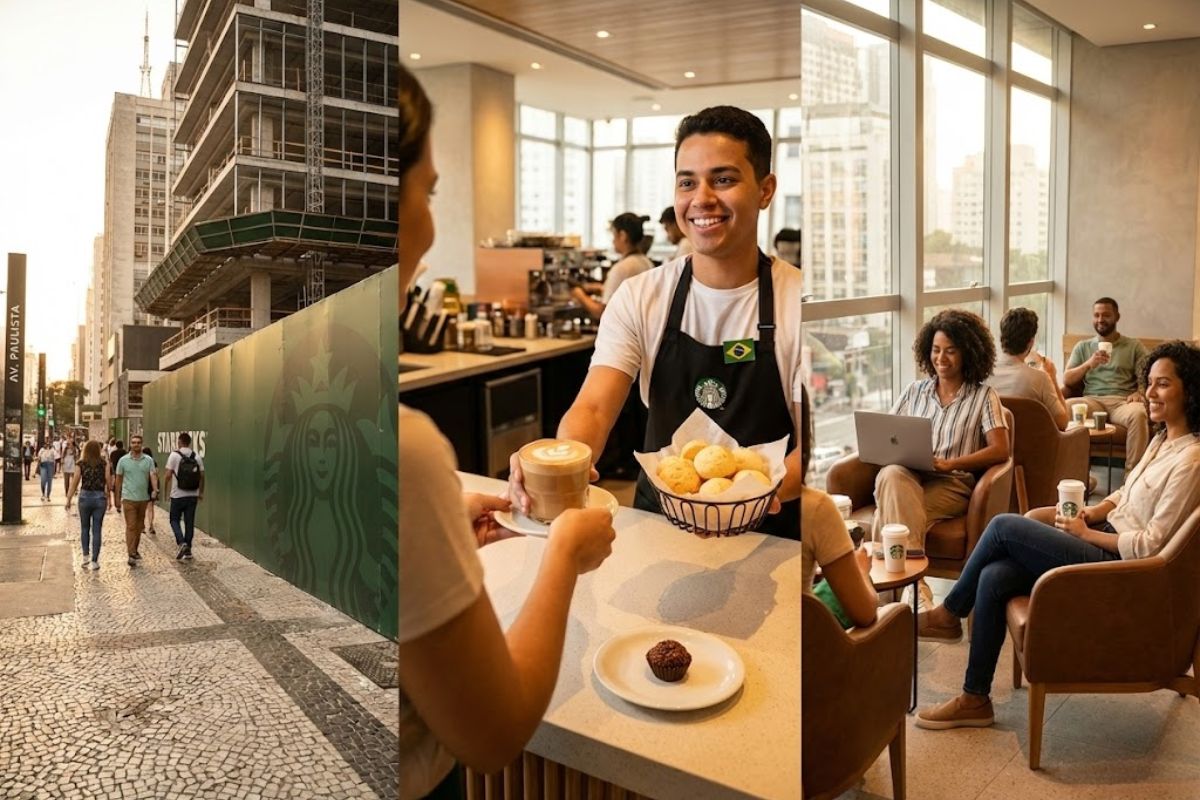
After Closing About 50 Operations, Starbucks Prepares 27% Expansion of the 112 Current Stores, with 30 New Coffee Shops in 2026, 80% in São Paulo, Bets on Pingado, Média, Cafezinho, Changes the Whole Menu and Strengthens Logistics, Technology, and Barista Training to Be More Present in the Routine.
After closing about 50 stores in different markets, including operations in Argentina, Starbucks has entered a new phase of expansion in Brazil. The plan, which began in 2025, is gaining momentum in 2026, the year in which the chain expects to open 30 new coffee shops in Brazilian territory, repositioning the brand in strategic capitals.
At the same time, the company is using recent numbers to support its bets. In November, the café chain achieved 90% NPS, a customer satisfaction score considered exceptional for retail, and designed a project that combines a more Brazilian menu, enhancement of the in-store experience, and greater presence in the consumer’s daily life throughout 2026.
27% Expansion Targets Large Brazilian Capitals
The company’s plan is to expand Starbucks operations in Brazil by 27% compared to the 112 stores currently in operation.
-
Oil surged to $115 a barrel due to the war in the Middle East, and diesel in Brazil has already risen to R$ 7.45 per liter, while the United States…

-
Brazilian city bets on the business environment to generate jobs and attract investments in the energy sector — secretary reveals strategy at Macaé Energy 2026.

-
50 viaducts, 4 tunnels, 28 bridges, and 40 kilometers of bike paths: BR-262 in Espírito Santo will receive 8.6 billion reais for the largest engineering project in the state’s history, inspired by the Immigrant Highway in São Paulo.

-
Brazil produces too much clean energy and doesn’t know what to do with it: over 20% of solar and wind capacity was wasted in 2025 while investors flee and 509 renewable generation projects were abandoned in the last year.


There will be 30 new units planned for 2026, with 80% of the openings concentrated in São Paulo, the brand’s main market in the country.
The remaining new coffee shops will be distributed among Rio de Janeiro, Belo Horizonte, Salvador, and Porto Alegre, reinforcing the presence in major capitals and high-traffic urban corridors.
The strategy includes more compact and convenience-oriented formats to capture quick consumption occasions, such as take-out coffee, snacks, and meals at alternative times.
According to the president of the operation, Mariane Wiederkehr, the focus of the new agreement is on logistics and technology, pillars that help reduce cost pressures on the brand’s main ingredient and ensure service standardization in the new units.
A More Brazilian Menu with Pingado, Média, and Complete Meals
Together with the physical expansion, Starbucks is redesigning the menu to bring the experience closer to the Brazilian palate.
The chain is launching for the first time a platform dedicated to national coffee, with classic options like pingado, média, and cafezinho, incorporating traditional bakery rituals into the environment of an international coffee shop.
Between January and February 2026, the company promises a profound change: 100% of the food menu will be restructured, with recipes adapted to local tastes.
The idea is to go beyond classic accompaniments and offer meals that allow customers to use Starbucks not only for quick coffee but also for light lunches, afternoon snacks, and options for those who work or study inside the store.
The chain also aims to better integrate beverages and food, creating combinations tailored for the Brazilian consumer, who often combines coffee, bread, sweets, and quick dishes at different times of the day.
High Satisfaction, Investment in Baristas, and Back-End Technology
The result of 90% NPS in November is used internally as proof that the public approves of Starbucks’ current model in Brazil.
To maintain this level amid a 27% growth of the chain, the company emphasizes two points: barista training and investment in back-end processes.
The company states that training more qualified baristas is a central part of the strategy, as interaction at the counter and beverage personalization are important elements of the brand.
At the same time, Starbucks is directing resources toward logistics and technology, seeking more efficient supply chains, systems that reduce waste, and tools that help better control inventory and costs.
These moves, according to leadership, are essential to mitigate pressure on the cost of coffee and other ingredients, without compromising quality in the cup and without deterring customers due to frequent price adjustments.
Brazil Still Behind Mexico, but at the Center of Plans
Even with the announced expansion, Starbucks’ presence in Brazil is still not the largest in the region. Mexico remains the leading market in Latin America, with around 900 stores in operation, far exceeding the just over one hundred Brazilian units.
The company’s management, however, makes it clear that the goal is to give the Brazilian market more prominence, albeit gradually.
The plan initiated in 2025 is to grow with a balance between speed and operational consistency, avoiding opening stores at an accelerated pace without guarantees of service standards and profitability.
Another central point is the business model adopted here. All Starbucks stores in Brazil are company-owned, directly operated by the company. Globally, there is licensing, but no traditional franchising in the country.
According to Mariane Wiederkehr, this allows for greater operational control, more rigor in quality, and direct care in customer relations at each unit.
The stated goal is to make the brand more convenient, present in routes, neighborhoods, and commercial centers used daily by Brazilians, without losing the global coffee shop identity that personalizes beverages and creates welcoming environments.
For you, does this new phase of Starbucks, with a more Brazilian menu and focus on São Paulo, really align with the way Brazilians like to drink coffee in their daily lives?







-

Uma pessoa reagiu a isso.