





 Portuguese
  English
  Spanish
  3 min of reading
  0 comments


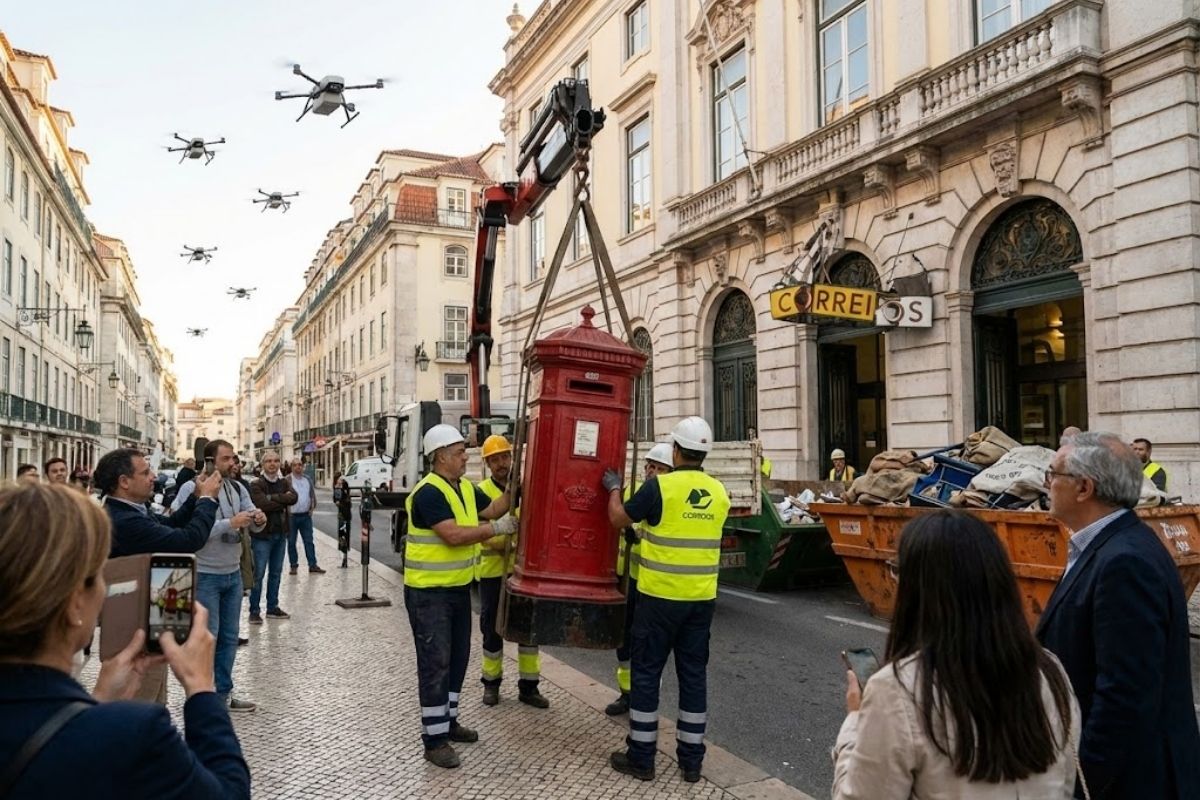
With 90% Fewer Letters Since the Early 2000s, Denmark Has Officially Decided That the Country Will Disconnect Its Postal Service for Paper Correspondence: In December 2025, the State-Owned PostNord Made the Last Delivery, Began Removing 1,500 Mailboxes, Laid Off 1,500 Employees, and Shifted Its Focus to Packages.
In Denmark, the country disconnected traditional mail for letters and closed a historic chapter: in December 2025, PostNord, the state postal service, made the last delivery of paper correspondence in Danish territory, ending more than 400 years of service.
The decision came with direct effects on the street and at work: 1,500 mailboxes began to be removed and sold for charity, and about 1,500 employees, nearly one-third of the workforce, were laid off, while the focus of the service is now on packages.
What, In Practice, Was Closed in Denmark
What ended was not “the mail” as a general idea, but the sending of letters through the traditional system.
-
Oil surged to $115 a barrel due to the war in the Middle East, and diesel in Brazil has already risen to R$ 7.45 per liter, while the United States…

-
Brazilian city bets on the business environment to generate jobs and attract investments in the energy sector — secretary reveals strategy at Macaé Energy 2026.

-
50 viaducts, 4 tunnels, 28 bridges, and 40 kilometers of bike paths: BR-262 in Espírito Santo will receive 8.6 billion reais for the largest engineering project in the state’s history, inspired by the Immigrant Highway in São Paulo.

-
Brazil produces too much clean energy and doesn’t know what to do with it: over 20% of solar and wind capacity was wasted in 2025 while investors flee and 509 renewable generation projects were abandoned in the last year.


In the described Danish model, the country disconnected the postal service for paper correspondence and shifted operations to the segment that grew with online shopping: package delivery.
This cut is symbolic because it mixes two layers at once: the cultural, of a service that has spanned centuries, and the operational, of a structure that depended on high volume to sustain itself.
The Economic Trigger: 90% Fewer Letters
The data that explains the shift is the collapse in the flow of correspondence. Since the early 2000s, the volume has dropped 90%, from 1.5 billion letters to less than 200 million.
As electronic communication has replaced paper, the letter service has lost scale and become unfeasible in its old format.
In the logic of the project, the country disconnected the postal service because the physical network for letters requires frequent collection, sorting, and distribution even when demand contracts, which pressures costs and schedules.
Street Mailboxes and Layoffs: What Changes in Daily Life
The gradual removal of 1,500 mailboxes serves as “material proof” of the end of an era: fewer posting points, fewer dedicated routes, and less need for a network designed for letters.
In the job market, the impact is as significant as the cut: 1,500 layoffs at PostNord, approximately one-third of the workforce.
This is a typical reconfiguration of technological transition, but with an important difference: here, the adjustment is visible in the urban landscape and the routine of smaller communities.
Those Who Still Depend on Paper Are Left in the Middle of the Road
Even being one of the most digitalized countries, with many government services online, Denmark still has a significant group that relies on paper correspondence: about 271,000 Danes, especially the elderly.
For this audience, the change is not abstract.
The end of the traditional model pushes demand toward private services, and the shift tends to create a sense of loss precisely because it involves not just price or convenience, but access and habit.
Why This Became a Global Milestone
By declaring the end of letters in the state postal service, Denmark positions itself as an extreme case of a global trend: digitalization accelerating and public services adjusting their portfolio where there is volume.
The key point is that the country disconnected the postal service after the demand collapse left the traditional system without practical support, opening a debate about the limit between efficiency, inclusion, and historical memory.
For those in Denmark who still use letters, the most realistic move is to map private alternatives and, when possible, migrate recurring communications to digital channels, reducing dependence on paper in a scenario where the old network no longer exists.
In your opinion, did the country disconnect the postal service because it was inevitable, or should Denmark maintain a minimal letter service due to the 271,000 who still depend on paper?










-

-

-

5 pessoas reagiram a isso.