





 Portuguese
  English
  Spanish
  4 min of reading
  11 comments


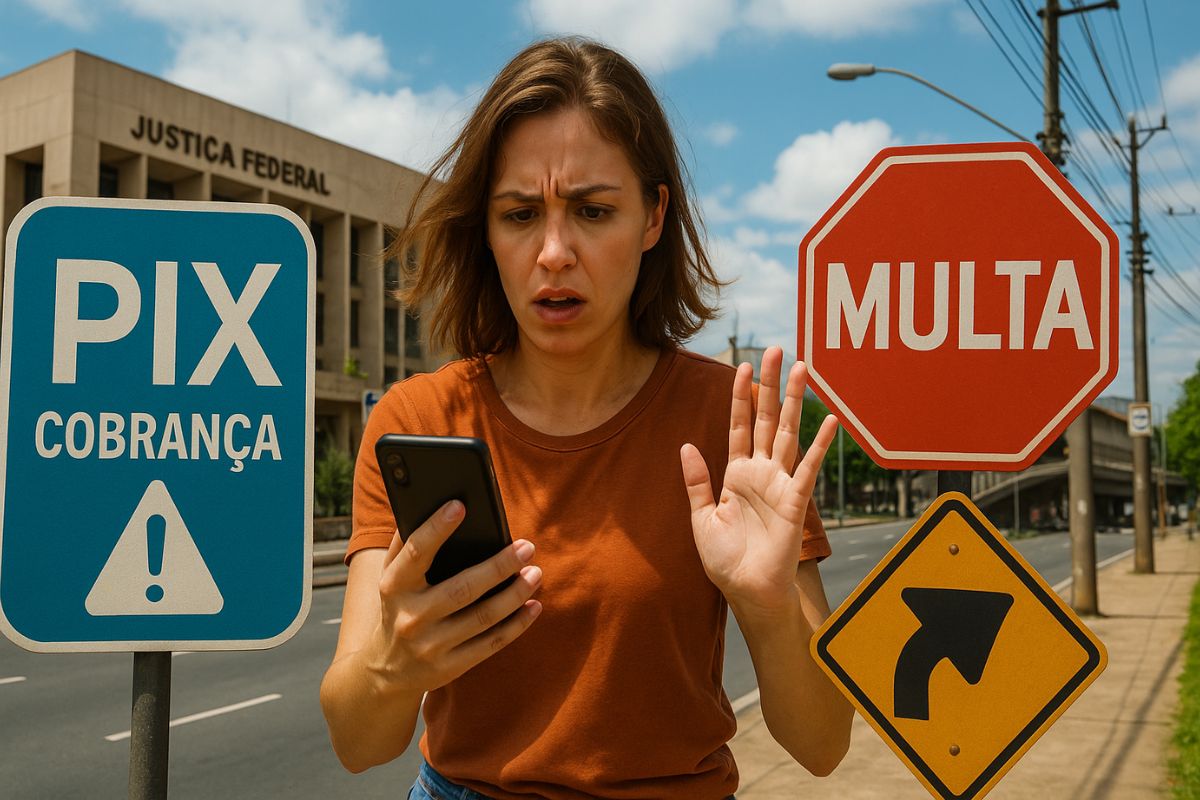


In São José do Rio Preto (SP), the woman spends Pix that was not hers, ignores refund requests, and is sentenced to pay almost triple the retained amount, in a decision that serves as a warning about the legal consequences of not returning wrong transfers.
A typographical error in a Pix key in São José do Rio Preto, in the interior of São Paulo, resulted in a criminal conviction for a 51-year-old woman. The case began when a man mistakenly transferred R$ 900 and, upon realizing the mistake, spent over a month trying to recover the money amicably. The recipient, however, used the amount and now faces harsh judicial consequences, in an episode that illustrates how a simple failure can escalate into a criminal process with financial and freedom-restraining implications.
The situation highlights the seriousness with which the law treats the appropriation of amounts received improperly.
After only returning part of the money and offering evasive excuses, such as claiming not to know how to use the app and later denying receipt, the woman was reported by the Public Prosecutor’s Office.
-
The U.S. Army surprises the world by presenting the UH-60MX Black Hawk helicopter capable of flying without pilots, controlled by a tablet, featuring the MATRIX system, smart sensors, and full autonomy in real combat and rescue missions.

-
Heineken’s factory in Brazil produces 300 million beer cans in just 4 months, reaches 1 million hectoliters, received R$ 2.5 billion, and is already projecting an annual capacity of 5 million with sustainable technology.

-
Inside an active volcano in Africa, residents use volcanic rocks to build houses in an impressive setting.

-
After 14 years of waiting, a rammed earth mansion built in 1702 in the North Zone of São Paulo will become a park with leisure facilities and green areas, with a million-dollar investment.

The final sentence not only determined the restitution of the remaining amount, but also imposed a significant fine, proving that refusing to return a mistakenly sent Pix can cost much more than the original amount.
Unlawful Appropriation: What the Law Says About the Wrong Pix
Many are unaware, but spending money received by mistake is not just an ethical issue; it is a crime under the Brazilian Penal Code.
The conduct of the woman from Rio Preto falls under Article 169, which addresses “appropriation of property received by error, fortuitous event or force of nature”.
The law is clear in establishing that anyone who appropriates a good that has come into their possession by accident, acting as if they were the owner, commits an unlawful act punishable by detention or fine.
The rationale behind the law is to prevent unjust enrichment and protect the principle of good faith in social and financial relations.
It is essential to differentiate this situation from other common crimes.
This is not theft, as there was no subtraction by the agent, nor is it fraud, as the victim was not deceived into handing over the amount.
The crime is configured the moment a person receives money mistakenly and, aware of this, decides not to return it, taking it for themselves.
In this case, the excuses of “not knowing how to use the app” and the subsequent confession to the police that she spent the money because she was unemployed were the elements that characterized the intent to appropriate what was not hers, making the action indefensible before the Justice.
The Sentence and the Financial and Legal Consequences
After the complaint was accepted, the Justice acted rigorously.
Judge Carolina Marchiori Bueno Cocenzo, responsible for the case, sentenced the defendant to a package of sanctions that far exceeded the R$ 500 she refused to return.
The first determination was the full restitution of the amount to the victim, with due monetary correction.
However, the main punishment came in the criminal sphere, showing the weight of the infraction.
The woman was sentenced to pay a fine of R$ 1,412, an amount corresponding to one minimum wage, which is intended for the National Penitentiary Fund, and not to the victim.
She was ordered to bear the costs of the process. Adding the restitution and the fine, the decision cost the defendant R$ 1,912 immediately, almost quadruple the amount she had appropriated.
The sentence also established an even more serious consequence: if the fine was not paid, the penalty could be converted into imprisonment in an open regime.
In practice, this means she would be subject to restrictions on her freedom, such as having to report periodically to the Justice and staying at home during the night, in addition to generating a permanent criminal record.
The story of the woman who spends Pix by mistake and ends up convicted serves as a striking lesson on responsibility and the legal implications of our financial actions.
The decision of the Justice in São José do Rio Preto reinforces that the appropriation of amounts, even if received by a simple error, has serious consequences, costly, and that can affect an individual’s freedom.
What would you do if you received a Pix by mistake in your account? Do you think the decision of the Justice in Rio Preto is fair and proportional to the act? Leave your opinion in the comments — we want to understand how people react to this situation in practice.







É crime se apropriar do que não lhe pertence, pior ainda, é se mostrar mau caráter e **** e aproveitador. Concordo plenamente com a justiça em condenar a pagar multa, custas e tudo mais que puder, e ainda acho que deveria ter pena de prisão em regime fechado. Já aconteceu comigo, devolvi ao banco assim que percebi, ninguém precisou me cobrar. Não é meu dinheiro, então devolvo, mesmo que seja centavos.
Então vamos lá,,,eu fui vítima de um golpe de estelionato onde depositei um valor de; r$4500 reais, na conta do estelionatário,via Pix,mó mesmo minuto ao perceber o golpe,fiz contato com a instituição (banco),que também é o mesmo banco do estelionatário,a resposta que tive é que eles teriam até 9 dias para estar investigando o caso,e eu ali pedindo a eles que fizesse o bloqueio da conta do **** pois o banco era o mesmo,e que eles tem o acesso,mais de nada resolveu,depois de 9 dias retornei o contato e a resposta que tive foi que a pessoa havia retirado o dinheiro da conta e a agência nada podia fazer.
A pergunta que faço é: para essa mulher teve justiça e para o meu caso que fiz contato com a agência e eles me negaram o extorno mesmo mostrando o boletim de ocorrência?
Deveria ter uma propaganda na redes sociais e na televisão sobre o assunto :
” Recebeu qualquer valor em sua conta bancária não importa Pix ou outro crédito caso não seja procurado devolver ,mas se procurado devolver o mais rápido possível ”
Eu devolvo pois não é meu e não justifica estar passando dificuldades financeira .