





 Portuguese
  English
  Spanish
 3 min of reading
  0 comments


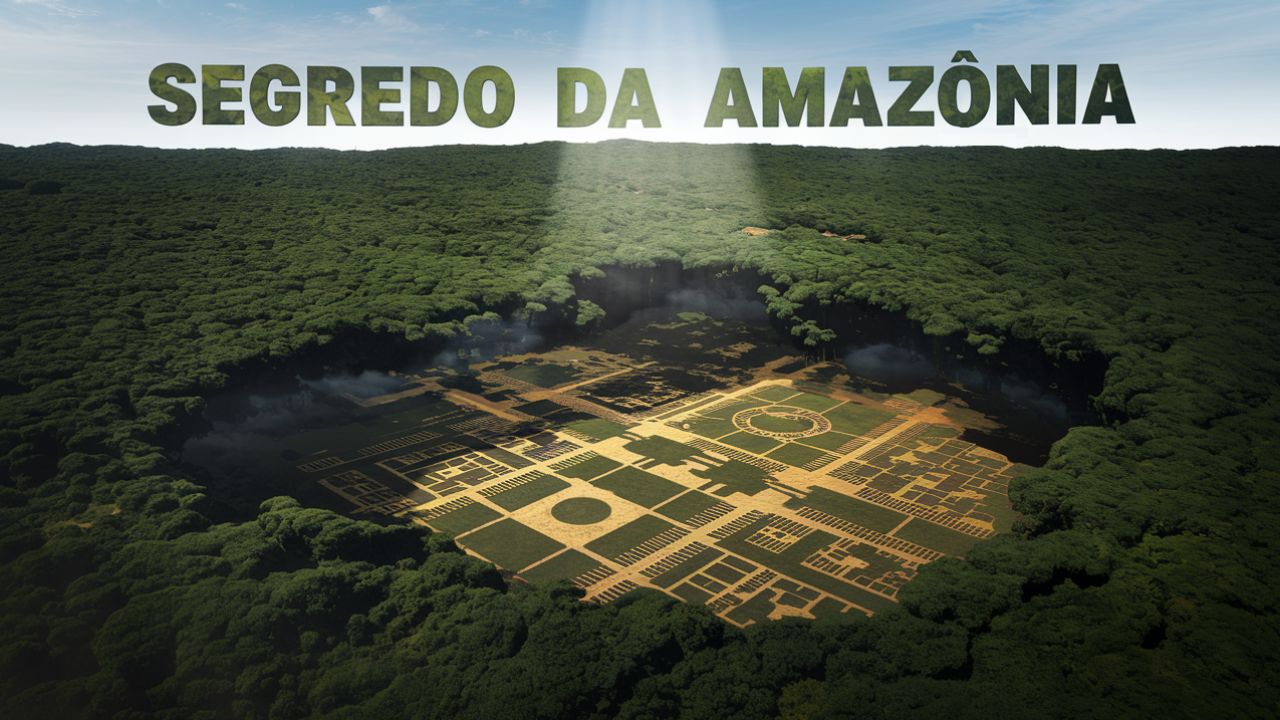
One of the Greatest Archaeological Discoveries in the Amazon Reveals Cities Over 2,500 Years Hidden Under Dense Forest. Scientists Used LiDAR Technology to Map Streets, Squares, and More Than 6,000 Platforms in the Upano Valley, Ecuador. This Revelation Challenges the Traditional View of the Forest as an Untouched Environment and Suggests That Complex Civilizations Flourished Where Least Expected!
The Amazon has always been considered a natural sanctuary, an unexplored green sea that hides millennia-old secrets. However, international researchers from the National Center for Scientific Research (CNRS) in France have made an impressive discovery that could change everything we knew about the ancient peoples of the region. Using LiDAR technology, which allows for mapping hidden structures under dense vegetation, scientists revealed a vast complex of cities dating back 2,500 years in the Upano Valley, Ecuador. The study was published in the renowned journal Science, shedding light on a surprising chapter of history.
The Lost Cities of the Amazon and Their Impressive Structure
What is impressive is not only the age of these Amazonian cities but also their architectural complexity. Who would have thought that such ancient civilizations had such sophisticated urbanization? Researchers found wide streets, straight roads, large squares, and thousands of monumental platforms.
The lead author of the study, Stéphen Rostain, highlighted that the settlements were not dispersed but organized in a planned manner. LiDAR revealed more than 6,000 platforms distributed over an area of 600 km², proving that these cities were true structured urban centers.
-
Something is happening around the Earth: Inside the huge explosion of fireballs in 2026

-
A hot air bubble coming from Argentina expands over Brazil, causing thermometers to exceed 38 degrees with a thermal sensation of 40 degrees in late March, affecting 6 states at once.

-
The radish leaf that almost everyone throws away has more polyphenols, flavonoids, and fiber than the consumed root, and a 2025 study showed that the leaf contains compounds that protect the intestine, combat inflammation, and may inhibit the growth of cancer cells.

-
A planet that seemed to defy the laws of physics has intrigued scientists for decades, until the James Webb revealed what is really affecting Saturn’s rotation.


The Kilamope and Upano Culture: The Engineers of the Forest
According to Tribuna de Minas, these cities did not arise by chance. They were built by the Kilamope and Upano peoples, who inhabited the region between 500 B.C. and 600 A.D. These ancient engineers of the forest transformed the landscape, creating elevated dwellings and structuring plazas that served as civic and ceremonial centers.
The evidence suggests that these peoples had an advanced form of social organization, using their plazas for rituals and political decision-making. The study showed that there was a network of communication and infrastructure connecting different urban centers, a detail that challenges the idea that the Amazon has always been an inhospitable and isolated region.
The Impact of This Discovery on Archaeology and History
The finding of these millennia-old cities revolutionizes the history of pre-Hispanic settlements. For a long time, it was believed that ancient Amazonian societies were composed only of small nomadic groups. Now, we know that these civilizations were urbanized and had sophisticated systems of land-use planning.
This is not the first time that evidence of urbanization in the Amazon has appeared. In Mato Grosso, archaeologists had already identified circular villages organized with central plazas and containment ditches, suggesting a connected network of settlements. This new discovery in Ecuador further reinforces the idea that the forest harbored complex societies technologically adapted to the environment.
The Future of Research and the Role of LiDAR in Amazon Archaeology
If today we can see these hidden cities, it is thanks to LiDAR technology. With its ability to penetrate the dense forest and reveal what is hidden beneath the soil, this tool promises to be the key to new discoveries.
The question now is: what else is hidden beneath the tree canopy? If we have already found entire cities, how many more are still waiting to be revealed? This discovery paves the way for a new era in Amazonian archaeology, challenging traditional narratives and showing that the history of the Amazon is much richer and more surprising than we ever imagined.






-

-

-

8 pessoas reagiram a isso.