





 Portuguese
  English
  Spanish
  5 min of reading
  0 comments



BP Reveals Oil Discovery in Pre-Salt, Sparking Criticism from FUP on Foreign Company Exploration and Highlighting Debates on National Control and Strategic Interests.
Recently, the discovery of oil in the pre-salt by BP in the Santos Basin rekindled debates about the role of foreign companies in the exploration of Brazil’s strategic resources.
Indeed, announced in early August, BP Energy classified the discovery as “significant”. Representing the largest reserve identified by the company in the last 25 years.
Furthermore, the Bumerangue block is located about 400 meters off the coast of Rio de Janeiro. Standing out for its production potential and its strategic value for the country.
-
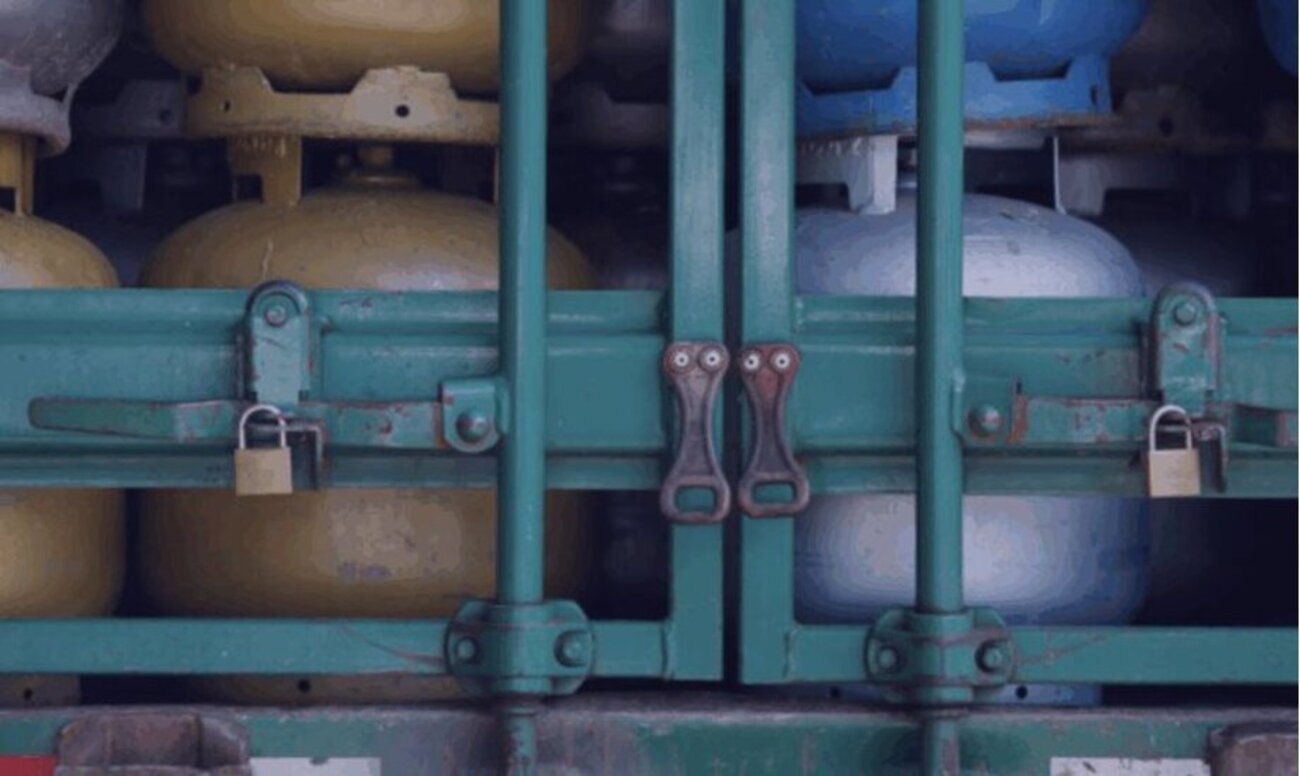
Petrobras evaluates suspension of sales to distributors and considers canceling the cooking gas auction following guidelines from the Federal Government.
-
Lula reveals a masterstroke by Petrobras to undo a deal made by Bolsonaro, which involves the return of an important refinery that currently produces less than half of what was expected and makes Brazil dependent on international diesel.

-
A study confirms that the natural gas sector will reduce greenhouse gas emissions in Brazil by 0.5% and accelerate the energy transition by 2026.

-
Petrobras implements a severe adjustment and confirms a 55% increase in the price of aviation kerosene with a proposal for installment payments for the companies.


On the other hand, the Single Federation of Oil Workers (FUP) criticized the operation, not for the development of oil activity itself. But because the exploration involves exclusively a foreign company, with no participation from Petrobras.
For FUP, the operation highlights the risks of handing the pre-salt over to international capital and the impacts of the relaxation of the sharing regime. Which allowed private and foreign companies to take over blocks that were previously operated by the Brazilian state-owned company.
Historically, the Brazilian pre-salt represents one of the largest oil discoveries in the country’s history.
Moreover, its exploration began in the 2000s, when the federal government, through Petrobras, invested in research and technologies to explore reserves located in deep waters.
Thus, the pre-salt attracted global attention not only for its oil volume, but also for the technical complexity of extraction.
For years, Petrobras operated all the pre-salt blocks, ensuring national control over production and ensuring that the economic benefits remained in the country.
Therefore, this historic model consolidated Brazilian expertise in ultra-deep water exploration, elevating Petrobras to the position of a global reference in oil technology.
Change in Legislation and Its Impacts
However, this reality began to change with Law 13,365 of 2016, which disobligated Petrobras from operating all blocks. Allowing the state-owned company to choose where to invest, with the right to a minimum 30% participation in exploratory consortia.
Consequently, the change aimed to alleviate the company’s financial situation, which faced difficulties after the impacts of Operation Car Wash.
On one hand, proponents of the law highlighted that the flexibility allowed foreign and national companies to invest and accelerate the exploration of oil in still undeveloped blocks.
On the other hand, FUP claims that the change opened the way for the concentration of exploration by foreign companies and reduced the financial compensation to the country.
In the auction of the Bumerangue block, BP offered the Union a share of excess oil of 5.9%, representing a premium of 4.24%.
This percentage is considered low, especially when compared to blocks auctioned previously. Thus reinforcing the perception that the current model favors multinationals over national interests.
Indeed, the pre-salt exploration regime follows the sharing model, unlike the concession model applied to other oil blocks in the country.
In sharing, the company pays a signature bonus and then shares the excess oil with the Union after covering exploration costs.
Thus, this model demands rigorous monitoring to ensure that the financial and technological benefits return to the country.
Moreover, the presence of foreign companies increases the complexity of strategic planning, as each operator has distinct technologies and investment priorities.
Therefore, the government and ANP need to coordinate infrastructure and logistics to harmonize interests and maximize the country’s gains.
Industry and Petrobras Perspective
According to the Brazilian Institute of Oil and Gas (IBP), the presence of multiple operators in the pre-salt, including national and international companies, brings important advantages.
According to IBP president Roberto Ardenghy, the participation of various companies accelerates exploration, broadens geological knowledge of the basins, and maximizes production potential.
Additionally, competition among operators attracts investments and increases royalty and special participation collections, benefiting the country as a whole.
For its part, Petrobras adopts a cautious strategy.
President Magda Chambriard stated that the company will participate in all auctions of interest, as long as the projects make economic sense and align with the business plan.
Thus, this balance between strategic presence and financial responsibility avoids risky investments, ensuring that the state-owned company maintains sustainability while contributing to the sector’s development.
Furthermore, Petrobras’s accumulated experience in exploration and production technologies in deep waters strengthens its ability to negotiate favorable conditions and ensure strategic returns for the country.
Pros and Cons of Flexibility
Experts, such as Professor Geraldo Ferreira from the Fluminense Federal University, point out pros and cons of flexibility.
On one hand, Petrobras gains freedom to prioritize areas with greater potential or economic return, thus speeding up the development of blocks that could be neglected.
On the other hand, the state’s strategic control over the oil and gas sector weakens, reducing the ability to coordinate industrial policies and collections for social funds intended for health, education, and the environment.
Additionally, Brazil’s history as a natural resource exporter reinforces the concern.
Since the colonial period, with the exploration of gold and diamonds in Minas Gerais, external operators limited the local utilization of resources.
Therefore, the current situation of the pre-salt may reproduce this pattern if there are no mechanisms to ensure technology transfer, human resources training, and industrial development stemming from the presence of foreign companies.
Thus, building a national production chain, including local suppliers and training programs, is essential for the wealth of the pre-salt to benefit the entire Brazilian economy.
Upcoming Auctions and Geopolitical Context
The next auction, scheduled for October 22, promises to consolidate this dynamic.
13 exploratory blocks in the Santos and Campos basins will be offered, with participation from Brazilian and international companies.
In this way, the diversity of actors increases competitiveness, but requires attention to governance strategies and the fair distribution of benefits.
Moreover, BP’s activity in the pre-salt highlights the importance of oil exploration policy in the geopolitical context.
Brazil, as one of the largest oil producers in the world, plays a relevant role in global energy security.
Therefore, the presence of multinationals like BP accelerates exploration and generates technological advances, but also reinforces debates about national sovereignty and management of strategic resources.
Final Considerations
In summary, the discovery of oil in the pre-salt by BP is a milestone for the industry, but provokes reflections on the balance between attracting investments, energy security, and national control.
Although the current legislation allows the operation of foreign companies, with right of preference for Petrobras, it seeks to reconcile public interest and economic efficiency.
Still, the country needs to ensure that it does not limit itself to exporting commodities, but transforms its natural wealth into sustainable development, technology, and strengthening of the national industry.
Finally, the debate surrounding the pre-salt highlights a historical question: how to reconcile economic growth, attraction of investments, and preservation of sovereignty over strategic resources.
As new discoveries like Bumerangue arise, the country will need to balance private and foreign operators’ interests with policies that ensure that the pre-salt continues to be a driver of development and wealth for all of Brazilian society.









-

-

-

-

5 pessoas reagiram a isso.