





 Portuguese
  English
  Spanish
  3 min of reading
  0 comments


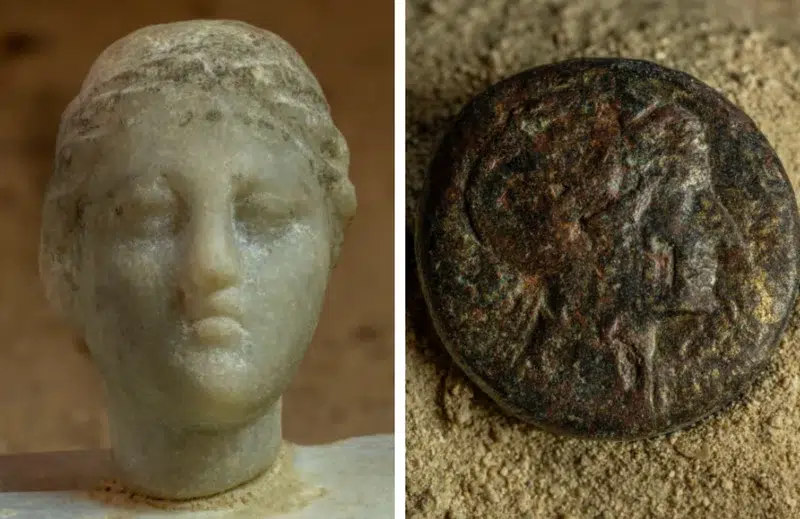
A Significant Discovery In Egypt May Finally Reveal The True Face Of Cleopatra, Bringing New Lights On One Of The Most Iconic And Mysterious Figures Of Ancient History.
The recent discovery of a white marble statue during excavations at the Tapuziris Magna temple in Alexandria has left archaeologists and experts divided. A small sculpture depicting a woman wearing a royal crown was identified by archaeologist Kathleen Martinez, leader of the Dominican-Egyptian team, as a possible portrait of the famous queen Cleopatra VII. However, the discovery has sparked intense debate.
Artifacts And Discoveries At The Tapuziris Magna Temple
The excavation revealed a number of important artifacts. Among them are 350 coins, many of which bear the image of Cleopatra, as well as pottery, oil lamps, limestone jars used for food preservation and cosmetics, and several bronze statues.
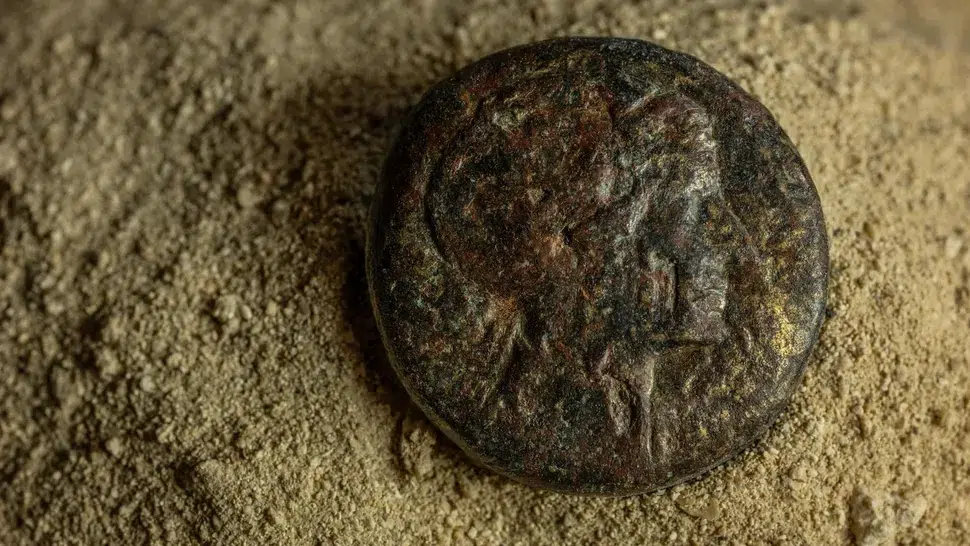
A amulet inscribed with the phrase “The Justice Of Ra Has Emerged” was also found, along with a bronze ring dedicated to the goddess Hathor, elements that reinforce the historical significance of the site.
-
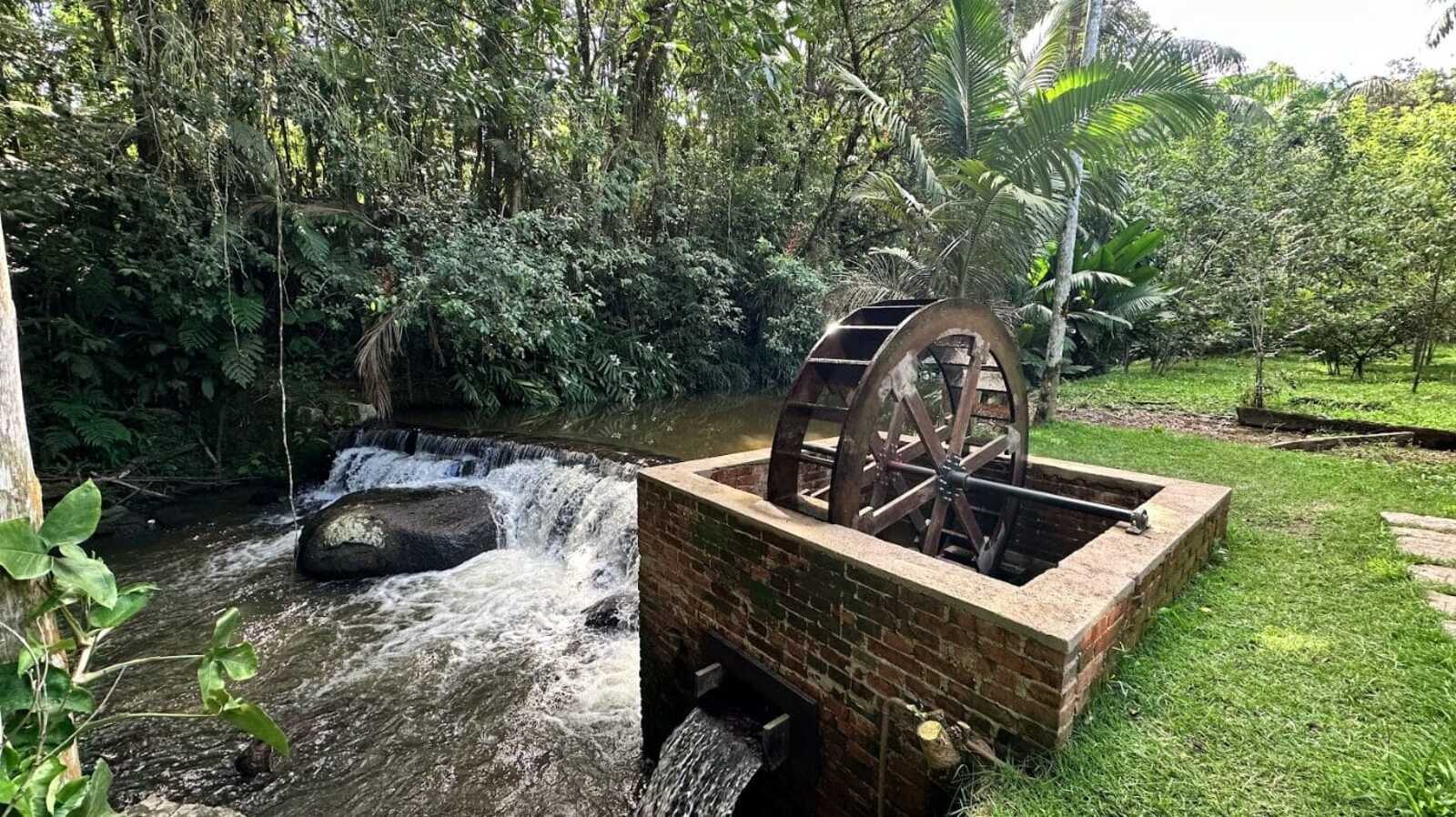
While restoring a historic mansion from 1910, a brick structure with an old turbine that generated energy from the Rio do Testo emerged, along with a hidden door and a rare floor concealed under layers of wax.
-
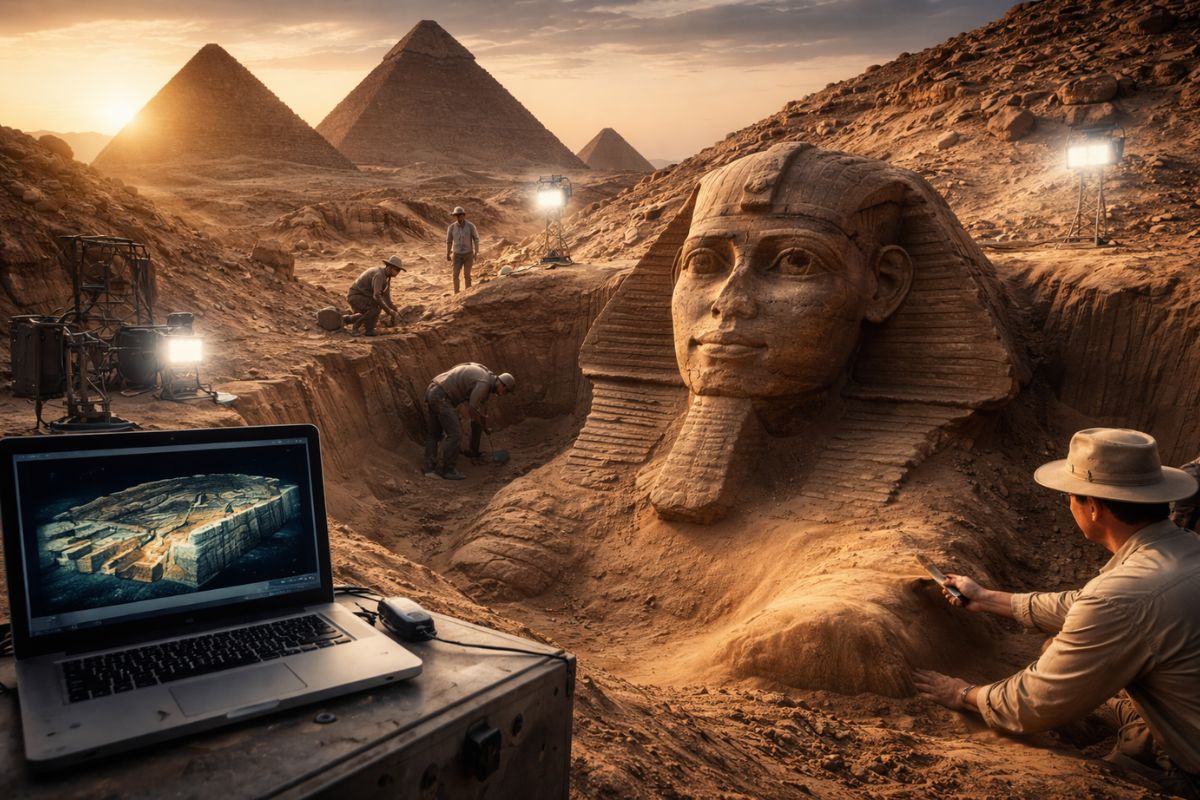
Italian researchers have detected what appears to be a second Sphinx buried under the sands of Egypt, and satellite scans reveal a gigantic underground megastructure hidden beneath the Giza Plateau for over 3,000 years.
-
There are 4,223 drums and 1,343 metal boxes concreted with 50-centimeter walls that store the radioactive waste from Cesium-137 in the worst radiological accident in Brazil, just 23 kilometers from Goiânia, with environmental monitoring every three months.

-
Giant Roman treasure found at the bottom of Lake Neuchâtel in Switzerland reveals an advanced trade system, circulation of goods, and armed escort in the Roman Empire about two thousand years ago.

With these discoveries, archaeologists were able to date the temple to the Late Baltic Period, estimating its construction in the 1st century BC. The wealth of artifacts found, dating from the same era, strengthened the theory that the temple was directly associated with Cleopatra.
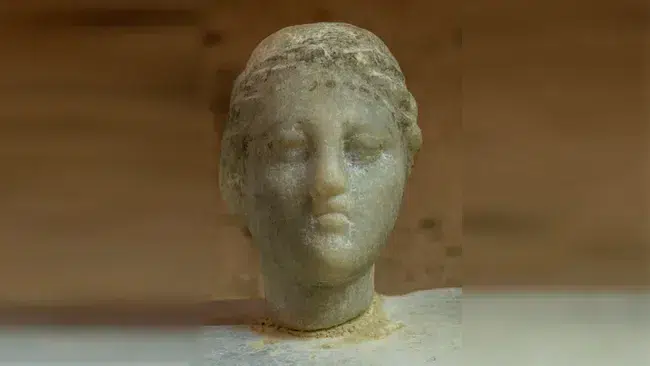
However, the white marble sculpture continues to generate controversy, with some experts questioning its connection to the Egyptian queen.
Zahi Hawass, former Minister of Antiquities, expressed doubts about the statue’s origins. In a statement sent to Live Science, he stated that the sculpture does not represent Cleopatra, but rather a Roman figure, since Pharaohs were depicted in Egyptian art styles, not Roman.
According to Hawass, the bust exhibits artistic characteristics that are not typical of Cleopatra’s time.
Historical Importance Of The Tapuziris Magna Temple
Despite the disagreements, the Egyptian Ministry of Tourism and Antiquities emphasized the significance of the excavation, noting that initial investigations in the submerged area of the Tapuziris Magna temple revealed human structures and large details of pottery.
The discovery reinforces the idea that the site holds great historical and cultural significance, providing new insights into ancient Alexandria.
While questions about the identity of the marble statue remain open, the excavation continues to be one of the most promising in the search for traces of Cleopatra’s history and the rich Egyptian culture.
Over time, new analyses may help clarify whether the figure found is indeed the queen who captivated the world or whether it is part of a distinct artistic tradition.








-

-

-

6 pessoas reagiram a isso.