





 Portuguese
  English
  Spanish
  3 min of reading
  10 comments


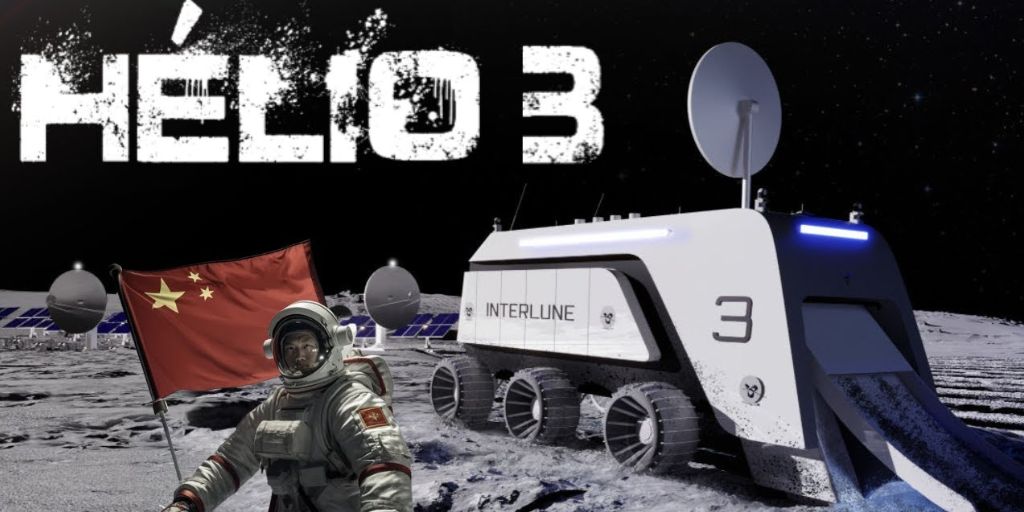


China Found The Largest Deposit Of Helium-3 On The Dark Side Of The Moon, Promising To Enable Nuclear Fusion And Generate Infinite Clean Energy. The Space Race Intensifies, With International Concerns About Chinese Dominance. This Discovery Could Change Global Geopolitics And Put China In The Energy Leadership Of The Future.
The Discovery Of A Giant Helium-3 Deposit By China On The Dark Side Of The Moon Promises To Revolutionize The Energy Industry On Earth, Enabling Nuclear Fusion And Generating Clean And Practically Infinite Energy. The New Space Race Is Intensifying, With China At The Forefront Of This Discovery That Could Change The Course Of The Global Energy Future.
The Race For Nuclear Fusion
China Is Determined To Lead The Lunar Exploration And The Energy Revolution That Helium-3 Could Provide. This Rare Isotope Of Terrestrial Helium Is Seen By Scientists As A Potential Fuel For Nuclear Fusion Reactors.
Helium-3 Could Provide A Clean, Non-Radioactive, And Highly Efficient Source Of Energy, Something That Has Captivated The Imagination Of Engineers And Scientists Around The World.
-
USA and China compete for Brazil over resources that could be worth trillions — rare earths put the country at the center of a global dispute

-
Motorola launched the Signature with a gold seal from DxOMark, tying with the iPhone 17 Pro in camera performance, Snapdragon 8 Gen 5 that surpassed 3 million in benchmarks, and a zoom that impresses even at night.

-
Satellites reveal beneath the Sahara a giant river buried for thousands of kilometers: study shows that the largest hot desert on the planet was once traversed by a river system comparable to the largest on Earth.

-
The government requests the Federal Revenue Service for a new system to automate the income tax declaration, reducing errors, time, and bureaucracy for millions of Brazilians.


The Discovery Of Helium-3 Occurred During The Chinese Space Mission Chang’e-5, Launched In 2020. This Mission Made History By Being The First In Over 40 Years To Bring Lunar Soil Samples Back To Earth.
It Was From One Of These Samples That Changesite-(Y) Emerged, A Transparent And Colorless Mineral That Contained Helium-3 Particles, As Confirmed By The China National Space Administration.
The Potential Of Helium-3
According To The European Space Agency, Helium-3 Is Scarce On Earth But May Be Abundant In Lunar Soil.
This Is Because, Unlike Earth, The Moon Lacks A Magnetic Field To Protect It From Solar Winds. Thus, Throughout Its History, The Moon Has Been Bombarded By Large Amounts Of Solar Winds, Which May Have Contributed To The Generation Of Helium-3 In Its Soil.
The Discovery Adds An Intriguing Element To The Competition Among Earth Powers For Space Exploration. China Plans To Go Beyond Sample Collection And Aims For Future Lunar Exploration By 2030.
Among The Plans Are A Mission To Study The Possibility Of Finding Water At The Lunar South Pole And The Construction Of A Permanent Base On The Satellite, Which Would Have As Its Main Objective The Exploration Of New Resources, Including The Possible Mining Of Helium-3.
Competition And International Concerns
China’s Lunar Ambitions Raise Concerns Among Leaders Of Space Agencies Around The World. Bill Nelson, NASA Administrator, Warned That The United States Cannot Afford To Fall Behind In The Race For Lunar Exploration.
In An Interview With Politico, Nelson Expressed Fears That China Might Claim The Lunar South Pole For Exclusive Resource Exploration If Americans Delay Their Missions To Return To The Satellite.
NASA Plans To Once Again Take Astronauts To The Moon And Establish A Sustainable Human Presence There By 2025. The Artemis Program Is Underway, And The Agency Has Already Announced The Selected Astronauts For The Return Mission To The Moon, Which Will Initially Orbit The Satellite.
Mark Whittington, A Space Exploration Specialist, Stated In An Article For The American Site The Hill That There Are Several Reasons For The Current Interest Of Economic Powers In Lunar Exploration, Including Science, Commerce, And “Pride Rights,” Which Translate Into Political Influence In The International Community.
Technological Challenges And Future Prospects
Whittington Highlighted That, Despite Current Technological Challenges, Fusion With Helium-3 May Not Become A Reality Until The Middle Of This Century.
However, He Emphasizes That Control Over Helium-3 Could Determine A New Global Leadership In The Future. The Possibility Of China Taking On This Role Is Concerning, Given The Country’s History Of Human Rights Violations And Suppression Of Freedom Of Expression.
Global Impact Of The Discovery
The Return Of China With Helium-3 Suggests That The Moon Could Become The Persian Gulf Of The 21st Century, Providing Clean And Abundant Fusion Energy That Could Change The World In Unimaginable Ways.
The Exploration Of This Resource Could Redefine Global Power Dynamics, Putting China In A Position Of Energy Leadership.
What Will The Impact Of This Discovery Be On Global Geopolitics? Will China Dominate The New Space And Energy Race? Comment Below!




Ninguém ou nenhum equipamento produzido pelo homem, deixa a órbita baixa da terra.
“dado o histórico do país em violações dos direitos humanos e cerceamento da liberdade de expressã” blablabla acritico do pais aue mais causa guerras e mortes no mundo. E golpes de estado. Etcetcetc….
Foi confirmada a presença de Hélio 3 na Lua, o que não chega a ser novidade. A corrida pelo domínio da fusão nuclear é muito mais pelo desenvolvimento da tecnologia do que pelo controle das fontes de combustível.