





 Portuguese
  English
  Spanish
 5 min of reading
  0 comments


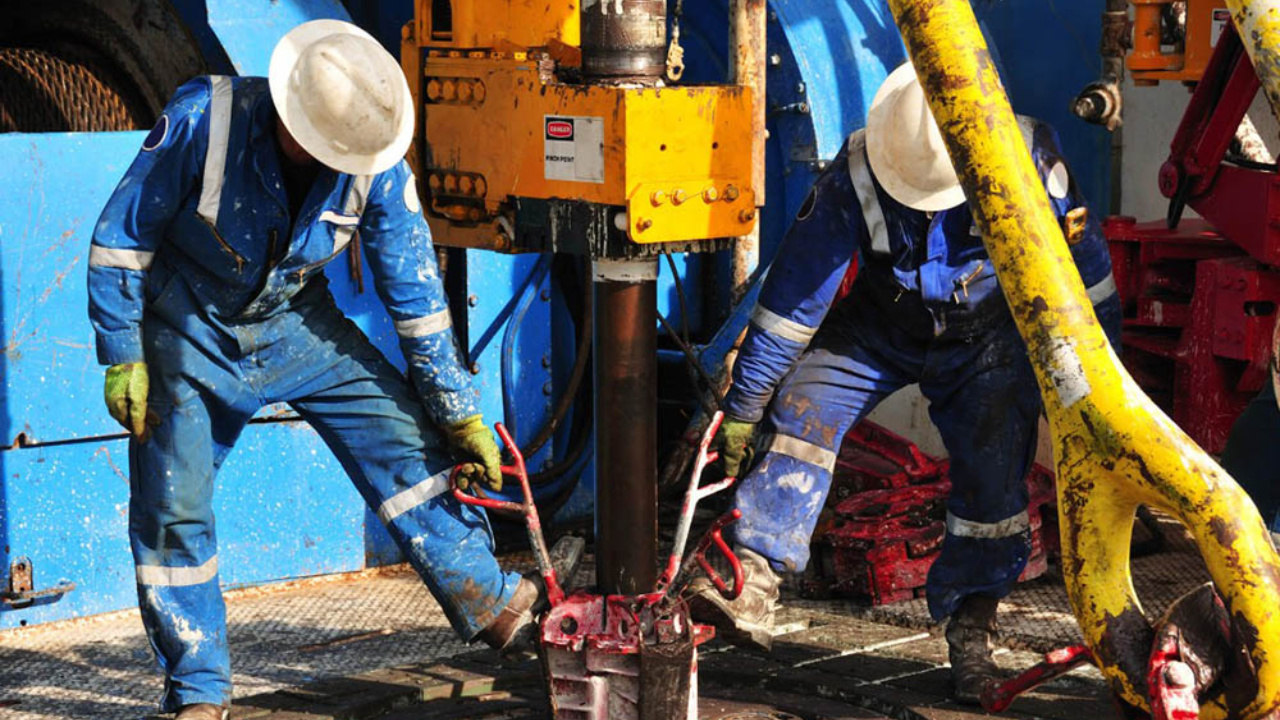
Espírito Santo Emerges as a Strategic Hub for the Decommissioning of Oil Platforms, an Activity Expected to Generate Over 5,000 Jobs and Attract Billions in Investments by 2030, Involving Petrobras, Multinationals, and Local Companies.
The end of the operational life of oil platforms in Brazil has opened a new business front for the national industry. In this scenario, the Espírito Santo emerges as one of the main beneficiaries.
The dismantling and removal of these offshore structures is expected to create over 5,000 direct and indirect jobs in the State, in addition to mobilizing a diverse industrial chain.
Shipyards, companies in the metalworking, electromechanical, construction, and circular economy sectors are among the most impacted. This assessment comes from the president of the Federation of Industries of Espírito Santo (Findes), Paulo Baraona, who sees the process as a significant vector for regional economic development linked to oil.
-
A study confirms that the natural gas sector will reduce greenhouse gas emissions in Brazil by 0.5% and accelerate the energy transition by 2026.

-
Petrobras implements a severe adjustment and confirms a 55% increase in the price of aviation kerosene with a proposal for installment payments for the companies.

-
The rise in oil prices could ensure an extra revenue of R$ 100 billion for the Federal Government, indicates a recent economic study.

-
Naturgy begins an investment of R$ 1.6 million to expand the gas network in Niterói and benefit thousands of new residences and businesses.


End-of-Life Platforms Drive Billion-Dollar Investments
The platforms going through the decommissioning process operate mainly in the Campos Basin, covering areas in southern Espírito Santo and northern Rio de Janeiro. According to Petrobras, 18 oil production units are expected to be removed from the Brazilian sea by 2030.
To achieve this, the state company plans investments of $9.7 billion, equivalent to about R$ 53.7 billion, allocated for hiring dismantling and removal services. However, the outlook is even broader. Petrobras’s business plan indicates that another 50 platforms are to be decommissioned starting in 2031, significantly increasing the volume of offshore oil-related projects.
In addition to Petrobras, private companies are also expected to invest substantial resources. According to Paulo Baraona, companies such as Prio and Shell are expected to invest around $3 billion, approximately R$ 33 billion, in similar services over the coming years.
Wide Production Chain and Material Reuse
The dismantling and removal process, technically known as decommissioning, goes beyond the simple removal of oil platforms from offshore. It involves the safe deactivation of structures, transportation to appropriate areas, dismantling, and, in many cases, recycling of equipment and materials.
According to business consultant Durval Vieira de Freitas, it is an activity that generates opportunities for various industrial segments. He highlights that many components of the platforms can be reused.
“When decommissioning a platform, many pieces of equipment can be reused, such as compressors, motors, pumps, and pipelines. This opens up opportunities for those who work with material disposal. It’s a large volume of opportunities.”
Thus, companies specialized in recycling, logistics, industrial maintenance, and asset reuse gain space in a chain that extends far beyond the oil sector itself.
Espírito Santo Positions Itself as a Logistics and Industrial Hub
With 18 projects already approved by the National Agency of Petroleum, Natural Gas and Biofuels (ANP), Espírito Santo is identified as the third most promising destination in Brazil for decommissioning investments. The expected volume exceeds $1 billion, around R$ 5.4 billion, just in the next few years.
On the national scene, expectations are even higher. According to Findes, investments in oil platform decommissioning projects in Brazil are expected to exceed $12.7 billion, equivalent to R$ 68.5 billion. This amount reinforces the sector’s potential as a new economic frontier linked to the offshore industry.
For Baraona, this movement consolidates Espírito Santo as a competitive logistics hub. The State has structured ports, capable industrial companies, and strategic location, factors that increase its attractiveness to multinationals in the oil and gas sector.
“We will hold an event where several companies will come to get to know our State and interact among themselves. This is another draw for the development of the State, which is transforming into a logistics hub.”
International Mission Brings Espírito Santo Closer to Europe
As part of the State’s positioning strategy, Findes promoted an international mission to Europe, with stops in Norway and the United Kingdom. The goal was to seek partnerships with companies that already dominate advanced technologies in the decommissioning of oil platforms and attract investments to Espírito Santo.
The delegation included representatives from companies such as ArcelorMittal, Vports, Porto Central, Grupo Estel, and Marca Ambiental, along with support from the State government. During the meetings, opportunities for technical cooperation, knowledge transfer, and operation installation in Brazil were discussed.
Companies specialized in offshore decommissioning, logistics, and subsea services participated in the agenda, including AquaTerra, Asco UK, Ashtead Technology, DeepOcean Subsea Services, Enerpro Group, Kishorn Port Ltd, Mizzen Ocean Engineering Ltd, Subsea Pressure Controls, and Sureclean, as well as institutional bodies from the United Kingdom.
European Multinationals Will Visit the State in March
As a follow-up to the international mission, executives from European multinationals are expected to visit Espírito Santo in March. The agenda includes an event organized by Findes, focusing on showcasing local infrastructure and promoting direct interaction between foreign companies and local firms.
The initiative involves joint efforts from the Federation of Industries and the state government. The aim is to expand business connections, detail opportunities in the industrial and logistics environment, and accelerate the attraction of investments linked to oil and offshore decommissioning.
Espírito Santo ports, metalworking and electromechanical companies, as well as logistics operators, are expected to be directly benefited by the growing interest of multinationals in the State.
New Offshore Economy Gains Strength in Espírito Santo
The advancement of decommissioning projects positions Espírito Santo as a protagonist in a new phase of the Brazilian offshore economy. Unlike traditional oil exploration and production, decommissioning combines industrial, environmental, and technological aspects, requiring specialized solutions and qualified labor.
At the same time, the rapprochement with countries like Norway and the United Kingdom strengthens access to consolidated technologies and best international practices. Consequently, the State enhances its competitiveness and establishes itself as a strategic location for the establishment of companies involved in the final cycle of oil and gas operations.
This movement reinforces the diversification of the industrial base in Espírito Santo and expands its role in the national energy and industrial landscape, in a moment of transition and reconfiguration of oil-related activities in Brazil.









Seja o primeiro a reagir!