





 Portuguese
  English
  Spanish
  4 min of reading
  0 comments


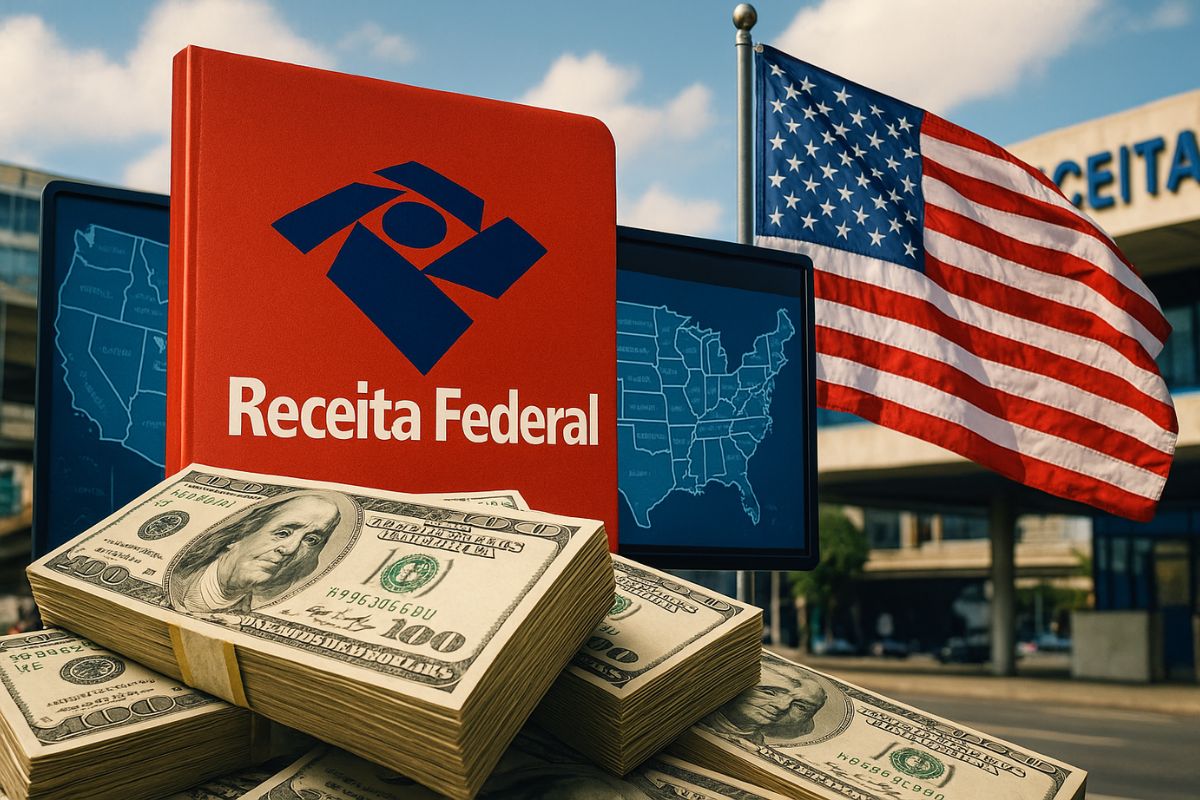
Based on the FATCA Agreement, the Federal Revenue Service Automatically Receives Information About Accounts and Investments Held by Brazilians in the United States, Increasing Oversight and the Requirement for Transparency.
The Federal Revenue Service already receives automatically, data sent by the authorities of the United States about bank accounts, investments, and income of Brazilians in that country. The exchange is a result of the intergovernmental agreement of FATCA and tightens the noose against tax evasion, allowing the cross-checking of information with income tax declarations in Brazil.
More than a diplomatic gesture, the flow of data makes it more difficult to hide assets abroad. The Brazilian tax authority claims to use advanced analysis tools including artificial intelligence to identify inconsistencies. In practice, those who are tax residents in Brazil and hold assets outside the country must declare everything, without exception.
What Is FATCA and How Does Information Reach Brazil
FATCA is a U.S. law that requires financial institutions worldwide to report to the IRS data on clients with tax ties in the U.S.
-
BRICS is building its own payment system that could be operational by 2030, and experts say it could increase trade between the countries by up to 10% per year and add 3% to the GDP of each member of the bloc.

-
Government suspends over 3 million traffic fines in Brazil and drivers breathe a sigh of relief.

-
Iran has just approved toll charges for ships in the Strait of Hormuz and has completely prohibited the passage of vessels from the United States and Israel in the world’s most important maritime route for the global energy market.
-
Government cancels R$ 25 million “celebration” for Brasília’s anniversary and allocates funds to health.


In the Brazil–U.S. case, the agreement between governments established reciprocity: information about Brazilians with assets in the U.S. is sent by the American side and reaches the Federal Revenue Service through official channels.
The packages include account balances, positions in funds, capital gains, interest and dividends, among other financial events.
This is not a case-by-case request, but rather periodic and standardized remittances, making it easier to cross-check with what each taxpayer declared to the Brazilian tax authority.
What Changes for the Taxpayer: Total Transparency and Fewer Loopholes
For tax residents in Brazil, the rule is simple: declare assets, rights, and income abroad completely and consistently.
The automatic exchange reduces the space for omissions and increases the risk of penalties when the data received from the U.S. does not match what was reported on the annual declaration.
Moreover, banks’ secrecy abroad loses strength when confronted with cooperation agreements.
The declared goal is to curb tax evasion, currency evasion, and money laundering, and electronic cross-checks have become routine.
In other words, relying on the “invisibility” of accounts outside the country is no longer a viable strategy.
How the Federal Revenue Service Uses the Data: Cross-Checks and Tax Intelligence
The Federal Revenue Service integrates FATCA information with other databases: income tax returns, financial transactions, foreign exchange events, and asset records.
Inconsistency detection algorithms highlight cases with a higher probability of error or fraud, prioritizing audits.
This model increases control efficiency: reports from the U.S. can indicate unreported income, undeclared balances, or asset variations without support.
When there are relevant indications, the taxpayer is often called to provide clarifications and prove origin and tax compliance.
Points of Attention: Reciprocity, Limits, and Good Compliance Practices
Experts remind that the reciprocity of FATCA is not always perceived as entirely symmetrical, and there is debate over possible gaps in how the U.S. shares data.
Nevertheless, the current flow already delivers a relevant volume of information to the Brazilian tax authority, sufficient to raise the standard of supervision.
To reduce risks, good practices include: maintaining organized documentation (statements, reports, contracts), reconciling balances and income with what will be declared in Brazil, and aligning the tax treatment of typical events (dividends, interest, capital gains).
Transparency and consistency are the pillars to avoid questioning.
FATCA vs. CRS: Where Brazil Fits into This Global Framework
FATCA is a bilateral agreement anchored in U.S. law; meanwhile, the CRS (Common Reporting Standard), led by the OECD, is a multilateral standard for automatic exchange among dozens of countries.
Brazil participates in the international cooperation ecosystem and increases the visibility of global assets of its residents, which tends to standardize tax compliance.
For the taxpayer, the practical effect is clear: the greater the integration between jurisdictions, the less scope to keep hidden assets.
Therefore, tax regularity and lawful planning become essential whether for those investing directly in the U.S. or those diversifying in other markets.
What to Do Now: Step by Step for Those with Assets in the U.S.
First, map everything: checking accounts, investments, brokers, property, shares, and any income.
Next, check statements and reports and harmonize the numbers with the Brazilian declaration. Foreign exchange conversion errors, dates, and income classification are common causes of inconsistency.
If there are past omissions, it is worth seeking voluntary regularization with technical guidance. Proactive measures are usually less costly than reacting to a summons.
And remember: the Revenue already operates with automatic data not counting on the ignorance of the tax authority is the best policy.
The automatic exchange of information strengthens the Federal Revenue Service and raises the bar for compliance for those investing abroad. Do you consider this cooperation fair and necessary or fear excesses in oversight? In your view, what is the biggest practical difficulty in keeping everything up to date documentation from banks, foreign exchange conversion, income classification? Share your experience in the comments: your account helps show how this change impacts those investing abroad in real life.









Seja o primeiro a reagir!