





 Portuguese
  English
  Spanish
  5 min of reading
  0 comments


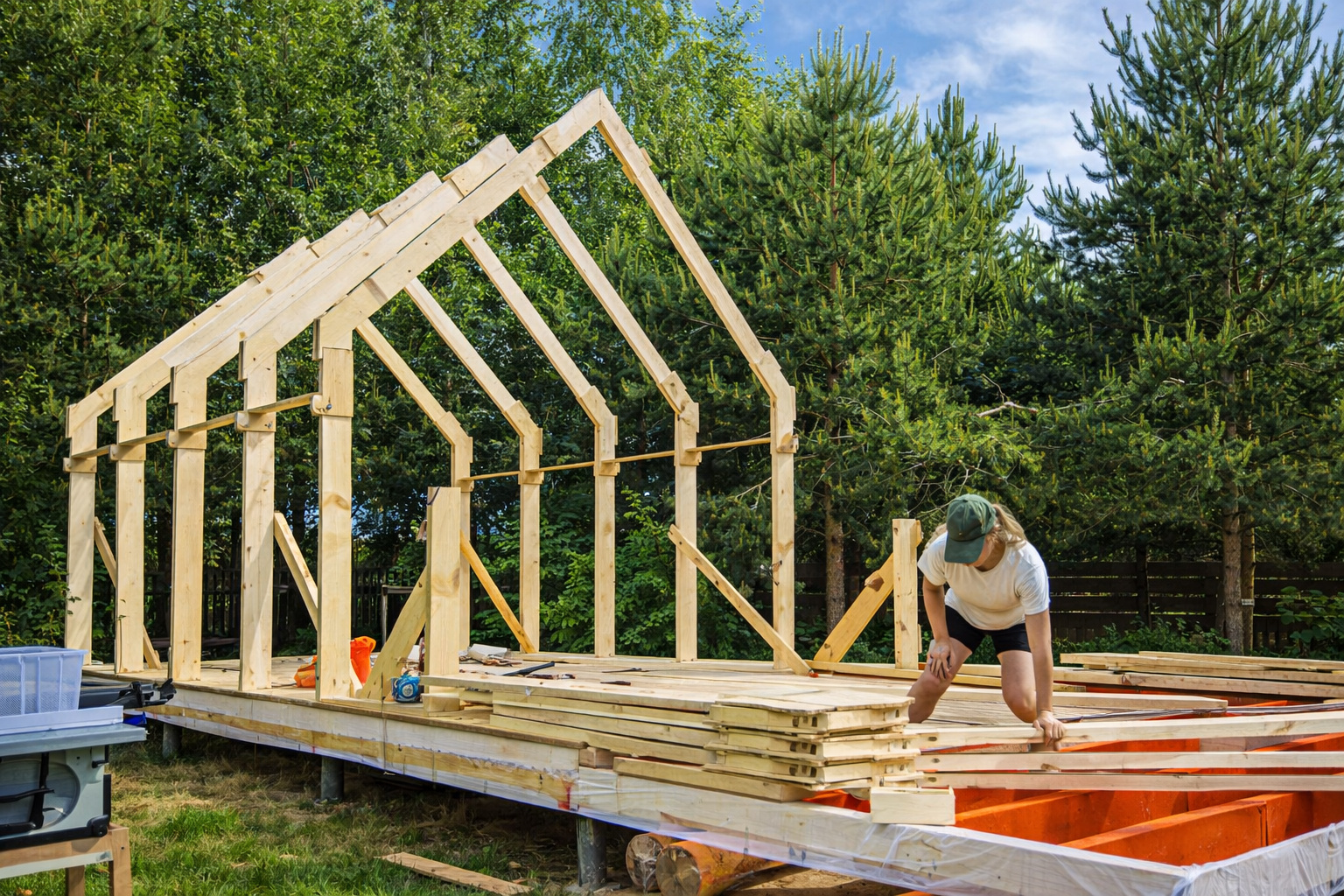
Since The Soil Preparation Until The Last Screw, Couple Builds A Super Low-Cost House Made Of Wood, With A Lot Of Talent And Showcase An Amazing Result Of The Simplicity Of The Material Joints
An empty lot can hide an unexpected project. That’s exactly what happened when a couple decided to build a low-cost wooden house, starting only with the exposed soil and some tools. Shortly after, the space began to show beams, panels, and a complete structure emerging before their eyes.
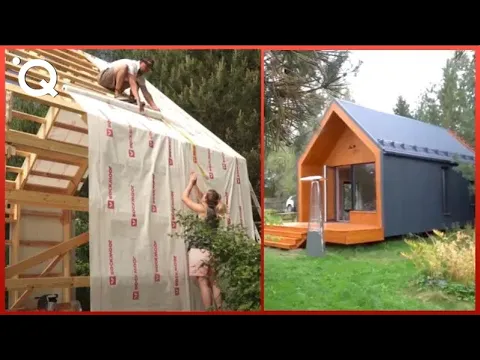

What draws attention is not just the finished house. The real impact is in the sequence of steps that transform the lot into a habitable structure. Each stage reveals a straightforward assembly method based on simple joints and work organization.
This construction stands out because it demonstrates something many imagine to be too complex. The structure is made from metal tubes, wooden beams, structural panels, and metal sheets, combined in a precise order.
-
While restoring a historic mansion from 1910, a brick structure with an old turbine that generated energy from the Rio do Testo emerged, along with a hidden door and a rare floor concealed under layers of wax.
-
Italian researchers have detected what appears to be a second Sphinx buried under the sands of Egypt, and satellite scans reveal a gigantic underground megastructure hidden beneath the Giza Plateau for over 3,000 years.

-
There are 4,223 drums and 1,343 metal boxes concreted with 50-centimeter walls that store the radioactive waste from Cesium-137 in the worst radiological accident in Brazil, just 23 kilometers from Goiânia, with environmental monitoring every three months.

-
Giant Roman treasure found at the bottom of Lake Neuchâtel in Switzerland reveals an advanced trade system, circulation of goods, and armed escort in the Roman Empire about two thousand years ago.


The Foundation Of The Low-Cost House Begins In The Soil With Filled And Aligned Metal Tubes
The first move occurs directly on the ground. The couple positions vertical metal tubes in the soil, creating support points distributed across the area of the future low-cost wooden house.
Each tube is fixed to the ground and receives internal filling with liquid material poured using buckets and hoses. The process requires constant attention to keep each piece aligned while the interior of the tube is filled.
After this stage, the lot ceases to be just exposed soil. The filled metal tubes form an elevated foundation, creating support points that sustain the structure of the house.
This type of solution attracts attention in small projects because it reduces the need for extensive foundations and allows for a quick start to the assembly of the main structure.
The Excavation In The Ground Reveals Another Silent Stage Of Preparation Before The Wooden House Takes Shape
While the metal supports are being installed, another intervention occurs in the lot. An excavator begins to dig a deep trench in the soil.
The metal blade dives into the compact earth, removing chunks of soil and depositing the material beside the opening. The movement repeats several times until a narrow corridor with exposed earth walls is formed.
This excavation creates an underground space prepared to receive elements installed below the surface. Even in a low-cost wooden house, ground preparation includes steps that often go unnoticed.
The result is an area ready to support both the house foundation and structures installed below ground level.
Wooden Beams Connect The Metal Supports And Form The Platform Of The House
After the metal tubes are securely in the ground, construction begins to rise. The couple positions long wooden beams over the metal supports, connecting one point to another of the foundation.
The rectangular beams are manually aligned and fixed with screws tightened by power tools. This process creates a structural network that then distributes the weight of the future wooden house.
The union between wooden beams and metal supports forms a resistant mesh that extends across the entire area of the construction.
When all the beams are installed, the structure presents a platform elevated a few centimeters above the ground.
Structural Panels Transform The Beam Mesh Into A Solid Floor Of The Low-Cost House
With the wooden foundation ready, large flat panels enter the assembly. Each panel is then placed on the beam structure supporting the house.
The panels are aligned side by side and fixed with screws that go through the panel and attach directly to the wooden beams.
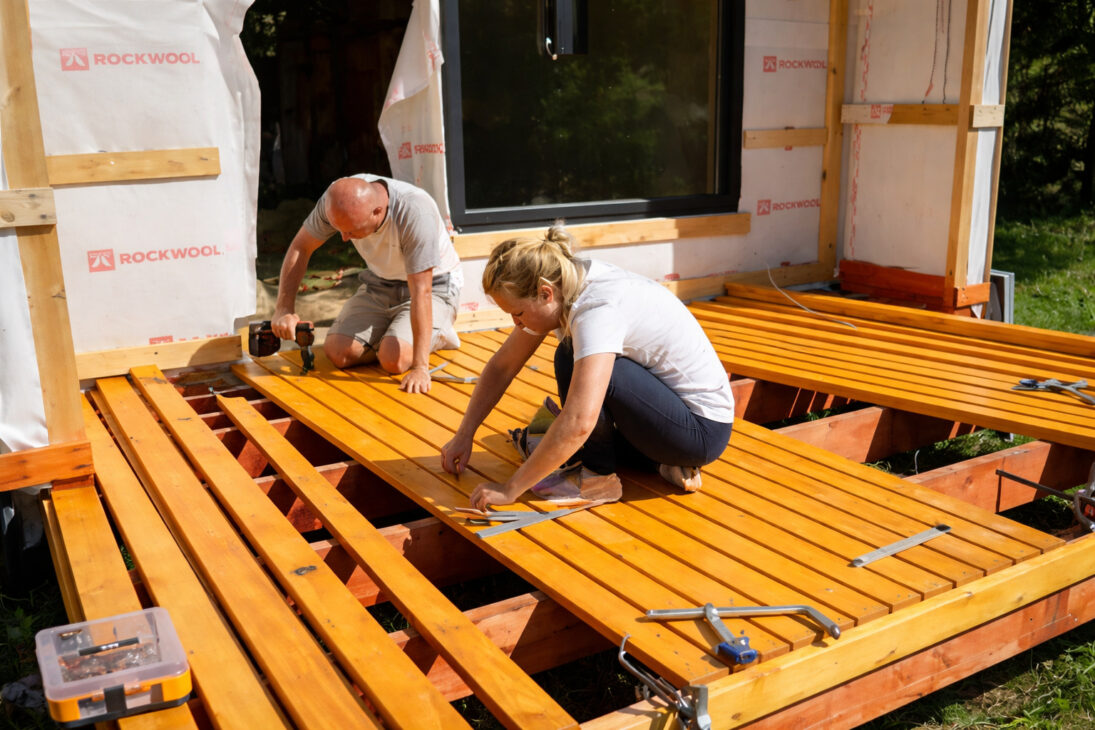
The combination of flat structural panels and wooden beams transforms the open foundation into a continuous floor.
The difference is immediately noticeable. The space that previously showed only exposed beams now presents a solid surface where it is already possible to walk and continue construction.
Couple Covers The Panels With A Mat Before The Walls Of The Wooden House Start To Rise
Before the vertical structure emerges, the couple unrolls a light mat over the entire newly assembled platform.
The material completely covers the panels and extends over the entire surface of the floor. Two people pull the roll while another smooths the mat to avoid folds.
This layer covers structural panels and wooden joints, creating a uniform surface over the floor.
After this moment, the foundation of the house then shows a continuous finish, preparing the space for the assembly of the walls.
Vertical Wooden Frames Raise The Walls Of The Low-Cost House
The construction changes completely when the walls begin to appear. The couple assembles rectangular frames made with vertical wooden studs and horizontal braces.
Each structure is manually raised and positioned at the edges of the platform. Then, screws fix the pieces to the base of the floor.
With the repetition of this process around the construction, the open platform begins to present defined walls.
The space that was previously just a wooden foundation starts to transform into a low-cost house built with wood, with internal volume already visible.
Roof With Metal Sheets Finishes The Assembly Of The Wooden House
Once the walls are secure, the upper part of the structure receives sloped beams that form the roof.
These beams create an inclined plane that crosses the house from one end to the other. Over this structure, plates appear that cover the entire surface.
Then, widely spaced metal sheets fixed with screws are installed, forming the final covering of the house.
At this moment, the transformation of the lot becomes evident. The construction that started with metal tubes scattered on the ground now presents a complete structure with floor, walls, and roof.
The story of this couple building a low-cost wooden house stands out because it reveals something little discussed outside construction sites. Simple materials, when organized in a precise assembly sequence, can thus generate efficient and functional structures.
And you, have you ever thought about building a wooden house following a similar method? Share your opinion in the comments and send this story to anyone who also likes to discover smart solutions in construction.








Seja o primeiro a reagir!