





 Portuguese
  English
  Spanish
  4 min of reading
  3 comments


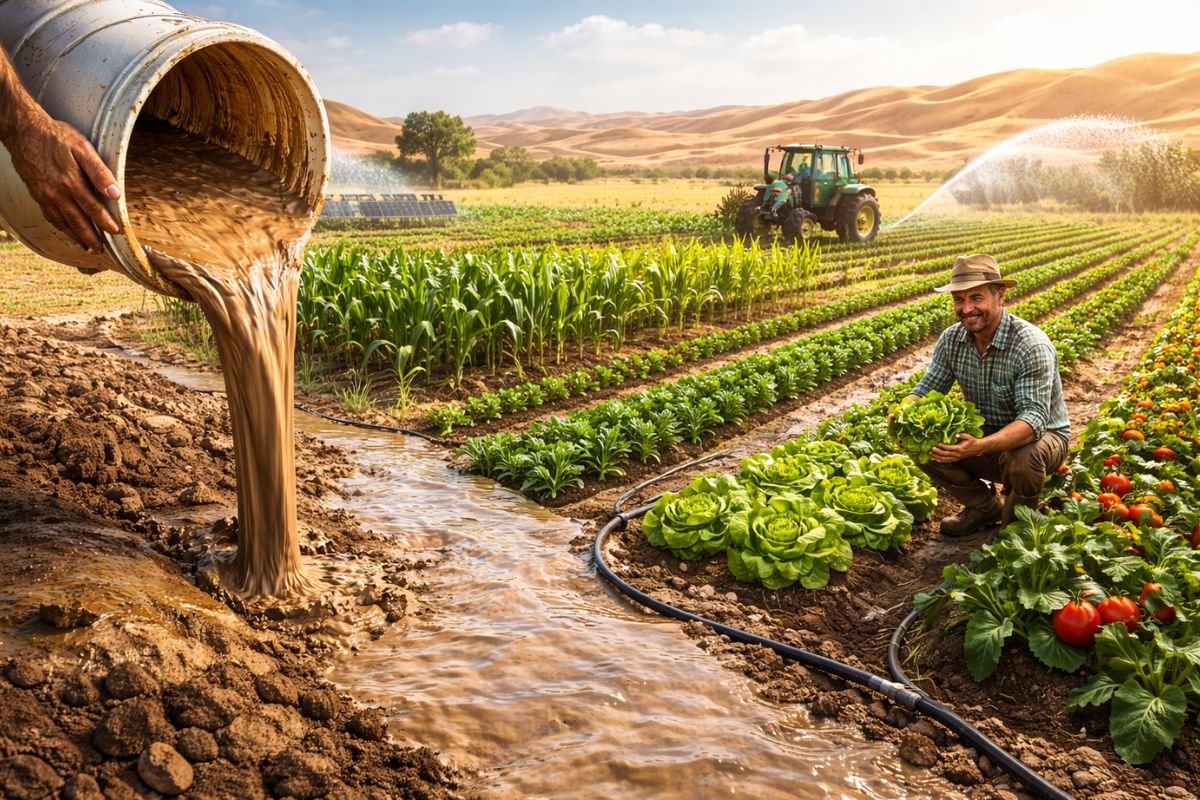


Deserts in Iraq, Near Anbar, Become a Laboratory for a Technique with Liquid Natural Clay That Infiltrates Sandy Soils, Creates a Retention Layer, and Reduces Water Usage by Up to 50%. The Initiative Aims to Curb Desertification, Increase Yields by 20% to 60%, and Enhance Survival of Treated Plants.
Deserts are at the center of a silent dispute over water and food, and the pilot project near Anbar, Iraq, relies on Liquid Natural Clay to change the logic of sandy soil. The proposal is simple in concept and heavy in impact: retain water and nutrients where everything used to flow away, reducing the need for irrigation by up to 50%.
Deserts and agriculture intersect in a data point that pressures governments and producers: food production already consumes over 70% of all available freshwater. With desertification and soil degradation further increasing the demand for water, the promise of the method is to transform degraded lands into fertile and sustainable areas for agriculture and ecosystems.
The Global Pressure for Water and the Weight of Desertification

Deserts advance when the soil loses structure, organic matter, and the ability to hold moisture, pushing agriculture into greater dependence on irrigation.
-
He started running at 66 years old, broke records at 82, and is now a subject of study for having a metabolic age comparable to that of a 20-year-old, in a case that is intriguing scientists and inspiring the world.

-
Oldest tree on the planet reappears after 130 years of searches: Wattieza, 385 million years old, was 10 meters tall and had no leaves or seeds; Gilboa fossils in New York solved the mystery in 2007.

-
A 48-square-meter house assembled in hours with 4,000 bricks made of recycled plastic that does not absorb moisture, has natural thermal insulation, and costs less than 90,000 reais in a complete kit.

-
Luciano Hang revealed that Havan’s air fleet has already accumulated more than 20,000 landings, 10,000 flight hours, and 6 million kilometers traveled, and he says that without the planes, the company would never have grown so quickly.


The described scenario places water as a bottleneck, because food production already concentrates the majority of the available freshwater use.
The consequence is strategic: with the global population growing, the need for food increases and amplifies pressure on vital resources.
When water becomes a physical limit, soil becomes the new frontier, because any gain in retention reduces pumping, cuts losses, and sustains planting in arid zones.
What is Liquid Natural Clay and How Does It “Reprogram” Deserts?

Sandy deserts have a structural problem: water infiltrates too quickly and washes away nutrients, leaving the plant with no useful reserves.
Liquid Natural Clay, described as an eco-innovation, was developed to be sprayed directly onto sandy soils.
Once applied, the formula penetrates the soil and creates a layer that retains moisture.
The operational effect is to significantly increase the soil’s capacity to retain water and nutrients, converting degraded areas into fertile and sustainable soils for agriculture and the functioning of ecosystems in dry zones.
The term “reprogram” appears as a summary of the mechanism: it is not just about irrigating more, but about altering the soil’s response to water.
Instead of disappearing in minutes, water remains available to the roots for a longer time, increasing efficiency.
Where It Happens: Anbar, Iraq, and the Design of the Pilot Project
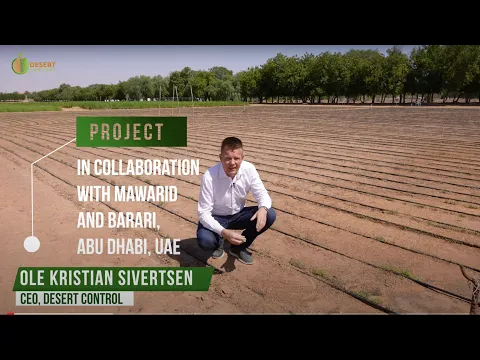

Treated deserts in the pilot project are located near Anbar, Iraq.
The site is presented as an arid agricultural zone where the technique is tested precisely because it faces the full package of challenges: sandy soil, high evaporation, dependence on irrigation, and desertification risk.
In this pilot, the quantified promise is twofold. On one side, a reduction in water consumption by up to 50%. On the other, a productivity gain in harvests between 20% and 60%.
These numbers position the application as a leap in efficiency because it simultaneously affects irrigation costs and agricultural returns.
Reduction in Irrigation and Multiplication of Harvests: The Numbers of Impact
Deserts are the backdrop, but the target is productivity with less water.
The project points out that the treatment can reduce the need for irrigation by up to 50%, which means, in practice, halving the water demand to maintain planting in treated areas.
At the same time, the cited productivity gain ranges from 20% to 60%.
This range suggests that the response varies according to crop, management, and local conditions, but maintains a common point: the applied water ceases to be waste and becomes a useful reserve, elevating agricultural performance.
The combination is relevant because it addresses two pain points at once.
It reduces irrigation in areas where water is expensive or scarce and improves harvests in regions where every percentage point defines economic viability and food security.
Next Step: 20,000 Trees and Total Survival in Treated Areas
Deserts also become a test for plant survival, not just for harvest.
The mentioned plan is to apply Liquid Natural Clay soon on 20,000 newly planted trees in Iraq, maintaining the focus near Anbar.
The stated expectation for these treated areas is to reduce the need for irrigation by up to 50% and, in addition, improve the survival rate of the plants by 100% in the treated areas.
In practical terms, this means seeking total survival of the trees that receive treatment, increasing the chance of consolidating vegetation and stabilizing the soil over time.
Why Soil Became a Strategic Frontier for Food Security
Deserts make one point clear: infinite irrigation does not exist, but efficiency can grow.
The strategic logic of the project is to transform the soil into retention infrastructure, reducing dependence on external water and creating resilience in arid environments.
When the soil can hold water and nutrients, the agricultural system gains a layer of security.
Less irrigation means less pressure on freshwater, and more productivity means more food with the same area, in a world where space and water have become contested assets.
Do you think solutions for deserts like this can become large-scale public policy, or will they remain limited to pilot projects due to cost and logistics?








Eu não sei, mas eu pensei nisso esses dias, fiz umas mudas de plantas daqui do semi árrido brasileiro, e aqui no meu local tem os três tipos de solo, arenoso, argiloso e pedregulho prevalecendo esse último, imaginei mais não sabia desses números
Buena iniciativa
Ojalá se pudiera áplicar en el noroeste de México, ya que los dos factores vistos en Irak , aquí también son los limitantes en la agricultura, por las condiciones deserticas y semideserticas de nuestra región