





 English
  Francês
  Alemão
  Italiano
  Japonês
  Norueguês
  Portuguese
  Spanish
  3 min of reading
  0 comments


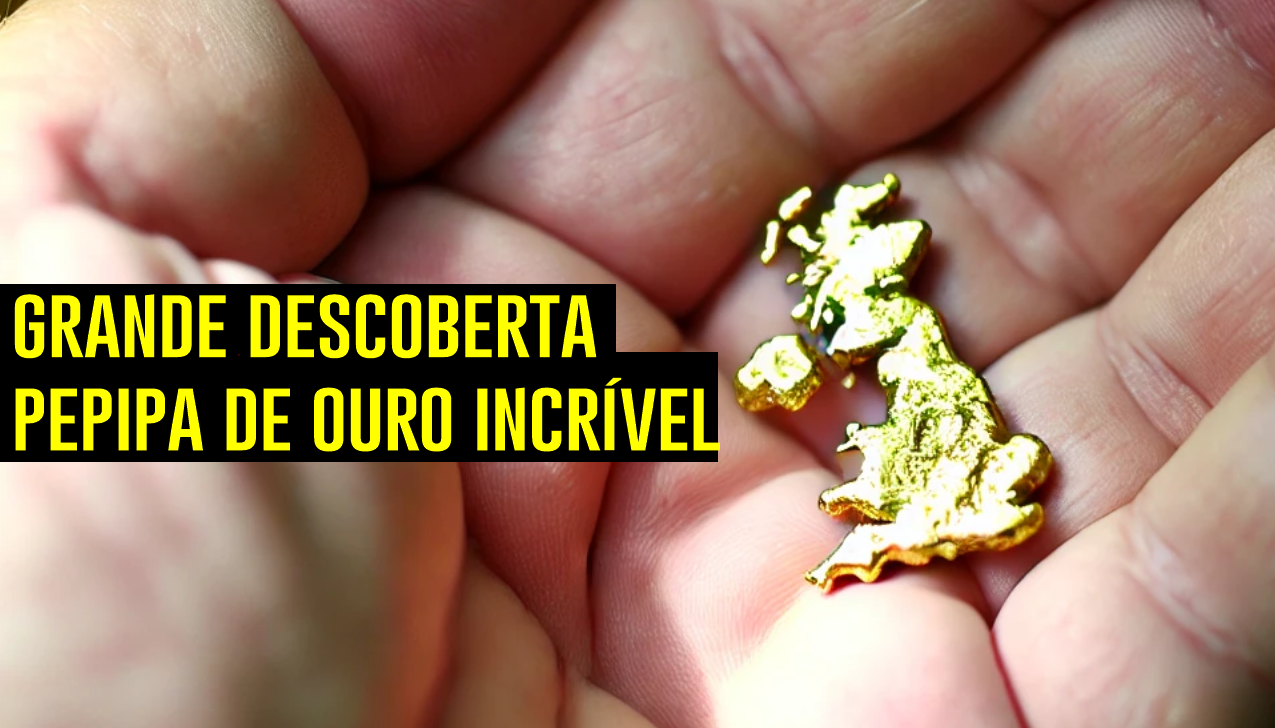
Metal Detectorist Makes Unique Discovery: Gold Nugget Shaped Like Great Britain Found and Impresses Experts
In what he called a “once-in-a-lifetime discovery,” Jonathan Needham, a 54-year-old detectorist, found a singular gold nugget shaped like a map of Great Britain.
This extraordinary find was made at the border between Staffordshire and Derbyshire, and it is believed that the gold may have been naturally shaped in the ground.
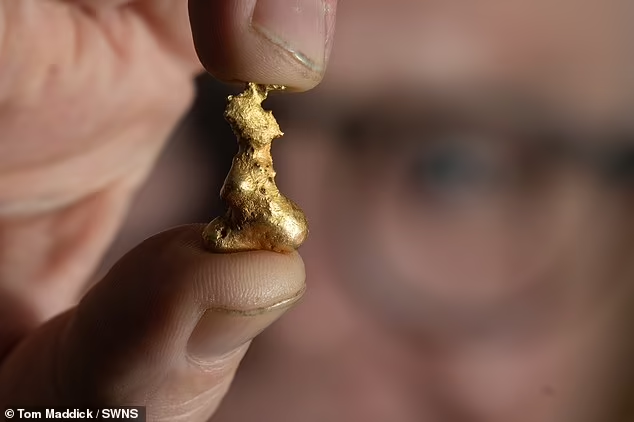
The nugget measures approximately 3 cm in length and over 1 cm in width, weighing about 10.3 grams.
-
A $3.5 billion megaproject in Latin America pumps desalinated seawater at 1,050 liters per second over 194 km to keep a copper supermine in the Andes operational for another 20 years.

-
A hidden mine in the Andes valued at nearly R$ 1 trillion is starting to attract global attention, containing copper, gold, and silver, and raises an intriguing question: why do Argentina and Chile need to act together to exploit this gigantic wealth?

-
A silent discovery in the interior of Bahia could change the future of energy in Brazil: a uranium reserve in Lagoa Real has an estimated capacity to produce 400 tons per year and is already attracting the attention of energy sector specialists.

-
Gold Miners Descend Into Narrow Holes Up to 48 Meters Deep in the Mauritanian Desert and Spend Up to Two Days Living Inside Tunnels in an Underground City with Over a Thousand Mines

Jonathan, a retiree who previously worked as a tree explorer and is now a treasure hunter, revealed that the discovery took place on November 1st. He described the moment as “the Holy Grail,” and stated that it is, without a doubt, the most interesting find he has ever made.
Now, Jonathan is in the process of confirming the piece’s origin, investigating whether it is a natural formation or a cast piece.

The Value of the Gold Nugget
Initially, it is estimated that the nugget could be worth approximately £800 if considered just scrap. However, if the piece is proven to be evidence of historic gold mining in the Midlands, the value could be much higher.
The Context of the Discovery
Excited about the history, Jonathan Needham explained his surprise at finding the nugget, saying: “I really couldn’t believe it. I had found gold before, but I didn’t expect to find a nugget this size.”
“When you’re in England and you find a gold nugget, it’s something exceptional. As I was digging, I realized it was golden and knew it was gold – initially I thought it might be a piece of jewelry.”
After starting to clean the item, Jonathan noticed a remarkable resemblance to the map of Great Britain. “It’s rare to find a piece of gold that resembles England. It’s truly madness,” he commented.
Confirmation and Next Steps
It is still unclear whether the nugget was naturally shaped or is a discarded cast product. To find out, experts will analyze the piece. If it is natural gold, the value of the nugget could be significantly higher than that of a common gold piece.
Jonathan hopes that it is a natural nugget and intends to return to the area where he made the discovery to try to find more items.
History of Discoveries
This was not Jonathan’s first extraordinary find. Last year, he uncovered a Bronze Age artifact, a dress or cloak clasp from 3,000 years ago, which he described as a “one-in-a-billion” find.
In addition to being a treasure hunter, Jonathan runs a YouTube channel, The Detector-hist, where he shares his adventures and discoveries.
The Treasure Legal Process in the United Kingdom
According to the UK’s Treasure Act of 1996, any treasure discovery must be reported to the local coroner within 14 days.
The British Museum’s Portable Antiquities Scheme assists discoverers, provides guidance on legal obligations, and drafts reports for treasure declarations.
This law aims to facilitate museums’ acquisition of culturally significant finds, with rewards typically divided between the discoverer and the landowner where the item was found.
The value of rewards is calculated based on the market value of the finds, determined by an independent panel of experts, the “Treasure Valuation Committee.”
What Is Considered Treasure
Currently, for an item to be considered treasure, it must meet certain criteria, such as:
- Two or more coins at least 300 years old, containing a minimum of 10% gold or silver.
- Prehistoric metal objects commonly found together.
- Non-monetary artifacts over 300 years old and containing at least 10% gold or silver.
- Items found in the same location as another item considered treasure.
However, changes are expected in the future, with a new definition in development that takes into account the cultural and historical significance of finds, not just their material quality.
Jonathan Needham’s discovery represents not only an extraordinary event but also highlights the complexity and cultural and historical value of archaeological finds in the United Kingdom.










Seja o primeiro a reagir!