





 Portuguese
  English
  Spanish
  5 min of reading
  0 comments


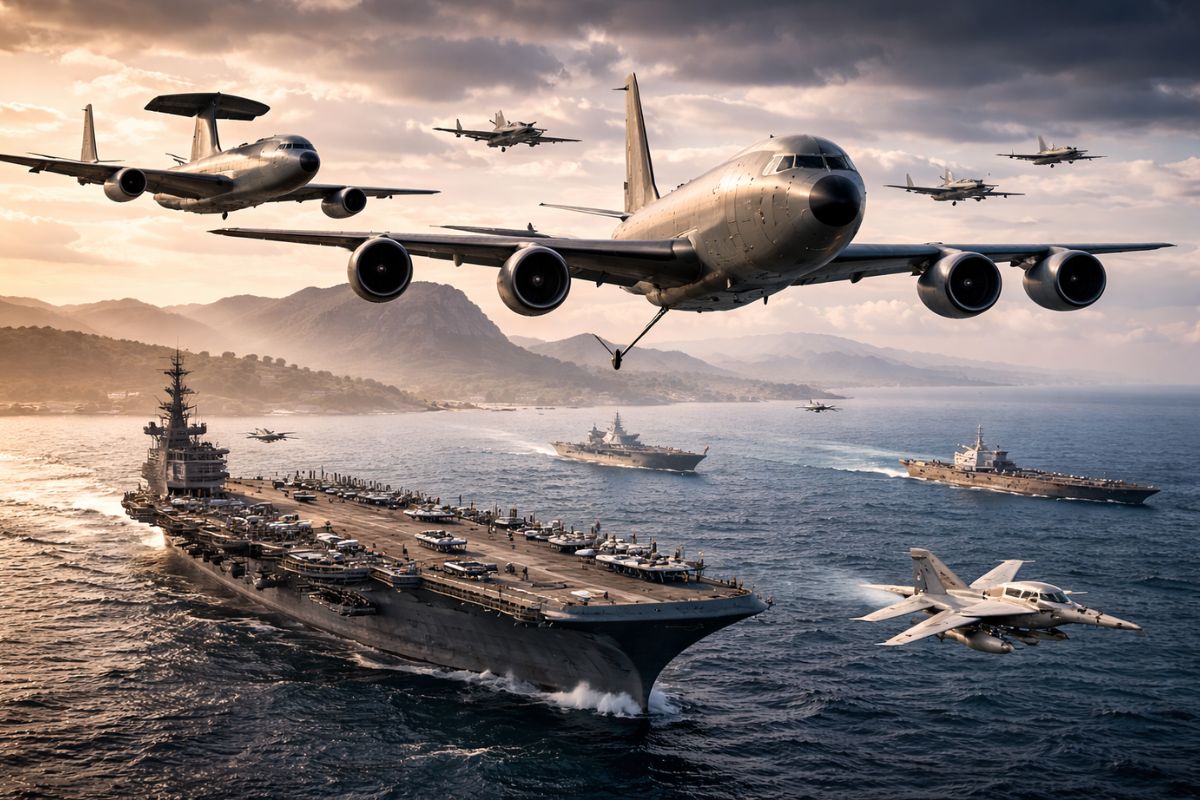
The Arrival of Dozens of Tankers and Early Warning Platforms from the United States to the Middle East and Hubs in Europe Coincides with the Approach of the Aircraft Carrier USS Gerald Herryford to the Strait of Gibraltar, Feeding Readings About Scale, Duration, and Intent of an Action Against Iran Behind the Scenes.
The Middle East has returned to the center of the military radar due to a type of movement that usually appears before the toughest headlines: tankers crossing the Atlantic, early warning platforms repositioning, and an aircraft carrier heading toward the Mediterranean. The ensemble suggests preparation for something larger than a symbolic demonstration, with Iran on the horizon.
At the same time, there is no automatic certainty just because the map has become fuller. The question is to understand what these means allow, how long they sustain operations, and why the Middle East needs so much air infrastructure for any campaign that goes beyond hours.
What Is Moving and Why the Middle East Has Become the Logical Destination

In recent days, the described picture is one of accelerated flow of U.S. aircraft to Europe and the Middle East, highlighting tankers, command and control, radar and early warning platforms, in addition to military cargo planes supporting a logistics chain that seems to have gained unusual momentum.
-
USA and China compete for Brazil over resources that could be worth trillions — rare earths put the country at the center of a global dispute

-
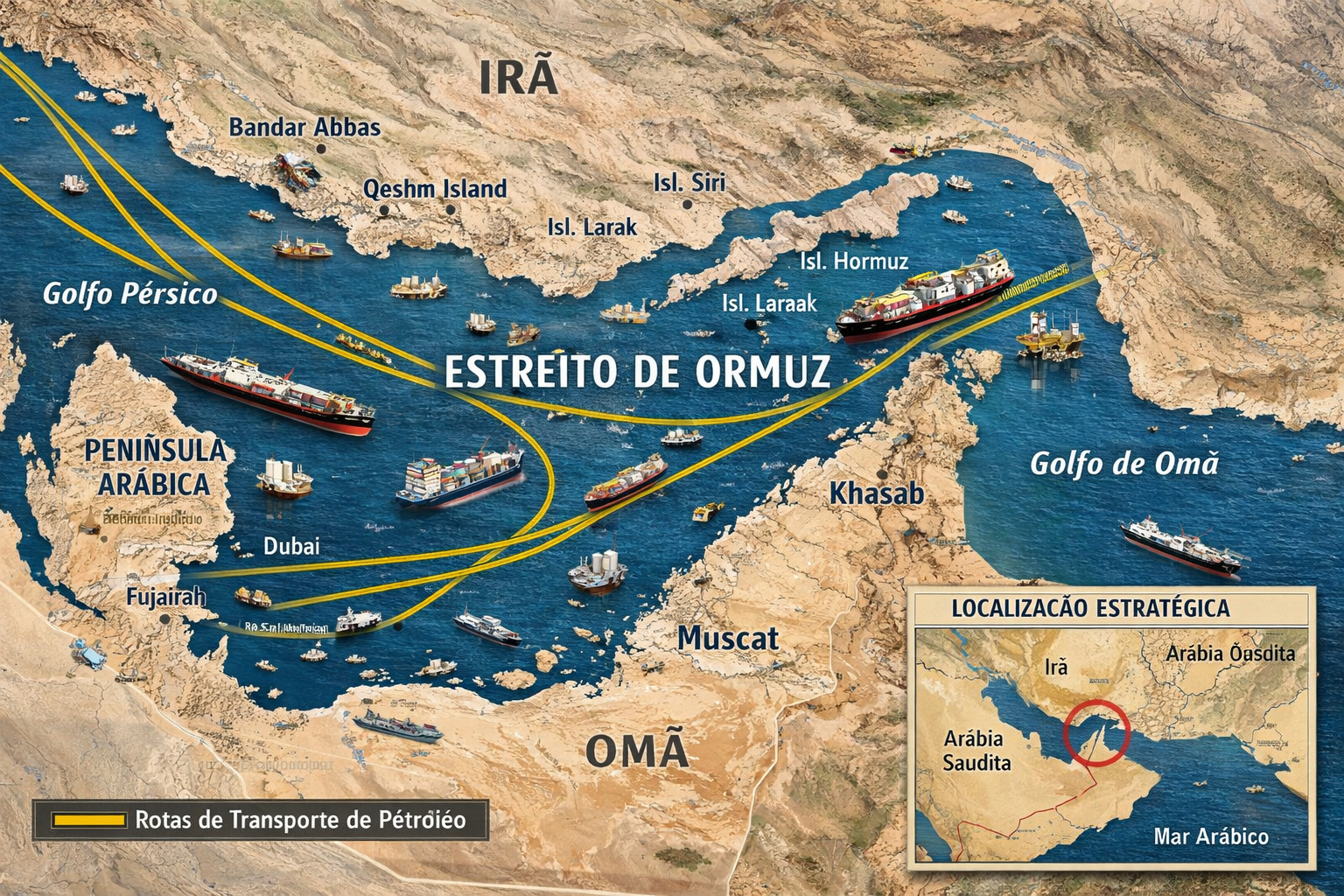
Global summit with over 40 countries pressures Iran for a blockade in the Strait of Hormuz and warns of direct impact on oil, food, and the global economy.
-
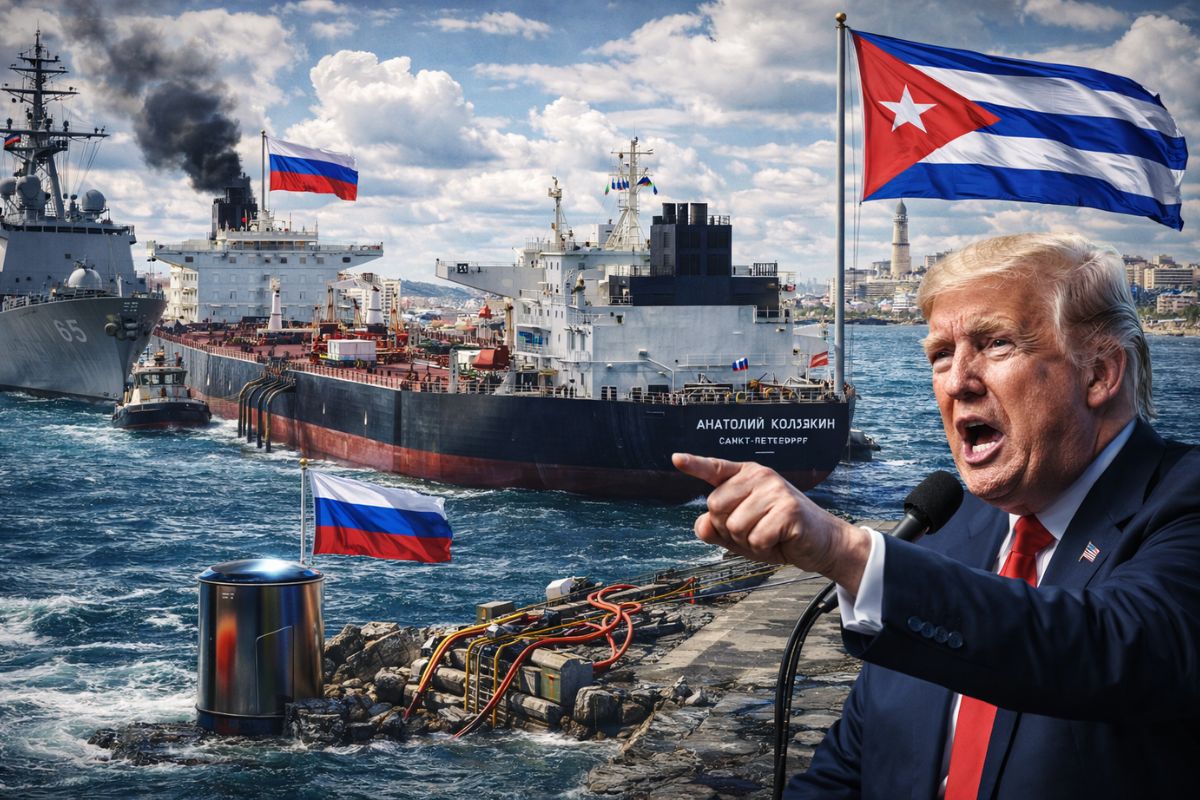
Russia has broken the U.S. maritime blockade to send oil to Cuba and is now loading a second ship while Trump says that “Cuba is next” in a possible military action against the island.
-
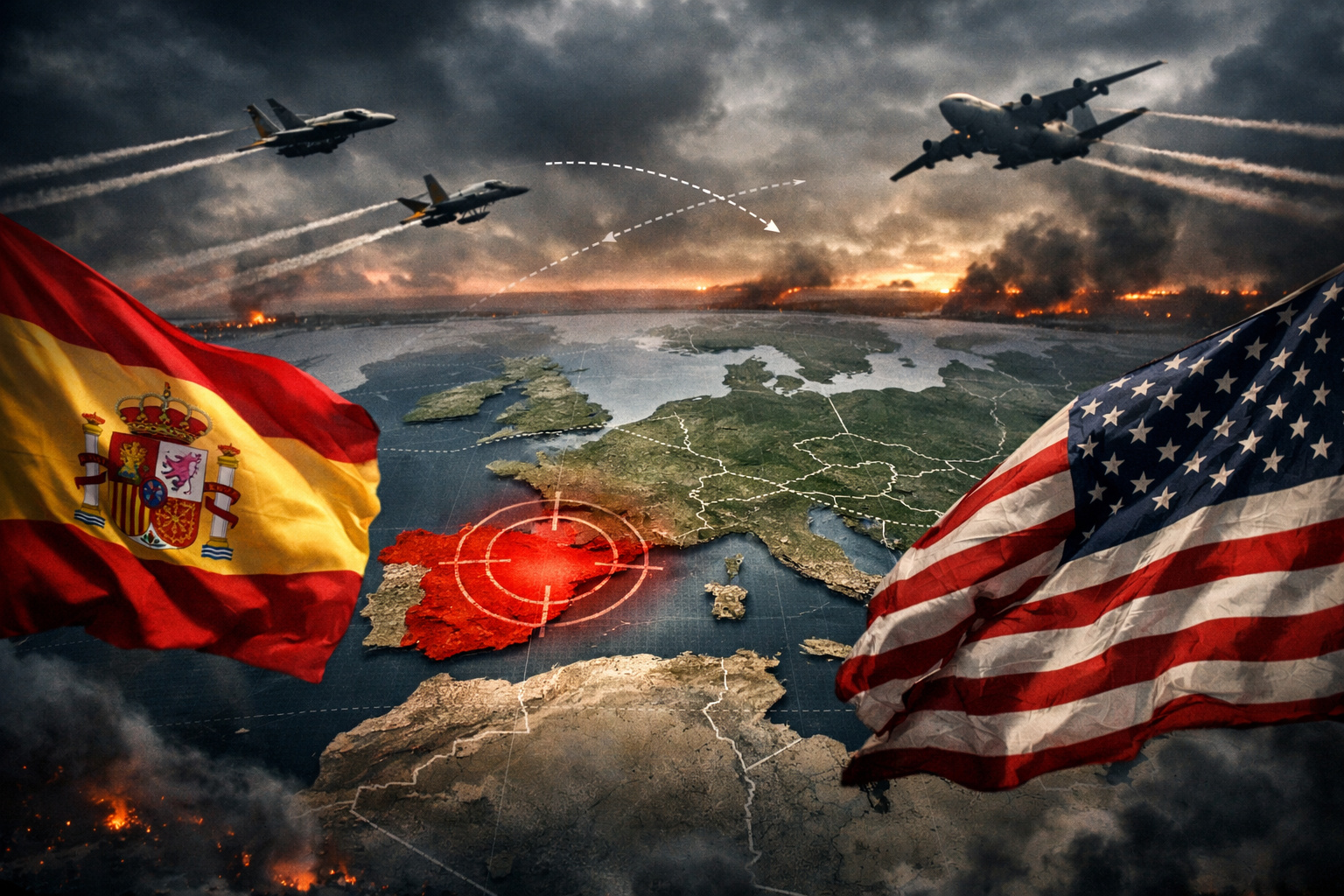
Spain challenges the USA and closes its airspace for operations against Iran, raising global tension and provoking the threat of a trade rupture.

This type of package is relevant because it serves not only to “arrive.”
It serves to stay, coordinate, and repeat.
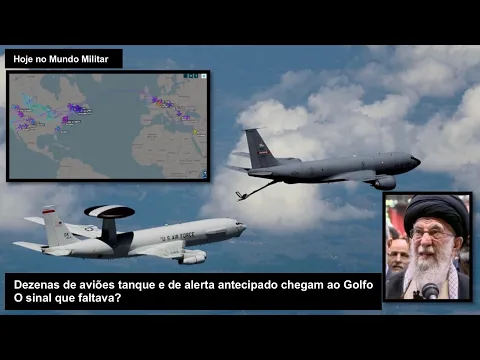
When tankers and early warning appear together, the signal tends to be one of sustainment, not just presence, especially if the hypothesis under discussion involves Iran and a broad theater like the Middle East.
Why Tankers Are the Thermometer of a Large Aerial Campaign

Fighters may be the most visible element of an offensive, but the central argument here is different: those who define whether a campaign is limited or massive are the tankers. Aerial refueling is not just the bridge of going and returning.
It extends real range, provides route flexibility, increases time on station, and allows carrying more weapons, elevating the frequency and pace of sorties.
That’s why the reading presented treats tankers as “thermometers of intent.”
Tankers are scarce and vulnerable assets, requiring crews, maintenance, and parts, and are typically not moved in large numbers just to exert pressure.
If they are being distributed through hubs in Europe, the Mediterranean, and with operational connection to the Middle East, the structure begins to seem compatible with a prolonged operation, not just a message to Iran.
Early Warning and Command and Control as the Nervous Center of the Sky
The second strong clue in the narrative is the massive presence of early warning and command and control aircraft, with direct mention of platforms like E3, described as surveillance, communications, command, and control.
In large aerial campaigns, this “nervous center” is what organizes chaos: it identifies planes and routes, updates what is taking off, where it is going, and what it is doing, while maintaining coordination under interference and electronic warfare.
At this point, the role of early warning ceases to be accessory and becomes a prerequisite. A large modern aerial campaign does not start with bombs; it starts with networking, coordination, and surveillance.
If the Middle East is receiving early warning in quantity and sustainment pattern, the question about Iran shifts from politics to logistics: what duration and intensity would be possible with what has already been deployed.
Aircraft Carrier, Gibraltar, and the Geometry of Access to the Mediterranean
The naval movement adds another layer. The USS Gerald Herryford, an aircraft carrier that had been operating in the Caribbean, was seen approaching the Strait of Gibraltar, about to enter the Mediterranean.
This matters because Gibraltar is the chokepoint that transforms intent into positioning: having crossed, it changes practical range and flexibility of where to operate.
The report suggests that from the Mediterranean, the carrier could operate from areas like the Israeli coast or the Red Sea, enhancing persistence and reducing some dependency on land bases in the Middle East, which could be targeted by Iranian missiles if an attack on Iran were to materialize.
When aircraft carriers enter the game, the message is not just strength; it is continuity of presence.
What Can Be Asserted and What Is Still Hypothesis About Iran

The most honest point of the picture is to recognize the difference between capability and decision.
The presented reading insists that it cannot be declared with 100 percent certainty that an attack on Iran has already been decided, but it can be asserted that the theater is being configured with typical resources of a large aerial campaign: massed tankers, early warning, command and control, in addition to naval reinforcements with aircraft carriers.
The boundary between “sending a scare” and “preparing for weeks” usually appears in the type of means displaced. Exercises and demonstrations may involve fighters and maneuvers.
Sustaining a campaign involves tankers, early warning, intelligence, and coordination, citing even the presence of RC135, Rivet Joints, and E3 as part of the described package.
If this is deterrence or preparation for execution, the Middle East is where this response takes shape first in the sky and only later on the ground, with Iran as the variable that pulls everything else.
In the end, the question is not whether there has been movement; it is what this movement allows to be done without stopping. Tankers extend range and pace, early warning organizes the aerial picture in real-time, and aircraft carriers near Gibraltar reshape the geography of the response.
This does not prove that an attack on Iran is already scheduled, but it shows that the infrastructure for a long campaign in the Middle East is being assembled.
When you see tankers, early warning, and aircraft carriers accumulating at the same time, what does that mean to you: preparation for war, diplomatic pressure, or prevention of surprise? If you have followed other crises in the Middle East, what was the signal that deceived the most, and what was the one that got it right?








Seja o primeiro a reagir!