





 Portuguese
  English
  Spanish
  5 min of reading
  0 comments


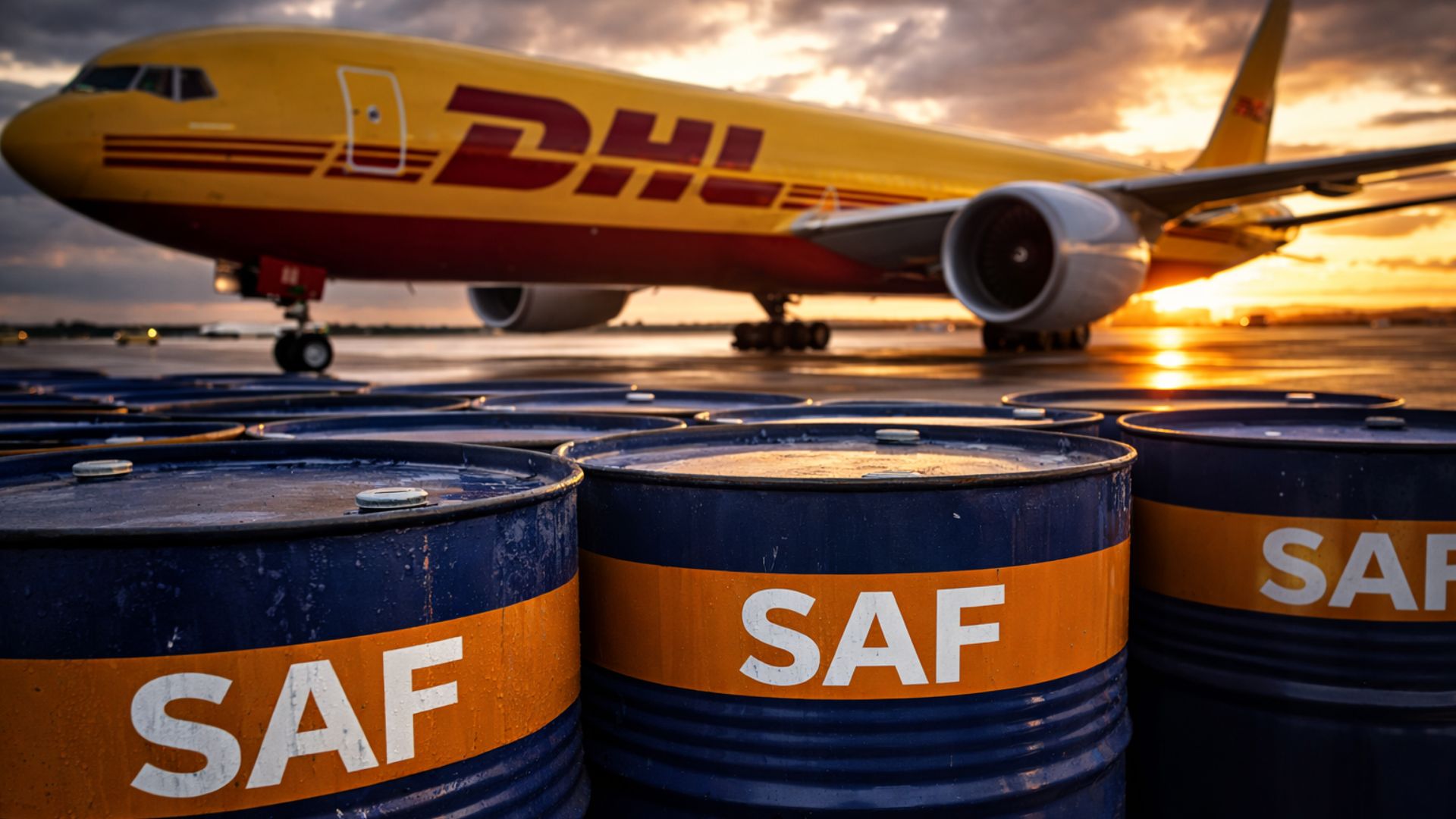
DHL Accelerates Its Energy Transition by Investing in Alternative Energy Sources Such as Biofuels, Electrification, and Renewable Energy, Strengthening Logistics Sustainability and Reducing CO₂ Emissions.
In January 2026, DHL started the year by reporting significant advances in its global decarbonization strategy, with results achieved throughout 2025. According to an article published by the website Tecnologística this Thursday (8), the company expanded the use of alternative energy sources across different modes of transport, accelerated the electrification of urban fleets, and increased the use of renewable energy in its logistics infrastructure. These actions reinforce the commitment to logistics sustainability and the goal of achieving net-zero greenhouse gas emissions by 2050.
DHL’s Integrated Strategy Based on Alternative Energy Sources
Right from the start, the data released show significant impacts on CO₂ reduction, both in air transport as well as maritime, road, and fixed operations. The strategy combines scale, innovation, and global partnerships, advancing the company in the energy transition in the international logistics sector.
The global strategy of DHL is structured to prioritize actions with the greatest climate impact and operational viability. The growing use of alternative energy sources is treated as a central business pillar, rather than an isolated initiative. This approach allows for consistent environmental gains without compromising operational efficiency.
-
A Canadian retiree creates a hydroelectric system on a real river, generating energy continuously throughout the day and demonstrating how the power of water can supply a house with stability even in a simple structure.

-
Petrobras reaffirms its commitment to the market and ensures that it will carry out the energy transition safely to maintain national sovereignty.
-
Researchers discover a possible hydrogen deposit of up to 46 million tons beneath an ancient coal basin, and the volume could exceed half of the entire global production.

-
China bets on the Fishery-PV model and transforms fish farms into giant solar plants, covering ponds with panels that generate energy while utilizing the same space for large-scale aquaculture production.

Additionally, the company connects its investments to clear interim goals, environmental performance reporting, and alignment with public policies and market demands. Logistics sustainability becomes part of the competitive advantage, influencing decisions by customers and partners in global supply chains.
DHL Air Transport and the Advancement of Renewable Energy with SAF
In air transport, DHL took a significant step by signing an agreement with Phillips 66 in the United States for the supply of over 240,000 metric tons of sustainable aviation fuel (SAF) over three years. The volume corresponds to approximately 314 million liters and will be directed mainly to operations on the U.S. West Coast.
The use of SAF allows for an estimated reduction of about 737,000 metric tons of CO₂ equivalent over the fuel’s lifecycle. This climate impact is comparable to the emissions of approximately 2,400 one-way flights between Los Angeles and Frankfurt. SAF is establishing itself as one of the main applications of renewable energy in air transport, especially on long-distance routes.
Maritime Biofuels Strengthen Logistics Sustainability
In the maritime sector, DHL increased the use of sustainable biofuels through a strategic partnership with CMA CGM. The company acquired 8,800 metric tons of second-generation sustainable marine fuel (SMF) of the UCOME type, produced from waste.
According to estimates based on the full lifecycle, the initiative is expected to reduce approximately 25,000 tons of CO₂ equivalent. This volume would be sufficient to keep a large container ship operational for several days, highlighting the potential of biofuels as alternative energy sources in global maritime transport.
Hydrogen and Alternative Energy Sources in Heavy Road Transport
In long-distance road transport, DHL advanced in tests with hydrogen-powered trucks in the Middle East. A memorandum of understanding signed with the company Hyperview in Saudi Arabia foresees a pilot project aligned with Saudi Vision 2030, including feasibility studies for refueling infrastructure.
Hydrogen emerges as a promising solution to reduce emissions on long routes, where battery electrification still faces technical limitations. The initiative broadens DHL’s portfolio of alternative energy sources, especially in emerging markets with high potential for logistics growth.
Last-Mile Electrification and Urban Logistics Sustainability
In the urban delivery segment, DHL has consistently accelerated the electrification of its last-mile fleet. Germany has been designated as a pilot market, with the goal of having 66% of final deliveries carried out with electric vehicles by 2030.
As of 2025, the Post & Parcel Germany division incorporated 2,400 new electric vans, expanding low-carbon delivery coverage to around one-third of the country’s postal codes. Currently, DHL’s electric fleet in Germany exceeds 35,000 vehicles, including vans, bicycles, and tricycles. This advancement reinforces logistics sustainability in urban centers, where reducing local emissions and noise is increasingly relevant.
DHL’s Logistics Infrastructure Based on Renewable Energy
Beyond transportation, DHL has been integrating renewable energy into its fixed operations. In Thailand, the company inaugurated a logistics center that operates entirely with its own electricity generation, through a 4.2 MWp solar power plant combined with a battery storage system.
This structure eliminates dependence on the conventional power grid and increases the energy resilience of the operation. The model combines efficiency, cost reduction, and lesser environmental impact, and is already planned to be replicated in future logistics units of the company in other countries.
Environmental Impacts and Long-Term Global Goals
The actions disclosed at the beginning of 2026 demonstrate how the combination of electrification, biofuels, and renewable energy can generate significant emission reductions at a global scale. DHL adopts a pragmatic approach based on real data, strategic partnerships, and already available technological solutions.
By diversifying its alternative energy sources, the company reduces operational risks and accelerates the transition to a low-carbon model. This balance between innovation and viability is essential to achieving climate neutrality by 2050, especially in a sector historically intensive in emissions.
A New Standard for Global Low-Carbon Logistics
The set of initiatives reinforces DHL‘s role as a benchmark in the sustainable transformation of the logistics sector. By expanding the use of alternative energy sources, investing in renewable energy, and accelerating electrification, the company consolidates logistics sustainability as a strategic growth axis.
More than meeting environmental goals, the strategy creates economic value, strengthens the brand, and responds to the expectations of customers and investors. For the global market, the movement indicates that the logistics of the future will be increasingly clean, efficient, and integrated with today’s climate solutions.







Seja o primeiro a reagir!