





 Portuguese
  English
  Spanish
  4 min of reading
  0 comments


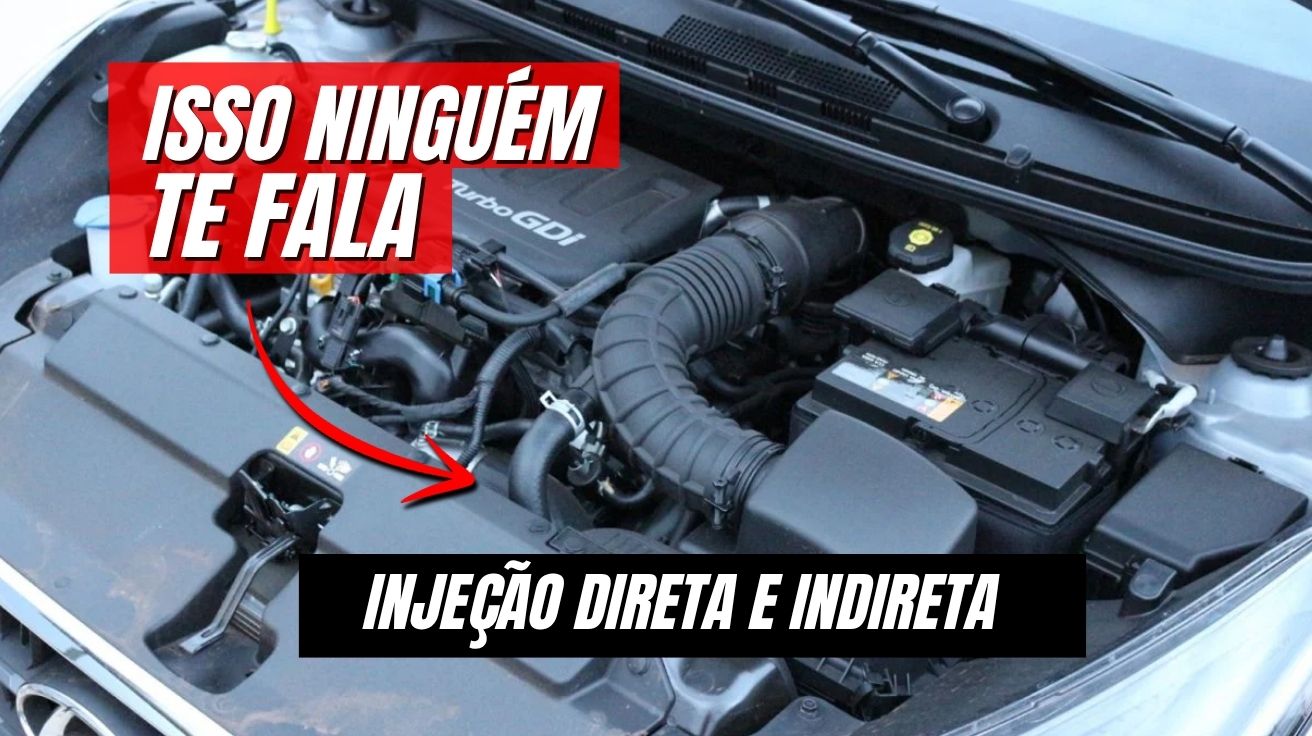
Comparing Direct and Indirect Injection Systems Reveals Impacts on Performance, Fuel Consumption, Maintenance, and Adaptation to New Environmental Requirements in Brazil, Showing How Engine Technology Can Transform the Driver’s Experience and the Future of Vehicles.
The competition between direct and indirect fuel injection influences the purchasing decision and the daily lives of millions of Brazilian drivers.
The injection system technology defines power, consumption, maintenance costs, and even the resale value of the vehicle.
But, after all, which system is better for your car and the context of Brazilian roads?
-
The coldest region of Brazil will experience very hot weather in the first days of April, with maximum temperatures reaching up to 35 degrees in Rio Grande do Sul, and only in the last week of the month an intense cold front is expected to finally lower the temperatures in the South and Southeast.

-
Iceberg A23a, one of the largest in the world, is undergoing accelerated collapse and may disappear: what explains the end of the ice giant?

-
Goodbye common refrigerator: essential appliance starts to gain competition with technology that preserves food for longer and reduces waste.

-
The simplest swap at home can reduce energy consumption by up to 90% without changing habits, using a technology that lasts up to 25 times longer and consumes only a fraction of the electricity.


How Indirect Injection Works
Indirect fuel injection, predominant in popular Brazilian cars, injects fuel into the intake manifold, mixing it with air before reaching the combustion chamber.
This system, which replaced the carburetor in the 1980s, is known for its robustness and simplicity.
According to Bosch, indirect injection favors the use of fuels of varying quality, common in various regions of the country, and allows for lower maintenance costs.
“The robust operation and lower maintenance costs are strengths of indirect injection,” says automotive engineer Fabiano Pimenta in an interview with UOL Carros.
National cars like the Fiat Argo 1.0, Chevrolet Onix aspirated, and Renault Kwid exemplify the predominance of this system in compact models.
What Is Direct Injection and How Does It Work
Direct injection, a global trend in efficiency and performance, injects fuel directly into the combustion chamber, controlling the amount and exact timing of combustion.
This technical advancement provides greater precision and energy utilization, increasing power and reducing consumption.
According to the Mauá Institute of Technology, the thermal efficiency of the system can exceed that of indirect injection by up to 15%.
Models like the Volkswagen T-Cross 1.0 TSI, Chevrolet Tracker Turbo, and Toyota Corolla 2.0 Dynamic Force, all featuring direct injection, illustrate the performance and consumption gains achieved.
According to INMETRO, these vehicles achieve urban averages of up to 11.6 km/l, surpassing rivals with aspirated engines and indirect injection.
Difference Between Direct and Indirect Injection: Advantages and Disadvantages
Advantages of Indirect Injection
- Simplicity of the system and ease of maintenance
- Lower repair costs
- Lower sensitivity to fuel quality
- Robustness in adverse conditions
Disadvantages of Indirect Injection
- Limited thermal efficiency compared to direct injection
- Lower performance in modern engines, especially turbocharged ones
Advantages of Direct Injection
Greater power and torque with lower fuel consumption
- Superior energy efficiency
- Meets stricter environmental regulations, such as Proconve L7
- Allows for higher compression ratios and immediate throttle response
Disadvantages of Direct Injection
- Higher maintenance and repair costs
- Sensitivity to low-quality fuels, which can cause carbon buildup
- Requires specialized labor
Maintenance and Durability: What to Know Before Choosing
Experts from the Brazilian Association of Automotive Engineering (AEA) warn that direct injection, despite its benefits, requires strict preventive maintenance and quality fuel.
Reviews can cost up to three times more than vehicles with indirect injection, according to Sindirepa-SP.
On the other hand, indirect injection proves to be more resistant to Brazilian conditions, with abundant replacement parts and workshops capable of servicing throughout the country.
Fuel Consumption, Performance, and Emissions
Comparisons from the Brazilian Vehicle Labeling Program (PBEV) by INMETRO show that vehicles with direct injection, like the Tracker Turbo and T-Cross, surpass equivalent models with indirect injection in fuel consumption and emissions.
Energy efficiency can vary from 8% to 15% in favor of direct injection.
Additionally, direct injection facilitates the reduction of CO₂ and particles but requires additional technologies, such as GPF (Gasoline Particulate Filter), common in European cars but still rare in Brazil.


Trends in the Brazilian Automotive Market
According to Bright Consulting, about 70% of the Brazilian fleet still uses indirect injection, reflecting the cost-benefit and profile of the national consumer.
The adoption of direct injection is growing in premium, turbo, and hybrid segments, especially due to the need to comply with environmental legislations such as Proconve L7, as highlighted by Anfavea.
Many manufacturers, such as Toyota, are adopting dual injection in their hybrid models, combining direct and indirect to extract maximum efficiency, performance, and durability, as noted in a report by UOL Carros.
What Is the Best Option for Your Car in Brazil?
The choice between direct or indirect injection depends on the driver’s profile, maintenance budget, and type of vehicle use.
Those seeking robustness, low cost, and easy maintenance find indirect injection to be the best ally.
For those who value performance, fuel economy, and are willing to invest in rigorous reviews, direct injection is the more modern and efficient path.
With advancements in legislation and the arrival of new technologies, do you think that direct injection will become the majority on Brazilian roads by 2030?



-

-

2 pessoas reagiram a isso.