





 Portuguese
  English
  Spanish
  5 min of reading
  15 comments


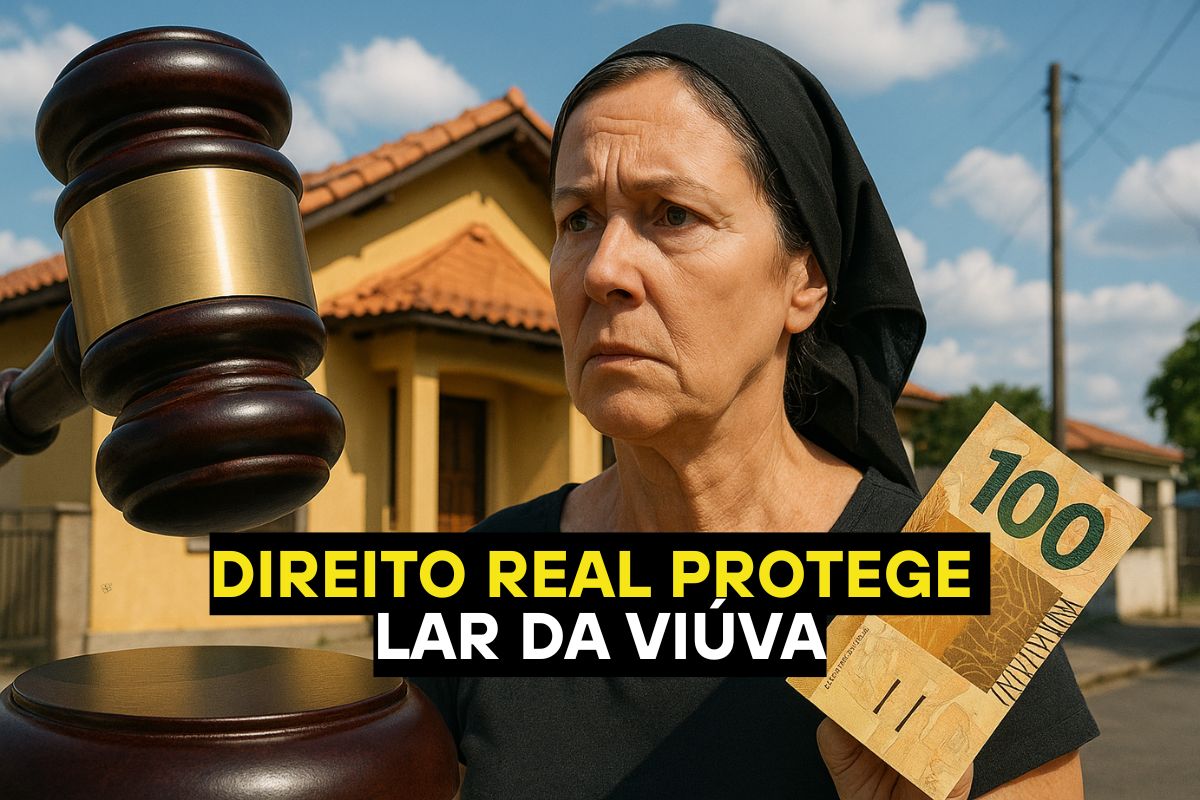


The Real Right of Habitation Guarantees Lifetime Housing in the Family Property to the Surviving Spouse or Partner, with Rules and Limits Defined by Law.
The big question after the loss of a partner is whether the widow can remain in the family property even without inheriting other assets. The legal answer is yes, thanks to the real right of habitation, which prioritizes the housing and dignity of the survivor, regardless of the division. This right is personal, lifelong, and does not require the widow to receive a share of the estate, as long as objective requirements are met.
In practice, the real right of habitation allows the spouse or partner to continue residing in the family property that served as the couple’s home at the time of death. The aim is to prevent the survivor from being forced to leave the residence, reducing conflicts in the estate and preserving the social function of the housing.
What is the Real Right of Habitation
The real right of habitation is the legal guarantee that ensures the surviving spouse or partner the use of the family property as residence. It is independent of the asset regime and applies to both marriages and recognized stable unions. The law protects the home before discussing asset division, placing the residence at the center of family protection.
-
The noise law will no longer be in effect at 10 PM starting in June with a new rule valid during the 2026 World Cup.

-
The Chamber opens a debate on driver’s licenses at 16 years old as part of a reform that includes around 270 proposals to change the Brazilian Traffic Code and may redesign rules for licensing, enforcement, and circulation in the country.

-
The new Civil Code could revolutionize marriages in Brazil with “express divorce” and changes that could exclude spouses from inheritance.
-
Banco do Brasil sues famous influencer for million-dollar debt and intensifies debate on delinquency, risks of seizure, and direct impact on Gkay’s credibility.


This right is different from inheriting. The survivor may not receive shares of the estate but can still maintain direct possession of the family property to live in. It does not need to be included in a will, as the protection comes directly from the law and must be formalized in the inventory.
Who Has the Right and When It Applies
The right is held by the legally married spouse under any regime and the partner in a proven stable union. The family property must be the one used as the couple’s residence at the time of death. The protection applies to the home, not extending to vacation, commercial, or rental properties.
As a rule, the right applies when the family property is the only residential asset inventoried. The existence of other assets does not invalidate the right of habitation, but the protected residence must be the one that housed the family. The focus is on the continuity of housing and the stability of the survivor.
Limits, Loss, and Possible Mitigations
The right is lifelong and personal, but it can be lost if the survivor remarries or forms a new stable union. It can also be limited in exceptional situations, for example, when maintaining the right causes significant and proven harm to the heirs, and the survivor has full capacity to support themselves elsewhere.
There are scenarios where the right does not apply, such as when the deceased was only a usufructuary of the property or when the family property belongs, in co-ownership, to third parties unrelated to the couple. In these cases, there is no exclusive possession of the couple to be protected, which removes the applicability of habitation.
Duties of the Spouse or Partner Who Remains
The one who stays in the family property assumes the ordinary expenses. This includes property taxes, condo fees, water, electricity, and maintenance. Heirs cannot charge rent from the survivor, but they can require regular payment of expenses to avoid deterioration of the common asset.
Registering the right in the property record is advisable, although it is not a condition of validity. The registration provides publicity and security against third parties, reducing risks in future transactions and preventing litigation.
Difference Between Habitation and Usufruct
Habitation only guarantees living in the family property. It is a restricted, personal, and non-transferable right that does not allow renting the asset to third parties or ceding its use. On the other hand, usufruct is broader, allowing the use and enjoyment of fruits, including receiving rents, according to the conditions of the title that established it.
While usufruct can encompass several assets and have its own rules of duration, habitation focuses exclusively on the protection of the marital home after death, maintaining the survivor’s connection to the family residence.
How to Claim the Right in the Inventory
The recognition of the real right of habitation must be included in the inventory, whether judicial or extrajudicial. It is important that the survivor expresses their intention to remain in the family property and presents documents proving the couple’s residence. Specialized legal assistance helps avoid nullities and shape the division without violating the right to housing.
In case of disputes by the heirs, it is possible to propose a declaratory action for the court to recognize the habitation. Proofs of stable union, joint accounts, and history of residence strengthen the survivor’s case and expedite the resolution of the conflict.
Effects on the Division and Sale of the Property
The ownership of the family property can be shared among the heirs, but direct possession remains with the survivor as long as the habitation lasts. Forced sale of the asset, while the habitation is in effect, is generally not allowed, precisely to ensure that the protection of housing is not undermined.
If all agree and there is a solution that preserves the survivor’s housing, it is possible to negotiate alternatives, such as the acquisition of another equivalent property. The priority will always be to protect the residence of the spouse or partner, balancing the protection of the home with the heirs’ legitimate interests.
What to Observe in Special Situations
If there is co-ownership with third parties unrelated to the couple, the right tends not to apply. If the family property is encumbered with usufruct by another person, usufruct prevails. Voluntary renunciation is possible, by public deed or in the inventory itself, when the survivor opts for another patrimonial solution.
Finally, the right of habitation should not be confused with the right to remain for social rental purposes. The survivor cannot turn the family home into a source of income, as the purpose is exclusively for their own housing.
The widow can indeed live her whole life in the family property even without inheriting other assets, as long as legal requirements are met and the limits of the institute are respected. Habitation is a housing protection, not a shortcut to income or economic disposition of the asset, and its formalization in the inventory prevents disputes and provides legal security for all parties involved.
Have you ever gone through an inventory in your family where the family property generated conflict between heirs and the surviving spouse? In your opinion, should habitation always be lifelong, or can there be limits in specific cases, such as when there is a single asset and dependent heirs? Share your experience in the comments and help qualify the debate.










Estou passando por isso em caso de falência da minha mãe onde os herdeiros brigam pela venda da casa que, atualmente, luto para fique como fonte de renda para uma das irmãs, que é especial ( incapaz ) e que precisa de assistência e não tem, por parte dos irmãos, exceto a minha, que já cuido dela há 14.anos.
Em relação a viúva perder os seus direitos de herdeira, é uma tremenda de uma injustiça. Ora, e nos casos em que a mulher se une ao homem já idoso e cuida dele, e ele tem filhos que não ligam para o pai, e o idoso não tem mais condições de conquistar bens que seriam durante o período do matrimônio. Daí fica a mulher sacrificando o tempo, a vida dela pra cuidar e no final, ficar nas mãos dos filhos, que não cuidaram do pai quando estava vivo, como é que vai abrir mão de algo em favor da viúva!? Isso é um absurdo. É revoltante.Nunca tinha visto tamanha injustiça.
Penso que criaram esse absurdo em prol de uma ” dama ” que está no poder, e que quando desocupar a casa pode sair fora e não vai levar nada do …
Quem será !? Alguém imagina quem seja !?
Meu pai faleceu, a companheira, requereu união instável, onde tbm ficou com uma pensão vitalícia em torno de 15 mil, tbm ficou com apartamento, único imóvel quitado, tivemos despesas com inventários e dívidas do meu pai, ela por sua vez já tinha uma pensão do ex marido e morava com a família… é possível recuperar esse imóvel p os herdeiros pagarem dividas e inventário?
Os casos dos comentários indicam a necessidade de consultar um profissional especializado e qualificado, para esclarecer dúvida e propor as medidas judiciais cabíveis.
Procure um advogado de sua confiança, ou um especialista em inventários!
O parecer de um especialista ajuda a solucionar problemas, reverter prejuízos e garantir a solução de conflitos de forma justa e igualitária.