





 Portuguese
  English
  Spanish
  5 min of reading
  0 comments


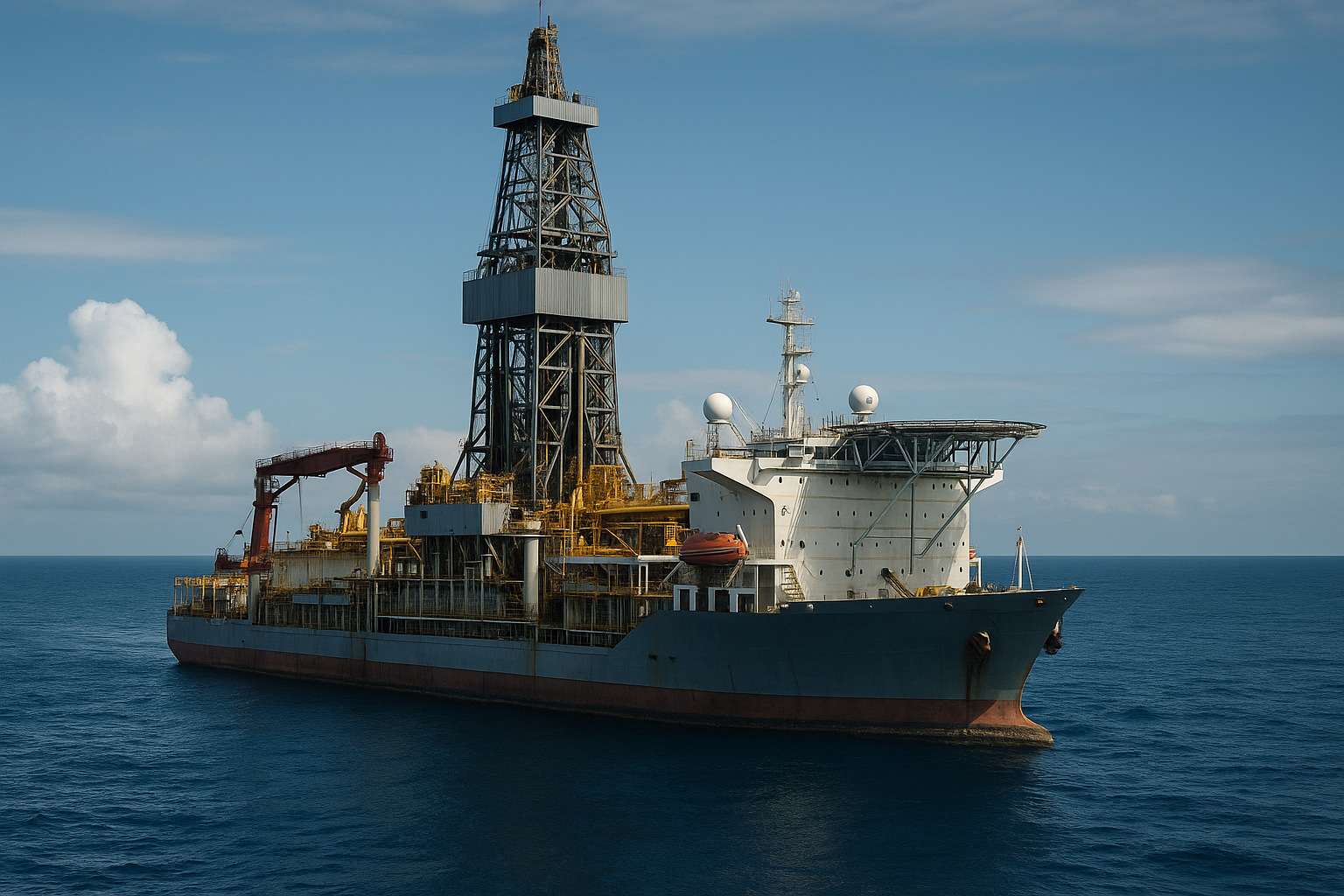
Understand How Drillships Revolutionize Offshore Exploration and Directly Impact the Energy and Oil Market in Brazil and the World.
Drillships are highly specialized vessels that play an essential role in offshore oil exploration and production.
Although they may seem just another type of ship among many that cross the oceans, their importance is undoubtedly strategic for the global energy industry and the global economy as a whole.
Therefore, in this article, you will understand what drillships are, how they originated, what their main function is, and, above all, how they directly impact the international market, affecting various production chains.
-
Europe is trying to create an ammonia-powered marine engine without auxiliary fuel, which could unlock the race for giant emission-free ships. The technology aims to eliminate one of the biggest obstacles to clean maritime propulsion.
-
A 4,500-ton frigate with just over 100 crew members, state-of-the-art radar, and cruise missiles is being touted as the new standard of naval warfare in the 21st century.
-
The first commercial hydrogen-powered ferry enters operation in the U.S., eliminates the use of diesel, uses fuel cells to generate clean energy on board, and transforms San Francisco Bay into a landmark of the new era of emission-free navigation.
-
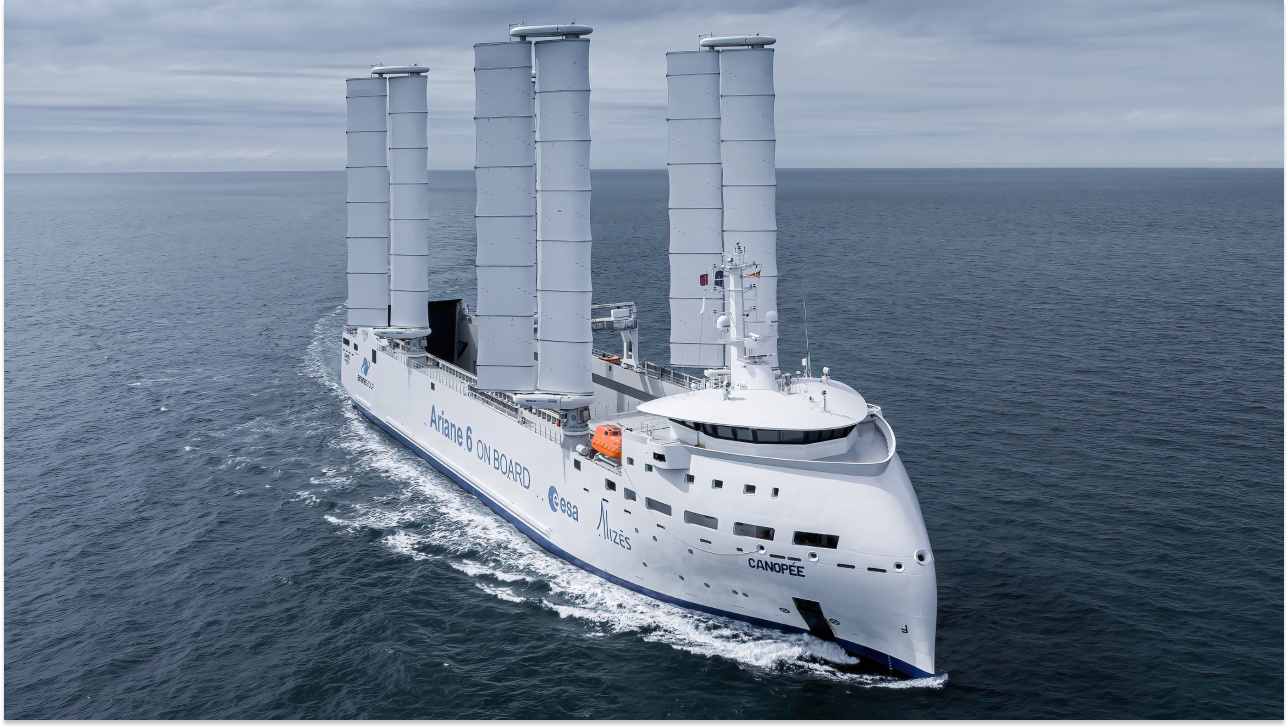
With a length of 121 meters and four rigid sails of 36 meters that automatically rotate to capture the wind, Canopée is the world’s first hybrid industrial cargo ship powered by wind, used to transport rockets and reduce fuel consumption by up to 30% on transoceanic routes.

What Are Drillships and How Did They Emerge?
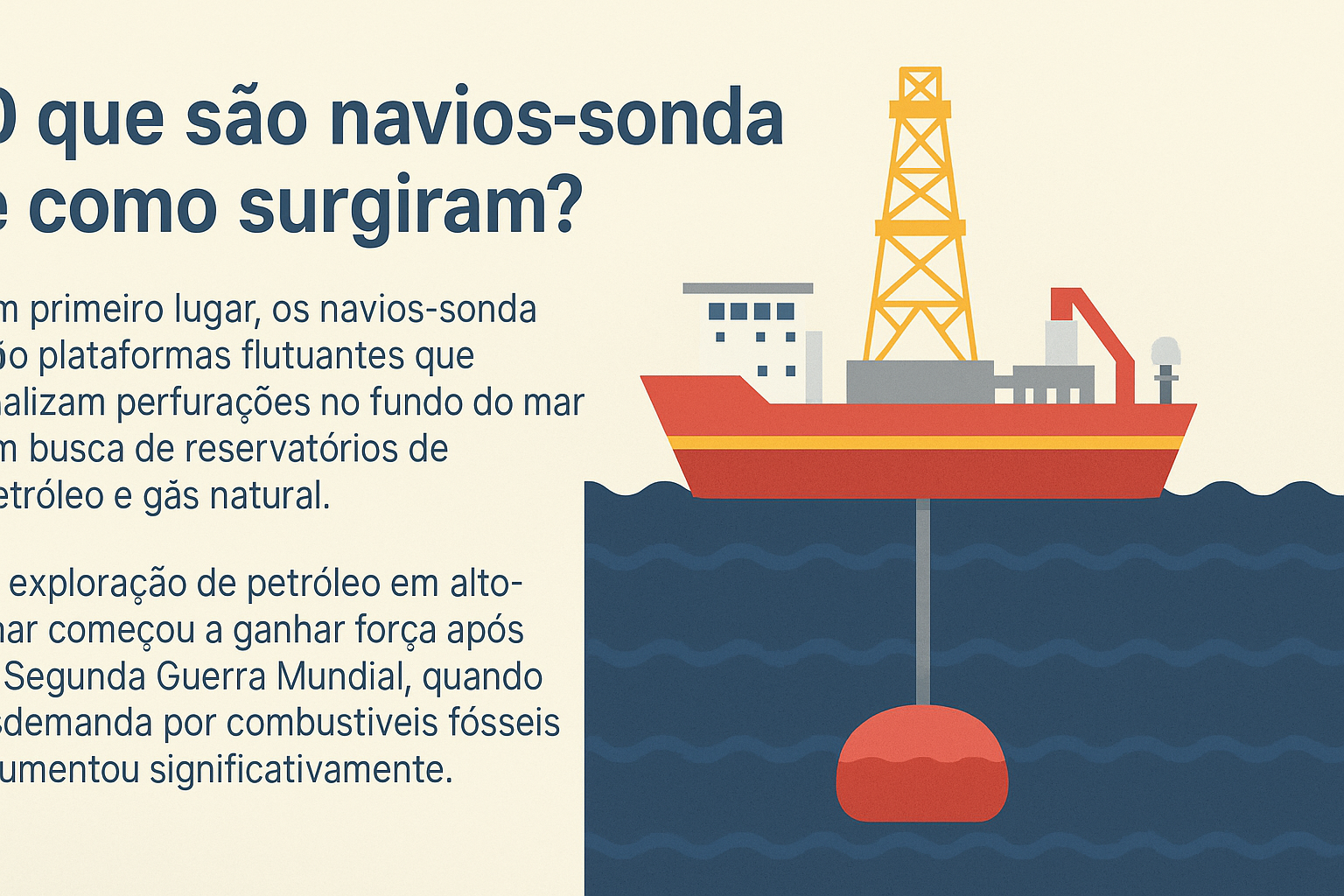
First and foremost, drillships are floating platforms that perform drilling on the seabed in search of oil and natural gas reservoirs.
With vertical drilling systems and robust dynamic positioning structures, they operate in deep and ultra-deep waters where fixed platforms simply cannot reach.
Additionally, the word “drill” comes from the verb “to drill,” which means to investigate or examine in depth.
In this sense, the investigation occurs in the seabed, thousands of meters below sea level.
Therefore, these ships function as mobile and self-sufficient laboratories, crucial in the early stages of offshore exploration.
Offshore oil exploration began to gain momentum after World War II, when the demand for fossil fuels increased significantly.
According to the National Agency of Petroleum, Natural Gas and Biofuels (ANP), the first offshore drillings date back to the 1940s and were conducted in shallow waters near the coast with fixed platforms.
However, as onshore and coastal fields became exhausted, the need arose to explore deeper and more remote areas.
It was only between the 1970s and 1980s that engineers developed the first modern drillships.
As reported by the Organization of the Petroleum Exporting Countries (OPEC), these vessels paved the way for a new era in offshore exploration, allowing access to depths that were previously impossible.
This technological advancement drove significant changes in the maritime and energy industries, impacting the geopolitics of oil and the global market.
The Technology Behind Drillships
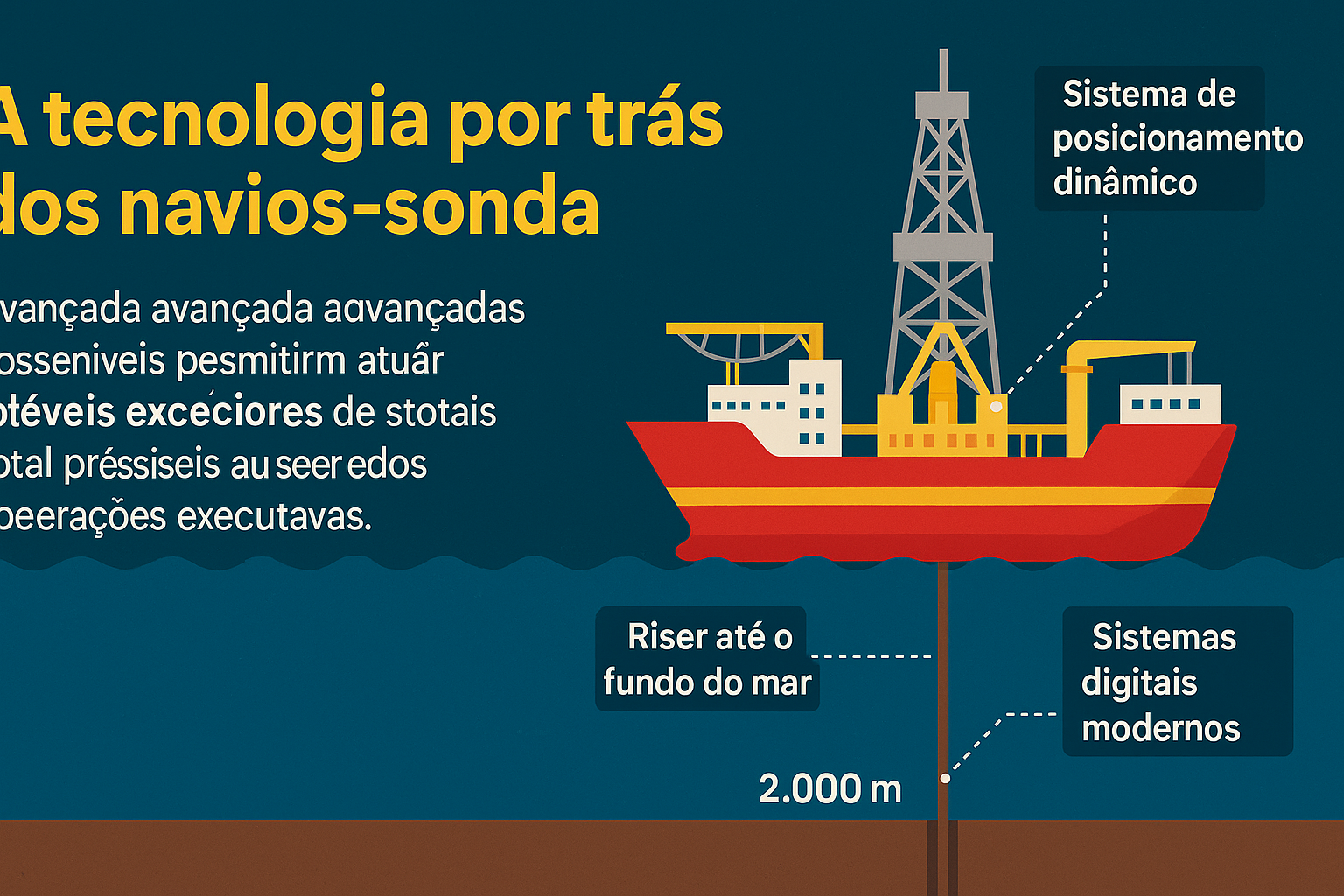
With advancements in naval engineering, it became possible to build ships capable of maintaining stability at sea and drilling at depths exceeding 2,000 meters.
According to a 2022 OPEC report, modern drillships can drill up to 10,000 meters of total depth, combining the water column and the seabed.
These vessels use dynamic positioning (DP) systems, which automatically correct the ship’s location according to winds, currents, and tides—without the need for anchors.
The Petrobras, in its 2023 annual report, highlights that this technology ensures precision and safety for operations in deep waters.
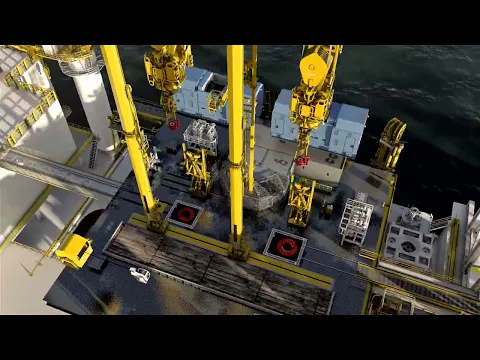
Moreover, at the center of the ship, a drilling tower connects to the seabed through a riser—a vertical tube that conducts equipment to the ocean floor.
This structure allows for precise drilling, even under adverse conditions.
Modern digital systems control all operations and reduce environmental risks. Sensors and software monitor activity in real-time and provide data that help operators make quick and safe decisions.
Aboard, automation has also gained ground. Robotic arms, artificial intelligence, and integrated control panels have made work more efficient and safe.
Thus, the combination of mechanical robustness and technological precision defines the new generation of drillships.
Operation, Analysis, and Results at Sea
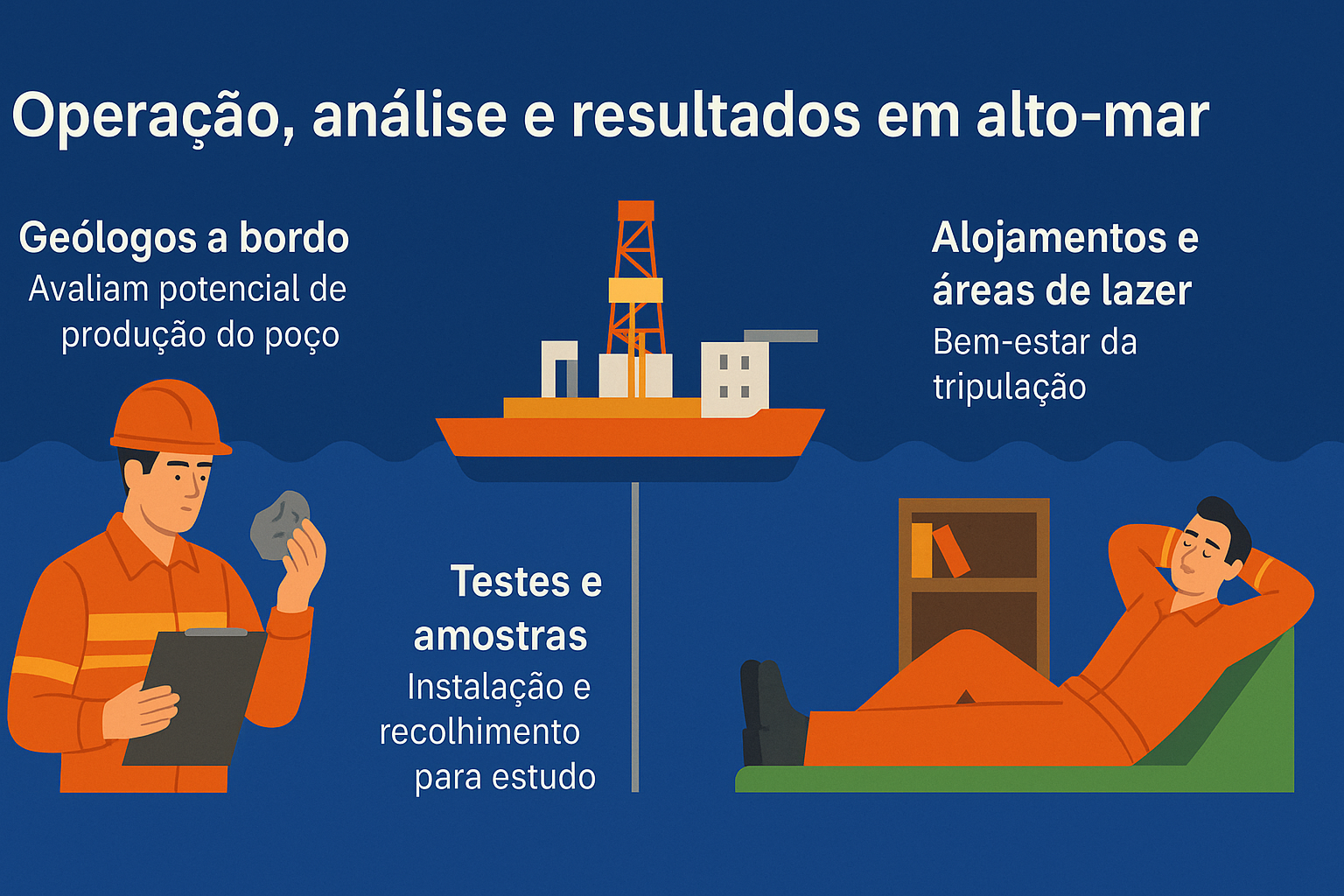
Geologists on board analyze all material extracted from the subsoil, such as rocks and fluids. Based on this, they evaluate the production potential of the well.
In addition, drillships conduct formation tests, install casings, and collect samples for more detailed studies.
Due to their design, modern projects allow the vessel to operate for weeks without external support.
According to the Brazilian Institute of Oil and Gas (IBP), the highly qualified crew enjoys comfortable accommodations, dining rooms, control rooms, laboratories, and leisure areas.
Therefore, despite being technical, the environment must ensure welfare and safety.
On the other hand, operating a drillship is expensive. Just one day can exceed US$ 500,000, according to data released by Petrobras in 2023.
For this reason, efficiency and planning become key factors in ensuring a return on investment.
Moreover, teams working on these vessels consist of professionals from various fields: engineers, divers, system technicians, drill operators, among others.
Each contributes to ensuring that the mission is executed with precision and safety.
The Influence of Drillships on the Energy Market
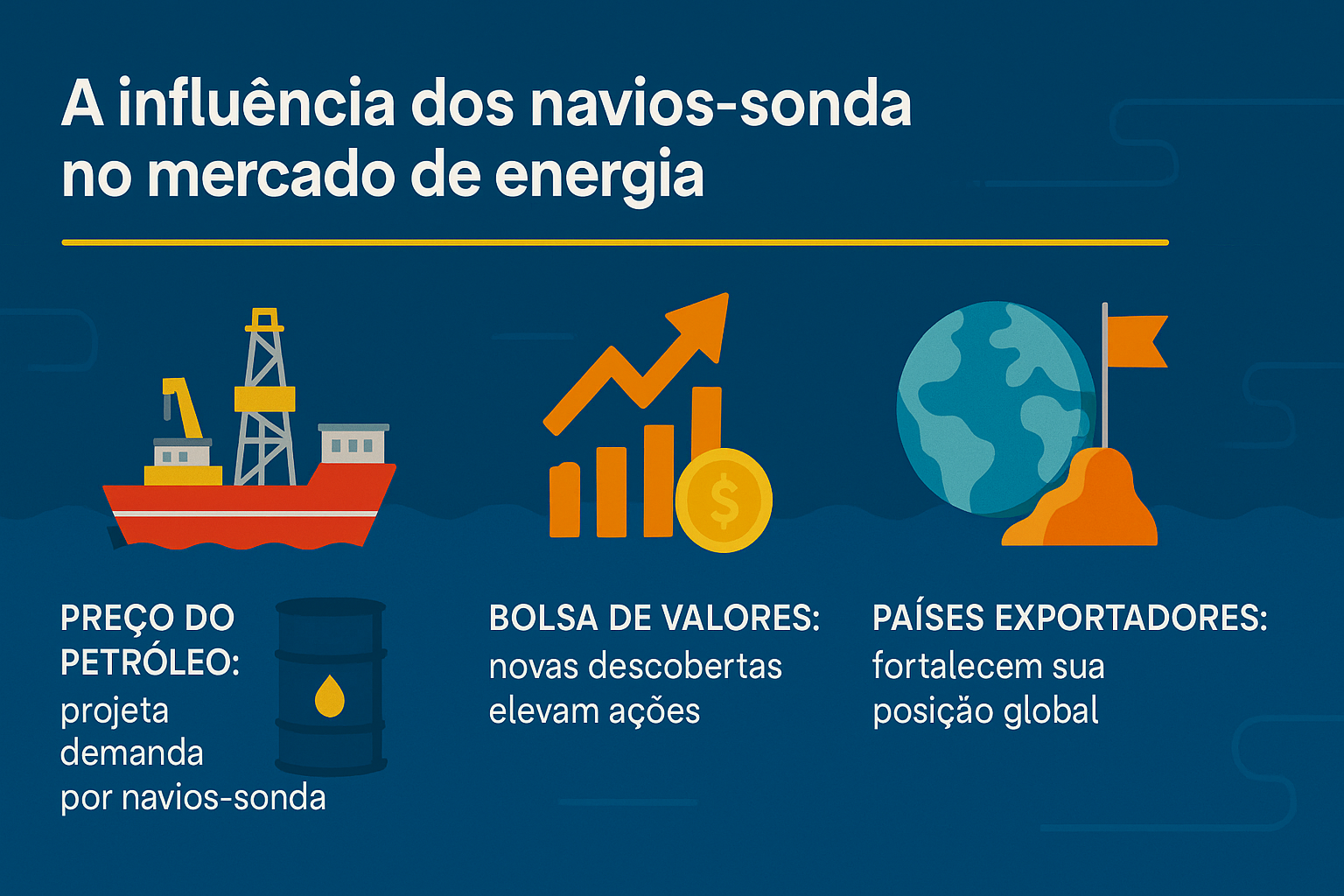
Indeed, drillships have a strong influence on the global oil market.
When the price of oil rises, companies increase their investments in offshore drilling, which elevates the demand for these vessels.
This stimulates sectors such as shipbuilding, logistics, parts supply, and technical labor.
On the other hand, during periods of falling oil prices, many companies reduce their projects, which decreases the need for drillships and impacts the entire production chain.
Furthermore, the discoveries made by these vessels impact the stock market and the strategic positioning of exporting countries.
A new discovery can raise a drilling company’s stock prices and attract international investments to the sector.
Countries like Norway, the United States, and Brazil stand out in this scenario.
According to data from the World Bank in 2024, each uses drillships to strengthen their energy production and position themselves in the global market.
Innovation and Sustainability on the Horizon
Although the advancement of renewable sources is notable, oil remains essential for sectors such as maritime transport, aviation, and the chemical industry.
For this reason, drillships will remain relevant for many years.
Consequently, companies in the sector are investing in hybrid propulsion, the use of biofuels, and artificial intelligence to make these vessels more sustainable.
The goal is to reduce emissions and optimize resources while maintaining safety and productivity.
Additionally, retrofit—or modernization of older vessels—has gained momentum in recent years. The shipbuilding industry adapts existing ships to meet new environmental and operational requirements.
Finally, recent contracts require vessels aligned with ESG (environmental, social, and governance) practices. This pushes the market to adopt more responsible and transparent practices.
In summary, drillships are much more than sophisticated vessels.
They represent humanity’s ability to explore the unknown and to transform the seabed into a source of energy, wealth, and knowledge.









-

2 pessoas reagiram a isso.