





 Portuguese
  English
  Spanish
  5 min of reading
  0 comments


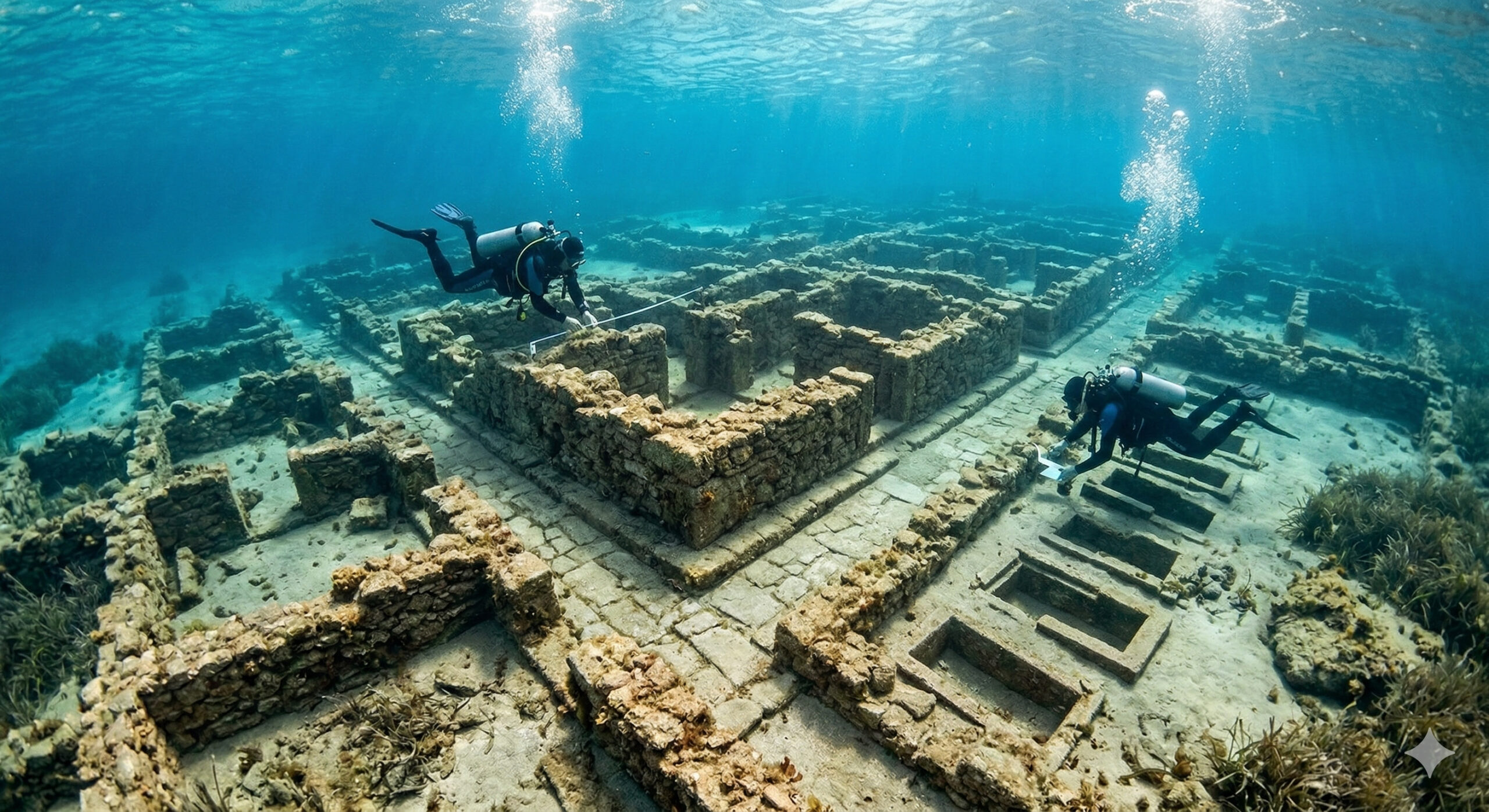
Submerged city of Pavlopetri, in Greece, reveals streets, tombs, and commerce 5,000 years ago in one of the oldest sites in the world.
In 1967, British oceanographer Nicholas Flemming identified, off the southern coast of Greece, near the region of Laconia, the remains of an ancient submerged city now known as Pavlopetri. According to a scientific record published by the Nature magazine in 2009, the site was discovered by Flemming in the 1960s and subsequently became the subject of detailed archaeological studies, establishing itself as one of the most important examples of submerged settlement in the world. Decades later, new research expanded knowledge about the site. According to the Pavlopetri Underwater Archaeology Project, conducted by the University of Nottingham, a digital mapping carried out in 2009 utilized sonar and advanced technologies to record streets, buildings, tombs, and urban structures with a high level of detail.
The most relevant fact is that Pavlopetri is about 5,000 years old and shows clear signs of urban planning, including organized streets, buildings, and burial areas — rare features for such ancient settlements. Archaeological studies indicate that the city remains submerged at a depth of about 3 to 4 meters, preserving almost all of its original urban layout.
Urban structure reveals unusual organization for the Bronze Age
Archaeological surveys show that Pavlopetri was not a rudimentary settlement, but rather a structured community. The streets follow organized patterns and connect different areas of the city, suggesting prior planning.
-
The new “monster” submarine of the United States Navy weighs nearly 8,000 tons, is 115 meters long, does not require fuel, and can operate for long periods submerged; meet the USS Massachusetts (SSN-798), which arrives to strengthen the military power of the U.S. amid global tensions.
-
In Sweden, Embraer subjects the KC-390 to rigorous testing in extreme cold, conducts operations in the snow with 100% success, and expands its presence among NATO countries.

-
An 8-kilometer submerged city discovered 36 meters deep in the Arabian Sea may be 9,500 years old and, if confirmed, would be older than any known civilization and coincide with the legendary Dwarka described in Hindu texts.
-
Roman game becomes an enigma for 40 years in the Netherlands, until AI and 3D scanning test 100 rules, run 1,000 simulations, and identify a “blocking game” that no one has been able to decipher since 1984.



The identified buildings have internal divisions and courtyards, indicating residential and possibly administrative use. Tombs found nearby reinforce the idea of an established community, with defined social practices and rituals.
This urban organization places Pavlopetri among the oldest examples of urban planning ever recorded, demonstrating a significant level of social complexity for the time.
Digital mapping revealed details invisible for decades
Technological advancement was crucial to understanding the extent of the site. In 2009, researchers used underwater scanning techniques and three-dimensional modeling to map the city accurately.

This work revealed new structures that had not been previously identified, expanding the known area of the settlement. The use of technology allowed for the digital reconstruction of parts of the city, facilitating more detailed analyses.
The application of 3D modeling transformed Pavlopetri into one of the best-documented submerged archaeological sites in the world.
Evidence indicates commercial connection with the Minoan civilization
Fragments of pottery found at the site indicate that Pavlopetri maintained contact with the Minoan civilization, located on the island of Crete. These artifacts suggest the existence of already established maritime trade routes during the Bronze Age.
The presence of these materials reinforces the strategic importance of the city, which likely served as a trading and connection point between different regions of the Aegean Sea.
This evidence demonstrates that even thousands of years ago, coastal communities were already participating in complex trade networks.
Sinking was caused by earthquakes and rising sea levels
The city was not built underwater. Studies indicate that Pavlopetri was gradually submerged due to a combination of natural factors.
Sismic events in the region caused changes in the terrain, while rising sea levels contributed to the progressive flooding of the area. This process occurred over centuries, resulting in the underwater preservation of the site.
The slow submersion helped keep the structures relatively intact, protected from erosion caused by human activities.
Aquatic preservation keeps rare details for archaeology
Unlike ancient cities on land, which have suffered destruction over time, Pavlopetri remained relatively preserved underwater.
The absence of continuous human occupation and the natural protection provided by the underwater environment allowed for the conservation of important structural elements.

This makes the city a natural laboratory for the study of ancient societies, offering information that would be difficult to find in terrestrial sites.
The city is located just a few meters from the surface, making it accessible for researchers and divers. This feature has contributed to its popularity but has also brought challenges.
The proximity to the surface makes the site vulnerable to impacts caused by anchors, vessels, and human activities. For this reason, Greek authorities are discussing ways to protect and manage the site. The preservation of Pavlopetri depends on measures that balance access and conservation.
Pavlopetri stands out among submerged cities of the world
Although there are other submerged cities, Pavlopetri is distinguished by its antiquity and level of preservation. Its urban planning and internal organization provide a detailed panorama of how ancient communities lived.
The combination of age, accessibility, and richness of detail makes the site unique in the context of underwater archaeology.
This set of factors places Pavlopetri as one of the most relevant discoveries for the study of early urban societies.
Scientific importance goes beyond archaeology
The study of Pavlopetri contributes not only to archaeology but also to fields such as geology and climatology. The analysis of the city’s submersion provides data on sea level variations and seismic activity over time.
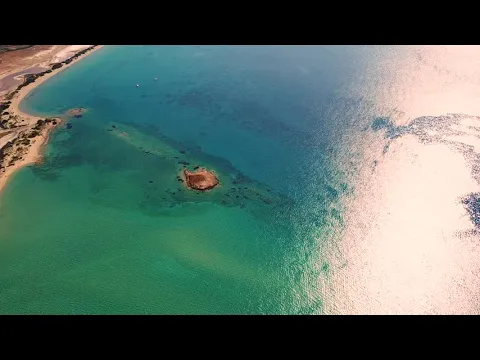

This information helps to understand natural processes that continue to occur today, offering perspectives on future environmental changes.
The city serves as a historical record that connects the past and present in different areas of knowledge.
Pavlopetri represents one of the most impressive examples of underwater archaeological preservation. Its antiquity, organization, and state of conservation offer a detailed view of how ancient societies were structured.
By revealing streets, buildings, and evidence of trade in a 5,000-year-old settlement, the city reinforces the complexity of early human civilizations and expands understanding of the development of coastal communities in the ancient world.









Seja o primeiro a reagir!