





 Portuguese
  English
  Spanish
  6 min of reading
  0 comments


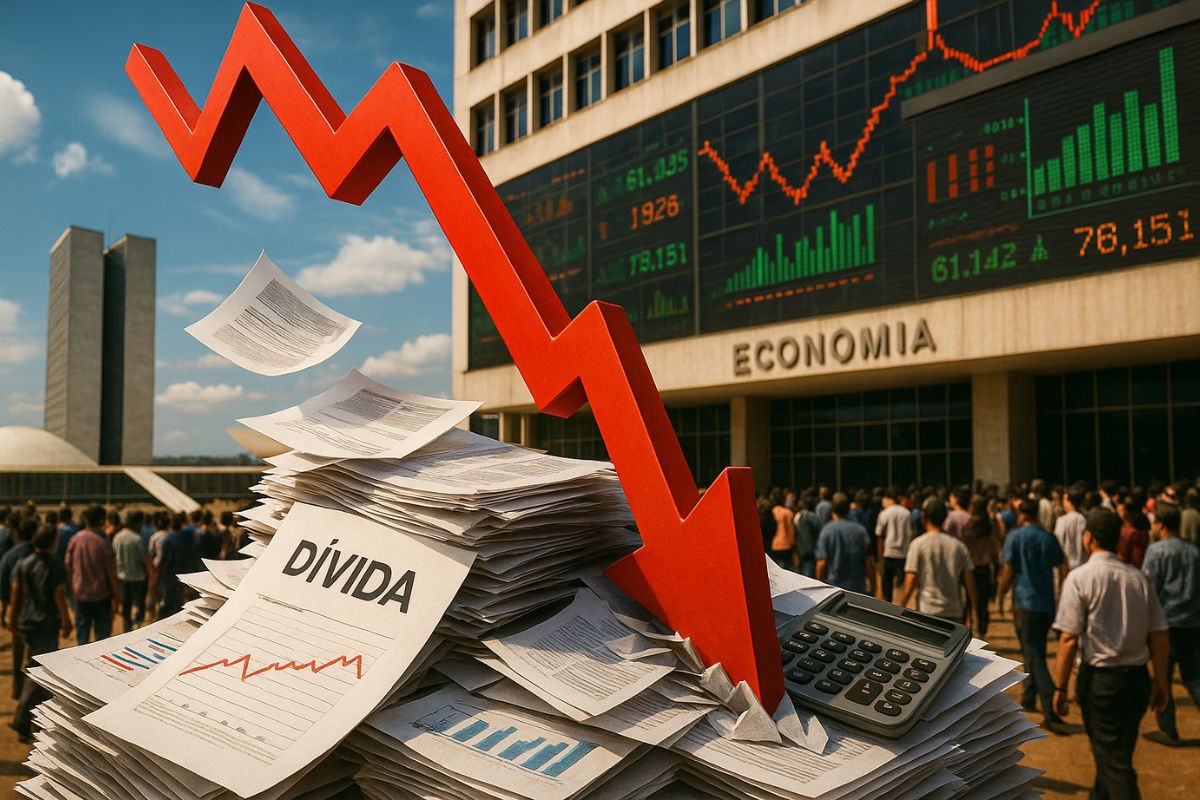
In The Midst of Deteriorating Public Accounts and Successive Goal Frustrations, Public Debt Returns to the Center of Economic Debate as a Real Risk Factor for the Country’s Fiscal Stability. The Alert is Not Just Short-Term, Since the Trajectory of Public Debt Indicates Increasing Pressure on the Budget, Interest Rates, and the State’s Ability to Finance Public Policies Without Resorting to New Rounds of Borrowing.
At the Same Time, The Combination of High Public Debt, Credibility-Damaged Fiscal Rule, and Weak Economic Growth Creates a Scenario Where the Word Collapse Ceases to Be Mere Rhetorical Exaggeration.
Starting in 2027, the Next Government Will Face a Heavier Fiscal Heritage, with Little Room for Errors and Intense Pressure for Urgent Reforms That Reestablish Some Degree of Predictability in Public Finances.
Why Public Debt Concerns Markets and The Government So Much
Public Debt is the Accumulated Stock of Government Commitments Over Time, Continuously Refinanced Through the Issuance of Bonds.
-
Brazilian city bets on the business environment to generate jobs and attract investments in the energy sector — secretary reveals strategy at Macaé Energy 2026.

-
50 viaducts, 4 tunnels, 28 bridges, and 40 kilometers of bike paths: BR-262 in Espírito Santo will receive 8.6 billion reais for the largest engineering project in the state’s history, inspired by the Immigrant Highway in São Paulo.

-
Brazil produces too much clean energy and doesn’t know what to do with it: over 20% of solar and wind capacity was wasted in 2025 while investors flee and 509 renewable generation projects were abandoned in the last year.

-
Piauí will produce a new fuel that replaces diesel without needing to change anything in the truck’s engine and reduces pollutant gas emissions by half: truck drivers from all over the Northeast are already celebrating the news that will arrive later this decade.

In Environments of Stability and Fiscal Discipline, Public Debt Can Be Managed Without Major Upsets, Provided It Grows at a Rate Compatible with GDP and with Sustainable Interest Rates.
The Problem Starts When the Trajectory of Debt Begins to Rise Faster than the Country’s Ability to Generate Income.
In This Context, Confidence is a Central Asset.
The Greater the Perception of Risk, the Higher the Interest Rates Required by the Market to Finance Public Debt Tend to Be.
This Reinforces the Problem, as Spending on Interest Increases, Fiscal Results Deteriorate, and the Need for New Issuances Grows.
When Financing Becomes Expensive and the Credibility of Fiscal Policy is Called into Question, the Risk of a Fiscal Collapse Ceases to Be Theoretical and Becomes Part of the Economic Team’s Working Scenarios.
Fiscal Framework, Spending Ceiling, and the Erosion of Credibility
In Recent Years, the Country Has Abandoned the Old Spending Ceiling and Adopted a New Fiscal Framework, with Goals Conditional on Revenue Performance and Limits on Expenditure Growth.
In Theory, The Objective Was to Signal Commitment to the Sustainability of Public Debt While Also Allowing Some Flexibility for Countercyclical Policies and Investments.
In Practice, the Implementation of the Rules Faced Deviations, Goal Changes, and Successive Exceptions.
The Cumulative Effect Was the Loss of Authority of the Fiscal Anchor.
When the Market Sees That a Rule Can Be Changed Whenever It Becomes Uncomfortable, The Framework Ceases to Be a Reference for Discipline and Becomes a Negotiable Parameter, Which Weakens the Capacity to Anchor Expectations About Public Debt.
For the Next Government, This Means Starting the Term with the Need to Rebuild Not Only Numbers but Also Confidence in the Rules.
Rising Public Debt and Risk of Fiscal Collapse
Fiscal Collapse is Discussed When the State Approaches a Situation Where Public Debt Grows Explosively, the Cost of Rolling Over Debt Increases, and Financing Sources Become Scarce or Very Expensive.
This is Not Just an Accounting Problem, but a Concrete Risk of Losing Control Over the Budget, with Cascading Effects on Inflation, Interest Rates, Credit, and Investment.
If Public Debt Continues on an Upward Trajectory Without Counterpart in Consistent Primary Surpluses, the Country Enters a Dynamics Where a Large Part of the Budget is Consumed by Interest and Amortizations.
In This Scenario, There are Insufficient Resources for Public Policies and Investments, While the Temptation to Resort to Short-Term Measures, Such as Creative Accounting or Further Loosening of Fiscal Rules, Increases, Which Only Aggravates the Perception of Risk.
Political Window in 2027 and the Cost of Postponing Reforms
Traditionally, the Start of a Term is Seen as the Best Window to Face Unpopular Issues, Including Those Related to Public Debt.
With Renewed Political Capital, A Government is in a Better Position to Approve Structural Reforms That Affect Mandatory Spending, Tax Exemptions, and Distortions in the Design of the Fiscal System.
Postponing These Decisions Usually Means Facing the Same Problem Later, but Bigger and More Difficult to Solve.
In 2027, the Fiscal Heritage is Likely to Be Particularly Sensitive. A Scenario of High Public Debt, Worn-Out Fiscal Rule, and Weak Growth Limits the Room for Concessions and Increases the Need for Harsh Measures.
The Economic Team That Assumes This Context Will Have to Combine Gradual Adjustment with Transparent Communication to Avoid the Perception of Disordered Break and, at the Same Time, Demonstrate That the Country has a Credible Plan to Stabilize the Trajectory of Public Debt.
What Kind of Fiscal Reform Can Make a Real Difference
When Discussing Solutions, Technical Consensus Usually Points to Three Axes: Spending Quality, Revenue Design, and Credible Rules for the Path of Public Debt.
On the Expenditure Side, Reviewing Inefficient Subsidies, Poorly Targeted Benefits, and Automatic Indexation Mechanisms Can Free Up Budget Space Without Cutting Essential Policies, Although This Requires Political Capital and Negotiation with Different Interest Groups.
On the Revenue Side, the Discussion Focuses on Tax Simplification, Combating Tax Evasion, and Revising Special Regimes That Reduce the Revenue Base Without Clear Returns in Terms of Investment and Employment.
Without a Redesign That Reduces Distortions, the Risk of Resorting Only to Point Increases in Tax Burden Increases, Which Tends to Stall Growth and Ultimately Makes the Stabilization of Public Debt Even Harder.
A Well-Designed Reform Needs to Look Simultaneously at Economic Efficiency and Distributional Justice.
The Role of Communication in Public Debt Management
In Times of Fiscal Tension, the Way the Government Communicates Its Decisions Can Accelerate or Contain Movements of Distrust.
Improvised Statements About Spending, Fiscal Goals, or Rule Changes Can Be Enough to Trigger Doubts About the Capacity to Control Public Debt, Especially When Coming from Central Authorities.
Therefore, Coordination Between the Economic Team, Political Area, and Institutional Communication Ceases to Be a Detail and Becomes Part of the Fiscal Strategy Itself.
At the Same Time, Transparency About the Diagnosis and Measures Being Considered Helps Reduce Space for Rumors and Extreme Interpretations.
When Society Understands Why Public Debt is Concerning, What Alternatives Are Under Discussion, and What Sacrifices Will Be Necessary, the Chance of Support for Reforms Increases, Even If They Involve Temporary Adjustments.
The Opposite, That is, Opaque Decisions and Contradictory Messages, Tends to Aggravate the Perception of Risk.
Public Debt, Economic Growth, and Societal Impact
No Discussion About Public Debt is Merely Technical.
Ultimately, The Way the Country Deals with Its Public Debt Defines How Much Space There Will Be for Social Policies, Infrastructure Investments, Education, Health, and Security.
The Greater the Share of the Budget Allocated to Interest and Rolling Over Debt, the Smaller the Room for Maneuvering for the Rest.
On the Other Hand, a Poorly Calibrated Adjustment That Cuts Productive Investments and Compromises Growth May Worsen the Debt-to-GDP Ratio in the Medium Term, as the Denominator of the Equation Shrinks.
The Challenge is to Reconcile a Path for the Stabilization of Public Debt with a Minimally Favorable Environment for Private Investment, Job Creation, and Expansion of the Productive Base, Avoiding Both Fiscal Collapse and Prolonged Stagnation.
In the Face of a Scenario Where Public Debt Pressures the Budget, Fragiles the Fiscal Framework, and Places the Next Government in Front of Difficult Choices, the Question for Those Following the Economic Debate Closely is: In Your Evaluation, What Should Be the Priority Reforms to Place Public Debt Back on a Sustainable Path Without Stalling the Country’s Growth?










Seja o primeiro a reagir!