





 Portuguese
  English
  Spanish
  7 min of reading
  2 comments


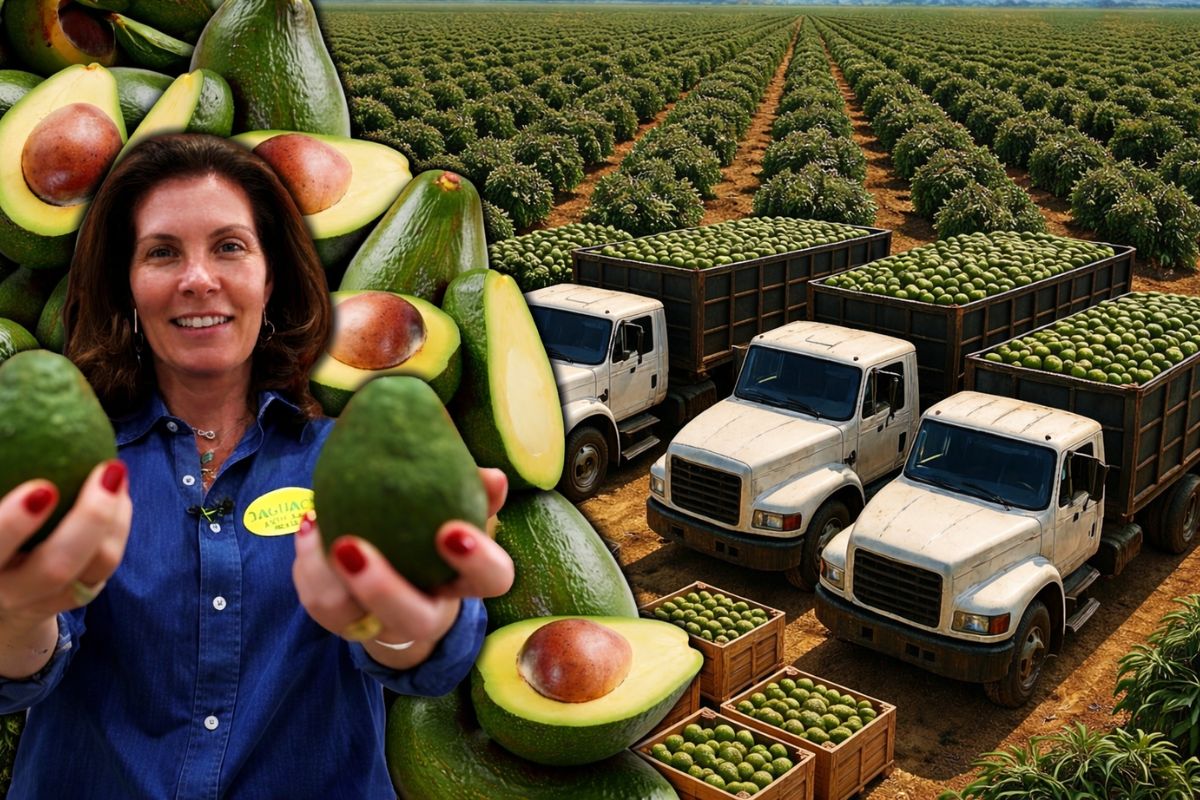


History Of The Largest Exporting Avocado Farm That Leads Avocado Production And Boosts Avocado In Brazil.
If today avocado appears in restaurants, markets, and social networks as a symbol of healthy and sophisticated food, this is directly related to the work of the largest avocado farm in Brazil, run by the producer known as the queen of avocado, Líia Carvalho. Since childhood, at the age of 4, she grew up within the family orchards and witnessed the transformation of a small 20-hectare property into a global reference.
Together with her parents, Paulo Leite de Carvalho and Maria Cristina Falange Carvalho, Líia helped build a farm that transitioned from common avocados to premium avocados, dominated exports, multiplied the cultivated area, and created a business model where the largest avocado farm combines family tradition, cutting-edge technology, and international market vision.
From 20 Hectares To The Largest Farm Of Avocado In The Country

The story begins at Jaguaci farm, in Bauru, in the interior of São Paulo. In the early years, the area was very different from what we see today.
-
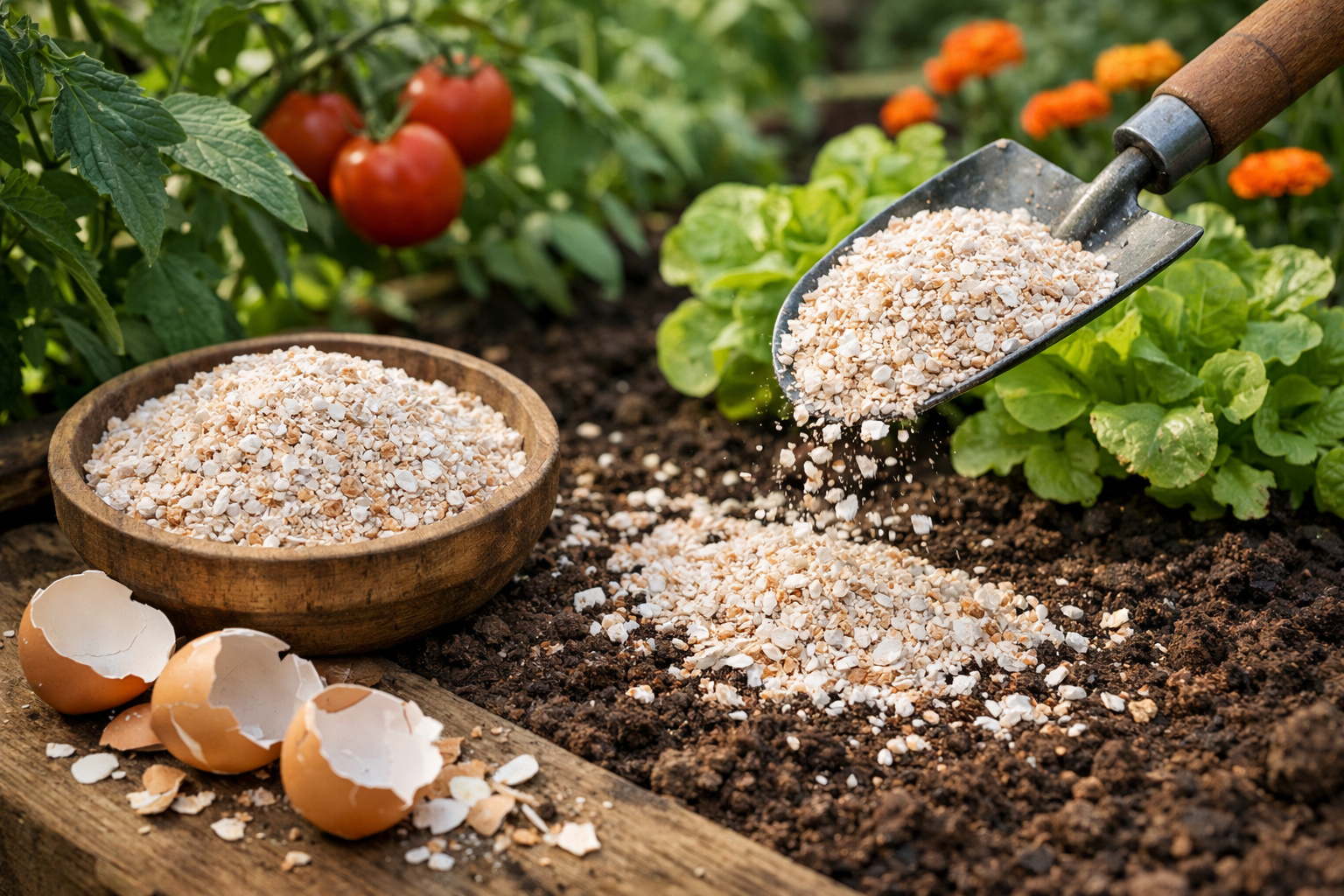
The eggshell that almost everyone throws away is made up of about 95% calcium carbonate and can help enrich the soil when crushed, slowly releasing nutrients and being reused in home gardens and vegetable patches.
-
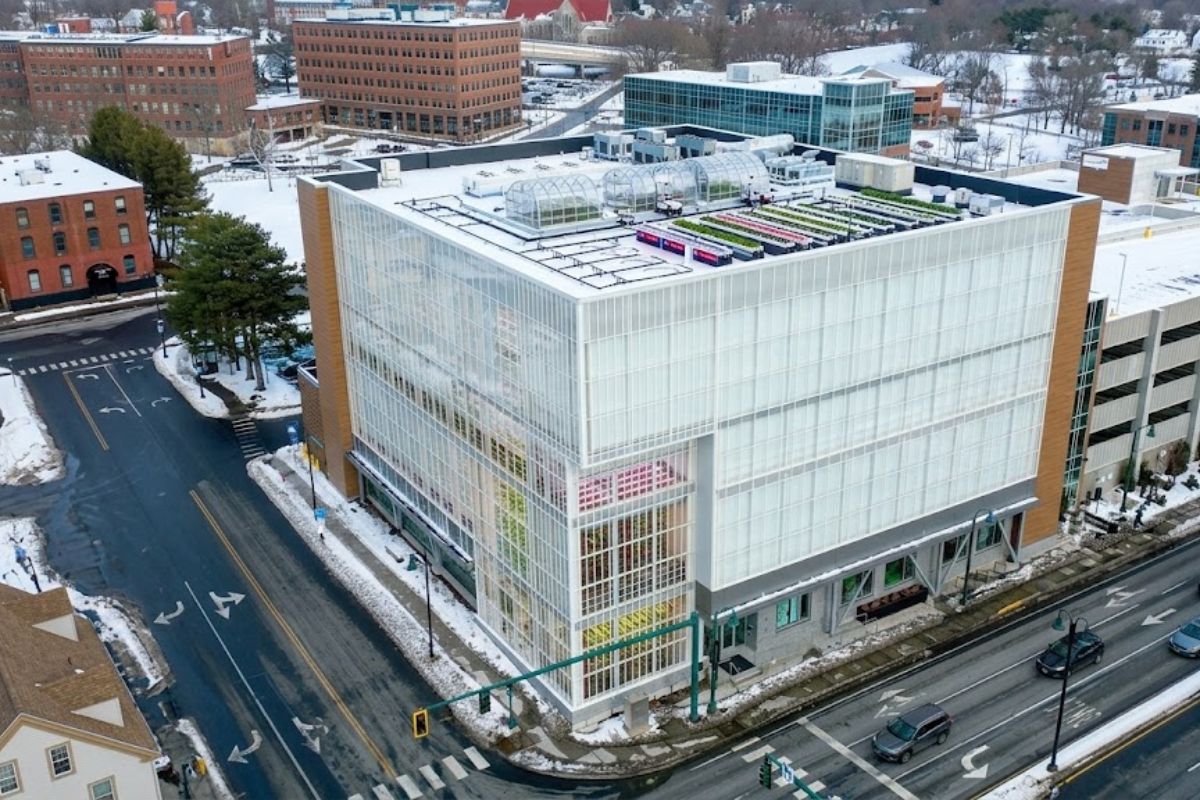
This farm in the United States does not use sunlight, does not use soil, and produces 500 times more food per square meter than traditional agriculture: the secret lies in 42,000 LEDs, hydroponics, and a system that recycles even the heat from the lamps.
-
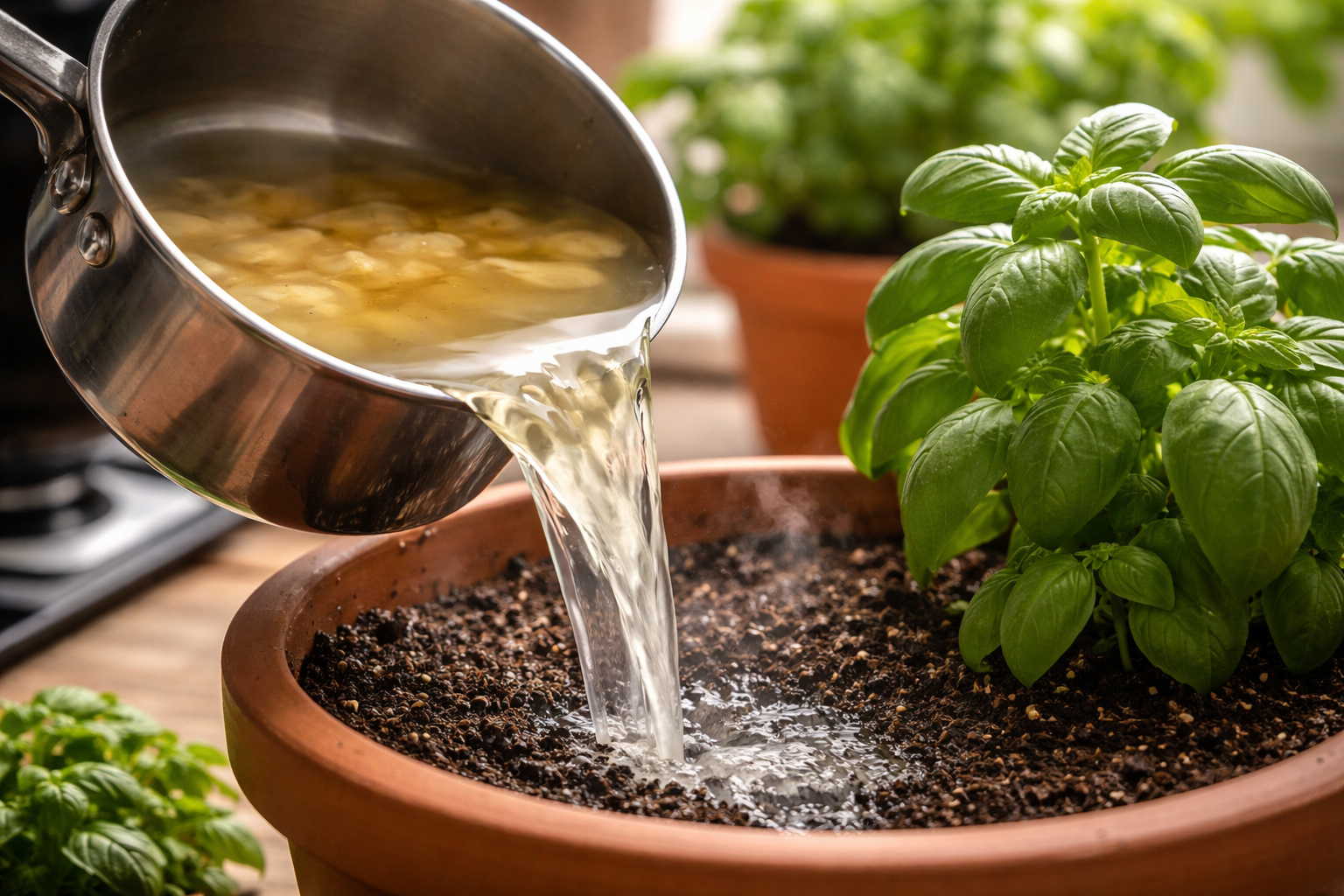
The water that almost everyone throws away after cooking potatoes carries nutrients released during the preparation and can be reused to help in the development of plants when used correctly at the base of gardens and pots, at no additional cost and without changing the routine.
-
The sea water temperature rose from 28 to 34 degrees in Santa Catarina and killed up to 90% of the oysters: producers who planted over 1 million seeds lost practically everything and say that if it happens again, production is doomed to end.


There were only 20 hectares, focused on the production of tropical avocados, packaged by the family itself and sold as table fruits.
What could have remained a regional business took another direction when the family decided to look beyond the gates and beyond Brazil.
The largest avocado farm that exists today was born from a small farm, meticulously managed, but daring to think like a global company, even before having the volume for it.
The turning point came when Paulo and Maria Cristina began to follow consumption trends abroad and realized the potential of avocado, a variety of avocado with characteristics that caught the attention of world cuisine. Instead of continuing with traditional avocado, they decided to change their entire strategy.
The Bold Bet On Avocado When Nobody Was Talking About It
In the 1980s, while almost no Brazilian producer was aware of the demand for avocado in Europe, the Carvalho family decided to bet everything on the new variety.
In 1981, they made the decision to replace common avocado orchards with avocado, taking the risk of investing in a crop that was little known in the domestic market.
This change was not just agronomic. It was a business decision. They understood that the European consumer valued a smaller avocado, with creamy flesh, rich in nutrients and with excellent performance in cooking. The avocado fit perfectly into this profile.
To open doors, the Carvalhos went beyond the field. They sent a letter to the French government in the early 80s, aiming to present the avocado produced in the interior of São Paulo to retailers and European importers.
It was a bold initiative for a family that still had a relatively small area but with great ambition.
The results appeared. It didn’t take long for the first orders to start coming in, and along with them, the need to expand production.
That’s how Jaguaci farm began a cycle of expansion that, over time, would consolidate the property as the largest avocado farm in Brazil and one of the great references in avocado in the international market.
How The Largest Avocado Farm Became A Power In Production And Export
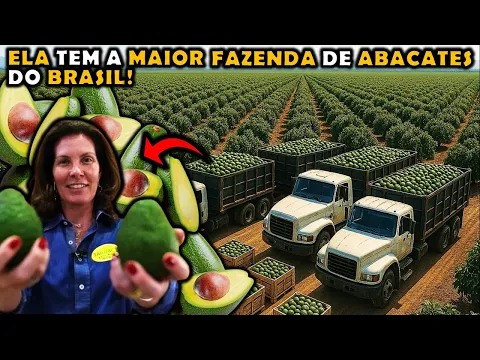

The growth was not just in reputation. In numbers, the evolution is impressive. The planted area, which started at 20 hectares, expanded over the decades to exceed 800 hectares of avocado in production. In 2021, the farm reached the mark of about 5,000 tons of harvested fruit, shipped in 110 containers.
These shipments accounted for nearly 80 percent of all avocado exports from Brazil, consolidating Jaguaci as the leading exporter of avocado in the country.
Besides the orchards, the industrial structure also grew, with four factory units supporting the processing and preparation of the fruit for different markets.
Meanwhile, the national scenario was also changing. The consumption of avocado in Brazil increased by approximately 20 percent in recent years, following the trend of healthy eating.
The national cultivated area grew from about 1,000 hectares in 2016 to approximately 9,000 hectares in 2021, with an annual production of nearly 300,000 tons, according to the Brazilian Avocado Association.
In this context, the largest avocado farm in the country not only rode this wave but helped to lead it, showing producers and consumers that avocado had a place in both exports and Brazilian tables.
Own Seedlings, Technology In The Field, And Biological Control By Drones
One of Jaguaci’s pillars is the strict control of the entire chain, starting with the seedlings. The farm produces its own avocado plants in suspended nurseries, with about 100,000 seedlings per year, which undergo grafting procedures. Some of these seedlings supply new areas of the farm itself, while others are intended for partner producers.
This strategy ensures genetic standardization, health, and uniformity of the orchards, which is essential when the largest avocado farm needs to deliver large volumes with consistent quality.
Pest management follows the same logic of innovation. One of the highlights is the use of biological control with Trichogramma, a micro-wasp created in the laboratory that acts against pests.
The micro-wasps lay their eggs inside pest insect eggs, preventing them from developing and reducing pressure on the orchards.
Instead of applying this control manually and scattered, the farm uses drones configured by georeferencing to release the eggs over the cultivated areas.
The use of drones in biological control shows how the largest avocado farm combines agronomic knowledge and precision technology to protect the orchards with less environmental impact.
Additionally, the farm invests in a living and balanced soil. Beneficial bacteria are cultivated to strengthen the root system of the plants and improve fertility.
The focus is to treat the soil as one of the most important inputs, preserving its structure and microbiology.
Careful Harvest And High-Tech Post-Harvest

Before harvesting, Jaguaci performs dry matter tests to determine the ideal moment for picking the fruit.
This test indicates when the avocado is ready to achieve the best flavor, texture, and post-harvest behavior.
The harvest is manual and careful, designed to preserve the integrity of the fruits as much as possible. The avocados are placed in boxes and quickly sent to the farm’s industrial complexes.
From there, the largest avocado farm operates with a processing line based on high technology, which includes: the use of metal detectors for safety, automatic filling and sealing systems, and a high-pressure machine, one of the few of its kind in Brazil, aimed at reducing microbiological risks and increasing food safety.
The farm’s packaging sector has the capacity to process, in a single day, about 200 tons of fruit, the equivalent of eight containers.
The processes can be semi or fully automated, always monitored by a quality department that oversees defined standards, from receipt to shipping.
This combination of careful harvesting and technological post-harvest explains why the largest avocado farm can deliver giant volumes without sacrificing consistency, which is crucial for maintaining contracts with international chains and demanding markets.
Guacamole, Olive Oil, And Derivatives That Elevate The Value Of Avocado
The business is not just about selling fresh fruit. The farm has also invested in derived products that enhance margins and diversify the portfolio.
Two examples are ready guacamole and oil extracted from the pulp of avocado, which together already represent more than 5 percent of the company’s sales.
It is a strategy that transforms avocado into a base for industrial solutions, ready-to-eat foods, and products with higher added value.
Jaguaci plans to expand this line and invest in new derivatives of avocado, including guacamole aimed at export, which should reach European markets.
Today, the farm already exports fresh fruit to countries in the European Union, Canada, the Middle East, with a focus on the United Arab Emirates, as well as Uruguay and Argentina.
The largest avocado farm has shown that a product previously seen as common in Brazil could find its place on premium shelves around the world.
Avocado In Brazil: Rising Consumption And Health Benefits

If before the avocado was mainly consumed in sweet preparations in Brazil, today the avocado has gained space in sandwiches, salads, hot dishes, breakfasts, and healthier desserts. This movement is favored by the nutritional properties of the fruit.
The avocado is rich in antioxidant vitamins such as A, C, and E. It also contains a high amount of monounsaturated fats, associated with increased levels of the so-called good cholesterol, HDL.
It is a food that contributes to heart health, helps balance cholesterol, combats free radicals, and can help prevent premature aging.
The high fiber content promotes satiety, assisting weight control diets. The fruit is also noted as a source of energy for sports practice and acts as a kind of natural isotonic, helping to replenish minerals.
Rich in compounds like omega-3, avocado also supports the physical and mental development of children when integrated into a balanced diet.
By leveraging this set of attributes and combining it with technology, management, and market vision, the largest avocado farm helped reposition avocado in Brazil, taking the fruit out of the niche product category and bringing it closer to the daily lives of consumers seeking health, practicality, and flavor.
In the end, Jaguaci’s trajectory shows how a decision made decades ago, on an area of just 20 hectares, paved the way for an operation that produces thousands of tons, generates millions per year, and inspires other producers to seek added value in Brazilian agribusiness.
And you, seeing all this, believe that avocado consumption can still grow much more in Brazil or do you think we have already reached the market’s limit for this fruit?








Aonde podemos comprar essas mudas ?
Sempre podemos mais nossos agricultores produtores o brasileiro quando abraça uma causa e forte e vai fundo acredito