





 Portuguese
  English
  Spanish
  4 min of reading
  1 comment


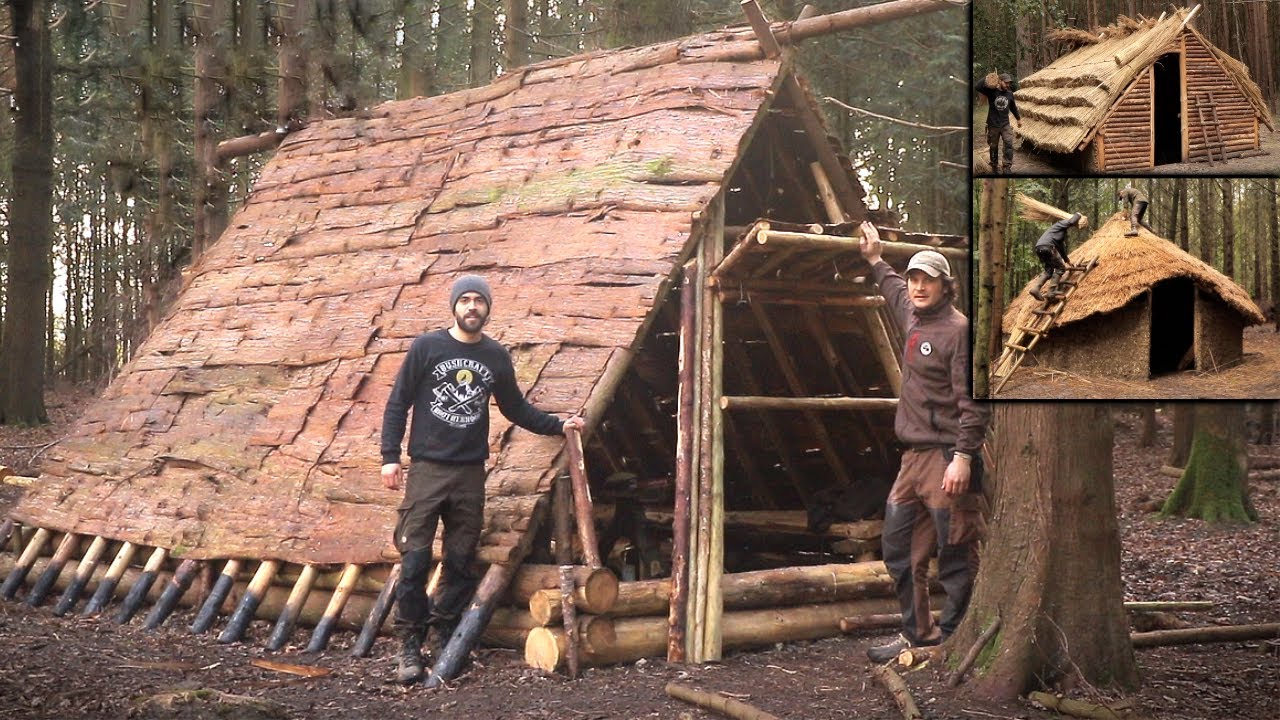


Two Men Build Medieval Village in 32 Days Using Bushcraft Techniques, Wood, Clay, and Straw, Creating Viking, Saxon, and Celtic Houses Without Modern Infrastructure.
In a world dominated by concrete, heavy machinery, and industrial schedules, two men decided to move in the opposite direction. In just 32 days, they built a complete medieval village in an isolated environment, using exclusively bushcraft techniques, simple hand tools, and materials found directly in nature. The project practically recreates housing forms inspired by ancient civilizations of Great Britain, such as Vikings, Anglo-Saxons, and Celts, demonstrating that historical knowledge, technique, and organization can completely replace modern infrastructure.
The result is not just a visual or aesthetic experiment. It is a functional set of self-sufficient shelters designed to withstand time, weather, and continuous use, just as it was centuries ago. Each building was constructed at an intense pace, with precise planning and mastery of ancestral techniques that are rarely applied today outside of academic or historical reconstruction contexts.
A Medieval Village Built with Bushcraft Techniques and Living History
The proposal of the project was clear from the start: to build three different types of historical shelters — a Viking house, a Saxon house, and a Celtic roundhouse — using only natural resources available on site. No concrete, industrial steel, electricity, or power tools. Only wood, clay, straw, stone, fire, and traditional knowledge.
-
Small house with natural light becomes a trend in sustainable architecture and shows how smart designs reduce energy consumption and enhance comfort in compact spaces.
-
Trump revealed today the design for the world’s largest triumphal arch, standing 76 meters tall, more than double the height of the Lincoln Memorial, with a golden Lady Liberty on top, four golden lions at the base, and the inscription “One Nation Under God” engraved in gold. When asked who the monument was for, he replied, “for me.”

-
Imagine a building that absorbs air pollution, regenerates itself, and becomes more resilient with each passing year: scientists from ETH Zurich have just turned this idea into reality using cyanobacteria and 3D printing.

-
Ceará receives the first 100% electric 19-ton loader: the SW956E model promises zero diesel, low maintenance costs, a 3.5 m³ bucket, and fast recharging in 1 hour and 10 minutes for mining and construction.


The structures were directly inspired by the architecture of ancient Great Britain, respecting real construction principles used by Vikings, Celts, and Anglo-Saxons.
Each shelter not only visually references the past but also follows structural methods compatible with the historical period it represents.
Medieval Viking House Raised in Just 10 Days
The first construction of the village was the Viking house, completed in just 10 days. The main structure was made with cedar logs, chosen for their natural durability and resistance to moisture.
To further increase the wood’s lifespan in contact with the ground, the builders used an ancient technique of controlled burning of the ends of the logs, similar to the Japanese shou sugi ban.
This process superficially carbonizes the wood, creating a protective layer against decay and insects. After the burning, the bark of the cedars was carefully removed and reused as natural shingles on the roof, a clear example of maximizing the use of available resources.

The interior of the Viking house also followed historical practices. A Viking longpit was dug, lined with stones and clay, which helps retain heat. The building includes a handmade foldable window and raised beds, reinforcing the functional character of the shelter and its adaptation to the climate.
Saxon House with Wattle and Daub and Traditional Woodworking
The second building was the Saxon house, also built in about 10 days. Unlike the Viking house, this structure used pine wood and classical mortise and tenon joinery techniques, known in Brazil as “encaixes de espiga e fêmea.”
All the work was done with hand tools, ensuring a sturdy and self-supporting structure without the use of industrial nails.
The walls were built using the traditional wattle and daub system, intertwining twigs and filling the gaps with a mixture of clay and straw. This method creates surprisingly insulating walls that can maintain more stable temperatures indoors.

The roof was covered with water reed, finished with a long straw ridge, a technique common in Saxon housing. The door was made from reclaimed wood and fastened with hand-forged nails. Inside, the builders created a small circular fireplace and a raised bed, while the window was entirely made from wooden stakes, wedges, and natural joints, without any industrial material.
Celtic Roundhouse Built in 12 Days with Circular Structure
The third and final construction was the Celtic roundhouse, completed in 12 days. This circular house required different planning, as its shape better distributes structural loads and offers excellent wind resistance.
The frame was made from peeled cedar trees, again with the ends burned to increase the wood’s durability in the ground.
The walls were built using the medieval system known as wattle and daub, combining intertwined willow rods with a mixture of clay, straw, and ash. This method creates a solid and breathable seal, widely used by Celtic communities for centuries.

For the roof, wattle rafters and purlins were used, covered with water reed and finished with a thick layer of long straw. The conical shape of the roof facilitates water drainage and increases structural resistance, making the roundhouse especially efficient for long stays.
Isolated Life, Without Urban Support and with Total Autonomy
At the end of the 32 days, the medieval village was complete. Without electricity, modern plumbing, or any type of urban infrastructure, the two men created a small functional settlement based solely on ancestral techniques. Each shelter demonstrates how ancient societies were able to build durable, efficient, and environmentally adapted housing with minimal resources.

The project goes beyond entertainment or historical curiosity. It practically shows that traditional technical knowledge, organization, and manual labor can replace modern systems in certain contexts, especially in situations of extreme isolation or prolonged survival.
For those interested in bushcraft, historical architecture, survival in nature, and traditional engineering, the medieval village built in just 32 days serves as a true practical lesson on how the past can still teach efficient solutions for the present.






Fenomenal esse experimento!!!! Parabéns!