





 Portuguese
  English
  Spanish
  3 min of reading
  0 comments


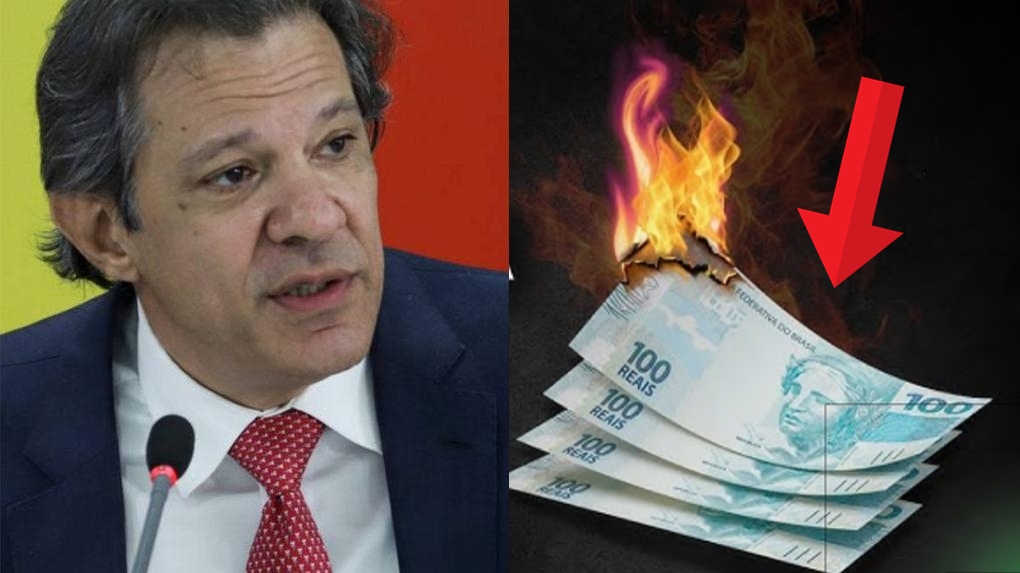
The Fiscal Package Announced by the Brazilian Government Generated Reactions in the Global Press, Highlighting the Direct Impact on the Dollar Price and the Economic Outlook of the Country.
The Brazilian real reached its lowest historical quotation, and stocks had their biggest drop since the beginning of 2023. This scenario of depreciation of the real against the dollar was driven by the government’s proposal to cut billions of reais in public spending, a measure that did not please investors already concerned about the country’s growing budget deficit.
On Thursday, the Brazilian currency fell by up to 1.5%, reaching 6.02 per dollar. The IBOVESPA index lost 2.4% and showed a negative fact, reflecting the growing distrust regarding Brazil’s fiscal future. On Friday, the currency hit the mark of 6.10 per dollar.
The Minister of Finance, Fernando Haddad, announced a highly anticipated fiscal plan that aims to cut 70 billion reais from public spending by 2026.
-
Larger than entire cities in Brazil: BYD is building a 4.6 km² complex in Bahia with a capacity for 600,000 vehicles per year, but the discovery of 163 workers in conditions analogous to slavery has shaken the entire project.

-
With an investment of R$ 612 million, a capacity to process 1.2 million liters of milk per day, Piracanjuba inaugurates a mega cheese factory that increases national production, reduces dependence on imports, and repositions Brazil on the global dairy map.

-
Brazilian city gains industrial hub for 85 companies that is equivalent to 55 football fields.

-
Peugeot and Citroën factory in Argentina cuts production by half and opens a layoff program for more than 2,000 employees after Brazil drastically reduced purchases of Argentine vehicles.


The package includes restrictions on the growth of the minimum wage, the establishment of a ceiling for high public servant salaries, and tax increases for incomes above 50,000 reais per month.
Lula’s Stance and Market Reaction
The devaluation of the real was exacerbated by President Luiz Inácio Lula da Silva’s stance, who reaffirmed the commitment to the fiscal plan but ruled out new proposals.
Responsibility was left in the hands of already announced measures, which increased concerns in the market.
Trust in the government is being eroded by the growing pessimism regarding the fiscal deficit, which has been increasing since Lula’s inauguration in 2023.
The rise in public spending has been an attempt to fulfill external promises to improve the living conditions of poorer Brazilians.


Additional Pressures on the Budget
Furthermore, the government faces additional pressures in response to natural disasters such as floods, fires, and a dry spell. The already fragile fiscal situation has become even more difficult to manage in the face of these adversities.
The spending cut plan has been postponed, and its measures have fueled further pessimism, particularly with the proposal for tax exemptions of up to 5,000 reais monthly. This has led to speculation that the fiscal proposal would not be robust enough.
Distrust and Inflation Expectations
Luis Cezario, chief economist at Asset1 Investimentos, stated that the fiscal package “seemed a bit too little, too late”, not reversing the perception that Brazil’s fiscal situation is deteriorating.
The growing distrust has also impacted inflation expectations, leading the Central Bank to signal an increase in interest rates.
International Impact of the Dollar Price

The international response to the recent fiscal measures announced by Minister Fernando Haddad did not take long to manifest, with renowned outlets highlighting the economic consequences of the budgetary decisions.
The Italian site Evrimagaci emphasized the historical weakening of the real against the dollar, pointing out that budget adjustments have generated market insecurity.
Meanwhile, Bloomberg described the performance of the real as one of the worst among emerging market currencies, reporting a depreciation of nearly 5% in just one week, highlighting investors’ frustration with the announced spending plan.
Reuters reinforced the negative impact of the fiscal changes, mentioning the income tax exemption plan as one of the factors that contributed to the Brazilian currency’s fall to new lows.
Downgrading the Outlook for Brazil
The real has already accumulated a drop of over 19% this year, which is one of the largest losses among emerging market currencies.
The IBOVESPA, the country’s main stock index, has recovered more than 7%, lagging behind emerging market stocks and most global benchmarks.
Pessimism regarding Brazil’s fiscal situation has also led major investment banks such as JPMorgan and Morgan Stanley to downgrade their outlook for Brazilian stocks.
According to Pedro Dreux, fund manager at Occam Brasil Gestão, “the government spent the last month creating expectations that it would present a spending cut package, but the big day arrived, and we see fiscal stimulus“.
The conclusion is clear: Brazilian assets are in decline, reflecting the choices of an administration that continues to prioritize increased public spending instead of adopting more effective fiscal control measures.









-

-

-

-

-

7 pessoas reagiram a isso.