





 Portuguese
  English
  Spanish
  5 min of reading
  0 comments


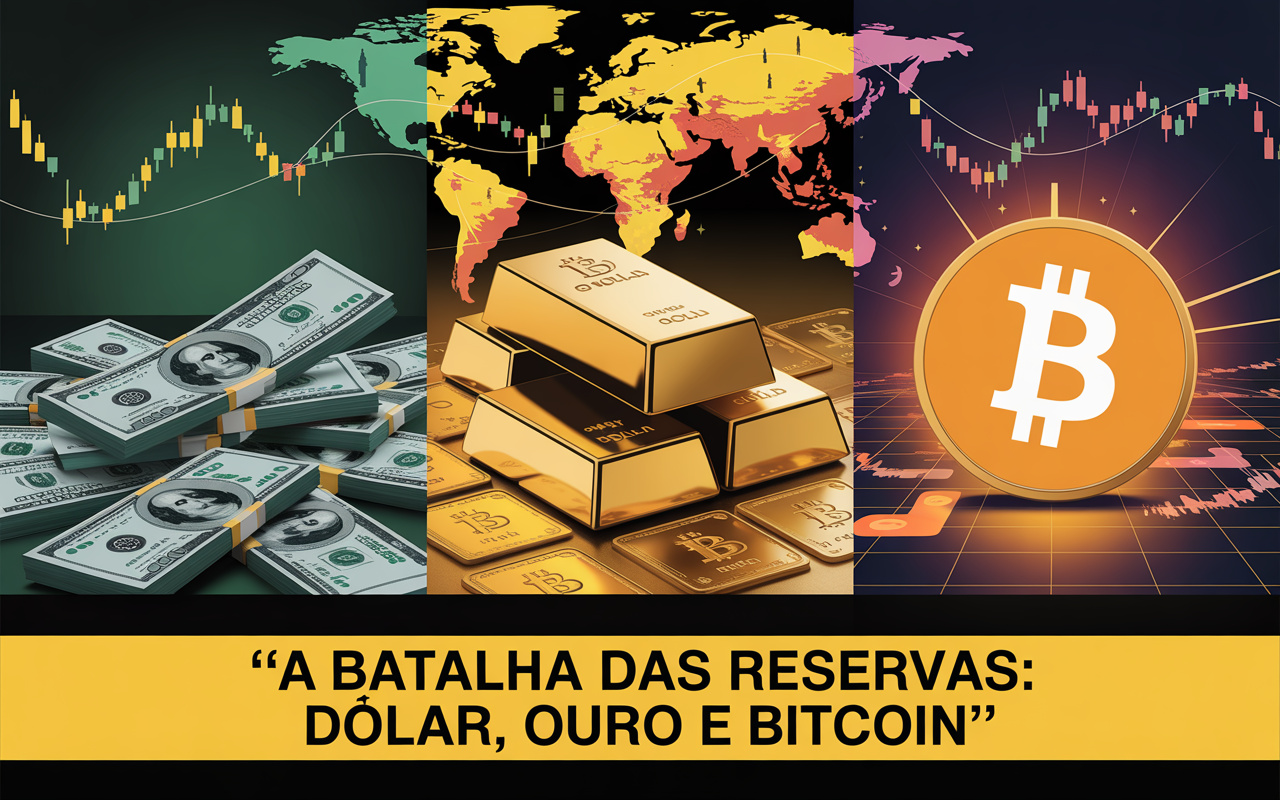
The Silent Battle of Reserves: Gold Rises, Dollar Loses Hegemony and Bitcoin May Be Recognized as a Key Asset by 2030, According to a Report from Deutsche Bank
The world is witnessing a silent, yet enormous change in the international financial system. For the first time in decades, the U.S. dollar — which has reigned supreme as the world’s primary reserve currency since the end of World War II — is starting to lose ground. In contrast, gold is regaining prominence and Bitcoin is emerging as a candidate to assume a strategic role by 2030.
This is the main conclusion of a report published by Deutsche Bank, which indicates that central banks and large investors are reshaping their reserve portfolios, in search of assets capable of providing security amidst an environment marked by geopolitical tensions, persistent inflation, and technological transition.
The Dollar Under Pressure: Weakened Hegemony
For decades, the dollar was synonymous with confidence, liquidity, and stability. It is estimated that in 2000, more than 70% of global central bank reserves were denominated in dollars. Today, that number has fallen to around 58%, according to IMF data cited by Deutsche Bank.
-
Mothers and daughters come together, create an ‘express’ beauty salon and turn the idea into a network with 21 units, revenue of R$ 16.7 million and 12,000 subscribers.

-
End of the 6×1 schedule: how the reduction of hours can affect service companies, industry, and agribusiness.

-
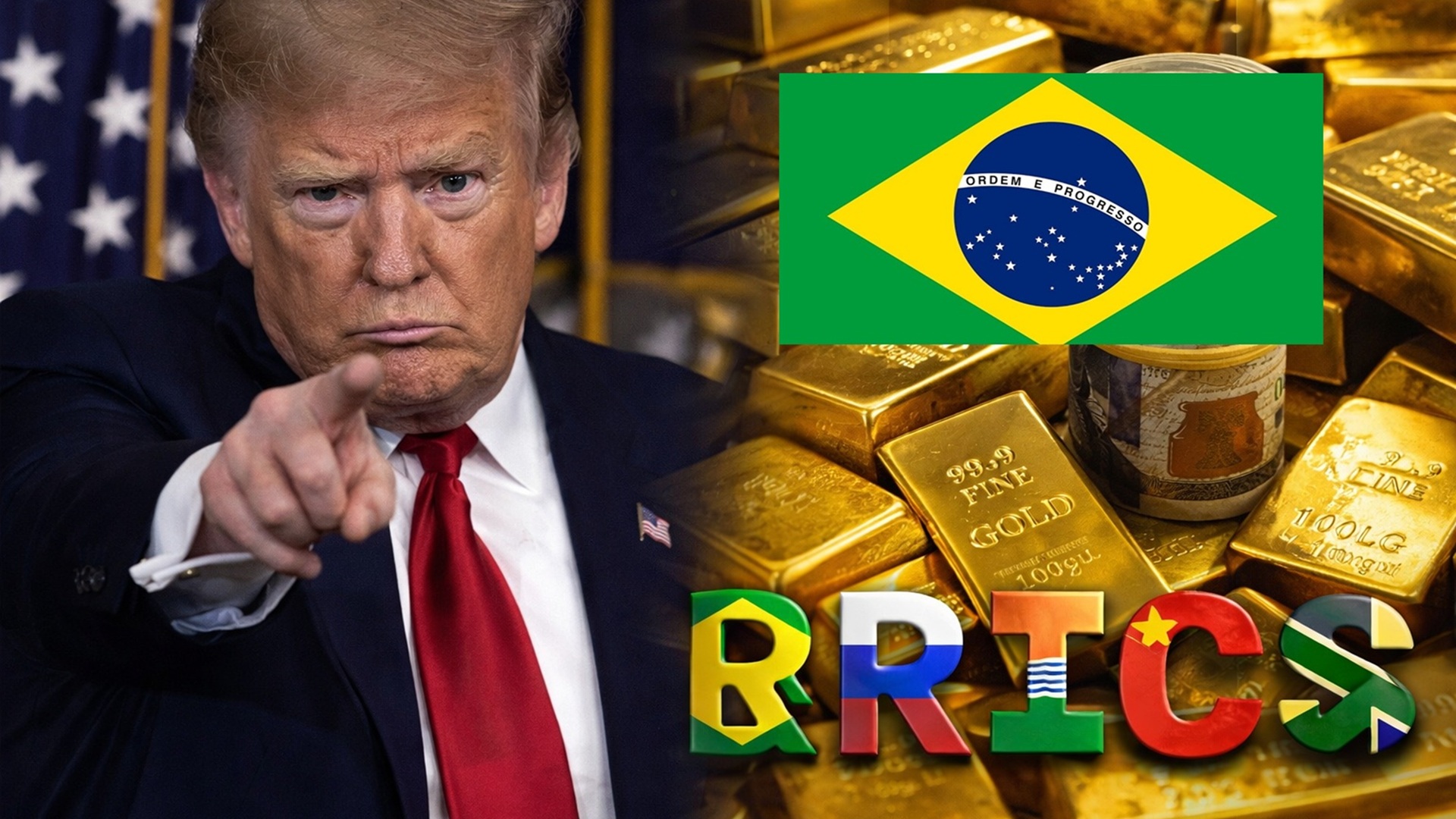
Brazil Ignores Trump’s threats to BRICS, Buys 42 tons of gold and reduces the Dollar’s share by 6.45% in international reserves.
-
Havan buys historic football land in Blumenau for a million-dollar amount protected by a confidentiality clause and is already planning to change even the layout of streets to build a megastore in half-timbered style costing 80 million reais.


The decline may seem small, but it represents hundreds of billions of dollars migrating to other assets. The explanation lies in the multipolarity of the global economy: countries like China, India, Russia, and Brazil have been gradually reducing their dependence on the American currency, either to protect themselves from sanctions or to strengthen their own currencies.
This movement became even more evident after the western sanctions imposed on Russia in 2022, when the country’s dollar and euro reserves were frozen. The episode served as a warning to other governments: keeping all reserves in Western currencies can be risky in times of conflict.
Gold: The Metal That Never Loses Value
If the dollar loses ground, gold is the biggest winner. In 2024, central banks bought more than 1,037 tons of the metal, according to the World Gold Council (WGC). This was one of the largest volumes in half a century. In 2025, the trend continues: only China added 1.9 tons in August, completing 10 consecutive months of official purchases.
According to Deutsche Bank, this appetite can be explained by two main reasons:
Protection Against the Dollar — the greater the uncertainty regarding U.S. monetary policy, the higher the demand for gold as a counterbalance.
Persistent Global Inflation — the metal is traditionally viewed as protection against loss of purchasing power.
It is no wonder that the price of gold surged nearly 40% in 2025, reaching record levels even against the backdrop of dollar appreciation at other times.
Bitcoin: From Speculation to Strategic Asset
The boldest point of Deutsche Bank’s report is the inclusion of Bitcoin as a potential reserve by 2030. The largest cryptocurrency in the world, which has already surpassed a market value of US$ 1.3 trillion, still suffers from high volatility but is gaining traction in institutional portfolios and sovereign funds.
The logic is simple: Bitcoin has a limited supply of 21 million units, making it inherently scarce. Unlike the dollar, which can be issued according to monetary policies, or gold, whose mining can still increase supplies, Bitcoin offers absolute supply predictability.
For Deutsche Bank, this characteristic makes it akin to a type of “digital gold,” especially attractive for emerging countries and investors who wish to reduce their dependence on Western currencies.
Geopolitics and the Race for Reserves
The “battle for reserves” is not only an economic phenomenon but also geopolitical. Deutsche Bank’s report highlights that the major movements towards gold and Bitcoin have been more intense in countries that challenge the U.S.-led order.
- China: the world’s largest buyer of gold in 2025, seeks to use the metal as an indirect collateral to strengthen the yuan in international transactions.
- Russia: after western sanctions, accelerated the diversification of reserves, reducing its dollar share and betting on gold and yuan.
- Gulf Countries: oil exporters are increasing gold reserves and exploring digital alternatives to reduce dollar dependence in energy trade.
This movement is directly related to what analysts call the gradual dedollarization of the global economy.
And Brazil in This Scenario?
Brazil, as an agribusiness powerhouse and energy player, closely follows these transformations. Currently, around 80% of Brazilian reserves are in dollars, with the remainder distributed among euros, yen, yuan, and gold.
Although the Central Bank has not announced interest in Bitcoin, the global trend may bring the topic to the agenda in the coming years, especially if major trade partners, like China, expand the use of the cryptocurrency in financial operations.
For specialists consulted by Deutsche Bank, Brazil will need to balance security (maintaining a significant portion in dollars) with diversification (increasing gold and, possibly, digital assets).
Divided Specialists
The report generated immediate repercussions among economists. Some agree that Bitcoin could indeed gain reserve status by 2030, especially if institutional adoption continues to grow. Others, however, remind us that high volatility and the lack of international regulation still limit the credibility of the cryptocurrency.
As for gold, there is no controversy: it is the most sought-after asset in times of uncertainty, and the volume of recent purchases confirms this.
According to Deutsche Bank, it is most likely that the international reserve system will become more diversified.
The dollar will remain dominant, but will share space with gold at an increasing level. Bitcoin, if it consolidates its adoption and overcomes regulatory barriers, may gain a significant slice of this landscape.
For investors, the message is clear: the world of reserves will no longer be the same, and ignoring these changes could mean missing out on strategic opportunities.









Seja o primeiro a reagir!