





 Portuguese
  English
  Spanish
  6 min of reading
  0 comments


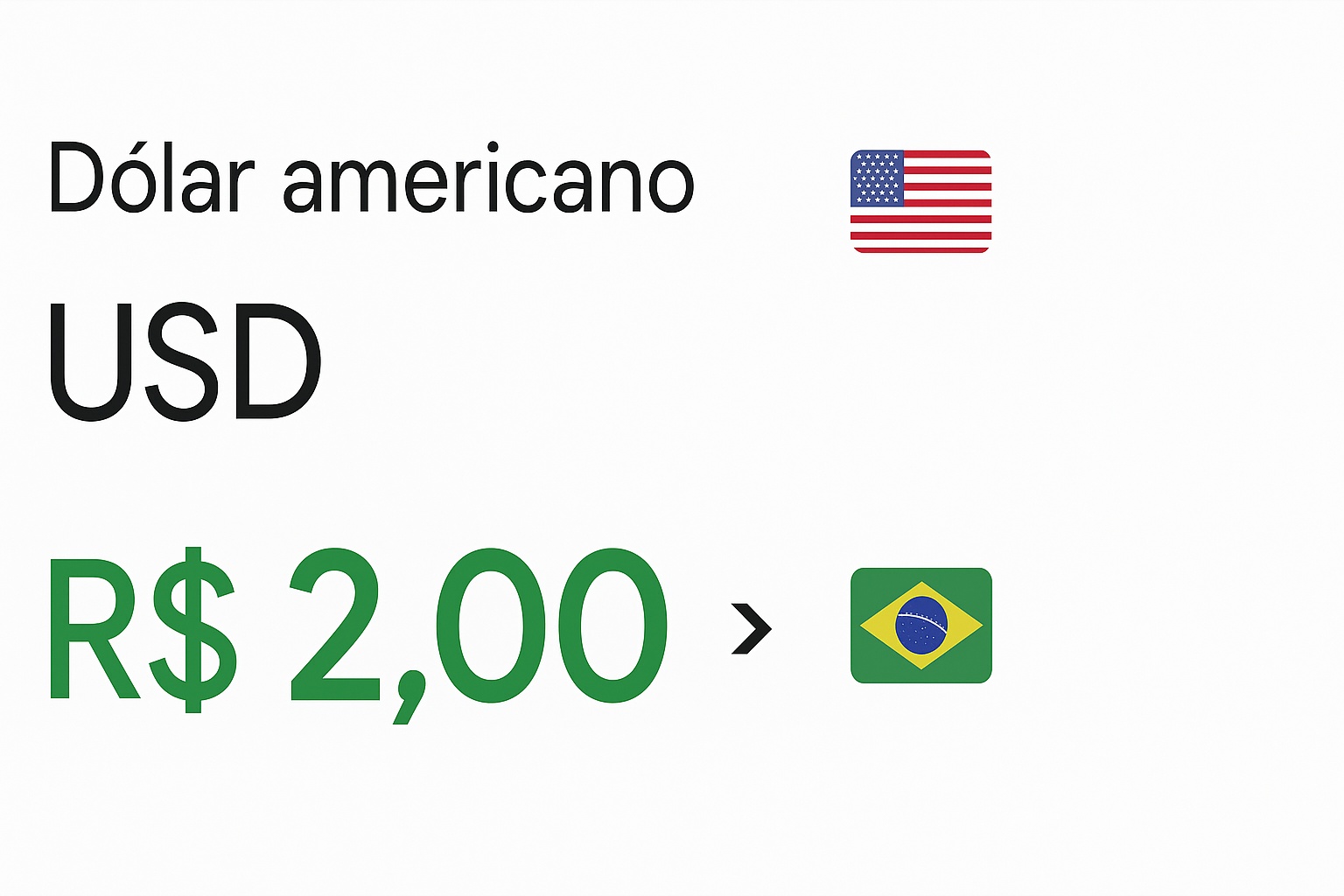
Dollar Reaches Lowest Value in 14 Months and Suffers Global Weakening. José Carlos de Souza Filho from FIA Business School Explains If It Can Go Back to R$ 2.
The recent drop in the value of the American currency has reignited a debate that seemed forgotten: could the dollar go back to R$ 2? After months of fluctuations and consecutive declines, the currency registered the lowest dollar value against the real in 14 months, closing last Tuesday at R$ 5.38. Although it is still a high level compared to the beginning of the last decade, the depreciation trajectory draws attention not only in Brazil but around the world.
According to a survey by Elos Ayta Consultoria up to August 8, the Ptax — the exchange rate calculated by the Central Bank — has accumulated a decline of 3.41% in the last 12 months and a significant drop of 12.38% in 2025. In the international scenario, the DXY index, which measures the performance of the American currency against a basket of currencies, has already fallen about 10% this year, recording the largest depreciation in the first half since 1973, the year that marked the end of the gold standard and the Bretton Woods agreement.
Factors That Explain the Dollar Devaluation
According to José Carlos de Souza Filho, a professor at FIA Business School, the recent dollar devaluation has multiple causes. Among the most immediate are the protectionist policy of the U.S. government and the expectation of interest rate cuts by the Federal Reserve (Fed).
-
Mothers and daughters come together, create an ‘express’ beauty salon and turn the idea into a network with 21 units, revenue of R$ 16.7 million and 12,000 subscribers.

-
End of the 6×1 schedule: how the reduction of hours can affect service companies, industry, and agribusiness.

-
Brazil Ignores Trump’s threats to BRICS, Buys 42 tons of gold and reduces the Dollar’s share by 6.45% in international reserves.
-
Havan buys historic football land in Blumenau for a million-dollar amount protected by a confidentiality clause and is already planning to change even the layout of streets to build a megastore in half-timbered style costing 80 million reais.




“When the U.S. interest rate falls and the Brazilian rate remains high, the differential continues to be attractive for foreign investors. In addition, the market has been pricing less the fiscal risks of Brazil, which helps strengthen the real,” explains the professor.
This view is reinforced by Bruno Shahini, an investment specialist at Nomad, who highlights that the Selic at 15% per year discourages long positions in dollars and attracts external flows to take advantage of the interest rate differential. This scenario increases the influx of foreign currency into Brazil and puts downward pressure on the value of the American currency.
Lowest Value of the Dollar in More Than a Year: What Can Happen Now
The drop to R$ 5.38 is not an isolated movement. Experts claim that the behavior of the American currency can vary greatly in the short term due to the large number of variables involved, including monetary policy, trade relations, and the performance of global economies.

In the most optimistic scenario, if Brazilian interest rates remain high, the Fed starts cutting rates as early as September, and there are advancements in trade negotiations between Brazil and the U.S., the dollar could fluctuate between R$ 5.40 and R$ 5.30. However, an opposite scenario — with high inflation in the U.S., maintenance of elevated interest rates, and worsening bilateral trade relations — could push the exchange rate back above R$ 5.50.
Why It Is Unlikely to Go Back to R$ 2
When the question is direct — Can the dollar go back to R$ 2? — experts’ answers are almost unanimous: it’s not impossible, but it’s highly unlikely. For José Carlos de Souza Filho, several factors explain the escalation of the American currency over the last few years. Among them are the increasing fiscal risk, high public debt, and persistent differences between domestic and foreign inflation and interest rates.
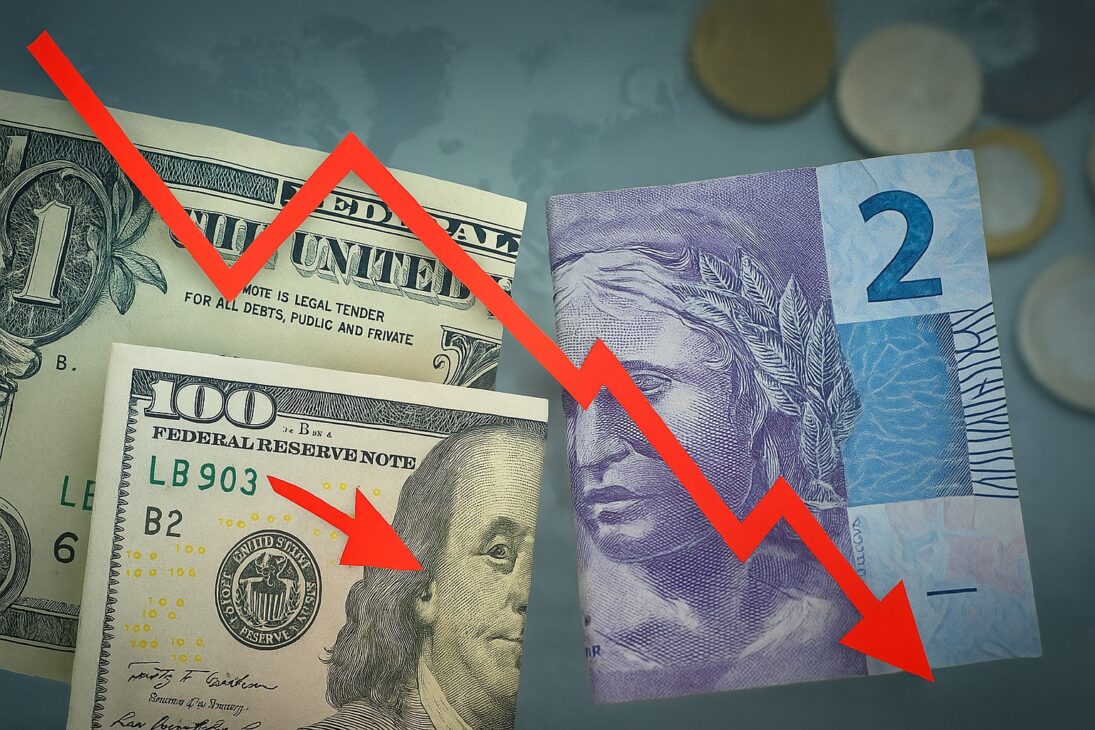
“A depreciation of this magnitude would require consistent fiscal surpluses, a strong appreciation of the commodities we export, and even a change in the global monetary system. The chances of all these factors occurring together are very small in the short and medium term,” says the professor from FIA Business School.
What Would Have to Happen for the Dollar to Drop That Much
According to Shahini, for the lowest dollar value to reach close to R$ 2, it would be necessary to reverse decades of loss in purchasing power. This would require, for example, a significant real appreciation, normally associated with highly favorable external shocks, such as a prolonged cycle of rising commodities and massive inflows of foreign capital.
Another possibility would be a period in which Brazilian inflation was consistently much lower than American inflation — a rare scenario in recent decades.
Souza Filho adds that for this, Brazil would need deep structural reforms, GDP growth above 5% per year, Selic below 5%, and a very stable internal macroeconomic environment. At the same time, the United States would face an internal debt crisis, high inflation, and loss of the dollar’s status as the world’s main reserve currency.
The Role of Reforms and the Global Economy
The reforms mentioned by José Carlos de Souza Filho — tax, administrative, and social security — are seen as fundamental for reducing fiscal risk and attracting more long-term investments.
However, even with a very favorable domestic scenario, an equally atypical external context would be necessary, with prolonged weakening of the American currency in the global market.
In this sense, the view from some asset managers, such as Dahlia Capital, is that there may be a period of a weaker dollar in the world, driven by diversification of global reserves, slower economic growth in the U.S., and rate cuts by the Fed. Even so, even prolonged weakening is unlikely to lead to an exchange rate as low as that seen in the early part of the last decade.
The Impact of American and Brazilian Monetary Policy
The lowest value of the dollar also directly depends on the decisions of the Federal Reserve and the Central Bank of Brazil. High interest rates in Brazil attract foreign capital, strengthening the real, while low rates in the U.S. diminish the appeal of the American currency. However, this balance is dynamic and subject to sudden changes due to crises, shifts in risk perception, and political events.
In addition, the trade relationship between Brazil and the United States plays a relevant role. An increase in Brazilian exports and trade surplus tends to increase the supply of dollars in the country, putting downward pressure on the exchange rate.
On the other hand, trade conflicts or a drop in the price of commodities exported by Brazil can quickly reverse this movement.
An Unlikely Scenario, But One That Sparks Curiosity
Although the discussion of whether the dollar can return to R$ 2 is fascinating, experts warn against the low probability of this scenario in the short and medium term. For this to happen, a rare conjunction of highly favorable internal and external factors to the real and unfavorable to the American currency would be necessary.
For investors and ordinary citizens, the most realistic approach is to monitor medium-term trends, understand the factors that affect the exchange rate, and consider that the currency market, like any asset, is subject to cycles and fluctuations.
What do you think, will we see a scenario of the real being so appreciated that it brings the dollar back to the R$ 2 mark, or will the future be one of a permanently higher exchange rate?







-

-

-

-

-

-

65 pessoas reagiram a isso.