





 Portuguese
  English
  Spanish
  2 min of reading
  0 comments


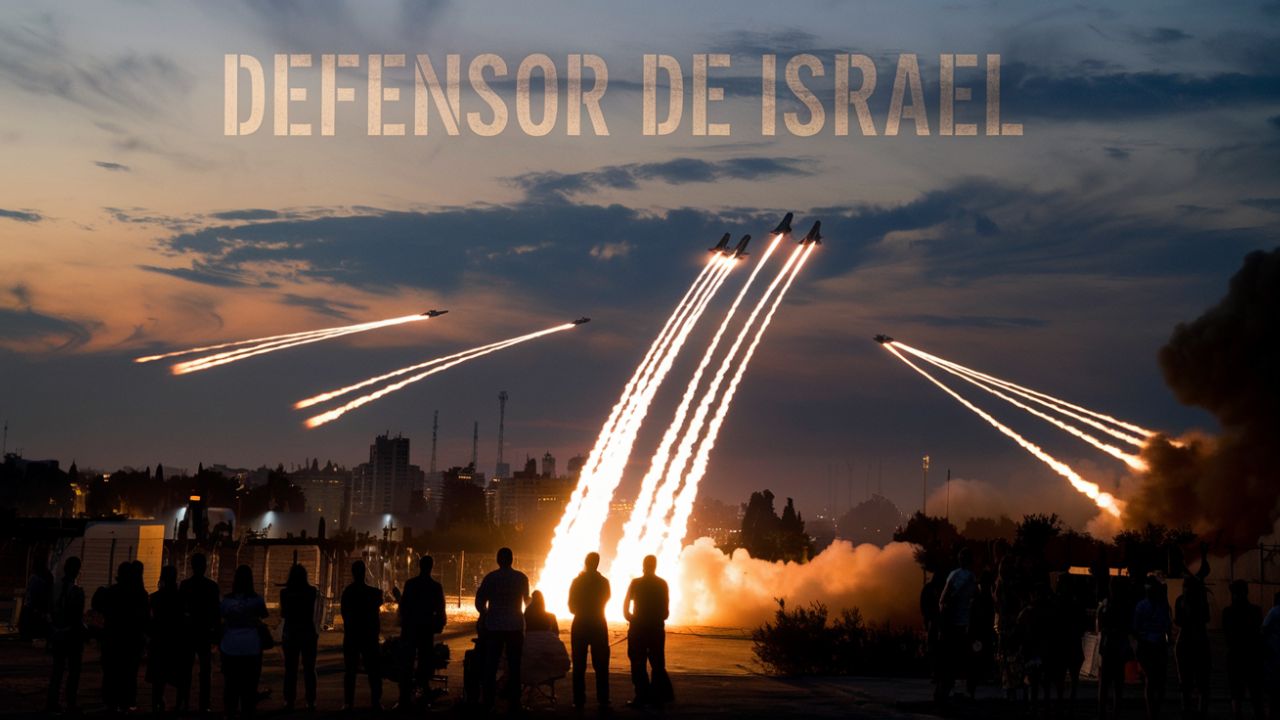
With a 90% interception rate and capable of neutralizing missiles in seconds, the Iron Dome is the powerful technological barrier that prevents Israel from being devastated by massive attacks, facing challenges like firing 5,000 rockets in just 20 minutes.
Imagine living in a place where, at any moment, a missile could fall from the sky. It sounds like a movie scene, but for many Israelis, this is reality. To cope with this, Israel developed the Iron Dome, a true technological masterpiece in air defense. But how does it work? Is it really infallible?
The Origin of the Iron Dome
The Iron Dome was born out of necessity. Since the 2000s, groups like Hamas have been firing missiles at Israeli cities, exposing the population to constant risk. Between 2000 and 2008, around 8,000 projectiles hit Israeli territory. It was in this context that General Daniel Gold proposed the system. Despite initial skepticism, the project moved forward with support from the Ministry of Defense and companies like Rafael Advanced Defense Systems. In 2011, the Iron Dome became operational.
How Does the Iron Dome Work?

The logic behind the system is ingenious and straightforward. It relies on three main components:
-
Something is happening around the Earth: Inside the huge explosion of fireballs in 2026

-
A hot air bubble coming from Argentina expands over Brazil, causing thermometers to exceed 38 degrees with a thermal sensation of 40 degrees in late March, affecting 6 states at once.

-
The radish leaf that almost everyone throws away has more polyphenols, flavonoids, and fiber than the consumed root, and a 2025 study showed that the leaf contains compounds that protect the intestine, combat inflammation, and may inhibit the growth of cancer cells.

-
A planet that seemed to defy the laws of physics has intrigued scientists for decades, until the James Webb revealed what is really affecting Saturn’s rotation.


Radar: Detects and tracks enemy missiles.
Control Center: Calculates the missile’s trajectory and decides whether it poses a threat.
Tamir Missile Launchers: Intercept projectiles that could hit populated areas.
Interestingly, if the system calculates that a missile will land in an uninhabited area, it does not take action. Why? To save expensive resources. After all, each shot from the system costs over R$ 350,000!
Why Is the Iron Dome So Efficient?
With an interception rate of about 90%, the Iron Dome is a true invisible wall. It can operate in any weather condition and is mobile, allowing its adaptation to different regions. However, this efficiency comes at a cost, literally. The high cost of maintenance and operation raises questions about its long-term sustainability.
To address economic and strategic challenges, Israel is developing the Iron Beam, a laser defense system. Besides being cheaper, it is incredibly fast and effective against short-range threats. While the Iron Dome handles projectiles from 4 km away, the Iron Beam covers shorter distances, complementing the current system.
The Challenge of Massive Attacks
Despite all its sophistication, the Iron Dome faces difficulties when overloaded. In recent attacks, Hamas fired about 5,000 missiles in just 20 minutes. Even a system this advanced has limits, highlighting the need for continuous innovation.






-

-

2 pessoas reagiram a isso.