





 Portuguese
  English
  Spanish
 7 min of reading
  0 comments


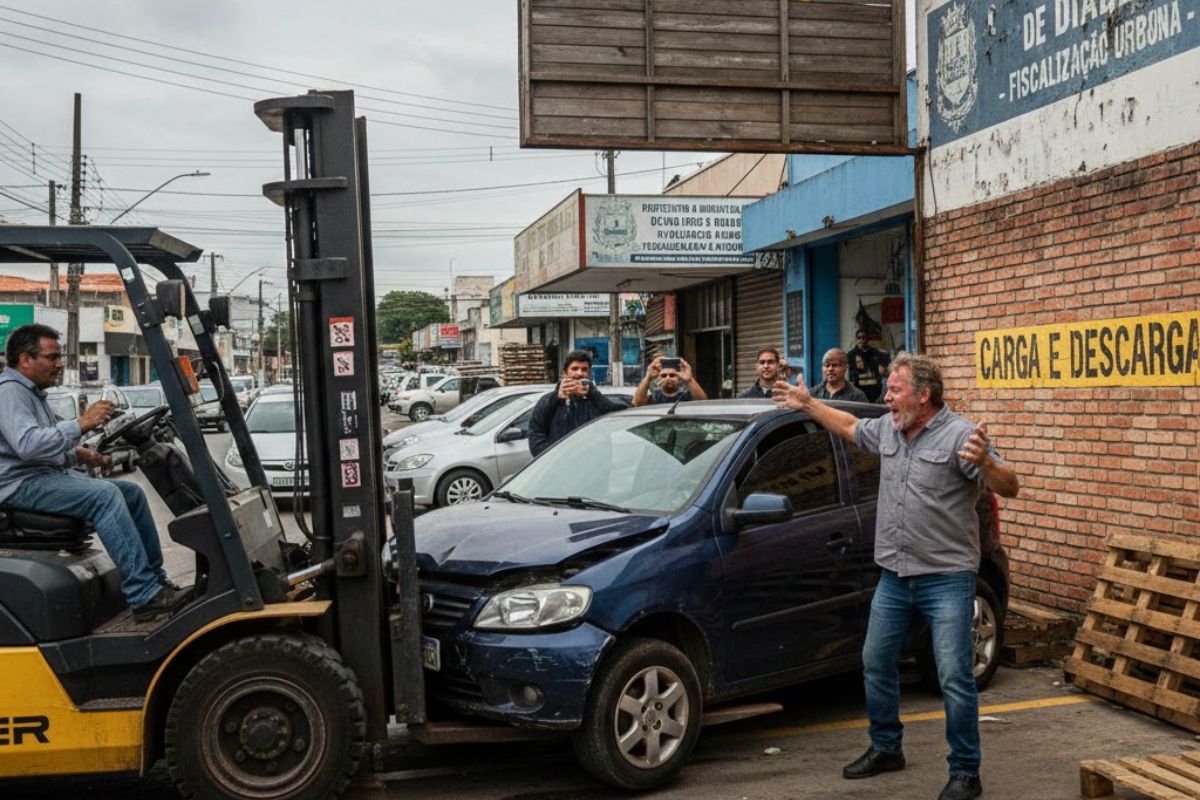
Designated Loading and Unloading Space on the Asphalt, Residents Ignoring the Signage, Businessman Cornered and Forklift on Scene Summarize the Impasse in Diadema. The Episode Exposes Failures in Traffic Enforcement, the Application of the Traffic Code, and the City Hall of Diadema in the Face of a Repeat Infraction That Ends in Damage to the Vehicle.
Designated loading and unloading space on the asphalt, residents ignoring the signage, a businessman cornered by routine disrespect, and a public authority that does not respond to calls. The use of a forklift to remove a car parked illegally in Diadema (SP) exposed not only an extreme gesture by an exhausted merchant but also serious flaws in traffic enforcement and the response capacity of the city hall in the face of infractions that occur daily on the same street.
In a video recorded by residents and shared in condominium groups, the owner of a lumber store is seen maneuvering the forklift to lift and move a car parked over the company’s exclusive loading and unloading space. The vehicle, parked illegally, is removed in a matter of seconds but ends with damaged parts after the movement. The scene, recorded in Greater São Paulo, reignited the conflict between the businessman, the residents, and exposed the void in action from the municipal public authority.
Forklift Video Exposes Impasse Between Businessman and Residents

The images show the forklift operator lifting the car and moving it to another position on the same street, freeing the designated space for the lumber store.
-
YouTuber creates an excavator equipped with a giant 4.5-meter sword to challenge his brother to a rematch, and the invention quickly goes viral on social media.

-
The U.S. Army surprises the world by presenting the UH-60MX Black Hawk helicopter capable of flying without pilots, controlled by a tablet, featuring the MATRIX system, smart sensors, and full autonomy in real combat and rescue missions.

-
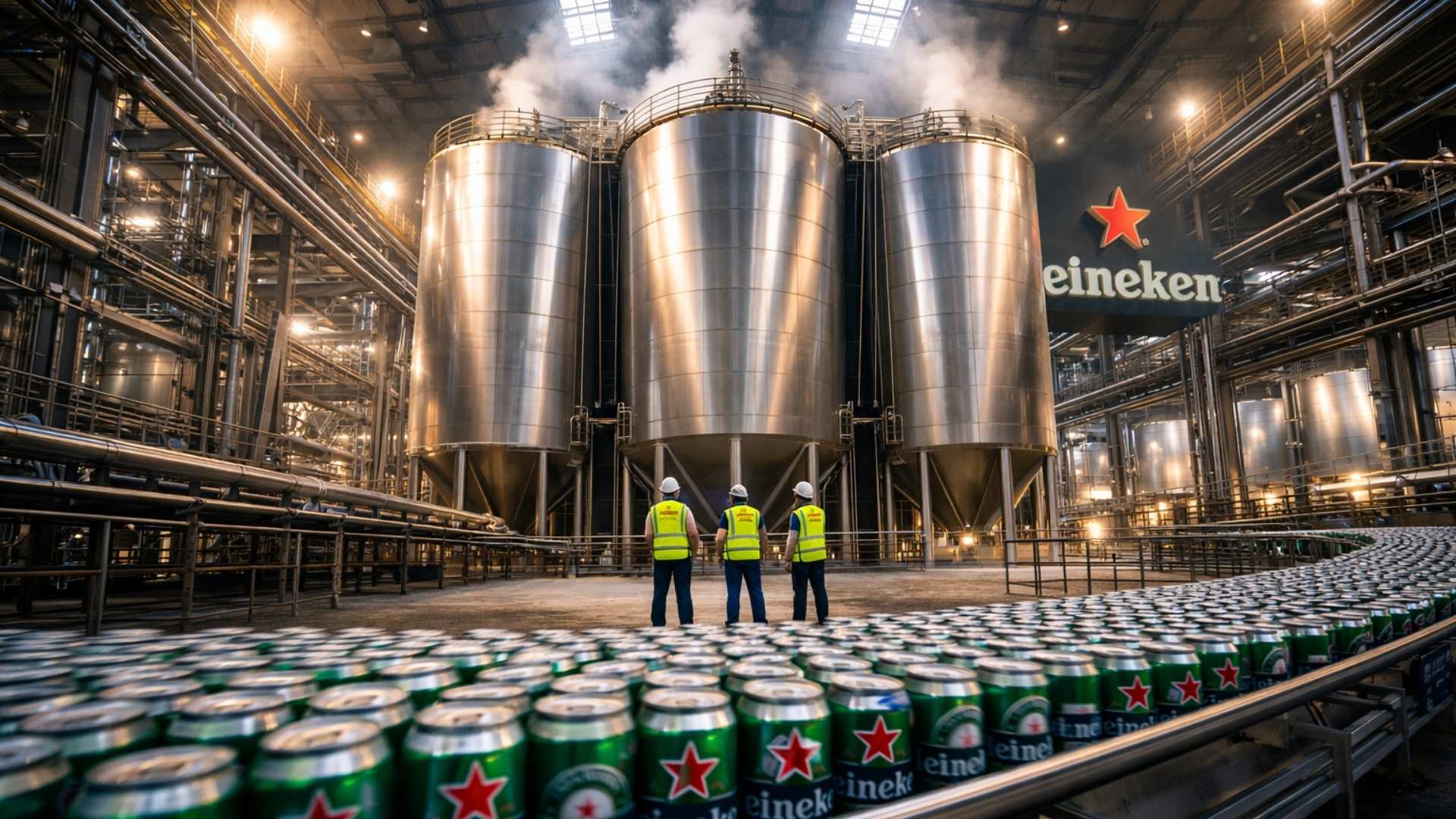
Heineken’s factory in Brazil produces 300 million beer cans in just 4 months, reaches 1 million hectoliters, received R$ 2.5 billion, and is already projecting an annual capacity of 5 million with sustainable technology.
-
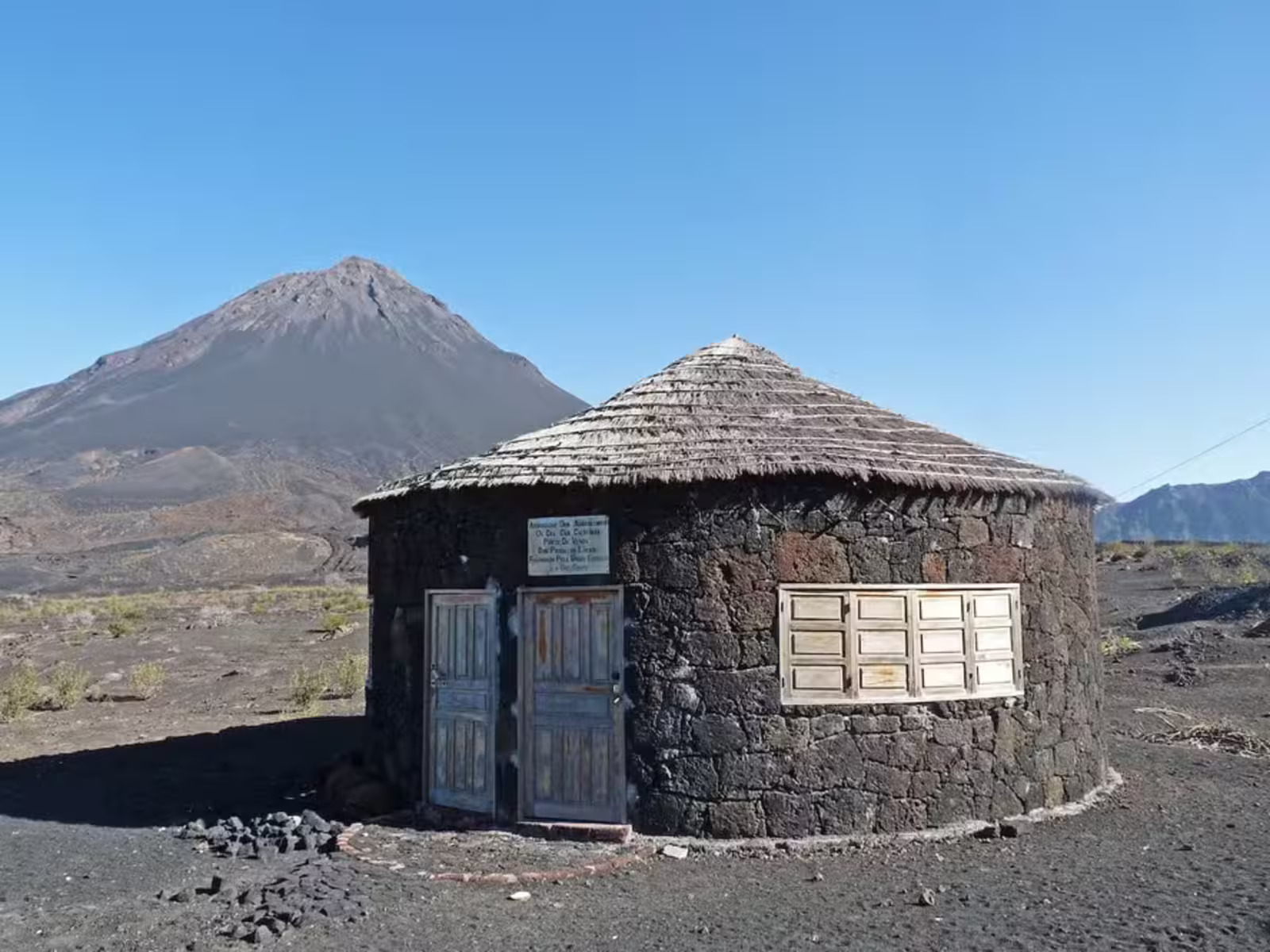
Inside an active volcano in Africa, residents use volcanic rocks to build houses in an impressive setting.

Residents report that the owner of the business had been complaining for a long time about vehicles occupying the space, even with the loading and unloading marking painted on the ground and signage indicating the parking restriction.
According to neighbors’ reports, this is not the first time the businessman has protested against the illegal use of the space.
On other occasions, he had only argued with drivers, alerted residents, or complained directly to the neighboring condominium.
This time, claiming to be tired of trying to resolve the situation through official means, he decided to use the forklift to forcibly clear the space of his business.
The condominium manager, Pamela Lanzoni, stated that she advises residents and visitors to respect the traffic signage and that the condominium reinforces the warning that no one should use the area designated for loading and unloading.
Still, even after the case’s repercussion, vehicles continued to be parked in the space intended for the lumber store, highlighting that the problem is routine and not an isolated episode.
Parking in Loading and Unloading Space Is a Serious Infraction According to the Traffic Code


The Brazilian Traffic Code (CTB) classifies parking in a designated loading and unloading space as a serious infraction, with fines and removal of the vehicle as penalties.
In practice, the car parked over the marking of the lumber store in Diadema was in an irregular situation and, if caught by a traffic agent, could be fined and towed to the municipal yard.
Experts consulted by the report highlight that, from an administrative perspective, the driver occupying the loading and unloading space directly breaches the CTB and can be held accountable.
However, the application of the penalty cannot be done by private individuals, but exclusively by public traffic agents or police on duty.
Even with the clear infraction by the driver who parked the car, the businessman did not have legal authorization to remove the vehicle using a forklift.
By physically interfering with someone else’s property and causing damage, he opens himself up to civil liability and even criminal charges, according to traffic and criminal law experts’ understanding.
Businessman’s Extreme Action May Be Classified as a Crime
Consulted lawyers point out that, although the businessman’s irritation is understandable given the daily repetition of the same infraction, the act of using industrial equipment to move an illegally parked car exceeds any acceptable reaction in the private domain.
According to technical explanations, it is not the merchant’s role to act as the State in removing the vehicle.
By causing damage to the car, he may be held liable for property damage crimes, in addition to facing potential civil actions for reimbursement of damages to the car owner.
According to information provided to the report, the city hall of Diadema decided to issue a warning to the businessman, reinforcing that the correct conduct in similar cases is to contact the Municipal Traffic Department so that an agent can go to the site, cite the vehicle, and arrange for official removal.
Unanswered Phones and Poor Signage Expose Failures of the City Hall
The episode also exposed the chaos in enforcement and service from the city hall of Diadema.
During the investigation, reporters attempted to call the official numbers announced by the municipality for reporting traffic irregularities, such as 118 and a 0800 number listed on the city hall’s website.
In both cases, the calls did not connect or went unanswered.
The businessman himself reported that on several occasions, he attempted to reach the responsible agencies, without success.
According to him, no one answers, no one shows up, and the space continues to be used as parking by residents and visitors, even with the loading and unloading marking on the ground.
In addition to the lack of response from official channels, there are reports that the painting of horizontal signage is worn out and that loading and unloading signs installed in the past were likely torn down in previous fights in the area.
The situation combines deficient signage, absent enforcement, and a communication channel that does not work in practice, which strengthens the feeling of abandonment among merchants and residents trying to follow the rules.
Residents Split Between Criticism of the Forklift and Support for the Outburst
Among the residents, opinions are divided. Some neighbors believe that the businessman overreacted by using the forklift on the car and argue that he should insist on seeking official channels, no matter how inefficient they may be.
Other residents, however, say they understand the action and even agree with the extreme pressure on those who insist on disrespecting the loading and unloading area.
A resident who recorded the video stated that the initial intention was merely to alert the condominium group so that the car owner could be located and remove the vehicle.
However, the recording went viral and expanded the debate on urban coexistence, respect for traffic rules, and the public authority’s omission.
Even after the repercussion, the report found that new cars returned to park in the same demarcated area during the filming on the street, reinforcing that the pattern of disrespect remains.
What the Case Reveals About Traffic Management in Diadema
The forklift incident in Diadema goes beyond the image of an angry merchant.
It highlights three structural problems: drivers ignoring signage, lack of effective enforcement, and city hall service channels that do not operate as promised.
Without regular presence of traffic agents, no prompt responses to calls, and worn signage, the system opens the door for makeshift, dangerous, and legally risky solutions, such as the one adopted by the lumber store owner.
The consequence is an environment where each party feels entitled to solve the problem on their own, instead of relying on public authority action.
To prevent similar scenes from recurring, the municipality will have to prove, in practice, that it can address complaints, enforce special parking spaces, fine offenders, and maintain signage in adequate conditions.
Without this, the pressure is likely to grow, both on merchants who depend on loading and unloading spaces to work and on residents who live daily with the tension generated by cars parked where they should not be.
In terms of public policy, the Diadema case serves as a warning: without present enforcement and reliable service channels, the Traffic Code becomes dead letter, and local conflicts end up migrating to the terrain of improvisation, property damage, and potential criminal liability of citizens who, exhausted, cross the line between legitimate complaint and illegal conduct.
What Is the Limit of Reaction in the Face of Public Authority Omission
The forklift episode in Diadema shows that when the State fails to enforce and respond quickly to visible infractions, the risk increases that merchants and residents will seek solutions on their own, with potentially serious consequences.
To prevent such cases from recurring, it is essential that city halls, municipal chambers, and traffic agencies be held accountable with data, clear protocols, and transparency: real functioning of complaint phone lines, presence of agents at critical points, maintenance of signage, and formal responses to recorded complaints.
Readers witnessing similar irregularities in their city can, besides taking photos and videos, formally register complaints in official channels, contact the Public Ministry, reach out to the municipal ombudsman, and track whether there is documented feedback.
At the same time, it is crucial to remember that individual reaction cannot exceed the limit of the law: combating a traffic infraction with an action that may be classified as a crime only amplifies the problem and shifts the focus of primary responsibility away from the public authority and the original offender.






-

-

-

3 pessoas reagiram a isso.