





 Portuguese
  English
  Spanish
  6 min of reading
  0 comments


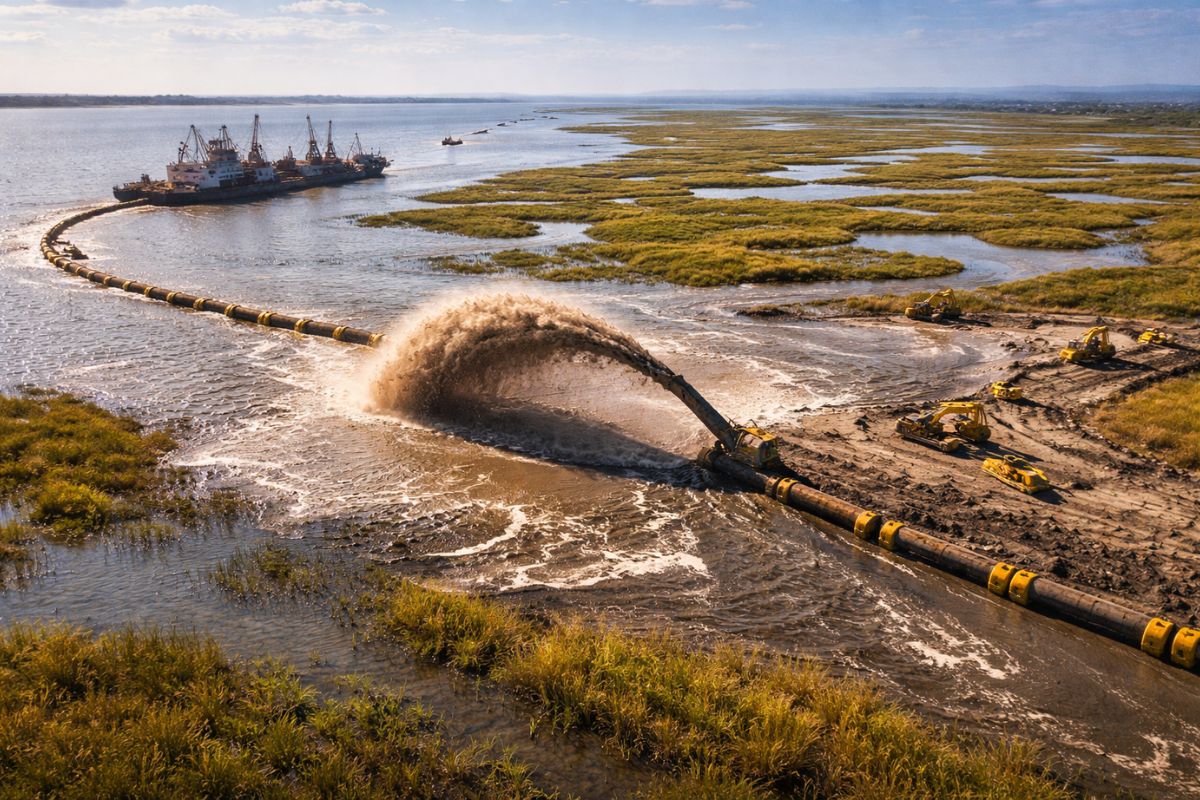
The Wetlands of the Upper Barataria Project in Louisiana Were Reconstructed with Dredged Sediment from the Mississippi River through a Pipeline Over 21 Kilometers Long, in a Project Led by NOAA and Partners to Restore 1,200 Acres, Contain Land Loss, and Measure Whether the Terrain Can Withstand Again.
The wetlands reconstructed in the Upper Barataria project in Louisiana resulted from an engineering operation that removed about 6.4 million cubic meters of sediment from the Mississippi River to restore elevation to a coast that has been sinking for decades. The goal was not just to fill voids, but to remake the physical foundation of an area that has been continuously losing land.
The project reached 1,200 acres in the Barataria Basin and was completed as one of the largest restoration projects ever undertaken by NOAA and its partners. Now, with construction completed, the phase that truly tests the endeavor begins: long-term monitoring, which will determine whether the new wetlands can maintain stability, resist soil loss, and hold the coastline of Louisiana for longer.
How Barataria Came to a Point of Continuous Land Loss

The Barataria Basin had already lost over 276,000 acres of land since the 1930s, and this accelerated erosion began to threaten not only the immediate coast but the structure of the estuaries of Louisiana as a whole.
-
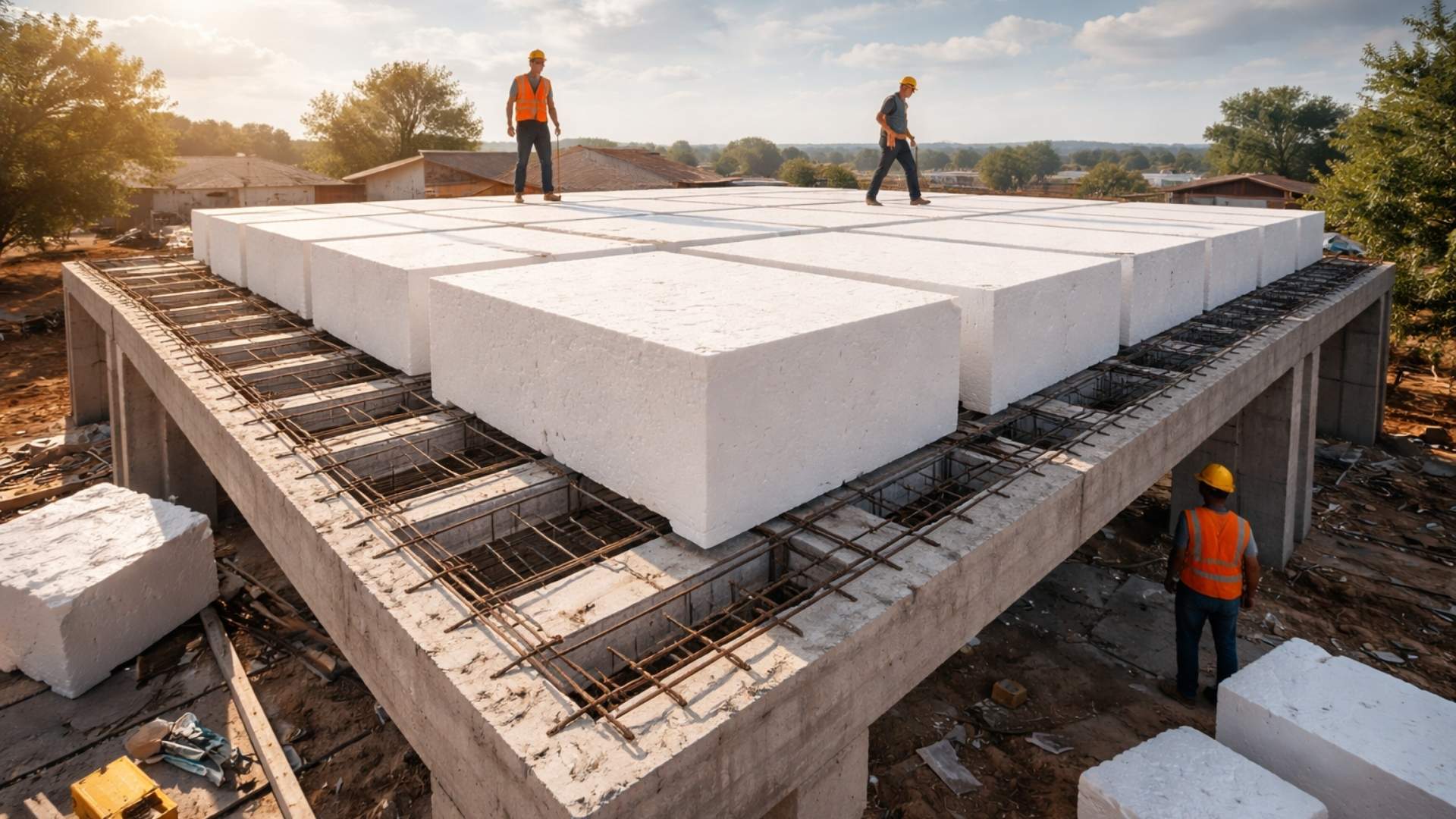
Forget concrete: architects are replacing tons of concrete with giant blocks of expanded polystyrene to build the roofs of houses and reduce structural weight by up to 50%, cut costs, improve thermal insulation, and speed up construction.
-
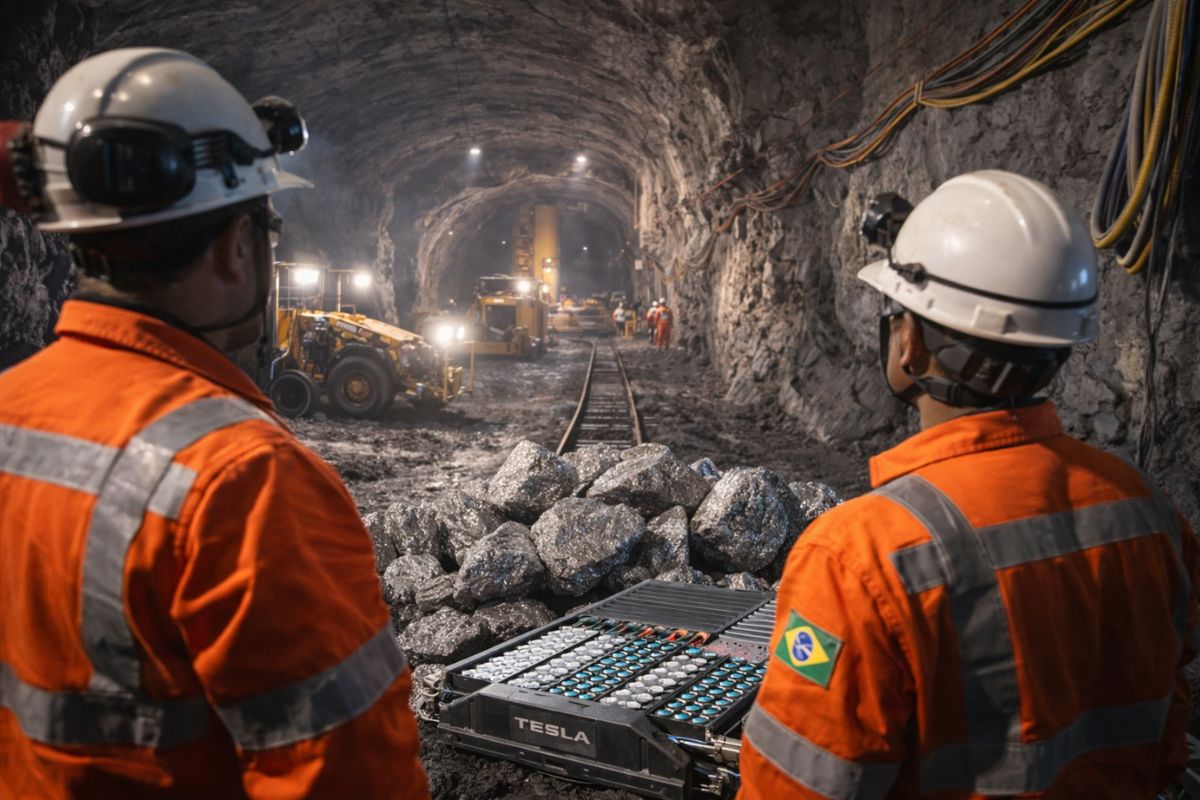
The Brazilian state enters the center of the global race for critical minerals by starting the construction of the largest underground nickel mine in Latin America, a mineral essential for electric car batteries that the entire world is competing for at this moment.
-
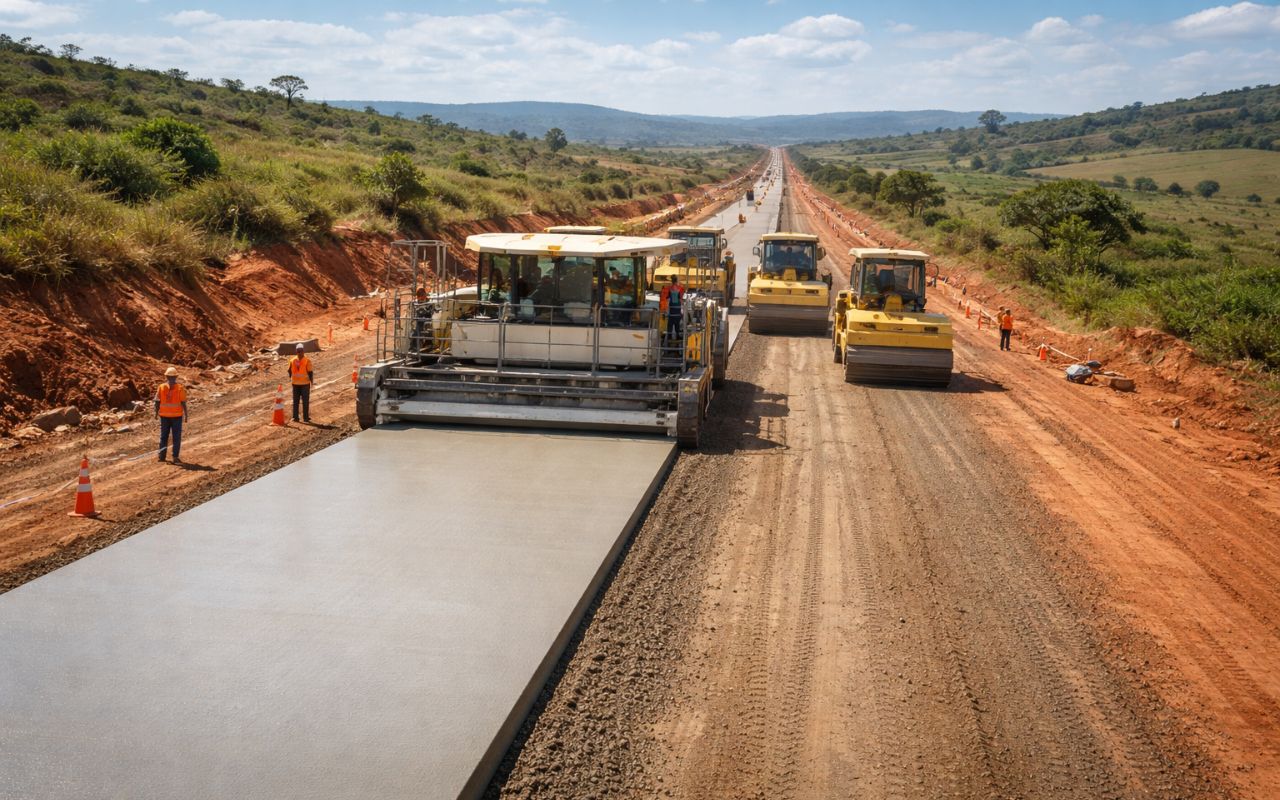
New CCR concrete paving technology promises roads up to 3x more durable, less maintenance, and cost reduction in Brazil.
-
Made from recycled plastic, plastic wood is gaining space in the construction industry because it does not rot, resists moisture, and reduces maintenance costs over the years.


The problem did not arise from a single cause. It was formed from a combination of natural subsidence, rising water, and the breakdown of the cycle that previously allowed the Mississippi to replenish sediments in the delta over time.
This mechanism was largely interrupted by levees built to protect urban and productive areas from flooding. By containing the river, these structures also prevented new sediments from reaching neighboring wetland areas.
The land continued to sink, but the material that used to replenish it stopped arriving, and the coast began to lose height and consistency in silence.
The situation worsened after the Deepwater Horizon spill, which hit the basin’s wetlands hard and accelerated a trend that was already long-standing.
Across Louisiana, the accumulated loss since 1932 reached 1,800 square miles, and the pace described in the project is brutal: equivalent to a football field disappearing every one or two hours. In such a scenario, reconstructing wetlands has ceased to be a peripheral measure and has become a regional scale response.
Therefore, Upper Barataria was treated as a central component of a broader coastal restoration effort.
The proposal was simple in formulation but enormous in execution: return part of the lost sediment to the system, raise the surface, and test whether engineering can provide a new foundation for a landscape that the Mississippi no longer nourishes as before.
What the Dredges Did Between the Mississippi River and the Wetland Creation Area

The dredges began operation at the end of 2021 when Weeks Marine started construction of the project.
The chosen method was hydraulic cutter suction dredging, pulling sediments from borrow areas in the Mississippi River and pushing that material to the wetland creation zone through a pipeline over 21 kilometers long.
It was not a superficial fill operation, but a massive transfer of soil on a river scale.
Throughout the process, sediment was transported using high-powered pumps and used to fill containment structures in the form of earthen levees. These levees helped keep the material in target areas while the new land was formed.
The result was the pumping of approximately 8.4 million cubic yards, equivalent to the volume highlighted in the topic, about 6.4 million cubic meters, taken from the Mississippi to elevate the surface in Upper Barataria.
The dredges did not operate solely as excavation machines but as a link between a large river loaded with sediments and an estuary that had been cut off from this natural replenishment. This detail changes the reading of the project.
Instead of importing material from outside or relying on smaller solutions, the project sought the necessary mass from the Mississippi itself to reconstruct wetlands on a scale compatible with the accumulated loss of Louisiana.
The impact was also seen in the immediate economic plan. According to the project, construction generated over 140 jobs related to the work, extending the effects of restoration beyond the recovered land.
When the dredges start moving millions of cubic meters, the effect is not limited to the landscape. It traverses logistics, contracting, heavy operation, and long-term public planning.
Why Monitoring Became the Most Crucial Stage of the Project

With construction completed, the monitoring phase has become crucial. This is because the restoration of wetlands does not end when the sediment is deposited.
It is after the project that the land begins to reveal whether it can consolidate, maintain the desired elevation, whether water circulates as expected, and whether the new surface behaves as a functional wetland, not as fragile fill.
The partners in this monitoring include NOAA, Water Institute, Louisiana Coastal Protection and Restoration Authority, Louisiana Department of Wildlife and Fisheries, and the United States Geological Survey.
Together, they monitor soil, vegetation, water quality, and the performance of structures designed to enhance wetland functionality over time.
In Upper Barataria, measurement is not a bureaucratic complement. It is the only way to know whether the elevation gained by the dredges will truly last.
Another central aspect of the monitoring is adaptive management. If the results show that the project is not performing as expected, corrective actions can be taken.
Among them are the establishment of wetland plant species, removal of invasives, and construction of new tidal connections.
This indicates that the project was not designed as a rigid and closed structure, but as a system that can be corrected if the terrain’s response falls below expectations.
This logic matters because the coast of Louisiana offers no margin for static solutions.
Subsidence continues, the water level continues to press, and the historical loss of land continues to weigh on any new intervention.
Therefore, Upper Barataria serves as both a restoration project and a learning field.
If engineering wants to replicate this scale in the future, it must first prove here that the new soil can remain standing.
What Is at Stake for Louisiana Beyond the Completed Project
Upper Barataria was presented as one of the largest restoration projects ever conducted by NOAA and its partners, and this does not happen just because of the physical size of the area recovered.
What is at stake is the attempt to restore stability to a coast that has lost natural protection for decades and today depends on much larger responses than localized actions.
The wetlands reconstructed serve, in this context, as a barrier, territorial basis, and resilience platform for nearby communities.
The project is also part of the response to the Deepwater Horizon disaster. On April 20, 2010, the explosion at the platform triggered the largest oil spill in United States history.
For 87 days, oil and natural gas were continuously released, with an estimated 134 million gallons dumped into the northern Gulf of Mexico.
The restoration of wetlands in Upper Barataria is precisely part of this effort to repair, at least in part, damage that has accumulated on top of previous historical losses.
By pumping sediment from the Mississippi into a system that had been isolated from the river, the dredges attempted to artificially reintroduce a natural process that levees interrupted.
The bet is that this material will not only restore height but also structural stability to a retreating coast.
It is an engineering effort that works almost as a substitute for a lost flow, trying to reconstruct with pipes and pumps what was once delivered by the delta itself.






Seja o primeiro a reagir!