





 Portuguese
  English
  Spanish
  5 min of reading
  0 comments


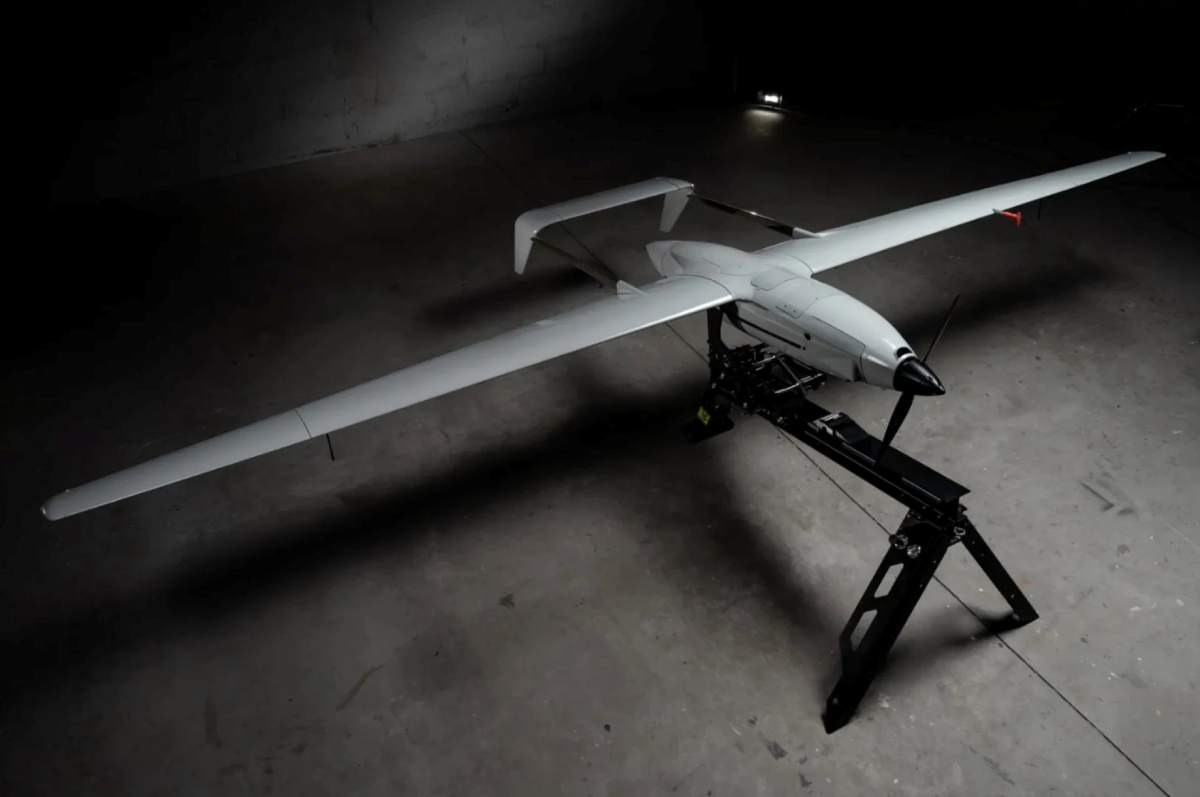
The Deployment of Hydrogen-Powered Drone Raybird by the Ukrainian Armed Forces Marks the First Use of This Technology in Real Combat, with an Endurance of Approximately 12 Hours, a Cruise Speed of About 110 km/h, a Weight of Approximately 23 kg, and a Capacity to Carry Up to 10 kg of Sensors
Ukraine has deployed a hydrogen-powered drone for the first time in an active combat zone. The Raybird aircraft, developed by the Ukrainian company Skyeton, was utilized by the country’s Armed Forces in reconnaissance missions with an endurance of approximately 12 hours.
The use of hydrogen-powered drone marks the transition of this technology from experimental projects to real operations in a war scenario. Although such drones have existed for nearly two decades, their practical application has been mainly limited to tests or technology demonstrators.
The aircraft used is unarmed and its primary function is long-range surveillance. During operations, the equipment collects data, observes the terrain, and operates advanced sensors and radar to enhance the military forces’ monitoring capability.
-
China creates hypersonic engine that can make planes and missiles fly more than 6 times the speed of sound with less weight, more range, and without system change.
-
Mysterious object on Mars divides NASA and Harvard after Curiosity image reignites suspicions about what was really found on the planet.
-
Giant structures 14 meters beneath Egypt are revealed by satellites and expose a millennia-old secret buried in Buto.

-
Children have been making clay pieces for 15,000 years in Southwest Asia, and fingerprints preserved on 142 ornaments helped archaeologists prove this.

The system was developed for prolonged observation missions. This type of operation requires aircraft capable of staying aloft for long periods while maintaining flight stability and real-time data transmission capability.
Deployment of Hydrogen-Powered Drone in Real Combat
The Raybird represents the first documented operational use of a hydrogen-powered drone in active combat. The deployment occurred in reconnaissance missions conducted by the Ukrainian Armed Forces in a real war context.
Historically, hydrogen projects in drones were confined to research settings or engineering tests. Many of these experiments focused on high-altitude flights or long-duration scientific missions.
With the deployment of the Raybird, the technology has begun to operate outside of the experimental environment. Field use demonstrates the adaptation of the aircraft to operational scenarios that require reliability, endurance, and rapid maintenance capability.
The decision to use the system in combat also indicates the maturity of the project. The drone was developed to perform observation and data-collection tasks without relying on conventional combustion engines.
How the Energy System of the Hydrogen-Powered Drone Works
To integrate hydrogen into the project, engineers conducted a complete redesign of the aircraft. The fuel requires larger tanks than traditional liquid fuels, prompting a reshaping of the fuselage and a redistribution of weight.
In this model, hydrogen is not burned directly. It is used in a fuel cell that produces electricity through a controlled electrochemical reaction.
The electricity generated powers electric motors responsible for driving the drone’s propellers. This configuration combines the efficiency of electric motors with the energy autonomy provided by hydrogen.
The result is a hybrid system that combines mechanical simplicity with longer flight duration. This combination allows the aircraft to execute extended missions without relying on conventional batteries.
The Raybird has a maximum takeoff weight of approximately 23 kg and a wingspan of about 4.7 meters. The aircraft can also carry up to 10 kg of sensors or equipment intended for reconnaissance operations.
During missions, the drone can reach cruise speeds of up to approximately 110 km/h. Its endurance can reach around 12 hours of continuous flight.
Lower Noise and Reduced Thermal Signature
One of the most relevant operational aspects of the hydrogen-powered drone is its discretion during flight. The use of electric motors significantly reduces noise levels compared to traditional combustion engines.
In addition to the relative silence, the system also produces a very small thermal signature. This factor makes it difficult to detect by infrared sensors or thermal tracking equipment.
In reconnaissance and surveillance missions, these characteristics are considered strategic. Aircraft with lower thermal and acoustic emissions tend to remain unidentifiable for longer periods.
The Raybird can operate at altitudes of up to approximately 5,500 meters. This capability enables prolonged observation and surveillance of large areas with greater operational safety.
The long flight time also makes the system suitable for border patrol and infrastructure monitoring. The extended airtime enhances the range of surveillance operations.
Another feature of the project is the ability to use interchangeable hydrogen cartridges. The system can also be refueled by mobile hydrogen generation units set up in the field.
This logistical flexibility was designed to facilitate operations in environments where access to conventional fueling infrastructure is limited. The goal of the project is to balance autonomy, reliability, and ease of maintenance.
Expansion of Interest in Hydrogen-Powered Drones
Although the Raybird case is linked to military use, interest in hydrogen-powered drones is also growing in civilian sectors. Various projects are exploring the technology for commercial and scientific applications.
Startups and research centers are investigating the use of these drones for environmental monitoring, air logistics, and light transport. Missions that require long flight times without refueling are considered especially suited for this technology.
Among the applications being studied are pipeline inspections, monitoring of wind farms, and tracking of power transmission lines. These operations often require extended flights over vast areas.
Hydrogen has a much higher energy density per unit of weight compared to conventional batteries. This characteristic allows for significantly increased operational time of unmanned aircraft.
European and Asian companies are also developing commercial drones based on fuel cells. These systems are being designed for aerial mapping, forest monitoring, and maritime surveillance.
Some projects funded by the European Union are studying the integration of green hydrogen produced from renewable energy. The proposal is to power fleets of drones used for climate observation and natural disaster management.
Possible Future Applications of the Technology
The technology used in the hydrogen-powered drone may have applications beyond the military field. One of the promising areas is large-scale environmental monitoring.
Thanks to the long flight time, drones of this type can observe forests, glaciers, and marine ecosystems for several hours. This type of continuous monitoring allows for detailed data collection without frequent interruptions.
Another possibility involves tracking wildfires and the early detection of methane leaks in energy infrastructures. These systems can also assist in the surveillance of protected natural areas.
Researchers are also studying the use of hydrogen-powered drones for supply transportation in isolated regions. In places with limited electric recharge infrastructure, the technology can facilitate logistical operations.
Infrastructure inspection for renewable energy is another application deemed relevant. Offshore wind farms, large-scale solar plants, and high-voltage transmission networks require constant monitoring.
With the advancement of fuel cells and the reduction in the cost of green hydrogen, these systems may become part of a new generation of lightweight aircraft. The technology points toward quieter vehicles, with greater autonomy and potential use of renewable energy.







-

-

-

-

23 pessoas reagiram a isso.