





 Portuguese
  English
  Spanish
  6 min of reading
  0 comments


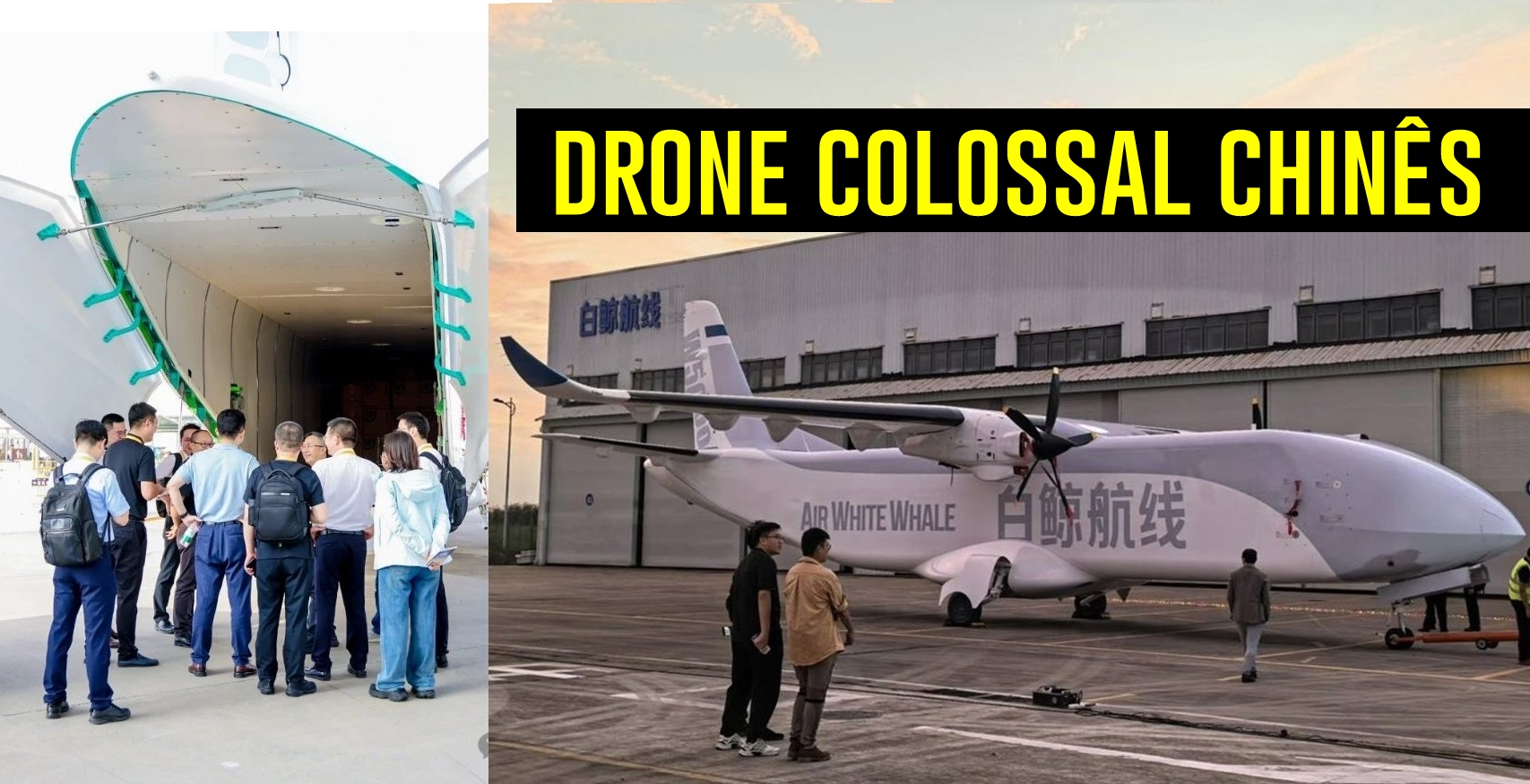
The Largest Cargo Drone in the World Is Chinese, With Capacity to Transport Up to 5 Tons and More Than 65 m³ of Internal Space
China is transforming the future of cargo transport with the accelerated development of cargo drones, an innovation that is gaining increasing visibility at international events, such as Airshow China, also known as the China International Aviation and Aerospace Exhibition, held in the city of Zhuhai.
This event showcases the greatest advancements of the Chinese aerospace industry, including impressive cargo drones. These cargo drones not only represent a giant leap in technological innovation but also provide a glimpse into what the future of logistics and military transport may hold.
Imagine, for a moment, that traditional trucks and planes, with their limitations of range and dependence on a robust infrastructure, could be replaced by a fleet of drones capable of flying automatically to remote and hard-to-reach areas.
-
Something is happening around the Earth: Inside the huge explosion of fireballs in 2026

-
A hot air bubble coming from Argentina expands over Brazil, causing thermometers to exceed 38 degrees with a thermal sensation of 40 degrees in late March, affecting 6 states at once.

-
The radish leaf that almost everyone throws away has more polyphenols, flavonoids, and fiber than the consumed root, and a 2025 study showed that the leaf contains compounds that protect the intestine, combat inflammation, and may inhibit the growth of cancer cells.

-
A planet that seemed to defy the laws of physics has intrigued scientists for decades, until the James Webb revealed what is really affecting Saturn’s rotation.


It’s a futuristic scenario, but the development of drones like the W5000 from Air White Whale shows that we are closer to this reality than previously thought.
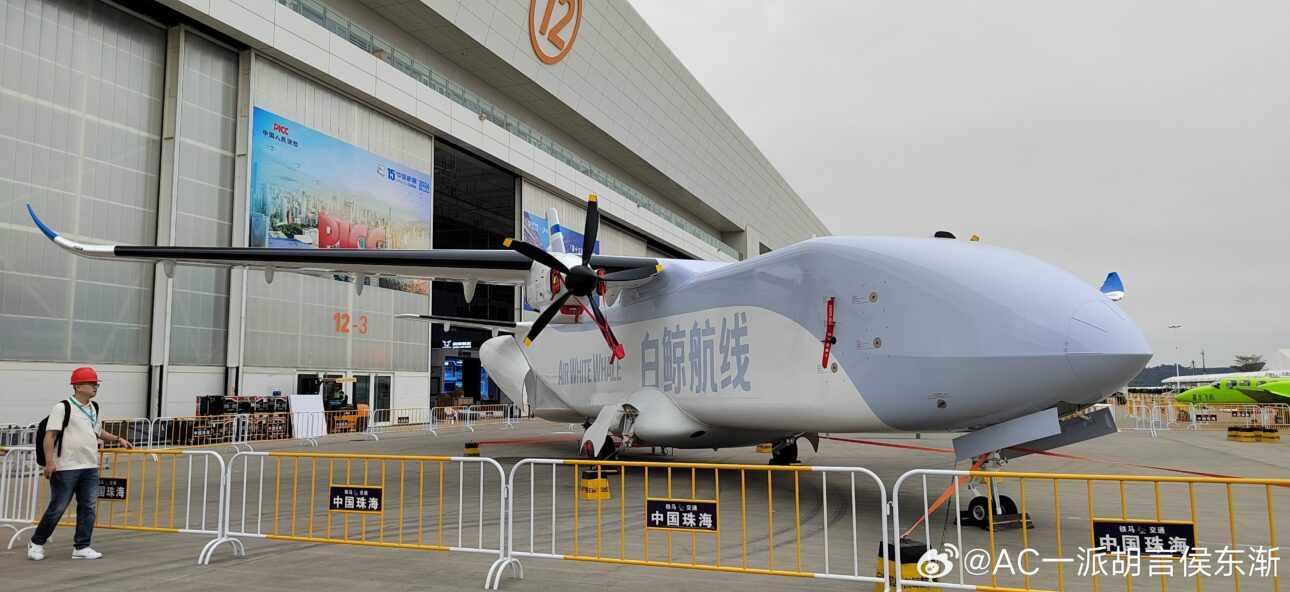
W5000: A Huge Chinese Cargo Drone
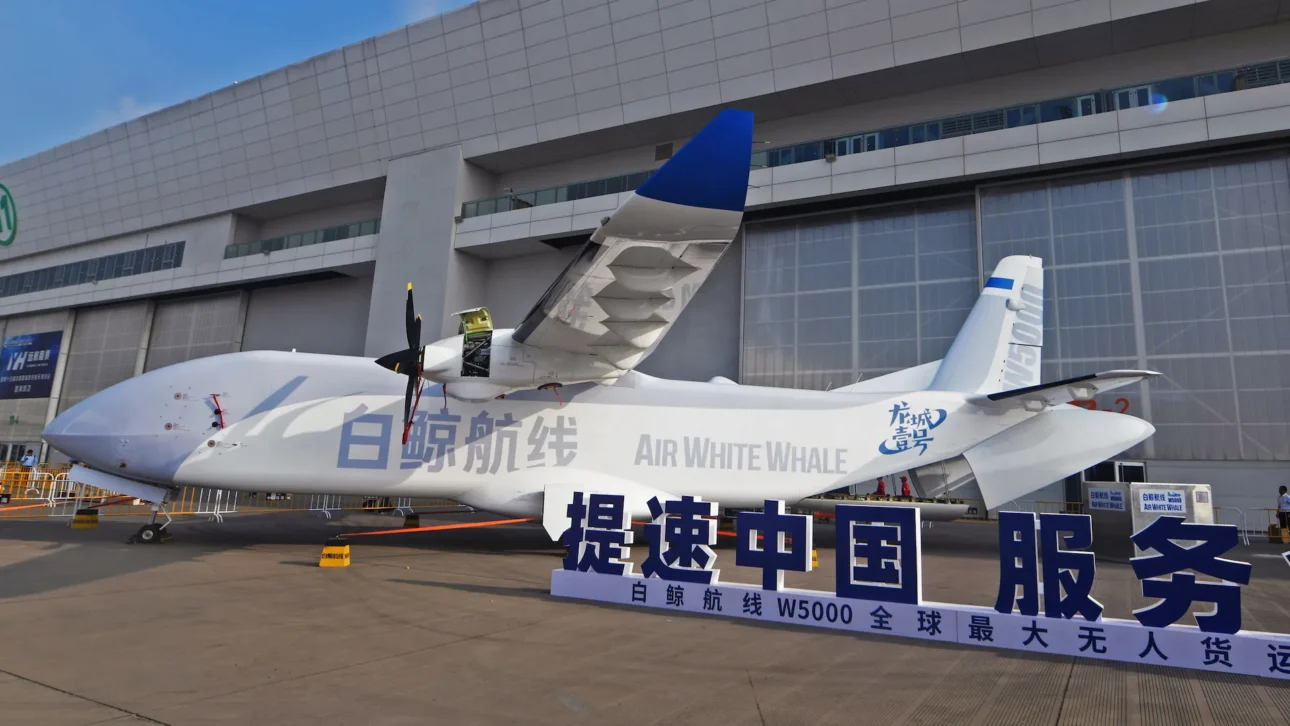
The W5000 is the star of this new technological landscape. Developed by Air White Whale, this cargo drone was one of the highlights at Airshow China and impresses not only with its size but also with its payload capacity and autonomy.
The name “W5000” refers to its ability to carry up to 5,000 kg, an unprecedented feat in the field of unmanned aircraft. Additionally, the drone has a maximum range of 2,600 km and can fly at a cruising speed of 526 km/h. With a maximum takeoff weight of 10,800 kg, the W5000 is indeed one of the largest and most powerful cargo drones developed to date.
Beyond its impressive capacity, the W5000 has been designed with practical and versatile functionality in mind. It can use standard cargo pallets and features a rear ramp with clamshell doors, making it easier to load and unload goods.
This feature is crucial for logistics operations that require speed and practicality. Another differentiating factor is that the W5000 is designed to operate at both commercial airports and general aviation airports, making it a viable option for transport in regions without large aviation infrastructures.
The military potential of the W5000 is undeniable. In conflict situations or high-risk operations where human presence could pose a danger, a drone like the W5000 can ensure supply without exposing lives to danger.
In October, during the launch ceremony of the W5000, representatives from major logistics companies such as JD.com, China Eastern Airlines Logistics, and China Post were present, signaling that the logistics sector is already eyeing the potential of this drone for future commercial operations. However, the possibility of the W5000 being used for military applications is clear, further increasing its strategic importance.
CH-YH1000: Adaptability for Water and Land
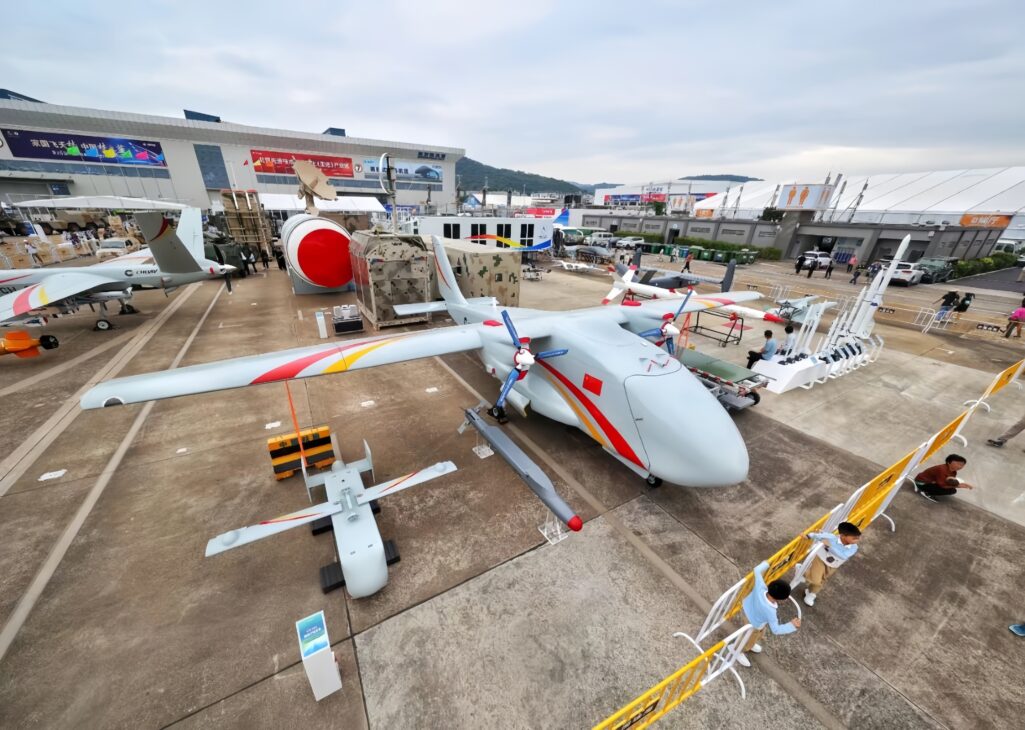
Another model that caught attention during Airshow China was the CH-YH1000, a smaller but equally innovative cargo drone developed by the China Aerospace Science and Technology Corporation (CASC). With a payload capacity of 1,000 kg, the CH-YH1000 has a flight autonomy of up to 10 hours and can operate in different scenarios, thanks to its adaptability.
In addition to taking off and landing on conventional runways, the CH-YH1000 can be equipped with side floats, allowing it to operate on water surfaces. This means the drone can be used in search and rescue operations, maritime surveillance, and even anti-submarine warfare missions.
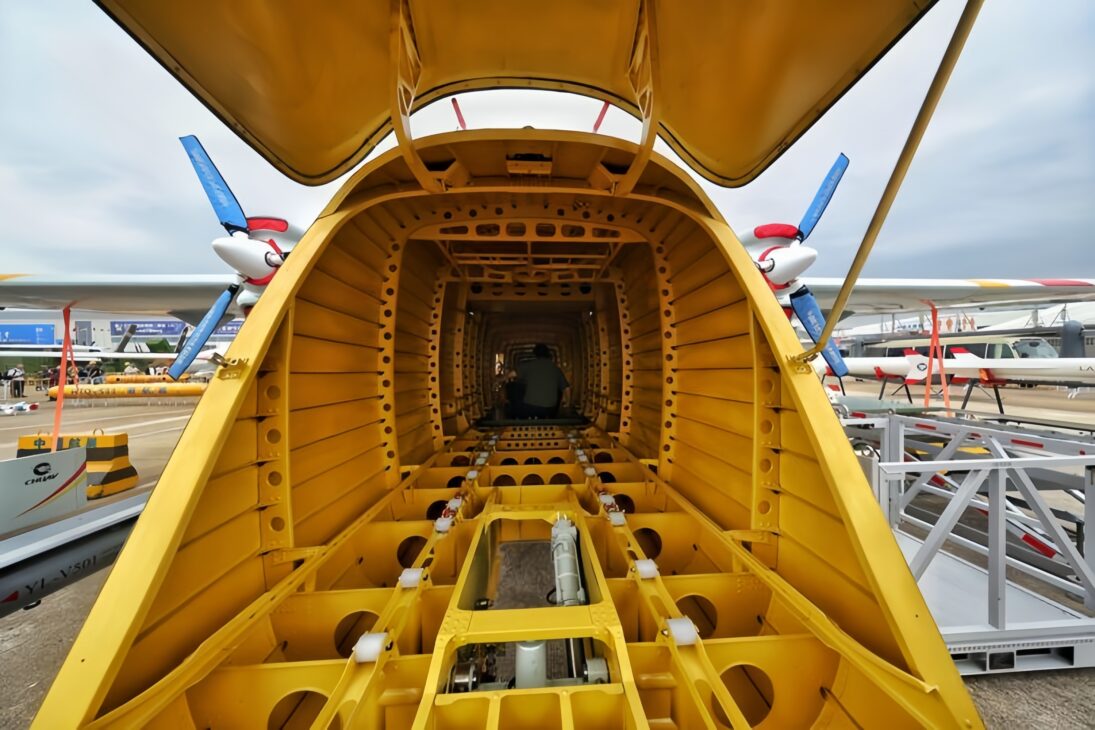
This versatility is an important differentiator, as it opens doors to new applications in both the civil and military sectors. In promotional videos, CASC showcased the CH-YH1000 in cargo drop situations and, interestingly, even in attack missions with the launch of guided munitions.
This indicates that, besides being a cargo drone, the CH-YH1000 can also evolve into a combat platform, adapting to different operational needs. The ability to operate in aquatic environments also makes it a strategic choice for maritime missions, where the use of traditional aircraft is often limited.
Altitudes and Remote Areas
China faces unique logistical challenges, especially in remote and high-altitude regions, such as the country’s west, where infrastructure is limited and weather conditions can hinder conventional transport.
In these areas, cargo drones like the CH-YH1000 and W5000 provide a practical and viable solution to ensure supply delivery. In hard-to-reach areas or where human presence may pose a risk, these unmanned drones represent a safe and efficient alternative.
Besides land operations, China also needs solutions for its strategic islands in the South China Sea. These islands, which play a strategic role in Chinese defense and power projection, require constant resupply.
However, these operations are challenging, especially in locations with little infrastructure or areas where the use of manned aircraft would be unfeasible. Thus, cargo drones emerge as a natural solution, providing a way to meet logistical needs without the risks associated with traditional transport.
Comparison with the United States
The United States is also paying attention to the development of cargo drones, especially in the context of operations in the Pacific, where logistics is a constant concern. The U.S. Marine Corps, for example, is exploring the use of unmanned drones to ensure logistics for troops in dispersed and hard-to-reach areas.
However, the American models under development are generally smaller and have a more limited range compared to their Chinese counterparts. This reflects the difference in strategic approaches: while the U.S. is still investing in partially manned solutions, China is advancing with exclusively unmanned drones, offering greater flexibility and reduced risk for personnel.
Brig. Gen. Shane Upton, head of logistics for the U.S. Army’s Multi-Domain Task Force, recently highlighted the complexity of supplying remote island units in the Pacific.
He noted that the enemy can easily hinder the use of traditional ports and landing strips, requiring new solutions to keep forces supplied. In this context, cargo drones represent a promising alternative to tackle logistical difficulties and ensure that U.S. troops remain ready to face challenges in a hostile environment.
The Future of Cargo Transport with Drones
Besides military applications, cargo drones offer interesting possibilities for the commercial sector. One example is the Feihong-98 (FH-98), a biplane cargo drone based on the Yun-5B model, widely used in China in areas where the use of manned aircraft is unfeasible.
This model represents Chinese innovation in unmanned aerial transport, especially in remote areas or with limited infrastructure.
The use of commercial cargo drones could revolutionize the logistics sector, reducing costs and eliminating the need for heavy infrastructure. In areas where rapid delivery is essential, such as in e-commerce operations, these drones can provide an efficient and agile solution, ensuring that products reach consumers quickly and safely, even in regions far from major centers.
A New Era in Aviation
China is leading the revolution in unmanned aviation with its impressive portfolio of cargo drones, covering both the commercial and military markets. By integrating these drones into its logistics, China not only improves its operational efficiency but also strengthens its response capability in crisis situations.
Cargo drones represent a viable solution to the growing logistical demands, both in hard-to-reach regions and in strategic areas, where human presence may be limited or dangerous.
In the global landscape, the proliferation of cargo drones opens new possibilities for cargo transport, and the impact of this advancement goes far beyond China. With the development of increasingly advanced technologies, it is possible that in the future, these drones will become a part of everyday life, transporting cargo autonomously, quickly, and efficiently, anywhere in the world.






Seja o primeiro a reagir!