





 Portuguese
  English
  Spanish
  5 min of reading
  0 comments


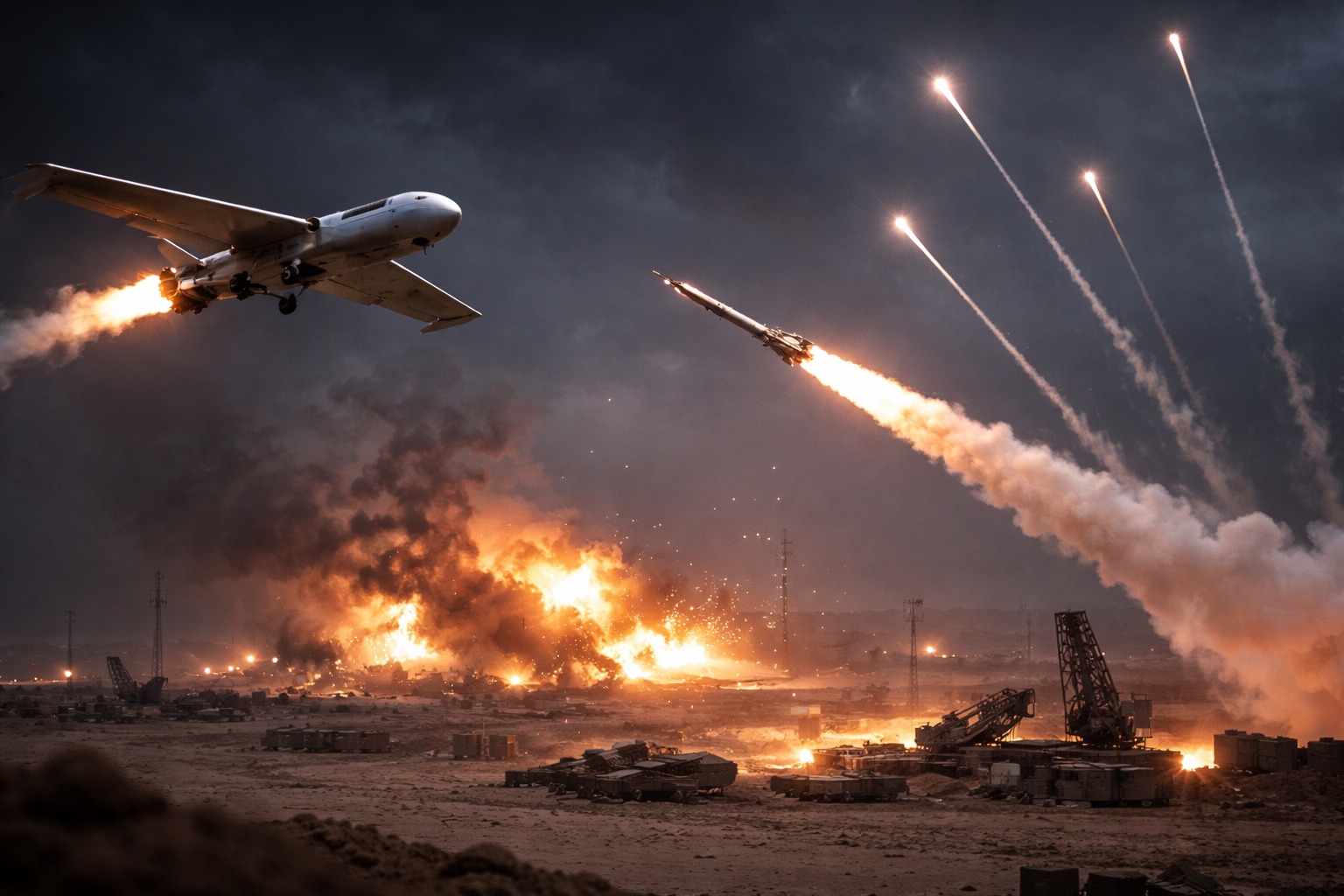
Iran War Enters Third Day with Over 1,200 Projectiles Fired, Interceptions Above 90% and Risk of Rapid Exhaustion of US$ 4 Million Patriot Missiles Against US$ 20,000 Shahed Drones
The Iran war is already showing a war of attrition in the Middle East, with waves of Shahed-136 drones pressuring US and allied defenses, while US$ 4 million Patriot missiles intercept attacks from US$ 20,000 drones, and military stocks begin to concern strategists. The data in this article comes from this report from Infomoney.
According to the article, the military escalation between Iran, the United States, and allies has quickly entered a phase of operational attrition.
Three days after the conflict began, Iranian drone attacks have started to pressure air defense systems in the region and rapidly consume interceptor stocks used to neutralize the projectiles.
-
Spain challenges the USA and closes its airspace for operations against Iran, raising global tension and provoking the threat of a trade rupture.
-
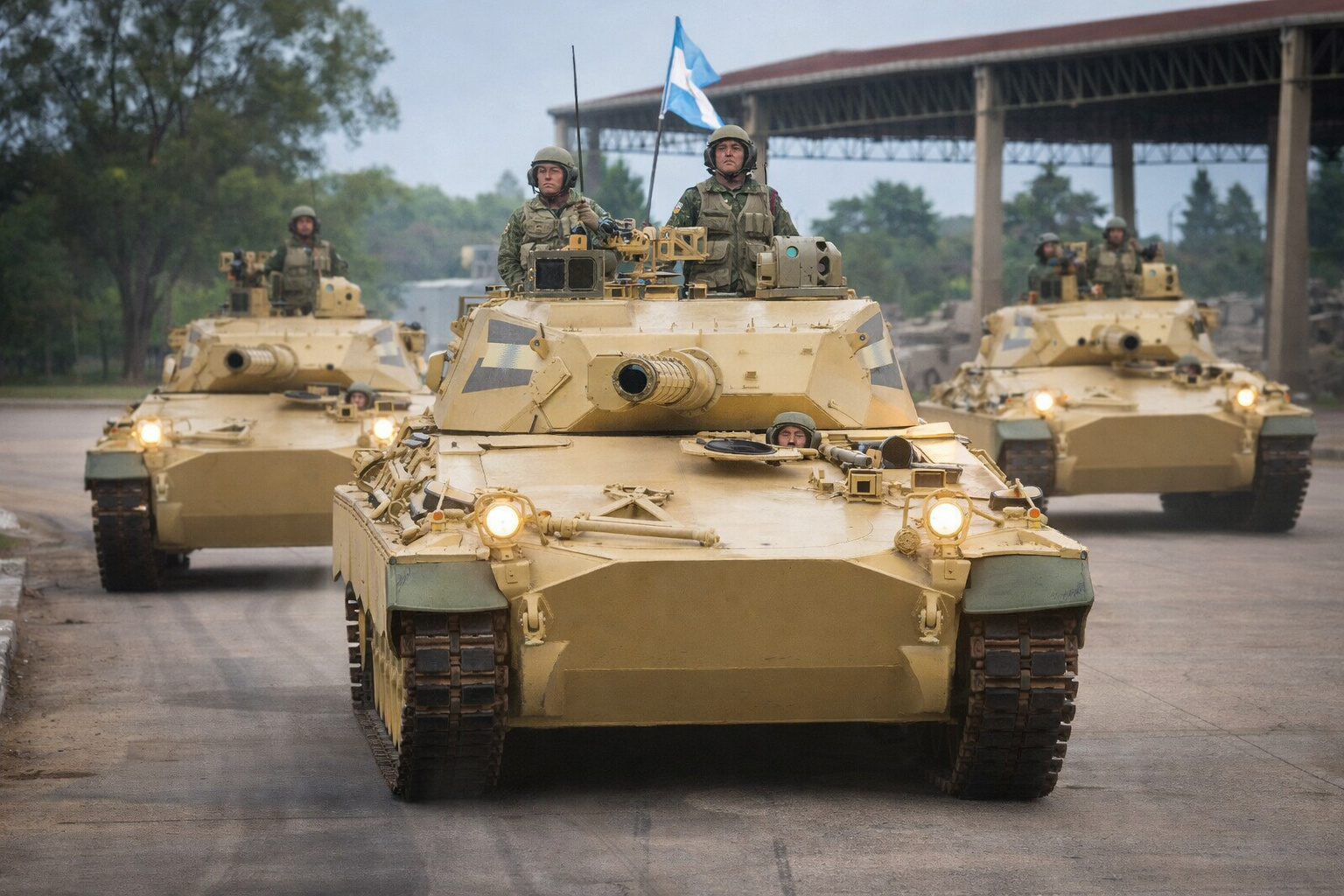
While no other country manufactures tanks in Latin America, Argentina activates the TAM 2C-A2 and raises a curiosity about the technological lag in the region.
-
A Russian ship with 730,000 barrels of oil has just arrived in Cuba while Mexico negotiates fuel sales through private companies: the communist island is desperately seeking alternatives after losing its supply from Venezuela due to American military action.

-
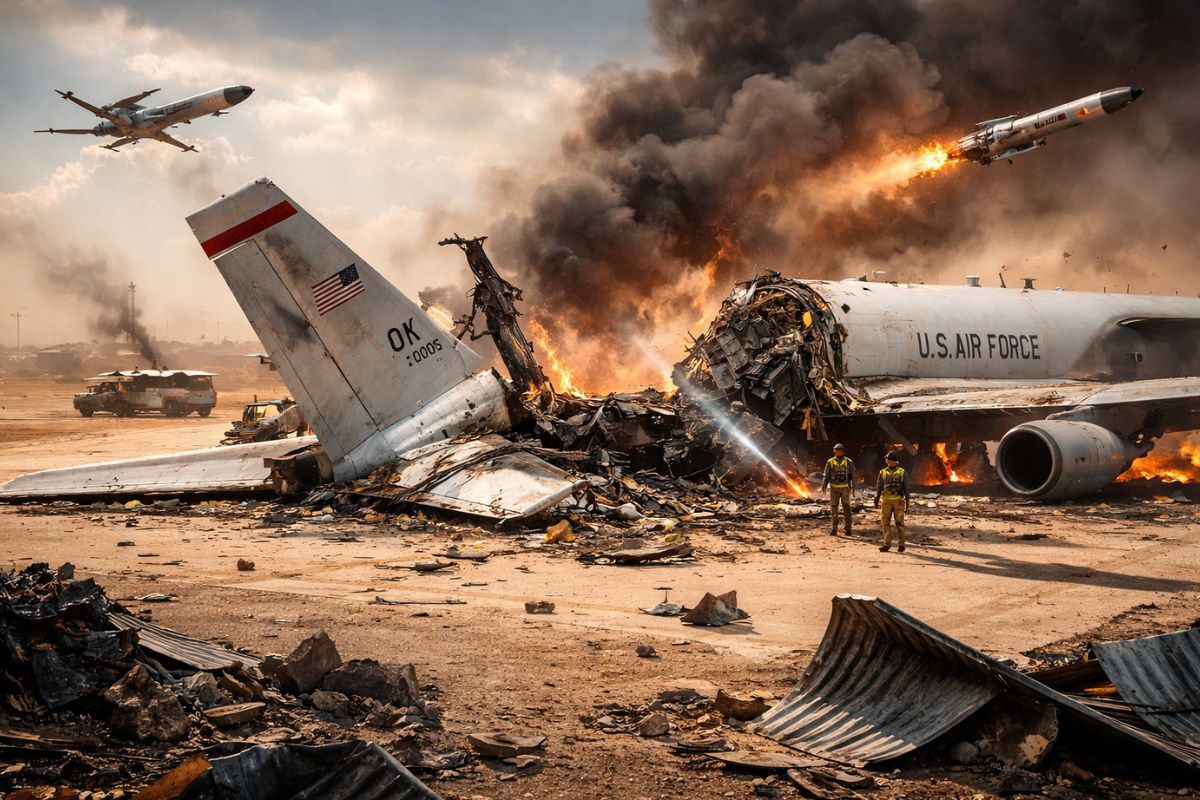
Iranian drones and missiles destroyed a 270 million dollar American spy plane in Saudi Arabia, splitting the E-3 Sentry aircraft in half and injuring 12 military personnel in an attack that exposes the vulnerability of U.S. bases in the Persian Gulf.
The Shahed-136 suicide drones, described as small cruise missiles with simple technology, continued to hit targets in the Middle East on Monday.
In recent days, they have been directed against US military bases, oil facilities, and civilian buildings.
These attacks began after the United States and Israel launched bombings against Iran on Saturday. The offensive included a combination of cruise missiles, drones, and guided bombs.
Iran War Pressures Air Defenses with Cheap Drones
The main defense system used by US allies in the region is the Patriot, manufactured by Lockheed Martin.
According to the United Arab Emirates, the interceptors have managed to shoot down over 90% of the Shahed drones and other ballistic missiles launched.
Despite the high interception rate, the cost of defense has drawn attention. Each Patriot missile used to shoot down a drone can cost around US$ 4 million, while a Shahed drone costs approximately US$ 20,000.
This cost difference has been pointed out by military analysts as a strategic problem. Relatively cheap weapons can deplete stocks designed to address much more sophisticated threats.
This scenario had already been observed during the war in Ukraine and reappeared with intensity in the Iran war.
Missile Stocks Could Run Out in Days
In practice, both Iran and the United States face the risk of rapidly exhausting their stockpiles of armaments.
The outcome of the confrontation may depend on which side can sustain operations for longer.
An internal analysis consulted by Bloomberg News indicates that the Patriot missile stocks in Qatar could last only four days if the current rate of interceptions is maintained.
Behind the scenes, officials in Doha have begun to advocate for a quick end to the conflict.
The concern over munitions also appears on the offensive side. Since the start of the Iran war this year, Tehran has fired over 1,200 projectiles at targets in the region.
A large portion of these projectiles would be Shahed drones.
According to Becca Wasser, head of defense at Bloomberg Economics, this could indicate that the country is preserving its more destructive ballistic missiles for later phases of the conflict.
Iran’s Military Capability and Impact of Previous Attacks
Before the current confrontation, estimates indicated that Iran had around 2,000 ballistic missiles. The number of drones available would be significantly larger.
Iran-aligned groups in the region had already been weakened after the war in Gaza. Additionally, previous attacks by Israel and the United States during a 12-day war in June also hit part of Iran’s military capability.
Since then, the Iranian government has begun to elevate the tone of warnings about the cost of an American offensive.
The Supreme Leader Ali Khamenei, killed in airstrikes on Saturday, had previously warned that a US attack could ignite a fire throughout the region.
Kelly Grieco, a senior researcher at the Stimson Center think tank, stated that a strategy of attrition makes sense for Iran.
According to her, the bet would be that the defensive systems of the adversaries will exhaust their interceptor missiles while political pressure grows among Gulf allies.
Air Defense Systems and Technological Limitations
Iran faces difficulties in reacting in air defense. Bombings conducted in the early hours of the war hit Iranian anti-aircraft batteries, including Russian S-300 systems.
Since then, American and Israeli fighters have been operating in Iranian airspace with no reports of major difficulties.
On the US allies’ side, air defense mainly relies on Patriot systems that use PAC-3 missiles.
Even with efforts by the Pentagon to increase production, about 600 PAC-3 units were manufactured in 2025 by Lockheed Martin.
Considering the volume of drones and missiles shot down, estimates indicate that thousands of interceptors may have already been fired in the Middle East since Saturday.
Saudi Arabia and the United Arab Emirates also use the THAAD system, developed by Lockheed Martin to intercept missiles at high altitudes at the edge of the atmosphere.
These interceptors are even more expensive. Each unit can cost around US$ 12 million, making its use against simple drones unlikely.
Cheaper Alternatives Against Drones
In addition to the Patriot and THAAD systems, the United States has also employed patrol fighters equipped with missiles from the Advanced Precision Kill Weapon System.
These projectiles cost between US$ 20,000 and US$ 30,000 per unit, plus the operational cost of the aircraft.
Specific solutions to combat drones are still rare in the region. Among the alternatives considered are lasers, automatic cannons, and even drones designed to intercept other drones.
These technologies could reduce the use of expensive systems against simple targets.
An example cited is the Iron Beam laser, developed by the Israeli company Rafael Advanced Defense Systems.
The Israel Defense Forces stated on Monday that the system has not yet been used in this conflict.
If the current pace of attacks continues, sources with knowledge of the situation state that PAC-3 interceptor stocks could become dangerously low in a few days.
If offensive munitions are also lacking, the confrontation could enter a prolonged stalemate.
Researcher Ankit Panda from the Carnegie Endowment for International Peace stated that in the first 60 hours of the Iran war, the scenario of prolonged attrition already seems plausible.
According to him, Iran may continue to consume its stock of missiles and drones while trying to keep the regime in power, even amid the chaos generated by the conflict.
With information from Infomoney.







-

Uma pessoa reagiu a isso.