






 Portuguese
  Spanish


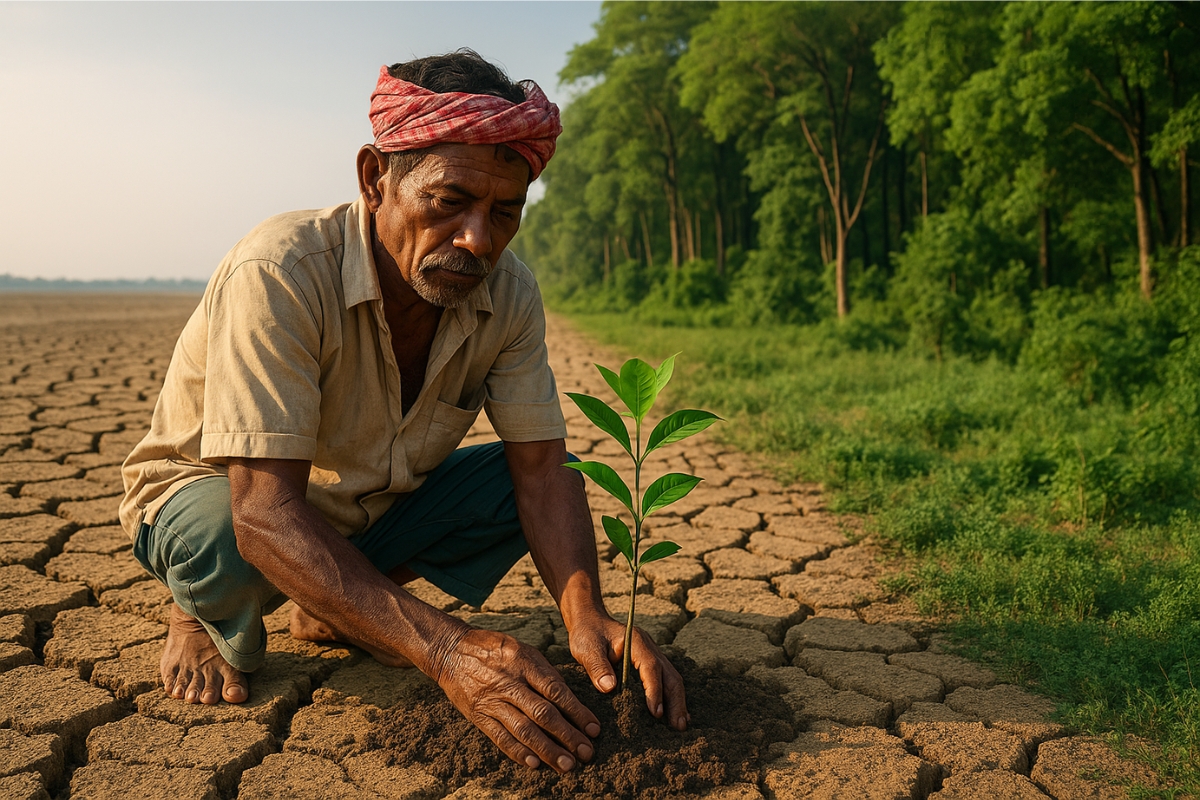


An Indian Man Dedicated 40 Years to Transforming a Desert into a 550-Hectare Forest, Proving That Consistency and Care Can Recreate Life Where There Was Once Destruction
For forty years, an Indian farmer named Jadav Payeng accomplished what seemed impossible: alone, he created a 550-hectare forest on an island devastated by floods and erosion. While the world saw deforestation and wildfires multiplying, Payeng planted, watered, and protected each tree, transforming a patch of arid sand into a thriving and lush ecosystem.
The Humble Beginning of a Silent Revolution
Jadav was born in Majuli, a vast river island in the Brahmaputra river in northeastern India, home to the indigenous Mising tribe. The son of poor farmers with little formal education, he grew up witnessing his homeland slowly disappear. Constant floods and soil erosion turned the island into a muddy desert, killing animals and displacing entire families.
It was in 1979, at the age of 16, that Payeng witnessed something that would change his life: hundreds of dead snakes in the sun after a devastating flood. That scene shocked him. He sought help from authorities, but no one was interested. So, he decided to act alone.
-
Brazilian YouTube Sensation “Galinha Pintadinha” Celebrates 20 Years, Amassing 65 Million Subscribers and $700 Million in Annual Revenue

-
Fifth-grader’s Project Turns Used Cooking Oil into Over 160,000 Gallons of Biodiesel, Cuts CO₂ Emissions, and Inspires Law in Rhode Island

-
Started with $80 at 17 Selling Used Clothes, Now Aiming for $18 Million with a Network of 50 Thrift Stores

-
17-Year-Old Develops Free App to Prevent Hot Car Deaths, Launches National Campaign in the U.S.



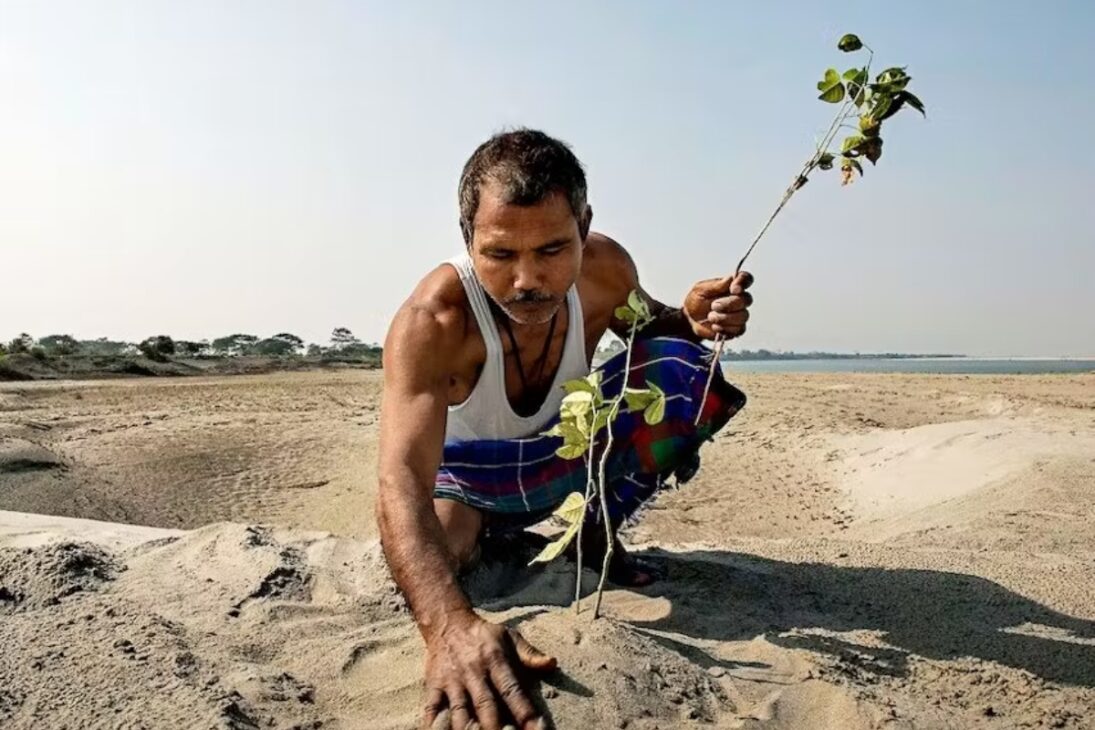
The Man Who Planted Hope
With a shovel, some saplings, and an unwavering will, he began planting bamboo and small trees on an abandoned sandbank. The soil was barren, the heat unbearable, and the constant floods threatened to destroy everything. But Jadav did not give up.
For decades, he planted daily, not one tree a day as the popular myth suggests, but with consistency and patience. The result was a forest so dense that today it is home to tigers, elephants, rhinoceroses, deer, and hundreds of bird species.
The site, now known as Molai Forest, is the size of 550 football fields, and has become a true ecological sanctuary. Scientists from Assam University confirmed that the microclimate of the island changed: temperatures decreased and wildlife began to thrive again.
The Recognition That Came Late
For many years, no one believed the story. It was only in 2008, when a local journalist flew over the area, that the world discovered that the “tree man” had created one of the largest artificial forests on the planet.
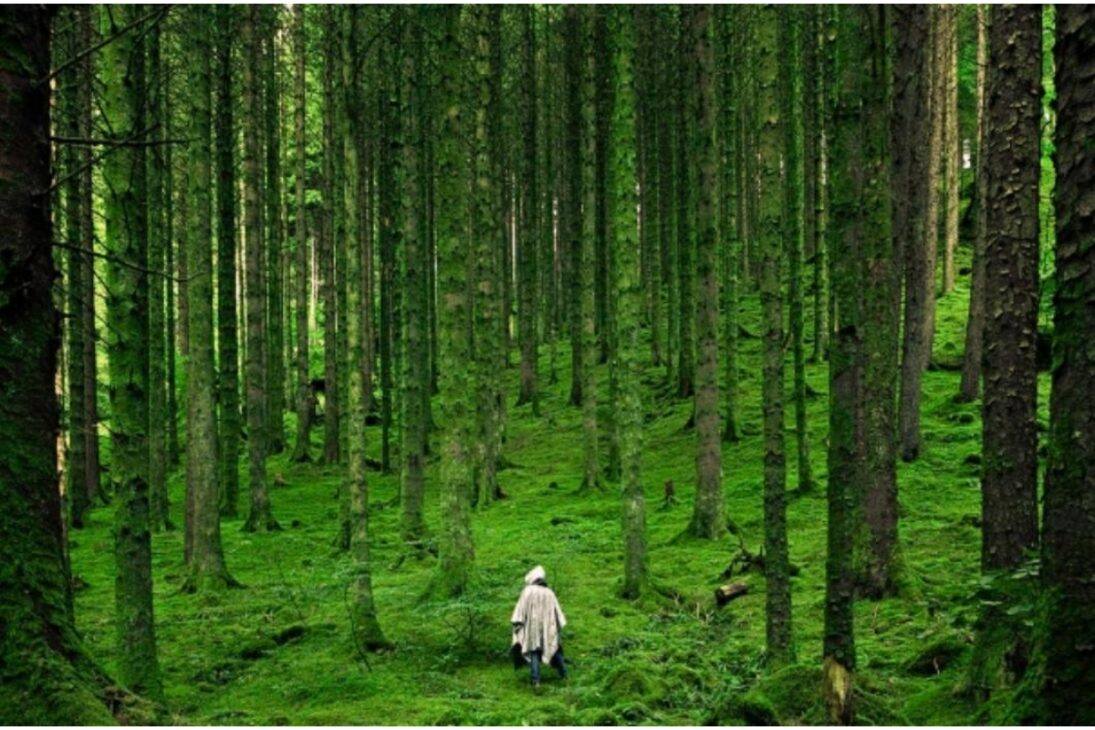
Since then, Jadav Payeng has received accolades, documentaries, and the civil award Padma Shri, awarded by the Government of India in 2015. Still, he lives simply, in a wooden cabin, surrounded by trees he planted with his own hands.
“Nature is like a mother. If you take care of her, she takes care of you,” he often says, the man who, with a shovel and a dream, brought life back to a forgotten piece of the planet.
An Example the World Needs to Follow
At a time when debates about climate and deforestation dominate the news, Jadav Payeng’s story shows that real change does not require millions in technology, but determination and consistency.
While governments discuss carbon targets, a single man proved that transforming a desert into a forest is possible. His work is a powerful reminder that great transformations begin with small actions, and it is never too late to replant the future.


A natureza não precisa de dinheiro prá ser restabelecida. Basta-nos deixa-la que a mesma faz o que for necessário… isso pode demorar, mas é factível. Também depende de decisões acertadas e levadas a cabo. Todavia o que mais vemos são propostas que não são transformadas em práticas, e esse engodo terá um custo para as próximas gerações, senão a nossa mesma.
É uma pena que o mundo está carente de pessoa como essa,e claro,quando aparece não são reconhecida e declarada como uma contribuição pelo seu trabalho,o que prezenciamos são pseudos ecologistas quero falam,mais que na verdade não cuidam do seu quintal…