





 Portuguese
  English
  Spanish
  4 min of reading
  0 comments



Published Research in Nature Geoscience Reconstructs Geological Data from the Pre-Cambrian and Shows That, Between 2 and 1 Billion Years Ago, the Earth Maintained Days of About 19 Hours Due to a Rare Balance Between Lunar Tides, Solar Atmospheric Tides, and Changes in Oxygen Levels
A study published in Nature Geoscience indicates that the Earth’s rotation stabilized at 19 hours between 2 and 1 billion years ago. The phenomenon occurred in the Middle Proterozoic and connects ocean movements to the evolution of life.
The research discovered that the length of the day stopped increasing during this period. This unexpected pause lasted for approximately one billion years in the planet’s early history.
The event connects the movement of the oceans and the atmosphere with the increase in oxygen. Geologists often refer to this specific period in Earth’s history as a boring billion.
-
A robot with a silicone face and 26 facial motors learns to move its lips accurately by observing its own reflection like a child, then analyzes hours of videos on YouTube to reproduce how humans speak and sing, now articulating words in several languages, has already recorded a music album generated by AI, and is beginning to cross the uncanny valley that causes people to reject almost human robots.

-
Iron foundry in Senegal reveals a pile of 100 tons of slag, 35 furnace bases, and a rare technique that has remained stable for centuries.

-
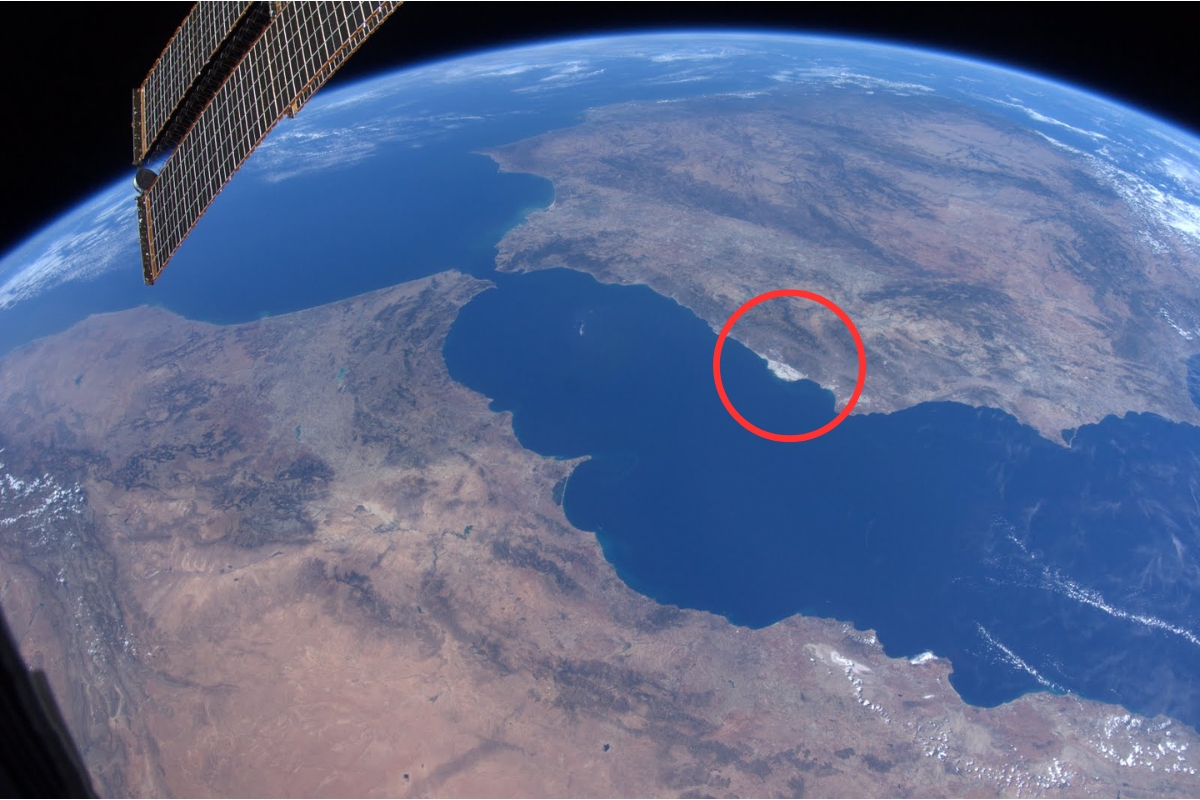
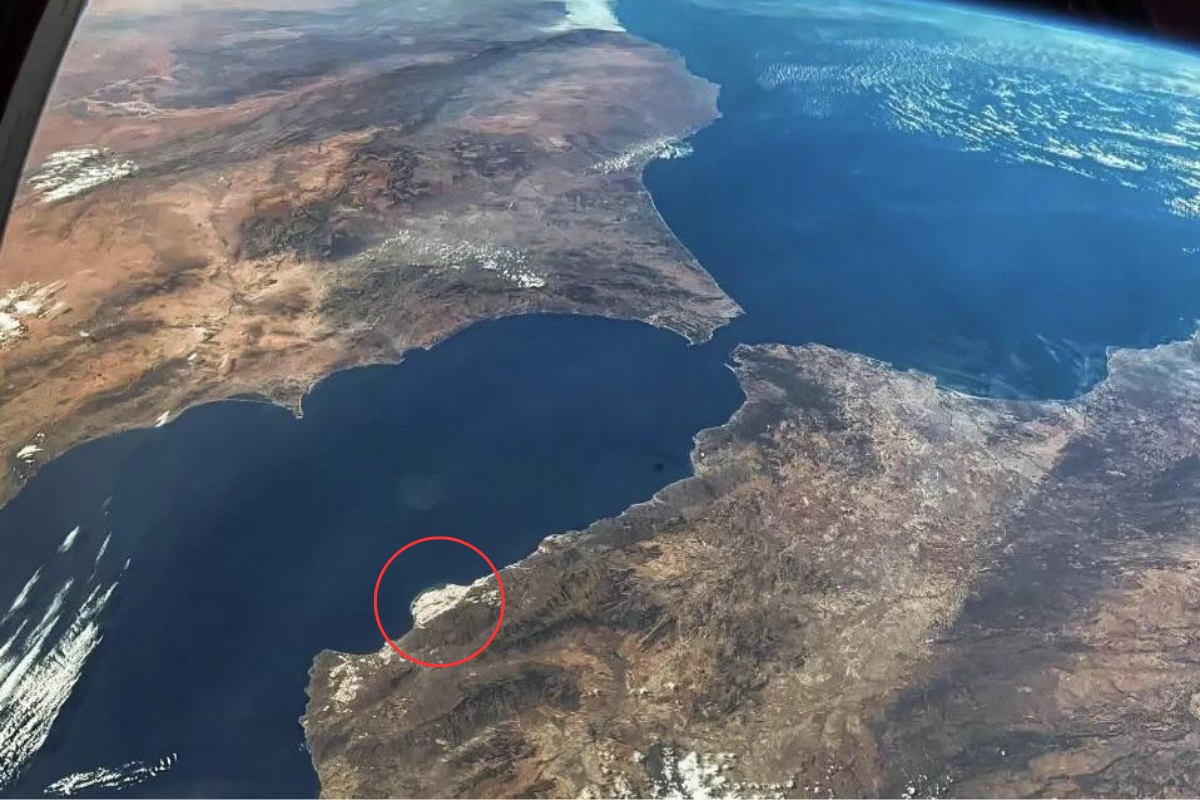
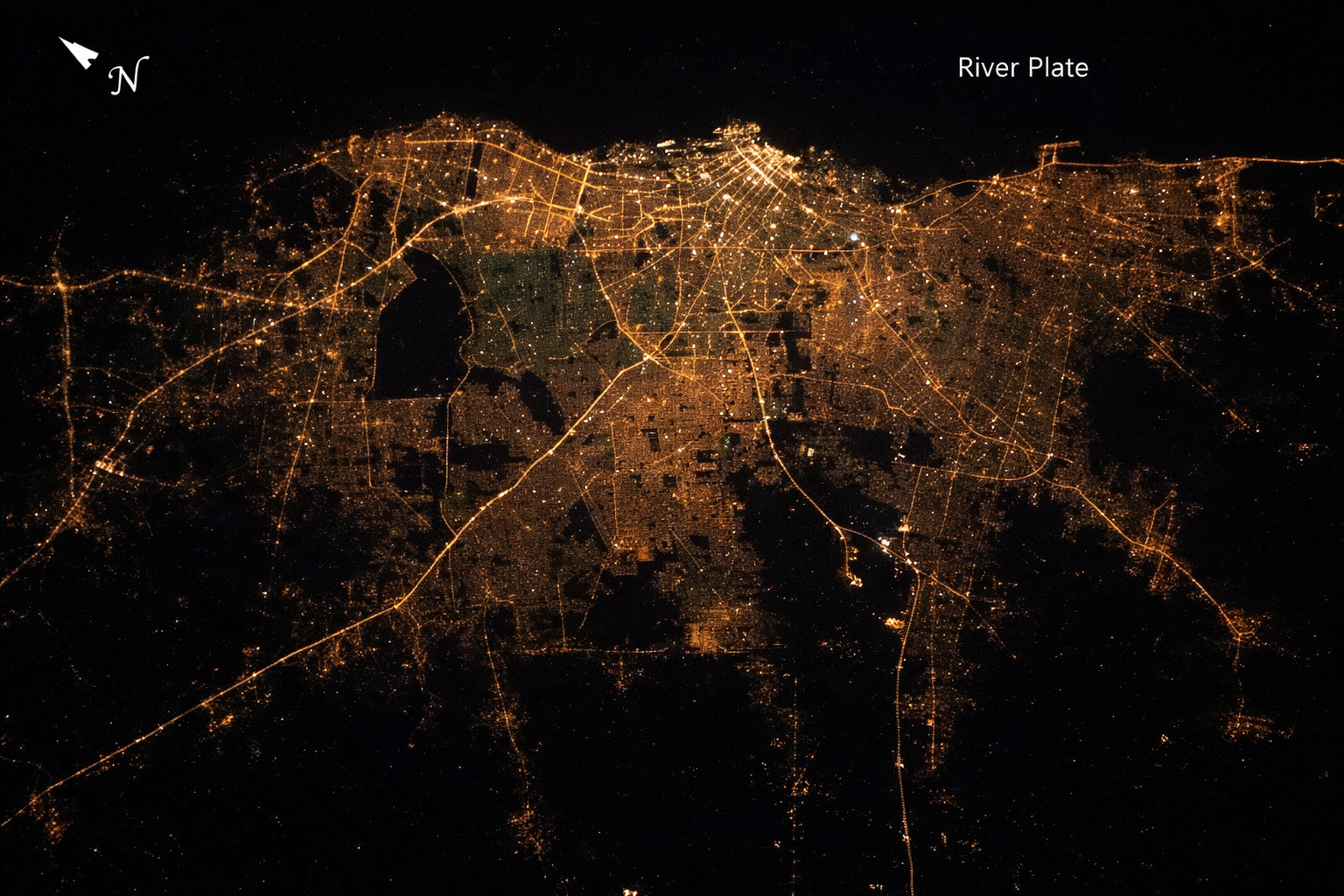
The only man-made structure in the world that can be clearly seen from space is not the pyramids of Egypt nor the Great Wall of China.
-
An analysis by NASA highlighted that the Great Wall of China and the Pyramids of Egypt are not visible to the naked eye from the International Space Station, and only one man-made structure is visible in this way.

The Balance of Forces Between the Moon and the Sun
The Earth’s rotation generally decreases gradually over time due to the Moon. The satellite exerts attraction on the oceans and creates tidal bulges that slow down the planet.
This displacement generates a torque that transfers rotational energy from the Earth to the Moon. The process causes the Moon to move away and our days to become longer.
The study suggests that this slowing down was balanced by solar heating during the Pre-Cambrian. Atmospheric tides pushed in the opposite direction and slightly accelerated the Earth’s rotation.
These two torques balanced each other out, and the length of the day stopped changing. The period of stability resulted in days lasting about 19 hours.
Methodology Based on Ancient Rock Records
The authors compiled reliable estimates of day length from rocks. Ancient data came from tidal rhythmites and stromatolites that record cycles in their structure.
Geologists use cyclostratigraphy to search for rhythmic patterns in ancient sediments. These patterns are driven by changes in Earth’s orbit and axis called Milankovitch cycles.
The precession and obliquity depend on the rotation speed of our planet. Faster rotation results in shorter precession cycles in the rock layers.
Researchers calculate the length of the day at the time when the sediments formed. The team gathered 22 estimates from different eras to compose the final analysis.
More than half of these estimates were published only in recent years of research. The dataset allowed for a new statistical analysis of the change point.
Atmospheric Resonance and the Statistical Plateau
The statistical analysis showed a clear plateau instead of a smooth curve. The length of the day remained constant at about 19 hours between 2 and 1 billion years ago.
The Earth rotated faster during the Pre-Cambrian, weakening the torque of lunar tides. Friction between the oceans and the seafloor was lower at that time.
The heating of water vapor and ozone drove strong semi-diurnal thermal tides. These tides behaved like global pressure waves that encircled the entire planet.
The solar tide would enter resonance if the wave period coincided with half the day. This would be similar to a park swing receiving the right push.
This resonance could become strong enough under the ideal combination of temperature. The solar tidal acceleration torque would then equal the braking effect of the Moon.
Connections with Oxygen Levels and Life
The compilation points to a period of resonance resulting in a 19-hour day. This value is slightly shorter than previous theoretical estimates indicated.
The plateau coincides with a stable climate interval and slow biological changes. It sits between two major variations recorded in Earth’s atmospheric oxygen levels.
Oxygen levels increased after the Great Oxidation Event, and ozone accumulated. A later event called the Oxidation Event caused the levels to drop again.
Changes in oxygen affect how the atmosphere absorbs intense sunlight. This directly influences the intensity and speed of thermal tides around the globe.
The evolving atmosphere may have pushed the Earth into resonance. Subsequently, the same process may have pulled the planet out of this balanced condition.
Longer days after the resonance may have benefited photosynthetic microbes. Continuous exposure to light helped raise oxygen levels to sustain complex animals.
The recent study demonstrates that the length of a day is not fixed. It is shaped by the complex interaction of the oceans, air, and the Earth-Moon system.




-

-

-

9 pessoas reagiram a isso.