





 Portuguese
  English
  Spanish
  4 min of reading
  0 comments


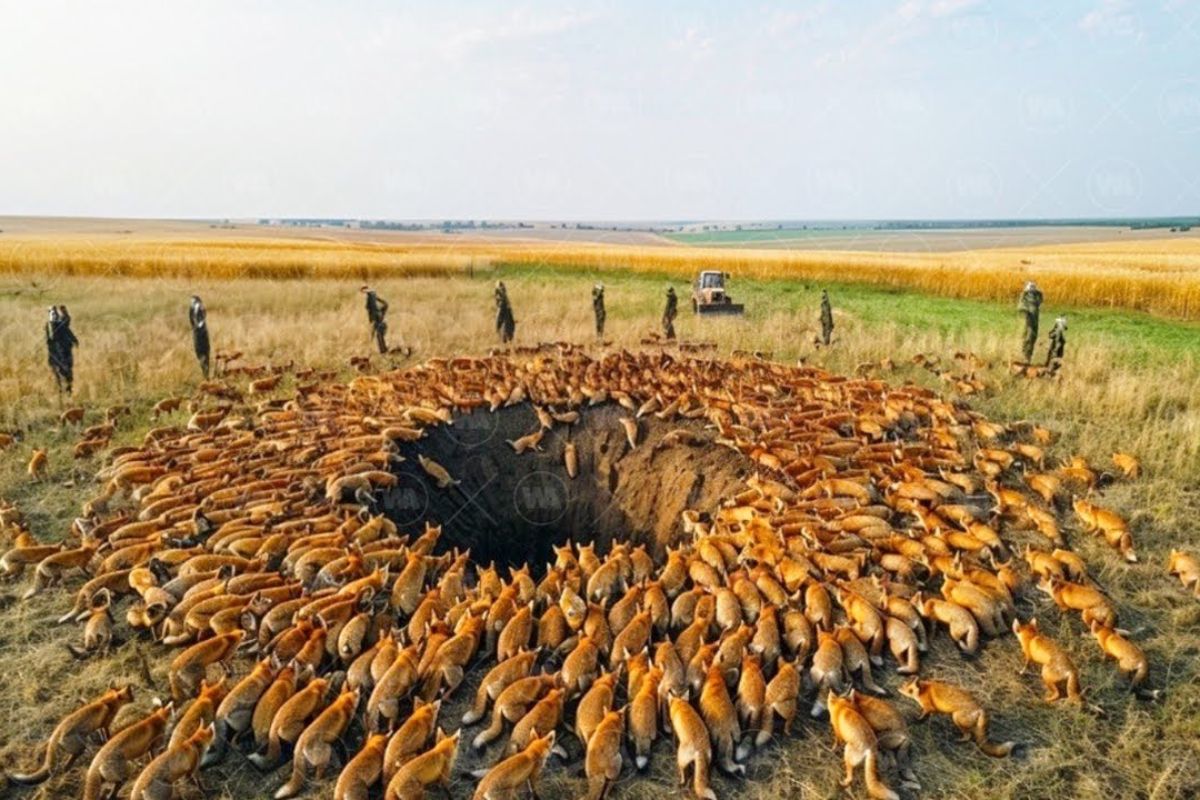
Rigid Measures Against Invasive Foxes Emerge After Reports of Bites in Urban Areas, Accelerated Species Expansion, Severe Losses in Livestock and Documented Ecological Collapses, Leading Australian Authorities to Impose Requirements for Immediate Lethal Shooting, Technical Training and Strict Protocols to Reduce Human Risks, Environmental Damage and Population Control Errors.
The threat posed by invasive foxes may seem unlikely at first, but it ceased to be theoretical when attacks on people began to occur in neighborhoods in southern Melbourne. Reports of repeated bites by the same animal over several weeks exposed the advance of this predator in densely populated areas.
In addition to the direct risk, invasive foxes amplify agricultural and environmental damages. Introduced in the 19th century by European colonizers as part of recreational hunting practices, they spread throughout much of the continent, thriving without sufficient natural predators and today rank among the most destructive species in Australia.
Historical Origin and Expansion of Invasive Foxes

Invasive foxes arrived in Australia in 1845, deliberately brought to replicate the English tradition of fox hunting.
-
Scientists have finally discovered where the plastic that disappeared from the oceans went, and the answer is frightening: it fragmented into such tiny particles that they became invisible and now there are 27 million tons of nanoplastic just in the North Atlantic.

-
The Artemis II mission will take the Orion capsule back to the vicinity of the Moon with four astronauts, a private bathroom with a curtain, a system adapted for men and women, and a level of comfort that highlights how the Apollo era operated at the rawest limits of space exploration.

-
Giant structures on the seabed precisely control oil and reveal how high-tech underwater valves work.

-
China has just tested a giant drone the size of a fighter jet with a wingspan of 25 meters that carries 6 tons, flies for 12 hours, and the most frightening part: it can launch entire swarms of smaller drones directly from the air.


In just a few decades, they were released en masse, classified as pests, and began to occupy forests, farms, and areas near cities, accompanying the proliferation of rabbits introduced in the same period.
Currently, the population is estimated to reach around 1.7 million individuals, occupying approximately 80% of the continental territory and dozens of islands.
Without effective predators, mortality occurs mainly due to human action or droughts, factors insufficient to contain the ongoing expansion.
Environmental Impact and Collapse of Native Fauna

The impact of invasive foxes on biodiversity is profound.
They pose a direct threat to dozens of species, including birds, mammals, reptiles, and amphibians, preying on any small to medium-sized animal within reach.
A single individual consumes an average of 150 kilograms of food per year.
On a national scale, scientists estimate hundreds of millions of native animals are killed annually.
On islands and isolated regions, the presence of invasive foxes has been associated with the collapse of entire colonies, such as in the case of penguins whose population plunged after successive attacks, requiring urgent human intervention.
Agricultural Damages and Attacks on Livestock


In agriculture, invasive foxes cause significant losses, especially in sheep farming.
A single animal can kill up to 12 lambs in one night, eliminating weeks of production.
Losses vary between 4% and 30% of lambs per property, depending on the region and intensity of predation.
The behavior of killing in excess exacerbates the problem.
In henhouses, for example, invasive foxes often kill dozens of birds in a single attack, taking only part of the carcasses.
The annual financial impact for the Australian agricultural sector is estimated in the tens of millions of dollars.
Why Shooting Is Strictly Regulated
In light of this scenario, Australia has adopted strict rules for the use of firearms against invasive foxes.
The goal is not only to reduce the population, but to prevent prolonged suffering, poorly executed shots, and injuries that make animals more cautious and difficult to control.
The guidelines require trained shooters, clear target identification, and certainty of instant dispatch.
Failed shots teach invasive foxes to avoid lights, sounds, and open areas, compromising future campaigns and increasing environmental and agricultural damage.
Limits of Other Control Strategies
Traps, fences, and visual or auditory deterrent methods show limited effectiveness.
Invasive foxes quickly learn to circumvent obstacles, avoid traps, and exploit weaknesses.
Specialized fences are expensive and restricted to areas of high economic value.
The use of poisons and burrow fumigation is permitted only under strict rules, with prior notification and rigorous control, precisely to minimize risks to non-target species.
Therefore, effective control relies on a combination of methods, with precise shooting playing a central role.
The strict rules imposed by Australia reflect the severity of the issue of invasive foxes, which affect urban safety, rural economy, and biodiversity.
Control requires technical precision, regional coordination, and responsibility to avoid even more severe side effects.
In the face of such an adaptable and destructive species, do you believe that harsher measures are inevitable, or should Australia still focus more on non-lethal solutions to contain invasive foxes?










-

Uma pessoa reagiu a isso.