





 Portuguese
  English
  Spanish
  4 min of reading
  0 comments



All The Gold Mined In The World Fits In A 22-Meter Cube. Understand Why This Rare Metal Continues To Be A Symbol Of Wealth, Security, And Global Power.
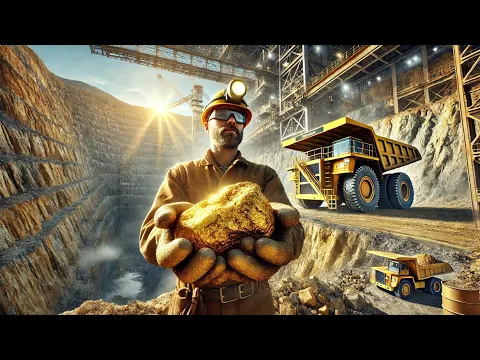
It’s hard to believe, but all the gold ever extracted by humanity in thousands of years of history fits inside a simple cube with only 22 meters on each side — roughly the height of a seven-story building. It may seem small for an element that has shaped empires, sparked wars, supports economies, and still serves as a store of value for countries and investors today. But this is precisely the nature of gold: extremely scarce, precious, and symbolic.
According to widely accepted estimates, the amount of gold that has been mined throughout history totals 216,265 tons, an impressive figure when expressed in absolute numbers, but surprisingly modest when translated into physical volume.
Gold: The Scarcity That Sustains Its Value For Millennia
Unlike other natural resources, gold cannot be synthesized or printed. It is finite, requires exploration at increasingly greater depths, and its extraction relies on complex and costly processes. This physical scarcity is precisely what ensures its stable value over time, making it one of the most reliable assets in human history.
-
He started running at 66 years old, broke records at 82, and is now a subject of study for having a metabolic age comparable to that of a 20-year-old, in a case that is intriguing scientists and inspiring the world.

-
Oldest tree on the planet reappears after 130 years of searches: Wattieza, 385 million years old, was 10 meters tall and had no leaves or seeds; Gilboa fossils in New York solved the mystery in 2007.

-
A 48-square-meter house assembled in hours with 4,000 bricks made of recycled plastic that does not absorb moisture, has natural thermal insulation, and costs less than 90,000 reais in a complete kit.

-
Luciano Hang revealed that Havan’s air fleet has already accumulated more than 20,000 landings, 10,000 flight hours, and 6 million kilometers traveled, and he says that without the planes, the company would never have grown so quickly.


If we gathered all the gold in the world, mined since the first civilizations to today, it would comfortably fit inside a single commercial building. Still, gold moves trillions of dollars in the global market.
Amount Considered: Only Gold Mined Officially And Legally
It is worth noting that the data presented throughout this content refers exclusively to the amount of gold extracted legally and registered by official agencies and international entities, such as the World Gold Council. Estimates related to illegal or unregistered mining, which still occurs in various regions of the world, especially in informal mining areas, have not been included in the calculations.
Therefore, although the total volume cited — 216,265 tons — is the most widely accepted globally, it may not accurately reflect the real amount of gold in circulation, considering the existence of unregulated activities.
Gold Mining: 2/3 Of All Gold Was Mined After 1950
Although gold has been known and used for over 6,000 years, about two-thirds of all gold ever mined was extracted from the earth only in the last seven decades. This productive leap has been driven by:
- Technological advancements in mining and ore processing,
- Expansion of the global financial market, which began to use gold as collateral and a protective asset,
- Growing demand for gold in the electronics, jewelry, and investment industries.
The gold rush gained momentum especially after World War II, with the strengthening of the United States as a global power and the standardization of international reserves based on precious metals.
Where Is The World’s Gold? Distribution By Uses And Locations
According to the World Gold Council, the gold that has been extracted is distributed across four main categories:
- Jewelry: about 46% of all gold is in the form of jewelry.
- Official reserves of governments and central banks: 17%.
- Investments (bars, coins, ETFs): 21%.
- Industrial and other uses: 16%.

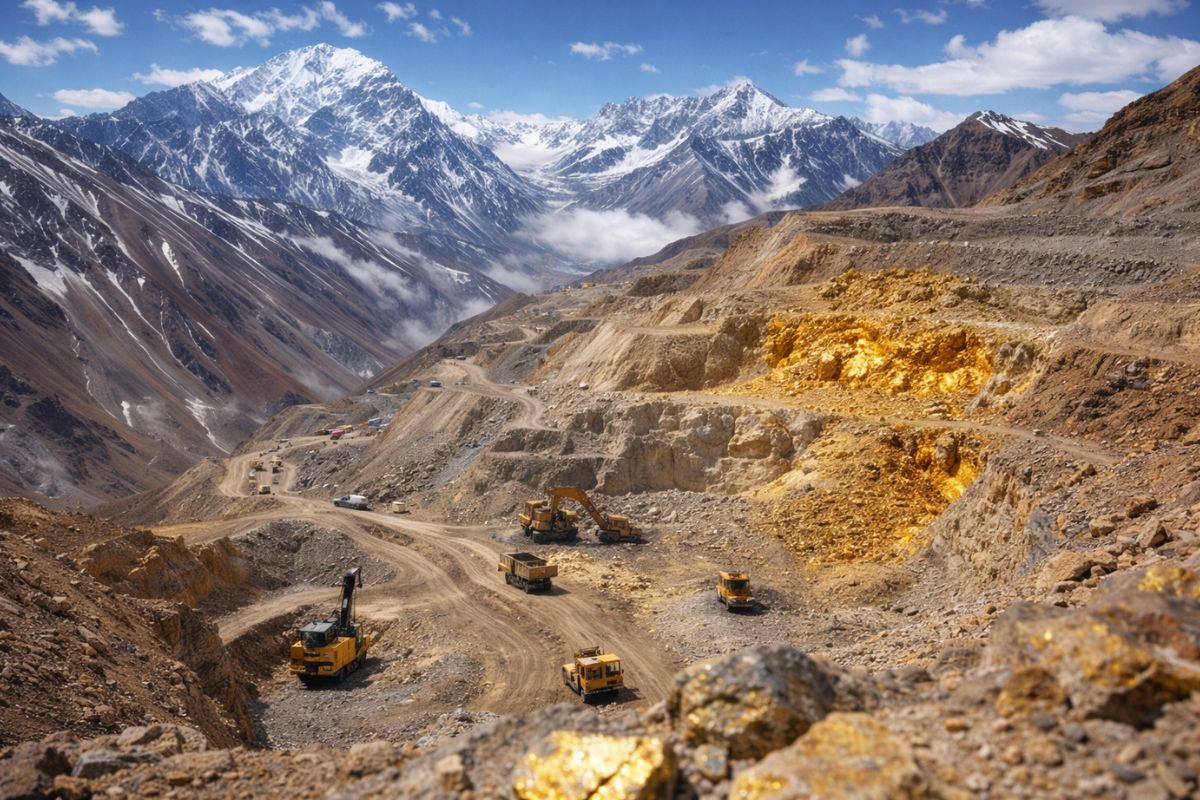
Geographically, the countries with the largest known reserves and accumulated extractions are South Africa, China, Russia, Australia, and the United States.
Brazil also has important reserves and gold deposits, with notable regions such as Minas Gerais, Pará, and Mato Grosso, which significantly contribute to the global gold market.
Gold Mining Today: Challenges And Impacts
Despite its economic value, gold mining faces increasing criticism and challenges. Extraction involves high environmental impact, consumption of large volumes of water, and the use of toxic substances like mercury and cyanide in illegal mining, particularly in the Amazon.
Industry companies have invested in sustainable practices and gold traceability, especially with the growing pressure from international investors for ESG (Environmental, Social, And Governance).
Furthermore, artisanal and illegal mining continues to be a critical problem, fueling environmental crimes and social conflicts in remote regions.
Why Does Gold Continue To Be A Store Of Value?
Gold possesses unique characteristics that explain why it continues to be regarded as one of the safest assets in the world:
- It Doesn’t Degrade, doesn’t rust, and can be easily shaped.
- High Liquidity: it can be exchanged for currency in virtually any country.
- Resistance to Crises: in times of financial or geopolitical instability, gold typically appreciates in value.
- Limited Supply: as we have seen, all the world’s stock fits in a single 22-meter cube.

These qualities mean that central banks, investors, and even entire countries use gold as protection against inflation, currency devaluation, and economic collapses.
Gold Is More Than Metal: It’s History, Power, And Permanence
Gold is not just valuable for its shine or rarity. It represents power, stability, and cultural heritage. From the crowns of the pharaohs of Egypt to the monetary systems of the 20th century, gold has always symbolized wealth and prestige.
Its extreme scarcity — physically represented in that 22-meter cube — reinforces its unique condition as an eternal asset. It is no wonder that even in the digital age, when cryptocurrencies and virtual assets are on the rise, gold still holds a special place in the collective imagination and in long-term economic strategies.
Few facts are as striking as this: all the gold of humanity would fit in a cube of just 22 meters on each side. A small space, but filled with meaning, history, and value.
Whether as jewelry, currency, investment, or symbol of power, gold remains one of the most solid pillars of the global economy — and its scarcity is what makes it eternal.








-

2 pessoas reagiram a isso.