





 Portuguese
  English
  Spanish
  4 min of reading
  0 comments


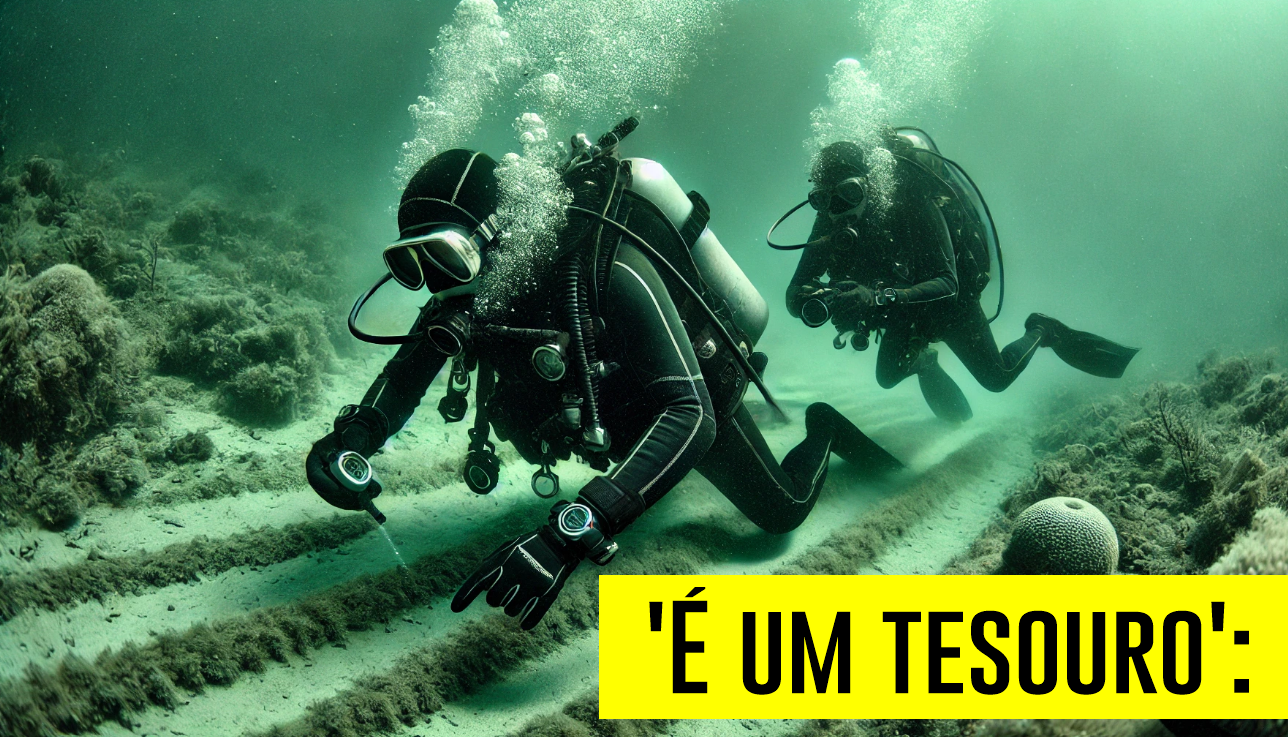
Researchers Believe They Have Found a Shipwreck Off the Coast of Kenya That May Be From the Last Expedition of Vasco da Gama, Marking an Unprecedented Historical Discovery.
A mysterious shipwreck off the coast of Kenya may have belonged to one of the ships from the last voyage of Portuguese explorer Vasco da Gama, made to the Indian Ocean over 500 years ago. Archaeologists believe the remains found near Malindi may be from the São Jorge, a ship that sank in 1524, shortly before Vasco da Gama’s death.
This discovery sheds light on a crucial period in the history of Portuguese navigators and could change our understanding of trade routes in the Indian Ocean.
The Shipwreck
The shipwreck was discovered in 2013, but only recently have archaeologists begun to investigate the site in more detail. Located about 500 meters from the coast of Malindi at a depth of approximately six meters, the ship rests among corals and wooden remains.
-
In a flooded well, archaeologists found a 1,700-year-old Roman egg that still contains clear and yolk intact inside the very thin shell.

-
Something is happening around the Earth: Inside the huge explosion of fireballs in 2026

-
A hot air bubble coming from Argentina expands over Brazil, causing thermometers to exceed 38 degrees with a thermal sensation of 40 degrees in late March, affecting 6 states at once.

-
The radish leaf that almost everyone throws away has more polyphenols, flavonoids, and fiber than the consumed root, and a 2025 study showed that the leaf contains compounds that protect the intestine, combat inflammation, and may inhibit the growth of cancer cells.


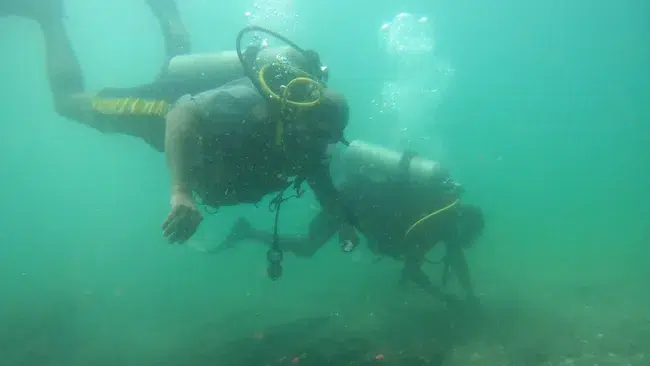
Although much of the structure is still submerged, divers have unearthed important pieces, such as fragments of the hull and other materials from the ship, in two archaeological trenches.
Filipe Castro, a maritime archaeologist at the University of Coimbra, leads the recent study investigating the identity of the wreck. He suggests that the ship found may be the São Jorge, one of the boats that accompanied Vasco da Gama on his last voyage to the Indian subcontinent. However, Castro acknowledges that there is still no certainty regarding this identification. “We do not know for sure,” he stated in an interview with Live Science.
The Voyage of Vasco da Gama
Vasco da Gama (1469–1524) was one of the greatest Portuguese navigators, being the first to open the maritime route to India, rounding the Cape of Good Hope in Africa in 1497. During his voyages, he established the foundations of the Portuguese commercial empire in the Indian Ocean.
His last expedition, in 1524, involved a fleet of around 20 ships, including the São Jorge. However, the São Jorge sank shortly before da Gama died in India, possibly due to complications from malaria.
If the found wreck is indeed the São Jorge, it would represent the oldest evidence of a European shipwreck in the Indian Ocean. According to Castro, this discovery has a “significant historical and symbolic value,” serving as a physical testament to the presence of Portuguese navigators in Kenyan waters during the 16th century.
The Importance of the Find
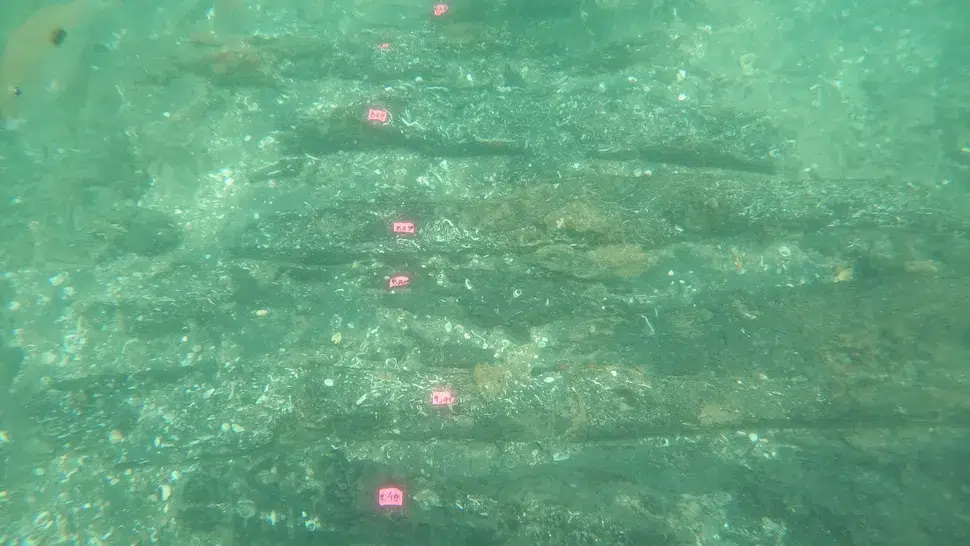
The Malindi wreck is one of the eight known that belong to the period of Portuguese voyages in the Indian Ocean. Other shipwrecks of Portuguese ships, such as the Nossa Senhora da Graça, which sank in 1544, have also been found in the region. If the identity of the São Jorge is confirmed, the wreck will become a landmark in naval history. “This is a unique wreck, a true treasure,” said Filipe Castro.
Moreover, the wreck has piqued the interest of Kenyan authorities, who are already considering turning the site into an underwater museum. Archaeologist Caesar Bita, who initially discovered the site, has already retrieved artifacts such as copper ingots and elephant tusks during the initial research. He is now helping coordinate investigation efforts to better understand the history behind the wreck.
The Cultural and Historical Value
Sean Kingsley, a maritime archaeologist and editor of the magazine Wreckwatch, commented on the importance of the discovery, highlighting that if the wreck is indeed the São Jorge, it will become “archaeological stardust.” The site is considered a strategic point, not only for understanding the history of Portuguese voyages but also for comprehending Kenya’s role as a starting point for exploring the riches of India.
Kingsley emphasized the need for further investigation to confirm the identity of the ship but also warned of the urgency to protect the site. “This wreck cries out for protection, respect, and care before its background history disappears forever,” he stated.
Next Steps in the Investigation
Researchers now hope to deepen their studies with an archaeological survey of the coral reefs north of Malindi, an area of about 25 kilometers. This work will help confirm the identity of the wreck and possibly uncover other secrets related to the presence of the Portuguese in the region.
This investigation is an important step for the preservation of maritime history and for valuing the cultural heritage of the region. If the São Jorge is confirmed as the found ship, it will not only mark a historical milestone in European navigation but also enrich the understanding of trade and cultural relations between the East and West in the 16th century.
In an increasingly technology-oriented and future-focused world, discoveries like this remind us of the importance of understanding the past and preserving the remnants of the explorers who helped shape the modern world.








-

-

-

5 pessoas reagiram a isso.