





 Portuguese
  English
  Spanish
  4 min of reading
  0 comments



With strategic investments and regional expansion, the EDGE Group strengthens local production, signs a letter with Ecuador for border security, and anticipates announcements in 2026 focused on cyber and industry
Seeing a foreign group establish an industrial base in Brazil is not new. What draws attention now is the pace and design of the strategy: the EDGE Group has placed the country at the center of its plan for Latin America, combining acquisitions, manufacturing, partnerships, and promises of new announcements.
According to what was said at the base, the Brazilian operation gained traction with two key bets and a new phase marked for May, when the inauguration of an industrial unit is expected. At the same time, the group is expanding discussions in the region, including a letter of intent with Ecuador for a border security program.
Why the EDGE Group bets on SIATT and Condor to gain scale

At the base, the EDGE Group describes two acquisitions as “strategic investments” in Brazil. The first is SIATT, cited as responsible for systems such as Mansup, an anti-ship missile, and Max, a guided anti-tank missile. The second is Condor, identified as a company with a solid history in non-lethal ammunition.
-
Without ships, the world comes to a halt in days, 90% of trade is by sea, 11 billion tons, 100,000 vessels; China dominates shipyards, builds giants of 400 m and even aircraft carriers.

-
Son of farmers becomes the king of barges in Brazil and creates Grupo Pipes with up to 300 barges in six states, connecting regions without bridges and investing in Pedra Caída tourism.

-
Russia pressures BRICS for joint food reserves after the crisis in Iran closed Hormuz, threatening fertilizers and halving productivity; warning indicates inflation and hunger affecting 673 million people.

-
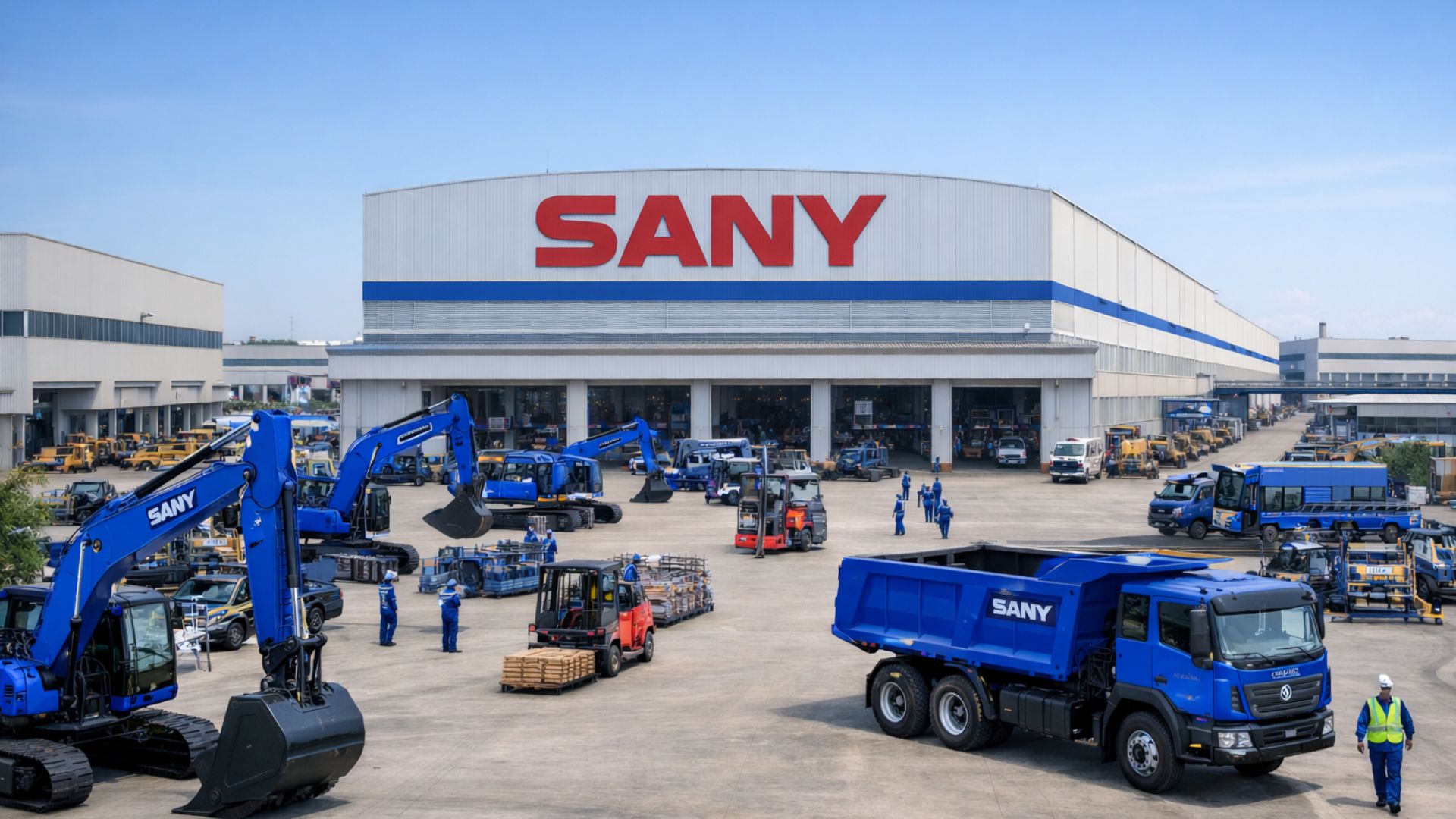
A Brazilian city will gain a mega factory from Sany starting in 2026, betting on national production of heavy machinery, job creation, and a billion-dollar expansion that promises to transform the industrial hub of Campinas.
The presented reading is objective: these two fronts signal a long-term commitment, both to Brazil and to the region.
In practice, this positions the group in areas with structural and recurring demand, ranging from defense solutions to lines focused on public safety.
Brazil as an industrial base and gateway to international markets
Another repeated point at the base is the existence of an already established industrial base in Brazil. This structure, according to what was said, serves the domestic market and also part of the group’s international markets.
The cited example is Mansup, described as supplied to the Brazilian Navy and also to the Navy of the United Arab Emirates, while the group seeks to advance in audits and opportunities in other markets.
The central message is that production in Brazil is not only local; it also serves as support for export and international presence.
Borders in Latin America become a priority, and Ecuador comes into focus
The base points to a shift in part of the regional demand: in addition to public safety, spending and interest in defense are growing, with specific attention to issues such as border security and combating illegal activities, including illegal movement of people, narcotics, and illegal mining in border regions.
In this context, the EDGE Group cites the signing of a letter of intent with the Ecuadorian government to assess a turnkey border security program.
The move is consistent with the strategy of expanding presence in several Latin American countries, aiming for complete solutions, not just one-off supplies.
Local production and domestic industry as a requirement for regional expansion


When asked about replicating industrial capacity in other South American countries or maintaining Brazil as an operational base, the response at the base points to a combination of both.
The logic presented is: Brazil already supports part of the deliveries, but as it expands, the group seeks to involve local industry in each country.
The argument is pragmatic. The EDGE Group emphasizes the importance of supporting the development of domestic capacity, workforce qualification, and local employment.
Also appearing as a requirement is the support throughout the life cycle of the systems: maintenance, repair, and revision, in addition to continuous support for the equipment deployed domestically in the countries where it operates.
New CAT factory in May and a promise of announcements in 2026 focused on cyber
In the final part of the base, the EDGE Group’s scenario in Brazil is described as “particularly active,” with a lot happening. A milestone mentioned is the inauguration in May of the CAT industrial unit.
The statement also connects the moment to a strategy of diversifying the “footprint,” reducing dependence on production concentrated only in the Emirates and expanding alternatives.
In this line, mentions of production in Latin America with lower costs, quality cited in São José dos Campos, a network of suppliers, and synergies with ITA appear.
The section closes with a projection: 2026 is treated as a platform for announcements, including partnerships and initiatives in cyber technology, as well as local production of equipment aimed at border security, which can serve both public safety and defense.
Do you think the EDGE Group’s strategy in the region will weigh more on border security, cyber technology, or local production in Brazil?








Seja o primeiro a reagir!