





 Portuguese
  English
  Spanish
  3 min of reading
  0 comments


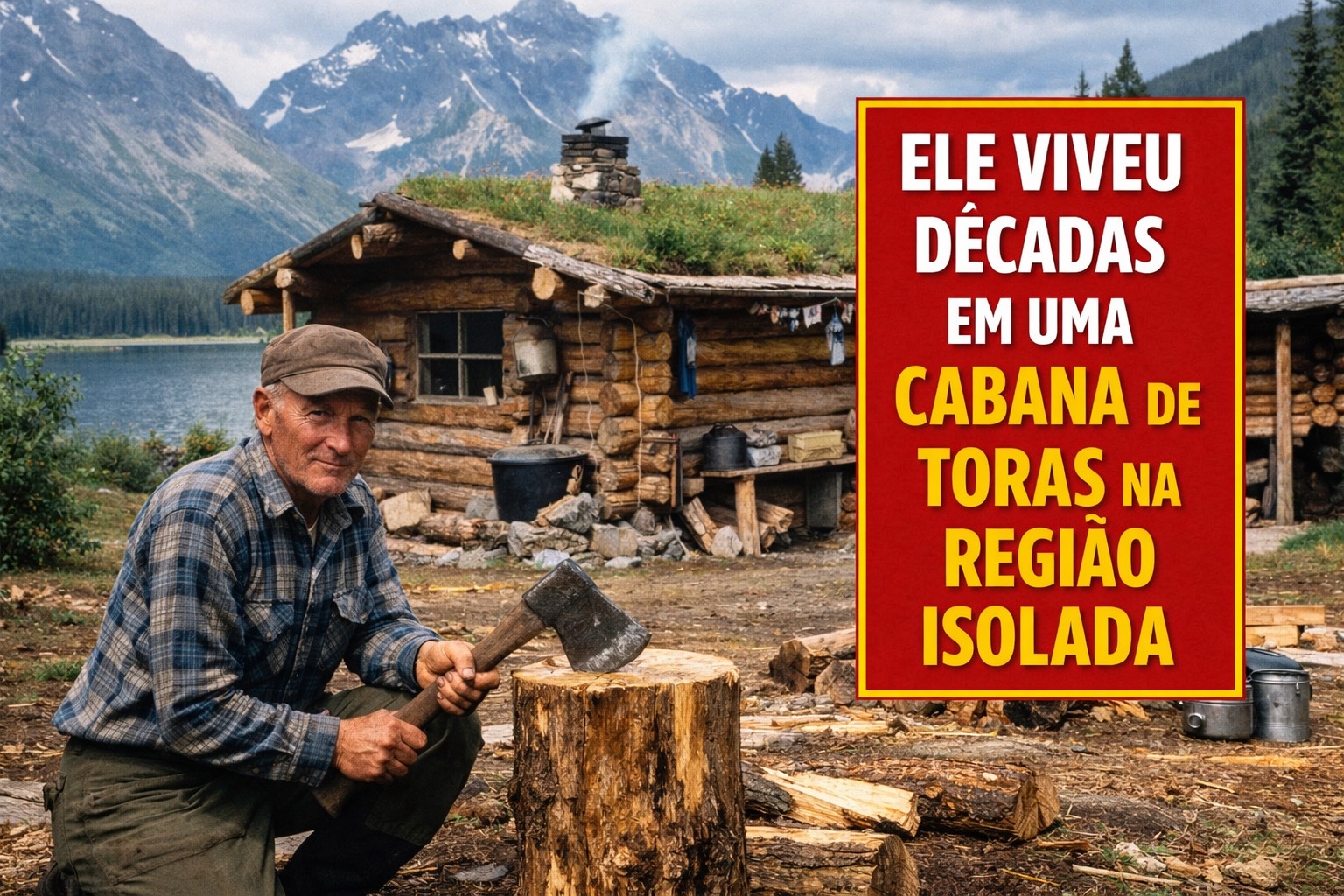
Richard Proenneke Installed Himself Solo in Southwest Alaska, Constructed a Cabin with Hand Tools, Recorded Decades of Self-Sufficient Routine and Left One of the Most Complete Accounts of Isolated Life
In the summer of 1968, Richard Proenneke arrived by plane at Upper Twin Lake, in southwest Alaska, to live alone, build a cabin, and document a self-sufficiency experience that would become a reference.
The small single-engine plane landed on the shore shaped by ancient glaciers, carrying hand tools, canvas bags, and basic supplies to begin his solitary stay.
When the plane disappeared behind the Neacola Mountains in the Aleutian Range, Proenneke remained alone, aware of the distance from the road and any human neighbors.
-
He started running at 66 years old, broke records at 82, and is now a subject of study for having a metabolic age comparable to that of a 20-year-old, in a case that is intriguing scientists and inspiring the world.

-
Oldest tree on the planet reappears after 130 years of searches: Wattieza, 385 million years old, was 10 meters tall and had no leaves or seeds; Gilboa fossils in New York solved the mystery in 2007.

-
A 48-square-meter house assembled in hours with 4,000 bricks made of recycled plastic that does not absorb moisture, has natural thermal insulation, and costs less than 90,000 reais in a complete kit.

-
Luciano Hang revealed that Havan’s air fleet has already accumulated more than 20,000 landings, 10,000 flight hours, and 6 million kilometers traveled, and he says that without the planes, the company would never have grown so quickly.


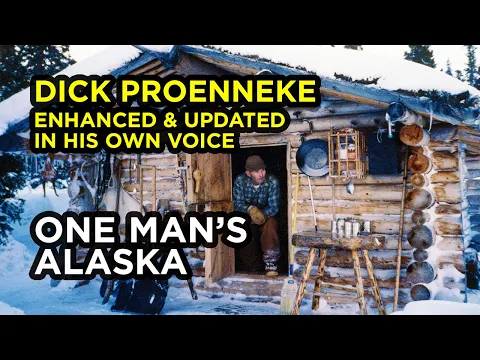

Training and Motivations
Born in Iowa, he experienced the Great Depression in childhood, developing a frugal relationship with resources, strict economy, and rejection of everyday waste.
During World War II, he served in the United States Navy as a carpenter and mechanic, learning essential wood and metalworking techniques.
After the conflict, he worked as a diesel engine mechanic in Kodiak, a period in which he matured the plan to live self-sufficiently.
Site Selection and Preparation
In 1967, he visited Twin Lakes to study the terrain, wind, snow, and sunlight, cutting spruce trees and preparing materials for the planned construction.
Upon returning permanently in 1968, he intended to stay only a year, bringing a 16 mm camera, tripod, and dozens of notebooks for systematic note-taking.
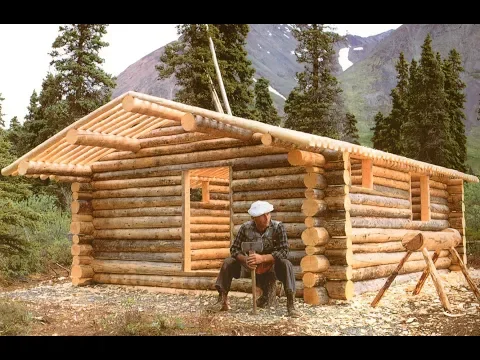
The cabin measured about 3.6 by 4.8 meters, built solely with hand-hewn logs, with no use of machinery.
He used saddle notch joints, carved with an axe and chisel, ensuring structural stability and thermal insulation during the winters.
The roof was fitted with thin logs, vegetation cover, and grass, creating natural protection against cold, wind, and constant moisture.
He built a woodshed elevated approximately 2.7 meters off the ground, keeping the wood dry and protected from animals.
He also erected an annex for firewood and an outdoor bathroom, following functional, durable, and spatial organization criteria.
Tools used had handles carved by Proenneke himself, adapted to daily tasks and environmental conditions.
Routine and Subsistence
In the summer, he took advantage of the constant light to cut firewood, fish for salmon, gather wild fruits, and record environmental observations.
In the winter, he faced extreme temperatures, kept the fire burning continuously, repaired tools, and wrote reflections by lamp light.
His diet came from fishing, gathering, and, for part of his life, subsistence hunting, always with full utilization.
With the creation of Lake Clark National Park and Preserve in 1980, he stopped hunting, maintaining practices compatible with the new rules.
His diaries describe the landscape’s responses to human presence, indicating how simple decisions could preserve local equilibria.
Occasional Human Contact of the Solo Man from Alaska
Despite living alone, he received pilots, forest rangers, and occasional visitors, keeping the cabin unlocked and maps updated.
He offered tea, engaged in long conversations, and pointed out trails, demonstrating hospitality even in a difficult-to-access isolation.
The story gained prominence with the book One Man’s Wilderness, published in 1973 from his personal diaries.
His footage led to the documentary Alone in the Wilderness, released after his death in 2003.
More than 250 written notebooks were published from 2005, forming a detailed record of self-sufficient life in Alaska.
While observing the sunrise over Twin Lakes, Proenneke claimed he did not want to miss anything around him, summarizing an existence shaped by manual work, continuous attention, and direct coexistence with nature.
With information from Filson.







-

-

-

-

8 pessoas reagiram a isso.