





 Portuguese
  English
  Spanish
 5 min of reading
  0 comments


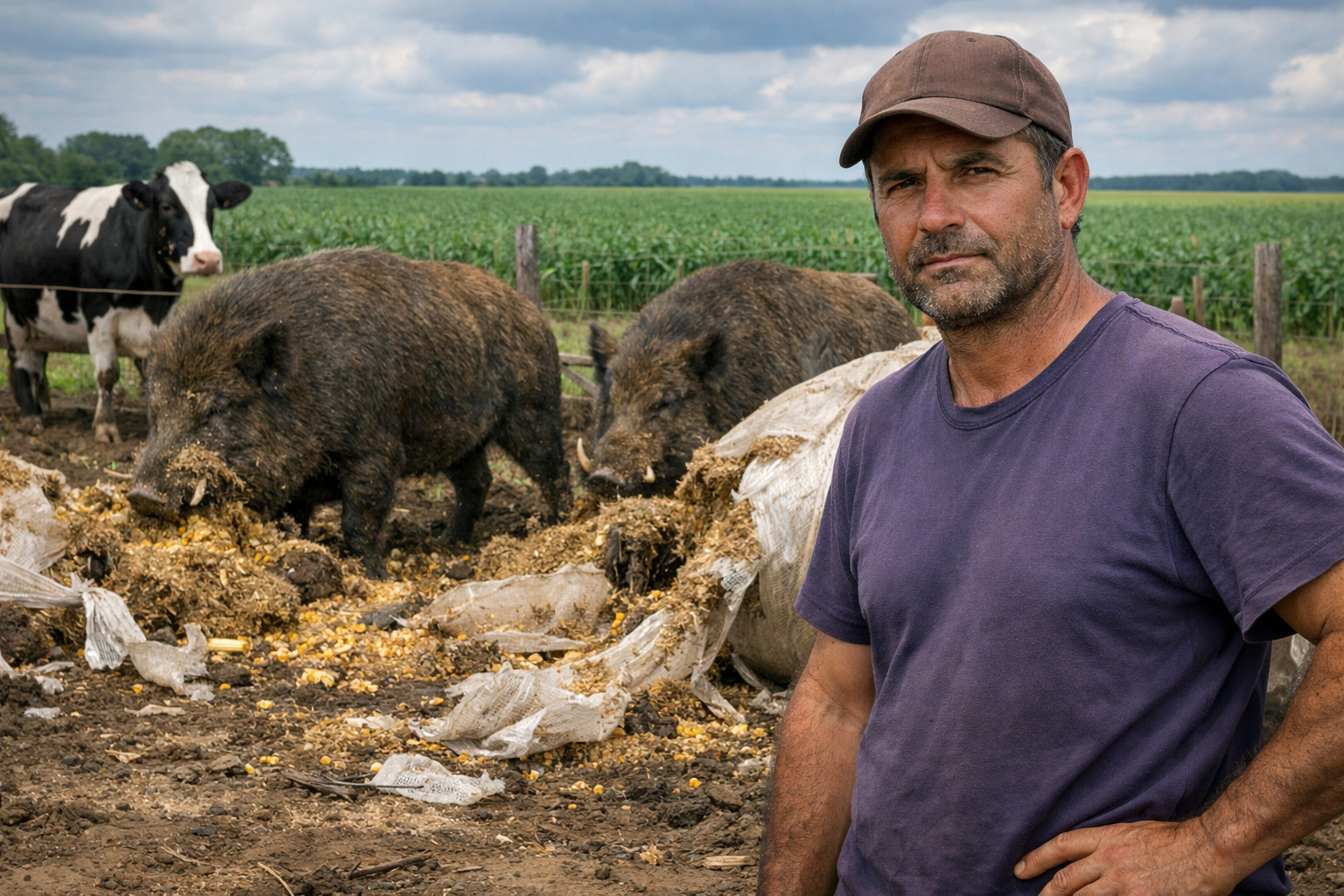
After a Decade in the Urban Industry, The Routine in The Field Began to Start Before Dawn, with Daily Milking, Pasture Management, Artificial Insemination, and a Constant Struggle Against Wild Boars, Weather, and High Costs
After spending about 10 years working as a welder in the city, Mateus decided to leave the industrial routine and return permanently to the countryside. The change did not happen by chance. Initially, he had already experienced periods in the field alongside his grandfather and uncle, but always ended up returning to the city in search of steady employment. Still, something kept him restless. When his father retired and decided to run the farm alone, Mateus felt he could not let him face the daily demands of farming without support. So, he resigned, returned to the rural area, and took over milk production.
The information was shared in a field video published on a specialized rural channel, which closely followed the producer’s routine and detailed the structure built over years of continuous work, almost always done only by him and his father. Since then, Mateus has remained alone on the property, facing the daily challenges of dairy farming with few resources, a lot of improvisation, and a strong reliance on correct management.
Currently, production revolves around 19 calving cows, all managed with a focus on efficiency. However, the moment is delicate. The average production has dropped due to poor pasture, as part of the area is being enclosed and the volume of silo is still not enough to keep the cattle exclusively at the trough. Nevertheless, Mateus remains determined, maintaining daily milking even with the price of milk considered low.
-
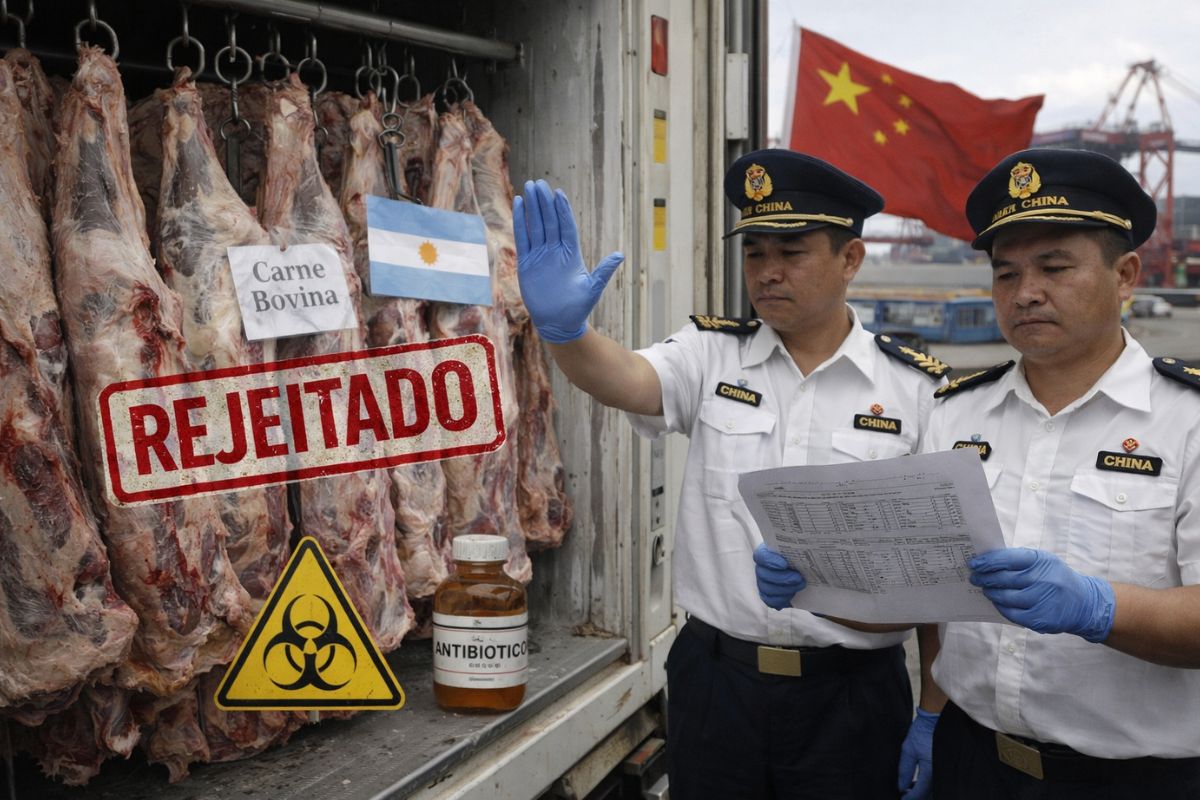
China rejected an entire shipment of beef from Argentina after detecting an antibiotic so dangerous that it has been banned for human consumption for over 30 years, and now the export sector is facing a crisis of international trust.
-
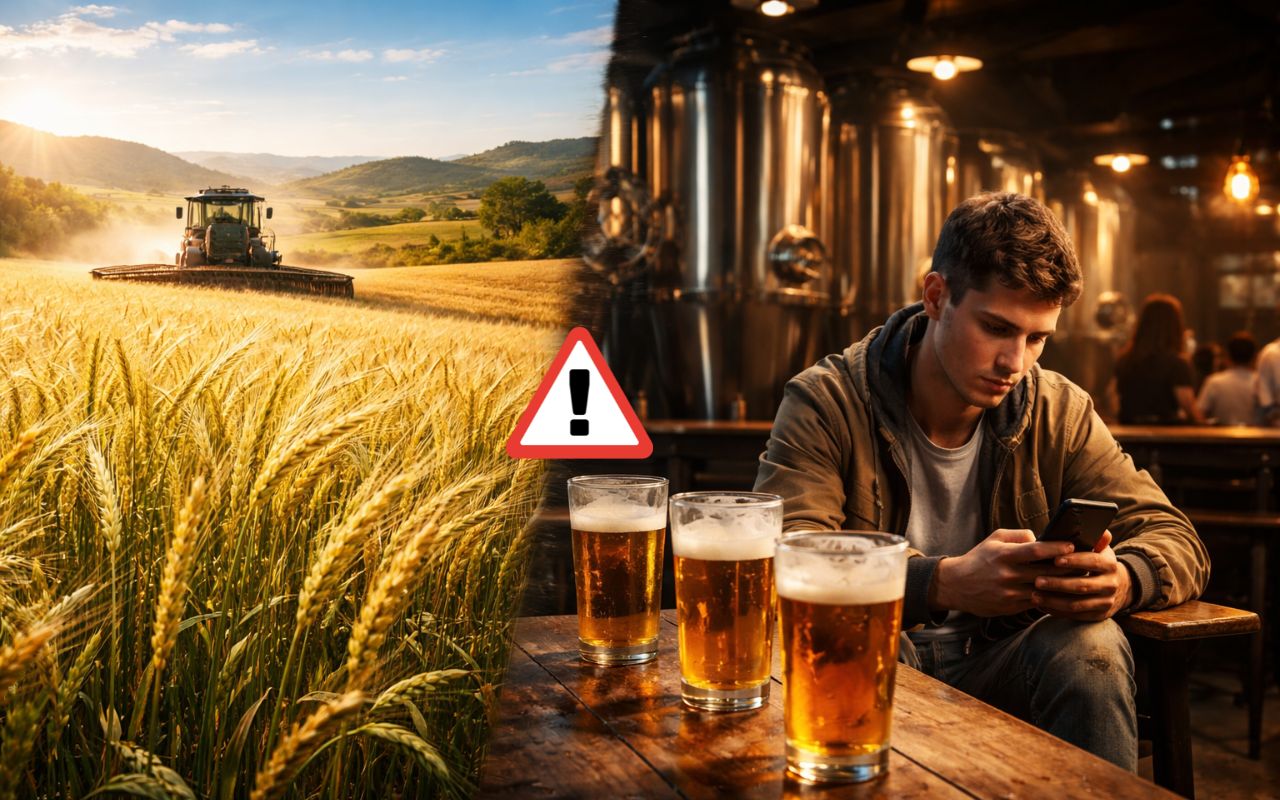
With nearly 500 thousand tons per year, barley production is growing in Brazil, while a decline in beer consumption among Generation Z raises alarms in the sector.
-
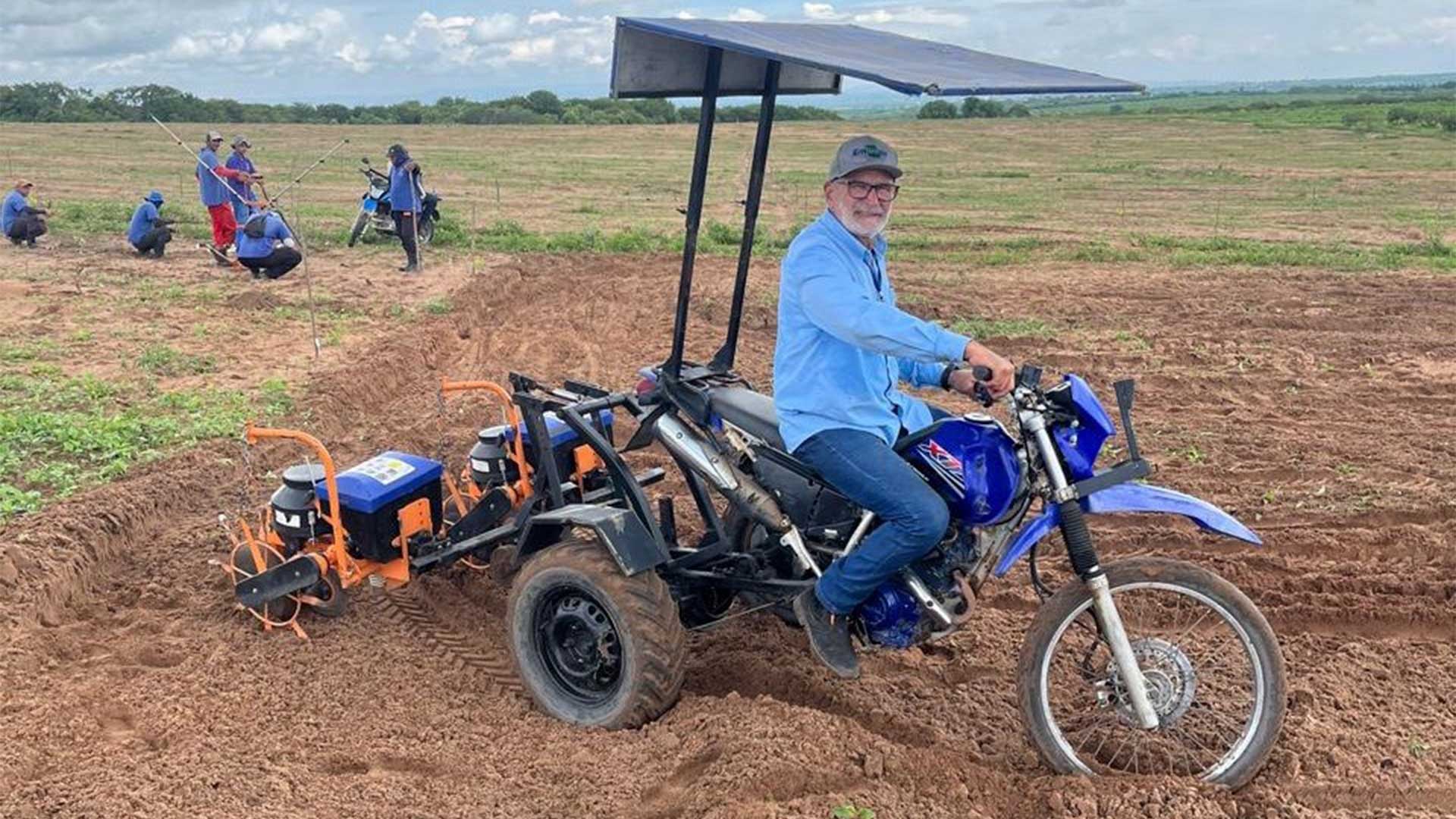
With tractors out of reach for small producers, a tricycle created by Embrapa Algodão becomes a cheap and efficient solution and gains national prominence.
-
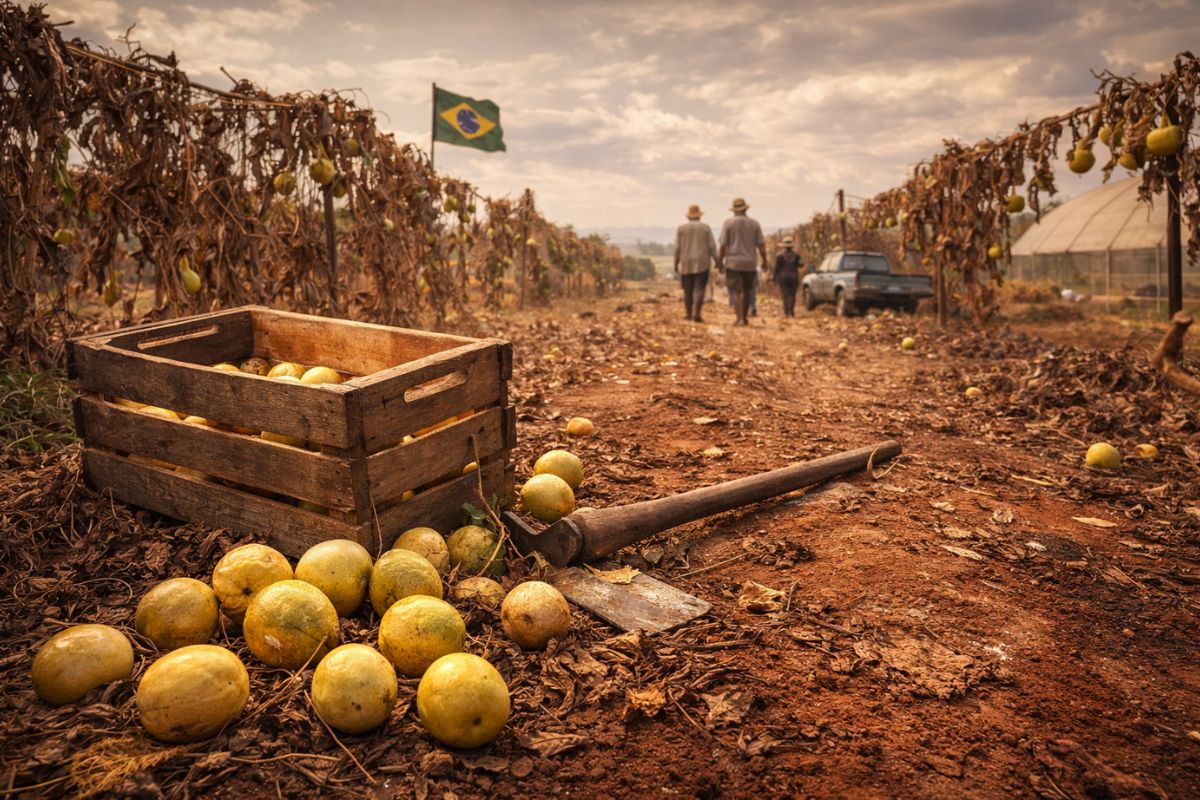
From 130 producers in the year 2000 to just 15 today: the dramatic decline of passion fruit in Araguari shows how the lack of labor in the Brazilian countryside is killing a decades-old agricultural tradition, even with Brazil being the largest producer in the world.
Pasture Management, Silage, and the Constant Struggle Against Wild Boars

The livestock’s main food source today is still pasture, not by choice, but by necessity. According to the producer, the ideal would be to keep the cows entirely at the trough, which he considers more advantageous. However, for that, it would be necessary to expand the silage area, something that has been done gradually. Currently, both the cultivated area and the pasture area total 5 hectares each, totaling 10 hectares managed directly.
In the adopted system, Mateus formed the paddocks by planting corn together with grass seeds, harvesting everything together and spreading the silage, which helped reduce costs and accelerate the formation of pasture. There are five paddocks, still in the consolidation phase, which will eventually allow for more efficient cattle rotation.
However, one of the biggest challenges faced was the presence of wild boars, which caused severe losses the previous year. According to Mateus, without exaggeration, the animals managed to knock down around 20 truckloads of silage, completely destroying planted areas. The sight of walking through the fields and seeing everything on the ground was described as disheartening. To try to prevent new attacks, he installed fences with four electric wires, using existing trees and structures to protect both the crops and the cattle.
Despite the difficulties, this year the crop developed better. The corn was planted early, without replanting, and the expectation is to gradually increase the silage production to reduce dependence on pasture, especially in more critical periods.
Reproduction, Heifer Rearing, and Structure Built on Improvisation


In reproductive management, Mateus prioritizes artificial insemination, using the bull only as a last resort. According to him, only after three unsuccessful insemination attempts is the bull used. Currently, there are seven heifers being raised, in addition to seven older heifers, some already close to their first calf. This strategy avoids high costs associated with the purchase of mature animals, a practice he considers financially unfeasible.
The newborn heifers are housed in individual pens, where they stay for up to one month old. Although there are four structures, only one is currently in use. Everything in the location is made from repurposed materials: tires become troughs, old structures are transformed into chicken coops, feed storage, and stalls. According to Mateus, almost everything was built by him and his father, except for very heavy jobs that would require machinery.
The feeding of lactating cows includes meal feed with 24% protein, maintained even during times of financial strain, as reducing the diet would directly impact production. Nevertheless, the producer is critical of some feeding alternatives. The capiaçu, for example, he considers useful only for those without other options, being more suitable for free-range cattle or rearing, but not ideal for milk-producing cows.
Milking, Equipment, and The Reality of Those Who Live Off Milk

The milking is done in a simple yet functional structure. The system includes a final unit, the possibility of expansion for two more sets, water heating, and specific places for detergent, brushes, and feed. Everything was designed to facilitate management and reduce physical wear, as, as Mateus himself states, “management shouldn’t make us suffer.”
One of the most sensitive points of production is the minimal use of oxytocin. Currently, only one cow receives it after developing mastitis and experiencing difficulty in milk flow. According to him, its use is minimized as much as possible, being really a last resort. For the producer, the ideal is for the cow to naturally release oxytocin upon entering the pen.
Even with an organized structure, unforeseen events are constant. Rain during milking requires shutting down equipment to prevent burning, which interrupts the process and increases daily effort. Still, Mateus continues working, aware that dairy farming is not built overnight, but rather over many years of continuous work.
Married and father of two children, he already counts on help from the boy, who, according to reports, can milk alone when necessary. For Mateus, teaching his children from an early age is part of life in the field, despite acknowledging that raising children in the countryside is increasingly challenging.
Would you have the courage to leave everything behind, face invasions by wild boars, and still insist on life in the fields to keep the production alive?







-

-

-

-

-

-

92 pessoas reagiram a isso.