





 Portuguese
  English
  Spanish
  8 min of reading
  2 comments


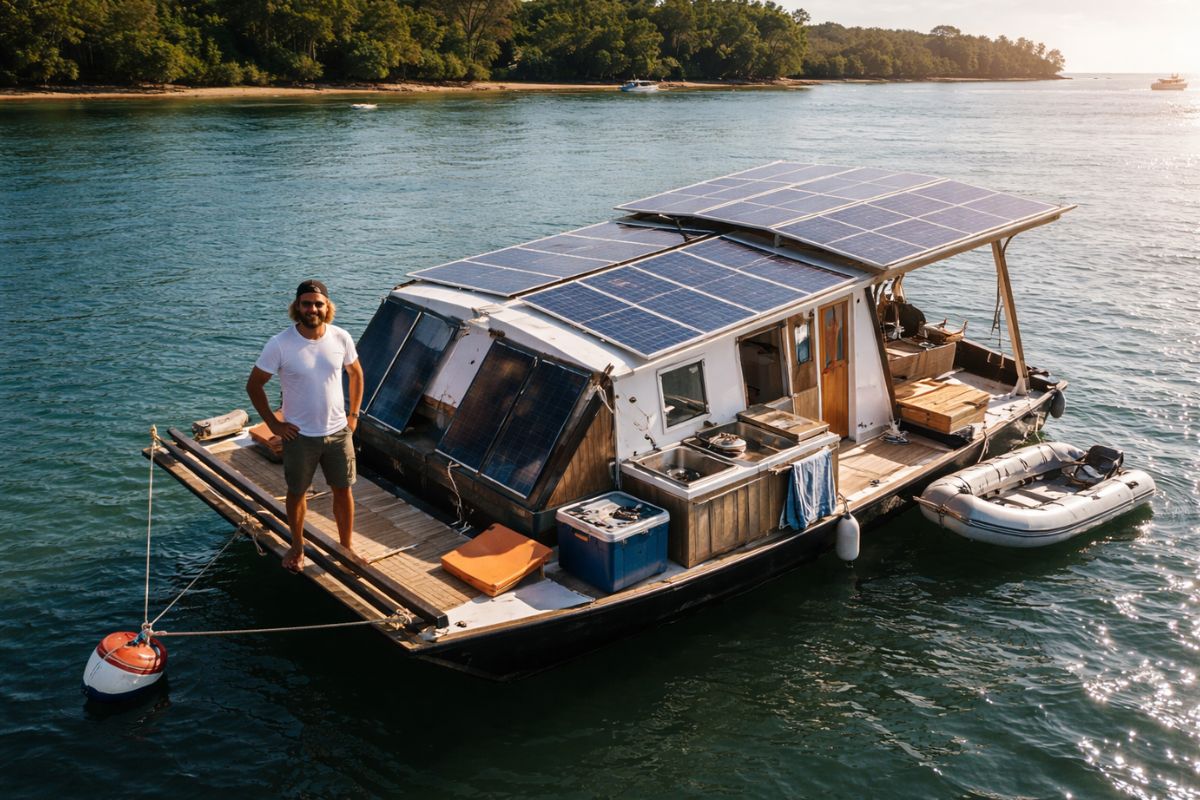


Simon Bought An Oro 47 Catamaran From 1976 For 5,000 Canadian Dollars, Faced Years Of Renovation And Installed 16 Solar Panels Of 330 Watts, 20 Kwh Batteries And A 12 Kw Electric Motor To Cook, Wash, Desalinate And Sail Without Diesel On Gabriela Island, Tides And Wind Decide Everything.
The catamaran became Simon’s most concrete choice to live off the grid without giving up the basics. Instead of seeking “conveniences,” he put his entire routine inside a hull and began to measure comfort, autonomy, and movement by the energy coming in, by what the system can handle, and by what the sea allows.
The decision didn’t come out of nowhere: before, he spent two years traveling across North America in a van and nearly a year touring the world on a motorcycle. Later, he bought the catamaran without seeing it, crossed the country, and took on a project that mixes heavy renovation, technical learning, and a clear goal of sailing without diesel.
A Catamaran That Became Headquarters And Changed The Way To Think About The Day

Simon describes the catamaran as his adventure headquarters, but the term is not figurative when looking at the functions he concentrated on board. The house, the workshop, and the engine room became the same place, which forces every decision to be practical, from the kitchen space to the type of energy available for the rest of the day.
-
While restoring a historic mansion from 1910, a brick structure with an old turbine that generated energy from the Rio do Testo emerged, along with a hidden door and a rare floor concealed under layers of wax.
-
Italian researchers have detected what appears to be a second Sphinx buried under the sands of Egypt, and satellite scans reveal a gigantic underground megastructure hidden beneath the Giza Plateau for over 3,000 years.

-
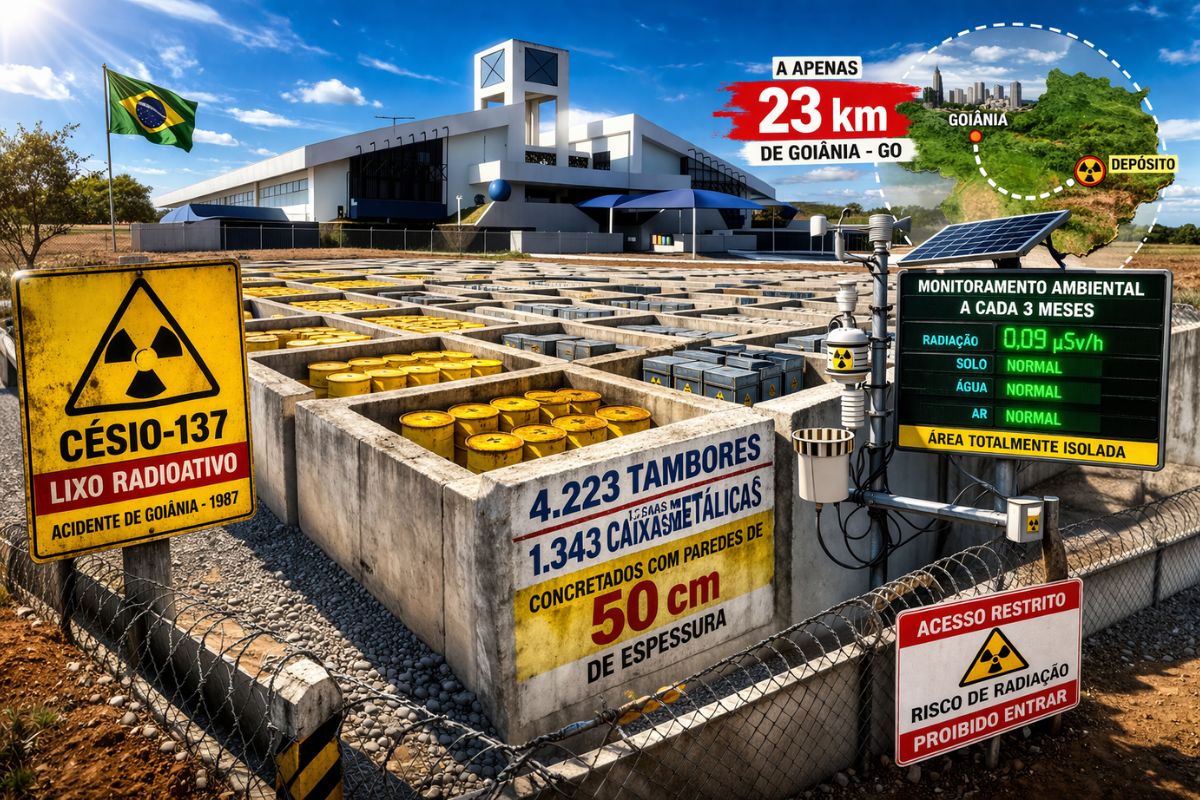
There are 4,223 drums and 1,343 metal boxes concreted with 50-centimeter walls that store the radioactive waste from Cesium-137 in the worst radiological accident in Brazil, just 23 kilometers from Goiânia, with environmental monitoring every three months.
-
Giant Roman treasure found at the bottom of Lake Neuchâtel in Switzerland reveals an advanced trade system, circulation of goods, and armed escort in the Roman Empire about two thousand years ago.

The daily experience comes through simple details, which end up being the true “luxury” of living in a catamaran: waking up with the sea, watching otters on the dinghy, having seals come close to the boat, stopping for a few seconds, going to beautiful reefs, and fishing for dinner. It’s not a permanent scene of tranquility; rather, it’s a routine that alternates between work, maintenance, and rare moments of reward.
The Purchase Sight Unseen And The First Meeting With The 47-Foot “Ugly Duckling”
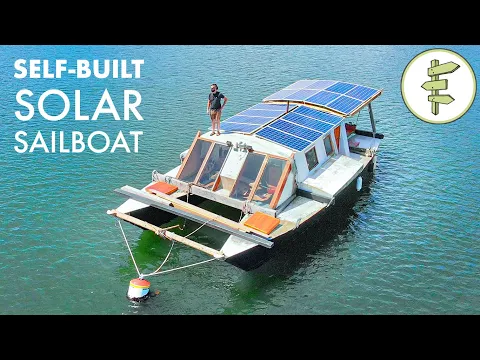

The catamaran is a 1976 Oro 47, measuring 47 feet, or about 14 meters. When Simon bought it, the vessel had been in the same spot for 12 years and he described it as abandoned. He paid 5,000 Canadian dollars, acknowledging that it was more than the boat’s condition suggested, but still closed the deal and only saw it for the first time afterward.
The initial shock was direct: “it looks horrible,” he says, but the evaluation changed when he entered, touched the structures, and felt that, despite the appearance, there was solidity. It was the confidence in what doesn’t appear in the photo that paved the way for the rest. From there, he assumed that this “ugly duckling” could bring something good, as long as he rebuilt whatever was necessary.
Renovation From Scratch: Keels Swapped, Paint Removed, And Every Centimeter Redone
The renovation of the catamaran was not just a touch-up. Simon reports that he swapped the keels, removed hundreds of kilograms of paint, and replaced practically every square centimeter of the deck. He describes the feeling that the boat was “constructed when it was rebuilt” and then “rebuilt again,” a way of saying that the catamaran started to carry more of his work than that of the original shipyard.
The material and method follow a logic that prioritizes feasible maintenance. According to him, the catamaran is made of nautical materials: quality plywood, cedar, all wrapped in epoxy and fiberglass to increase strength. He summarizes the concept with a concrete image: if a problem arises in the hull, you can cut, buy another sheet of plywood, and repair it. Less dependence on “magic solutions” and more capacity to fix when needed.
Why Remove The Diesel: The Bet On Electricity And The Leap From “Works” To “Makes Sense”
When he bought the catamaran, it had a functioning diesel motor. Even so, Simon decided to get rid of it, something that, according to him, raised the inevitable question from many people: why remove a functioning system? His answer is twofold: there is indeed an environmental motivation, but there is also convenience. With electricity, he doesn’t want to be limited by a tank and fuel logistics, especially considering long crossings.
The technical reasoning appears in the form of the chosen hull. To produce enough energy to move a boat consistently, he explains that surface area is necessary, and this favors multi-hulls like trimarans and, primarily, catamarans. The catamaran becomes an energy platform before it becomes a “motor”, because the roof and exposed areas house the generation that sustains the house and, in part, the displacement.
16 Panels, 5,280 Watts And What That Really Delivers On A Catamaran
The system is described with well-defined numbers: 16 solar panels of 330 watts, manufactured in Canada, totaling 5,280 watts of solar energy.
Additionally, Simon uses batteries with a capacity of 20 kWh and a 12 kW HP EV AC motor. For household use, he considers it a lot of energy, sufficient to run induction stoves and ovens, a washing machine, and water production equipment.
But propulsion is the point where the catamaran honestly reveals limits. He says that, to push the boat, this is equivalent to about seven or eight horsepower, which does not generate high speed.
From 3.5 to 4 knots, there’s a threshold where the batteries start to be demanded more rigorously. The catamaran delivers autonomy, but it demands discipline in speed and expectation.
A Concrete Example Of Performance: The Day The Sun “Paid” For The Crossing
Even with limits, Simon describes situations where the equation closes in a surprising way. In summer, he claims to generate enough energy to raise anchor in the morning, travel 50 kilometers through the Georgia Strait to Vancouver, and arrive before sunset without touching the batteries, using only energy coming in from the panels that day.
This type of account helps answer the “how much” and “where” practically: how much the system can handle depends on the season and weather, and where he tests this is on real routes with urban destinations.
The catamaran doesn’t become a “concept”; it becomes movement measured in kilometers, hours of light, and margin of safety. Autonomy stops being a promise when it becomes arrival before the end of the day.
Drinking Water, Food And Functional Comfort: What Energy Sustains Beyond Sailing
The self-sufficiency of the catamaran is not limited to “sailing.” Simon says he produces his own drinking water with a desalination device, and that, with the available power, it’s easy to make fresh water. This changes the weight of the routine: there’s no need to treat water as a permanent obstacle, and the system becomes part of daily life, like turning on a tap, but with a technical chain behind it.
The kitchen is another central point. He defines himself as someone who really enjoys cooking, so the kitchen takes up a large space in the middle of the catamaran.
In return, the rest is more compact: there are four beds, but designed as small private nooks for sleeping and relaxing. The rear cockpit was not even built yet, reinforcing that the catamaran is a living project. Comfort here is what works every day, not what impresses during a quick visit.
Sun Is Not A Guarantee: Rain Reduces, Wind Compensates And Winter Changes The Strategy
Simon does not treat solar energy as a perfect solution. He acknowledges disadvantages: with rain, production drops. At the same time, he points out that rain often comes with wind, and that’s why he plans to install wind turbines to balance generation.
He says he is investing in turbines an amount similar to what he invested in solar panels, hoping that both systems will complement each other and avoid severely low days.
In winter, the challenge increases because it becomes darker and solar production decreases. To heat the catamaran, he built a stainless steel wood stove but intends to migrate to electric heating and even build his own heat pump, for convenience.
The logic is simple: turn on and adjust the temperature without relying on firewood stock on board. Technology doesn’t eliminate the climate, but it can reduce the invisible work of keeping everything functioning.
Safety And Routine On The Water: Mooring Buoys, Storms And The Cost Of Coming And Going
Simon says he is on Gabriela Island, in the Gulf of Sul, a place that captivated him and that he describes as beautiful and good for learning.
The catamaran is attached to a mooring buoy, not anchored, which brings safety: there’s a huge block of concrete and a heavy chain that keeps the vessel in place.
Still, the routine has risks and logistics. He comments that, in storms, even if the catamaran itself is well secured, another vessel might break loose, and he usually stays downwind of most boats in the bay, which requires attention.
Additionally, the math of daily life appears in small things: at a buoy, there are constant displacements between the boat and land, and the extra time weighs whenever something is forgotten and must be retrieved. Freedom on the water comes with a schedule that tides and currents also write.
What He Learned And Why It Matters For The Future Of The Catamaran
Living on a catamaran, for Simon, has become a continuous course in skills. He reports being mentored by a sailmaker, learning TIG welding, doing woodworking and boat building, and working in a shipyard with fiberglass services.
The justification is straightforward: there isn’t always a shop available to “resolve things for you,” so the ability to fix becomes part of the system itself.
The project also connects to work and documentation. He says he works in the shipyard, helps in a food bank, does diving, takes welding and boat repair jobs, and frequently installs solar panels on vessels. In parallel, he maintains a YouTube channel and claims to have documented the construction in about 200 episodes.
And when discussing destinations, he admits that he still doesn’t know exactly where he wants to go, because the catamaran is still being tested for everything he imagines doing. Ambition exists, but the proof comes in open waters, with numbers and performance, not with talk.
The 47-foot catamaran that Simon bought for 5,000 Canadian dollars has become a real platform for life off the grid, with 16 solar panels, 20 kWh batteries, a 12 kW electric motor, and a set of choices that exchange fuel for generated and stored energy.
There’s no magic: there are speed limits, dependence on weather, adjustment of habits, and a renovation that consumed time and technique, but the result is a routine where cooking, washing, and producing drinking water fit into the same system that moves the boat.
If you had a catamaran like this, what would truly be a priority: more speed, more internal comfort, or more energy autonomy?
And, considering the decision to remove a functioning diesel engine, would you do the same, or keep “a plan B” even with 5,280 watts of solar and wind turbines in the project?








Sería genial conocer alguien con ese espíritu para ir por el mundo en autocaravana y bote y construir esos proyectos juntos. Genial q pone paneles en otros botes, hace reparaciones, y va aprendiendo sobre la marcha de su propio proyecto que además le genera experiencia de vida y técnica y podría tener trabajo a dónde quiera que vaya.
Hola, excelente artículo, muchas gracias por compartirlo.
Soy Angel McLeod, ingeniero eléctrico con especialización en energías renovables, y quería aportar algunos comentarios técnicos sobre este interesante proyecto.
He estado siguiendo el caso y, por lo que he leído y visto en los videos, se trata de un proyecto en curso con un gran potencial. La iniciativa de incorporar aerogeneradores es muy acertada, aunque considero que, para lograr una autonomía total, también sería necesario ampliar la capacidad de almacenamiento energético.
Una mejora clave sería optar por baterías de estado sólido, ya que ofrecen una mayor densidad de almacenamiento en menos espacio y con menores riesgos a largo plazo. Para una embarcación de este tamaño, estimo que la demanda energética total debería estar entre 40 y 60 kW. Con una combinación de paneles solares de alto rendimiento y turbinas eólicas, es totalmente factible alcanzar esa cifra.
Esto le daría una independencia casi total de las condiciones meteorológicas y permitiría, además, instalar un motor eléctrico de propulsión con mayor capacidad de empuje y masa, optimizando así el rendimiento general de la embarcación. Un proyecto inspirador y técnicamente muy viable.