





 Portuguese
  English
  Spanish
 5 min of reading
  1 comment


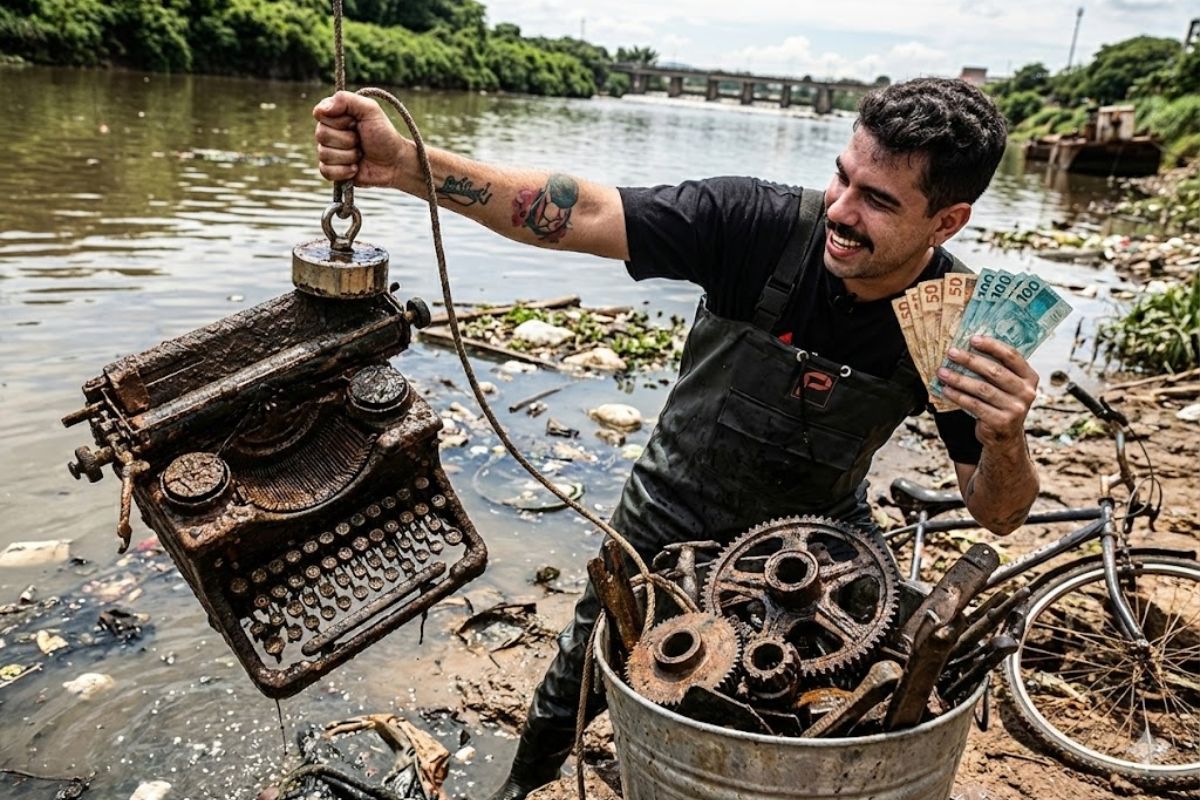


Content Creator Turns Magnetic Fishing into Urban Mining After Spending 24 Hours Fishing for Trash with a Magnet in the Tietê, Finding a Rare Torino Typewriter, Negotiating Scrap at a Junkyard, Visiting an Antiques Store, and Making Approximately 700 Reais with Unlikely Finds that Mix Trash, Household Items, and Collectible Pieces.
In April 2023, a video from creator Balian gained traction on social media, showing that it was possible to earn around 700 reais in just 24 hours fishing for trash with a magnet in the Tietê and in an abandoned quarry, pulling tools, metal pieces, and even a rare imported Torino typewriter from the riverbed.
On December 18, 2025, the story was detailed again, reconstructing the journey that mixes magnetic fishing, junkyard visits, and Creep antique store, and explaining step by step how a weekend surrounded by polluted water, scrap, and firm negotiations managed to transform rusted objects and heavy trash into cash and viral content.
How Magnetic Fishing Turned into Urban Mining in the Tietê

In the experience shown by Balian, magnetic fishing stops being an internet curiosity and starts functioning as planned urban mining.
-
These living root bridges and ladders are over 700 years old and help indigenous people survive in one of the rainiest regions in the world.

-
From sertanejo star to international investor: Ana Castela invests millions in a mansion in the USA, creates a themed accommodation in Orlando, and shows that the “boiadeira” also wants to grow away from the stage.

-
The 10 most stunning motorhomes in the world: a $3 million trailer with a rooftop nightclub and garage for a Ferrari, “palaces on wheels” with Italian marble, private cinema, and five-star hotel luxury for billionaires.

-
Trump wanted to spend $400 million on the White House, but the courts prohibited the million-dollar construction.

Instead of a conventional hook, he uses a super magnet attached to a strong rope and directs the equipment to specific points in the Tietê River and abandoned quarries, where the chance of finding metal is greater.
The logic is simple: anything attracted by the magnet that has resale value can count towards the final total.
This includes heavy scrap sold by the kilo at junkyards to items with decorative or historical appeal that may interest collectors and antique dealers.
Throughout the day, the technique of fishing for trash with a magnet in the Tietê replaces fish with any piece of metal that is worth something on the market.
By showing the routine of preparing the material, choosing throw points, and insisting even when the magnet gets stuck on rocks or debris, the video reinforces that the result does not come solely from luck.
There is strategy in choosing locations, reading the riverbed, and the way of pulling the rope, reducing losses and increasing the chance of finding something better than common scrap.
What He Found Fishing for Trash with a Magnet in the Tietê and the Quarry
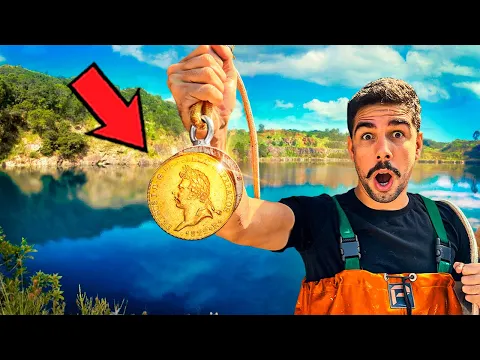

The first part of the adventure takes place in an abandoned quarry, where the magnet spends a good amount of time stuck in submerged rocks and metallic structures.
After hours of attempts, daily use tools begin to surface, such as masonry items, garden scissors, and iron letters in the shape of “F” and “X,” with decorative potential for industrial environments or themed stores.
Back in the Tietê, the scenario changes.
To continue fishing for trash with a magnet in the Tietê, Balian faces polluted water, strong smells, and the need to enter the river to release the equipment when it gets stuck in buried metal chunks in the mud.
The reward comes in the form of various objects, such as a calendar from 1976, a potato masher, a cart wheel, and a street sign.
The highlight comes when the super magnet pulls up a medallion that seemed valuable, and then, an imported Torino typewriter, treated as a rare piece due to its brand, age, and condition.
It is at this moment that the video makes it clear that not all “trash” is equal: some items will only be worth their weight in metal, while others attract interest from antique dealers and collectors.
How Balian Transformed Nasty Scrap into Cash
With the material sorted, the next step is to turn what was taken from the river into money. At the junkyard, Balian doesn’t limit himself to weighing everything as common scrap.
He highlights the utility, shape, and resale potential of the pieces, managing to earn around 50 reais just from the simplest items that go into the regular buying flow by the kilo.
The real leap comes when the pieces chosen for their historical or aesthetic appearance, especially the typewriter, go to Creep antique store.
There, the service looks at the Torino typewriter with another criterion, evaluating design, rarity, restoration potential, and customer demand for such items.
The negotiation brings the total close to 700 reais, adding what came from the junkyard and what was paid for the special items.
Throughout the entire process, the video shows that it’s not enough to spend all day fishing for trash with a magnet in the Tietê.
Without basic market knowledge, the scrap pulled from the water would be sold only as cheap iron.
The differentiator lies in identifying what can become decorative pieces, collectible objects, or items of historical interest, and knowing where to offer each type of find.
Lessons and Risks for Those Thinking of Repeating the Adventure
The case reinforces the idea that Brazil operates, in many areas, as a “country of submerged treasures”, where rivers, lakes, and quarries accumulate decades of disorderly disposal.
Amid heavy scrap, unused pieces, and unusual objects, scenes like those shown by Balian highlight both the economic potential of trash and the size of the environmental problem it represents.
At the same time, the video makes it clear that working fishing for trash with a magnet in the Tietê is not an innocent outing.
There is contact with polluted water, risk of cuts from rusted metal, and the need for appropriate equipment and basic safety precautions, such as gloves, sturdy footwear, and attention to your surroundings to avoid accidents on slippery shores or fast-moving areas.
For those curious about the idea of using a super magnet in urban rivers, the experience shows that planning, personal protection, and risk awareness are just as important as the magnet itself.
Without this, the chance of turning a “treasure hunt” into a health problem or accident increases significantly, especially in areas with a history of pollution and irregular disposal.
In the end, Balian’s story indicates that a combination of creativity, market reading, and willingness to face difficult conditions can indeed generate income from trash.
But it also warns of the need to treat rivers and quarries not just as sources of scrap but as environments that need recovery and respect.
Would you be up for spending an entire day fishing for trash with a magnet in the Tietê in search of valuable scrap, or do you think the risk, effort, and pollution do not justify the extra money?








Eu acho que nessa vida toda experiência é válida
A