





 Portuguese
  English
  Spanish
  4 min of reading
  0 comments


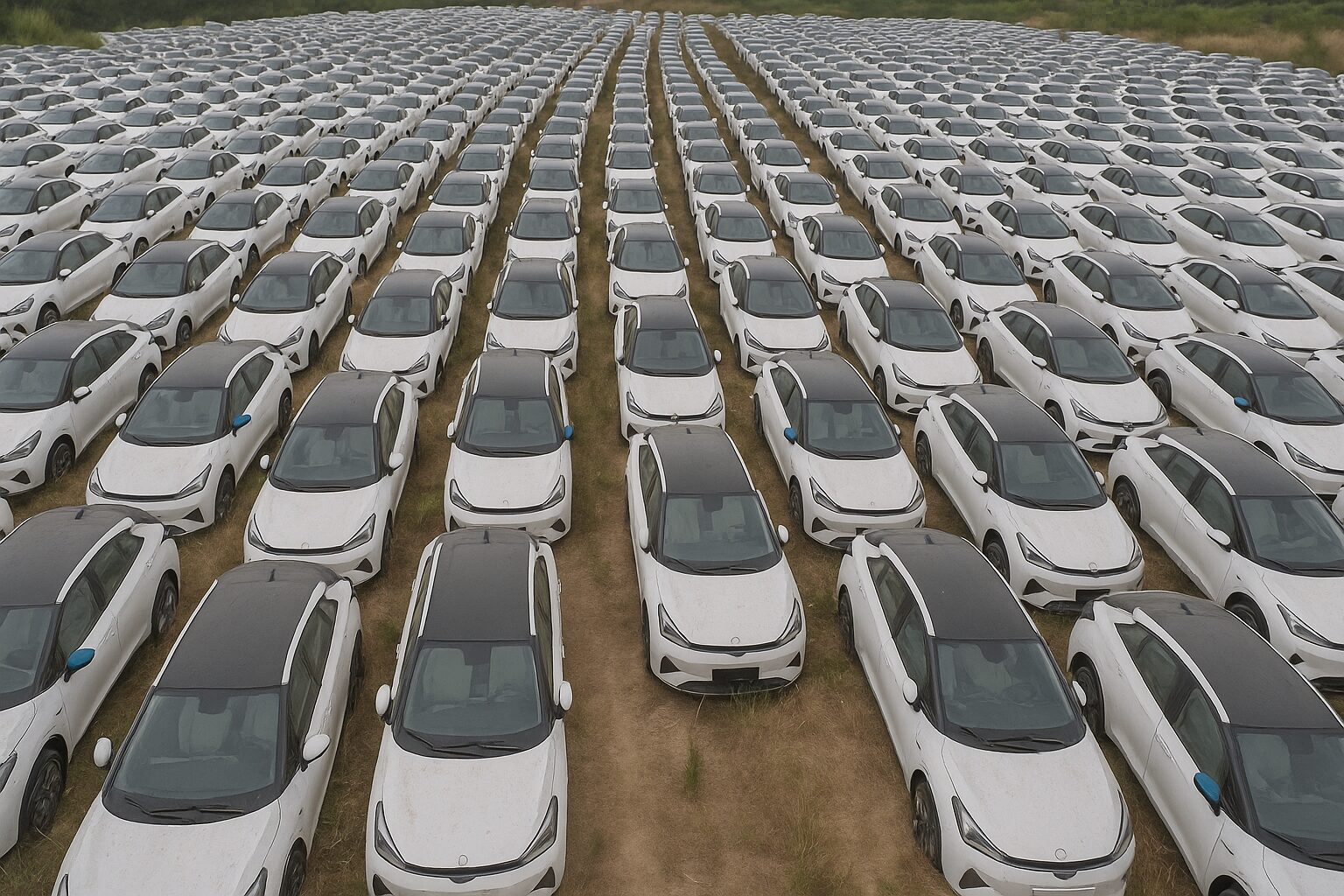
Images of Large Lots Occupied by Abandoned Electric Vehicles Spread on Social Media and Called Attention to the Result of Excessive Subsidies, Bankruptcy of Manufacturers, and Insufficient Charging Infrastructure.
Abandoned Electric Cars in China: China, the world’s largest electric vehicle market, now faces an unexpected scenario: the emergence of true “graveyards of electric cars.” Images showing thousands of vehicles parked in vacant lots or agricultural fields, unused and unmaintained, have circulated on social media and impacted public opinion. The scene contrasts with the futuristic image associated with China’s energy transition and raises questions about the side effects of the rapid electrification of the automotive fleet.
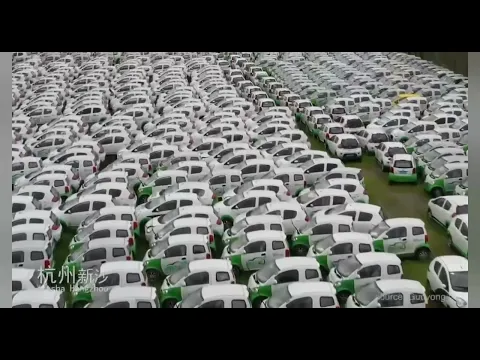
The so-called “graveyards of electric cars” are not isolated cases. Reports and photographs have emerged in cities such as Hangzhou, Nanning, and Chengdu. In many of these locations, abandoned vehicles still display stickers from ride-sharing or app-based transportation services, revealing their origin in the urban mobility market.


‘Boom’ of Startups and Subsidies Fed Production Bubble
The origin of the problem dates back to the early last decade when the Chinese government promoted aggressive subsidies to stimulate the production and adoption of electric vehicles. Concurrently, hundreds of startups emerged with the promise of revolutionizing the automotive sector with their own models of urban electric cars.
-
Honda performs miracles in fuel consumption with a hatch that marks 13.2 km/l in the city and 15 km/l on the highway, leaving Polo, HB20, 208, and Onix behind and becoming a reference among compact cars without resorting to turbo or hybrid systems.

-
Six diseases that seem common but can prevent the renewal of the driver’s license for the elderly throughout Brazil and surprise experienced drivers — could any of them affect you without showing clear signs?

-
With 122 hp, fuel consumption of up to 17.7 km/l, and a trunk capacity of 440 liters, this hybrid SUV impresses even though it costs up to R$ 47,000 more than the Yaris — meet the Toyota Corolla Cross.
-
600 km with three Chinese plug-in SUVs, same mode and air conditioning on: Jaecoo 7, BYD Song Plus, and Haval H6 hit the road, and the pump reveals who was truly the most economical.
With state support and easy credit, companies like Xpeng, WM Motor, Bordrin, and other lesser-known brands produced entire fleets geared towards rental, urban transportation, and ridesharing apps. However, many of these companies did not survive the challenges of the market, such as fierce competition with established brands, high maintenance costs, and the lack of a robust charging infrastructure in smaller cities.
When subsidies began to be cut around 2020, the scenario changed: hundreds of thousands of vehicles became unused, and investors abandoned the projects. Without buyers, an active fleet, or large-scale recycling plans, the vehicles were piled up or left in idle lots.
Abandoned Electric Cars Highlight Structural Failures
The “graveyards of electric cars” in China reveal not only the collapse of poorly planned startups but also structural failures in the automotive sector’s energy transition. The absence of clear policies for battery disposal and recycling, for instance, exacerbates the problem.
Experts point out that, unlike combustion cars, electric vehicles have components that require specialized reverse logistics, especially lithium-ion batteries. Improper disposal of these materials can have significant environmental impacts, such as soil contamination and fire risks.
Furthermore, the reuse or repurposing of batteries still faces technological and regulatory barriers, turning thousands of vehicles into environmental and logistical liabilities.
Domino Effect: What Led to the Collapse of Part of the Sector
The crisis of abandoned vehicles originates from three main factors, according to experts from Tsinghua University and the China Automotive Technology and Research Center:
- Production Exceeding Actual Demand: Excessive confidence in the growth of electric mobility led to manufacturing volumes above the market’s absorption capacity.
- Fragile Business Models: Many startups relied solely on rentals and app-based services, which lost strength over time, especially after the pandemic.
- Lack of Infrastructure and Maintenance: In smaller cities, where part of the fleet was relocated, there are insufficient charging points and specialized workshops, making the operation of these cars unfeasible.
Geopolitical and Environmental Impact of Rare Earths and Batteries
Another factor that makes the problem delicate is the environmental and geopolitical issue. The mass production of electric cars requires large volumes of lithium, nickel, cobalt, and rare earths — strategic elements in the global competition for green technologies.
With so many electric cars out of use, part of these precious materials is technically “stranded” without proper destination. Countries like the United States and EU members closely monitor what is happening in China, as improper management of these waste materials could undermine the ecological argument for automotive electrification.
Possible Solutions and New Regulatory Cycle
The Chinese government has already initiated a new phase of regulations focused on mandatory recycling of out-of-service electric vehicles, including incentives for companies that can recover and repurpose batteries.
Additionally, major automakers like BYD, Nio, and Geely are adopting circular economy policies, with refurbishment centers and material recovery. The expectation is that the next generation of Chinese electric vehicles will be more durable, standardized, and compatible with national recycling and maintenance networks.
More than a portrait of waste, the “graveyards of electric cars” expose the challenges of a rapidly Technology transition without comprehensive planning. They show that, beyond innovation, electric mobility requires infrastructure, long-term industrial policy, environmental regulation, and sustainable business models.
China, a pioneer in this transformation, is also now a laboratory of mistakes and successes that can guide other countries in their pursuit of decarbonizing their fleets.







Seja o primeiro a reagir!